
Sealed enclosures are a smart choice when you want bass that sounds controlled, accurate, and punchy instead of boomy.
In this roundup, we focus on sealed subwoofer boxes for tight bass, with options for different sub sizes, vehicle setups, and space limits.
Best 10 Sealed Subwoofer Boxes for Tight Bass Picks for 2026
Tight Bass Pick
Atrend Bbox Single Sealed 12 Inch Subwoofer Enclosure

- Single 12-inch sealed wedge enclosure
- 3/4-inch MDF with airtight construction
- Built for low-frequency accuracy and reduced rattle
Best For: Single-sub setups that prioritize tight, controlled bass
Compact Bass Layout
QPower BASS12 3 Hole 12 Sealed Enclosure

- Sealed 3-hole design for car audio
- MDF wood construction with sturdy feel
- Easy push-button terminal cups
Best For: Drivers wanting a compact sealed box with deep bass potential
Dual-Box Value
QPower Pair of 2 Single 10-Inch Sealed Boxes

- Two sealed 10-inch enclosures included
- 0.9 cu. ft. airspace per box
- 5/8-inch MDF with terminal cup connectors
Best For: Matched dual-sub builds that need tighter, balanced bass
Dual-Sub Bass Upgrade
Bbox Dual Sealed 12 Inch Subwoofer Enclosure

- Dual sealed 12-inch enclosure
- 3/4-inch MDF with airtight joint design
- Made for controlled bass and reduced rattle
Best For: Truck or car systems wanting a dual sealed box with accurate bass
Compact Tight-Bass Pick
QPower 12" Single Sealed Enclosure

- Airtight 1.2 cu ft sealed chamber
- 1-inch MDF front panel for stability
- Spring-loaded gold-tipped terminals
Best For: Single-sub installs that prioritize crisp, accurate bass
Dual-Box Bass Upgrade
Bbox Dual Sealed 12" Enclosure

- Dual sealed design for two 12-inch subs
- Airtight build with extra glue on joints
- 3/4-inch MDF and CNC miter fit
Best For: Drivers wanting a dual sealed setup with controlled low-frequency response
Truck-Friendly Tight Bass Set

- Two individual sealed 12-inch boxes
- 0.88 cu ft airspace per enclosure
- 7.5-inch depth fits behind truck seats
Best For: Behind-seat truck installs needing a compact sealed pair
Sealed Bass for 12s
Rockville RD12A Dual 12" Sealed Enclosure

- Dual 12-inch sealed design for punchy bass
- 3/4-inch MDF build for durability and resonance control
- Slanted face helps sedan installation fit
Best For: Drivers wanting accurate bass in a dual 12-inch sealed box
Compact Tight Bass
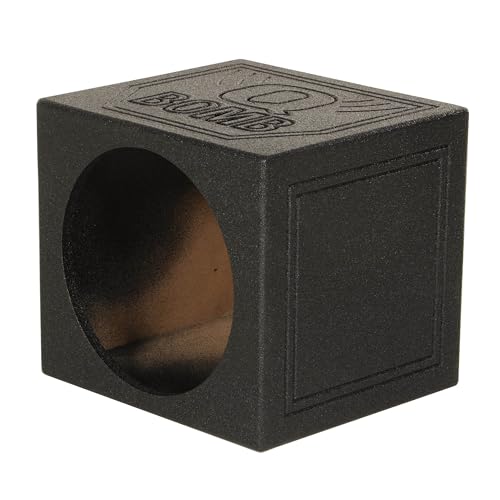
- Sealed single 12-inch design for tighter bass
- 3/4-inch MDF with reinforced seams
- Spring-loaded terminal cup for easy wiring
Best For: Simple sealed bass for one 12-inch sub
Shallow Mount Tight Bass
Bbox 10" Sealed Subwoofer Enclosure

- Pro-tuned sealed 10-inch box for accurate bass
- 0.51 cu. ft. net volume supports tight low end
- 1-inch front baffle adds structural rigidity
Best For: Compact shallow-mount 10-inch installs needing controlled bass
Tight Bass Pick – Atrend Bbox Single Sealed 12 Inch Subwoofer Enclosure
If you want sealed subwoofer boxes for tight bass, this Atrend Bbox single 12-inch enclosure is built around airtight construction and low-frequency accuracy. The wedge shape, 3/4-inch MDF, and double-glue assembly are aimed at delivering clean bass response with less rattle and leakage.
Best For: Drivers who want a single 12-inch sealed enclosure for tighter, more accurate bass in a car audio setup.
Pros:
- Sealed wedge design is tuned for optimum bass response and low-frequency reproduction.
- 3/4-inch MDF construction supports solid frequency response and accurate music playback.
- Aliphatic wood glue and reinforced joints are designed to create an airtight, no-leak chamber.
- Recessed side panels and dado-style fit help reduce rattle and noise.
Cons:
- Fits a single 12-inch subwoofer only.
- Wedge enclosure shape may not suit every trunk layout.
- Designed for wired subwoofer setups, so installation still depends on your system needs.
This is a practical pick if your priority is controlled bass rather than maximum boom. The sealed design and careful MDF construction make it a strong match for listeners who want cleaner sound in a simple, purpose-built box.
Compact Bass Layout – QPower BASS12 3 Hole 12 Sealed Enclosure
For shoppers comparing sealed subwoofer boxes for tight bass, this QPower BASS12 stands out with its compact 3-hole layout and MDF build. It is marketed for deep bass, but the sealed enclosure still keeps response more controlled and focused than many ported alternatives.
Best For: Car audio users who want a sealed 12-inch enclosure with a compact multi-sub layout and solid bass output.
Pros:
- Sealed design supports tighter, more balanced bass response.
- Compact 3-hole layout is built for a car audio installation.
- MDF construction adds stiffness and helps the enclosure stay solid.
- Push-button terminal cups make hookup straightforward.
Cons:
- Large overall dimensions may require significant cargo space.
- Designed around 12-inch subwoofers, so it is not a universal-size box.
- The product notes emphasize deep bass, so it may appeal more to output-focused buyers than pure SQ seekers.
This box is a reasonable fit if you want a sealed enclosure with a bit more system flexibility than a single-sub design. Its compact layout and sturdy build make it a practical option for bass-minded car audio setups.
Dual-Box Value – QPower Pair of 2 Single 10-Inch Sealed Boxes
If you need sealed subwoofer boxes for tight bass in a matched pair, this QPower set gives you two single 10-inch enclosures with 0.9 cubic feet of airspace each. The sealed alignment is meant to produce tighter, more balanced bass and easier installation without custom fabrication.
Best For: Anyone building a symmetrical dual-sub setup with 10-inch sealed boxes for punchy, accurate bass.
Pros:
- Two matching sealed boxes make it easy to build a dual-sub setup.
- 0.9 cu. ft. of airspace per box supports controlled bass response.
- 5/8-inch MDF construction helps reduce flex and vibration.
- Terminal cup connectors simplify secure wiring.
Cons:
- Each box is designed for a single 10-inch subwoofer only.
- Requires space for two separate enclosures.
- Charcoal carpet finish may not match every interior style.
This pair is a smart option when you want the benefits of sealed bass and also want a clean, matched installation. The smaller 10-inch size and sealed alignment make it especially appealing for punchy, balanced sound rather than oversized output.
Dual-Sub Bass Upgrade – Bbox Dual Sealed 12 Inch Subwoofer Enclosure
For larger setups, this Bbox dual 12-inch enclosure is built for sealed, controlled output with an emphasis on low-frequency reproduction. If your goal is sealed subwoofer boxes for tight bass, the 3/4-inch MDF construction and airtight joint design are key selling points.
Best For: Truck and car owners who want a dual 12-inch sealed enclosure with accurate bass and a solid, no-rattle build.
Pros:
- Dual 12-inch sealed design supports low-frequency reproduction and tighter bass.
- 3/4-inch MDF and CNC mitering are intended to improve fit and rigidity.
- Double-glued joints and recessed side panels help create an airtight air chamber.
- Built for specific truck models as well as general car audio use.
Cons:
- Large dual-box format takes more space than a single enclosure.
- Only works with 12-inch subwoofers.
- Best suited to sealed, accurate bass rather than maximum output styles.
This enclosure makes sense if you want a sealed dual-sub setup with a focus on cleaner response and reduced vibration. It is a strong choice for drivers who want a straightforward upgrade with a more controlled bass profile.
Compact Tight-Bass Pick – QPower 12" Single Sealed Enclosure
If you want sealed subwoofer boxes for tight bass, this QPower 12-inch single sealed enclosure is built around accuracy and controlled low-end output. The 1.2 cu ft airtight chamber and heavy-duty MDF construction are aimed at clean bass response, while the compact size helps it fit in standard trunk and cargo spaces.
Best For: Drivers who want a single 12-inch sealed box for crisp, accurate bass in a car or truck.
Pros:
- Single sealed chamber is designed to maximize bass accuracy.
- 1-inch MDF front panel and 3/4-inch MDF body add stability.
- Spring-loaded gold-tipped terminals make wiring simple and secure.
- Compact enclosure size suits trunk and cargo-area installs.
Cons:
- Only supports one 12-inch subwoofer.
- Not water resistant.
- Sealed design favors accuracy over maximum output volume.
This is a practical sealed box choice if your priority is tight, controlled bass rather than a boomy response. It focuses on solid construction and an airtight chamber, which are the main factors most buyers want in a sealed setup.
Dual-Box Bass Upgrade – Bbox Dual Sealed 12" Enclosure
This Bbox dual sealed 12-inch enclosure is aimed at shoppers looking for sealed subwoofer boxes for tight bass with a little more system flexibility. The design emphasizes airtight construction, MDF rigidity, and low-frequency reproduction, making it a sensible pick when you want cleaner bass response from a dual-box setup.
Best For: Truck and car owners who want dual 12-inch sealed enclosures for controlled bass and strong low-frequency performance.
Pros:
- Dual 12-inch sealed design supports a larger bass setup.
- 3/4-inch MDF and CNC miter construction help maintain accurate response.
- Aliphatic wood glue and reinforced joints are used for an airtight seal.
- Nickel finish subwoofer terminals add a clean connection point.
Cons:
- Floor-standing design may take more room than compact single boxes.
- Uses RCA connectivity rather than a more universal speaker-wire approach.
- Not water resistant.
Compared with basic sealed boxes, this model leans into build precision and airtight assembly to reduce rattle and leakage. It’s a good fit if you want a dual-sub sealed setup that stays focused on sound quality and bass control.
Truck-Friendly Tight Bass Set – QPower QTW12 Sealed Pair
For shoppers comparing sealed subwoofer boxes for tight bass in a truck, this QPower QTW12 pair is built around compact fit and clean response. Each box holds a single 12-inch sub with 0.88 cubic feet of airspace, and the 7.5-inch depth is meant to sit neatly behind a single-cab or extended-cab seat without eating up cabin room.
Best For: Truck owners who need a pair of shallow sealed 12-inch boxes that fit behind the seat.
Pros:
- Includes two separate sealed enclosures for a matched pair setup.
- 0.88 cu ft internal airspace supports tight, accurate bass response.
- 7.5-inch depth is designed for behind-seat truck installation.
- 5/8-inch MDF construction helps minimize resonance and panel flex.
Cons:
- Each enclosure is sized for one 12-inch sub only.
- Shallow design may not suit larger or more demanding enclosure preferences.
- Details provided do not list water resistance.
This set is especially appealing if space is limited and you want sealed enclosures with a compact footprint. The smaller airspace and MDF build point toward the kind of tight bass many truck audio buyers are after.
Sealed Bass for 12s – Rockville RD12A Dual 12" Sealed Enclosure
If you want sealed subwoofer boxes for tight bass, the Rockville RD12A is aimed at accurate, punchy low end rather than boomy output. Its dual 12-inch sealed design, 3/4-inch MDF build, and slanted face make it a practical fit for many sedan-style car audio installs.
Best For: Car audio buyers wanting a dual 12-inch sealed box with controlled bass and easier sedan fitment.
Pros:
- Dual 12-inch sealed enclosure tuned for tight, accurate bass
- 3/4-inch MDF construction helps control resonance and add durability
- Slanted face design can improve fit in sedan applications
- Gold spring-loaded terminals provide secure subwoofer connections
Cons:
- Built specifically for 12-inch subs, so it is not universal for smaller drivers
- At 16.25-inch mounting depth, it may not suit very deep-fit constraints
The RD12A is a straightforward choice if your priority is clean sealed-box bass and solid build quality. It is less about maximum boom and more about giving compatible 12-inch woofers a stable, well-made enclosure.
Compact Tight Bass – QPower 12-Inch Sealed Sub Box
The QPower single 12-inch enclosure is a solid pick if you want sealed subwoofer boxes for tight bass without custom fabrication. Its 3/4-inch MDF construction, reinforced seams, and sealed internal air space are designed to deliver controlled, punchy bass in cars, trucks, and SUVs.
Best For: A simple ready-to-load sealed box for one 12-inch sub in everyday vehicle audio setups.
Pros:
- Sealed 12-inch design supports tighter, punchier bass response
- 3/4-inch MDF and reinforced seams help reduce vibration and distortion
- Spray-finished exterior adds moisture and scuff resistance
- Spring-loaded terminal cup makes wiring quick and secure
Cons:
- Single-sub design limits output compared with dual-enclosure options
- Best suited to 12-inch drivers only
This enclosure focuses on practical performance and easy installation. If you want a compact sealed box that aims for clean bass instead of oversized output, it fits the brief well.
Shallow Mount Tight Bass – Bbox 10" Sealed Subwoofer Enclosure
If you need sealed subwoofer boxes for tight bass in a shallow-mount setup, this Bbox enclosure is built around compact, accurate low-frequency performance. The 10-inch single sealed design uses MDF construction, a 1-inch front baffle, and 0.51 cubic feet of net internal air space to support controlled bass reproduction.
Best For: Shallow-mount 10-inch subwoofer installs that need a compact sealed enclosure with accurate bass.
Pros:
- Pro-tuned sealed design targets tight, accurate bass response
- 0.51 cubic feet of net volume is tailored for compact low-frequency performance
- 1-inch front baffle and recessed side panels add rigidity
- Airtight assembly and carpeting support a clean, durable finish
Cons:
- Limited to 10-inch subs, so it is not for larger drivers
- Shallow-mount format may not suit deeper subwoofer models
This is a good option when space is tight and you care more about precision than sheer output. It is designed to keep bass controlled while fitting neatly into vehicle cargo areas.
How We Picked the Best Sealed Subwoofer Boxes for Tight Bass
We looked for sealed enclosures that prioritize rigidity, proper airspace, and practical installation features. For Sealed Subwoofer Boxes for Tight Bass, the biggest difference usually comes from enclosure volume, MDF thickness, terminal quality, and overall build consistency.
We also favored boxes with clear sizing, common subwoofer fitment, and designs that support clean bass response rather than maximum output at the expense of accuracy.
Quick Comparison
Single 10-inch and 12-inch boxes are often the best match for smaller trunks or drivers who want compact, controlled bass. Dual 12-inch boxes are better for louder systems that still need sealed-enclosure precision. If you need flexibility, a pair of single boxes can make installation and tuning easier than one large cabinet.
Key Buying Factors for Sealed Subwoofer Boxes for Tight Bass
Airspace and Subwoofer Match
Always compare the box’s internal volume with the subwoofer manufacturer’s recommended sealed airspace. Too much or too little volume can change bass character, reduce output, or affect power handling.
Material and Construction
Look for MDF construction with tight joints and strong bracing where available. Thicker panels help reduce cabinet resonance, which is important when you want clean, tight bass instead of box coloration.
Box Size and Vehicle Fit
Measure your trunk, hatch, or cabin before buying. A well-built enclosure is only useful if it fits cleanly and allows enough room for wiring, mounting depth, and seat or hatch clearance.
Terminal and Wiring Convenience
Solid spring terminals or well-made binding posts make installation easier and help maintain a secure connection. This matters more in systems that may be serviced or rewired later.
Single Vs. Dual Sub Layout
Single sub boxes are usually easier to tune and place, while dual boxes offer more cone area and output. For many daily drivers, single enclosures deliver the most predictable results for tight bass.
Who Should Buy Which Sealed Subwoofer Boxes for Tight Bass?
If you want the cleanest bass response and have limited space, choose a single sealed box. If you’re building a louder daily system and have the amp power to match, a dual sealed box may be a better fit. If your goal is a balanced system with minimal install hassle, Sealed Subwoofer Boxes for Tight Bass are often the most sensible starting point.
For shoppers who value accuracy over maximum boom, sealed enclosures remain one of the best enclosure styles for everyday listening, especially with music that benefits from fast, controlled low-end response.