
If you need a straightforward way to connect a USB-C phone or tablet to a car stereo, speaker, or wired headphones, the JSAUX USB C to 3.5mm Audio Aux Jack Cable is built for that job.
It focuses on plug-and-play compatibility, a built-in DAC chip, and a durable braided cable rather than gimmicks.
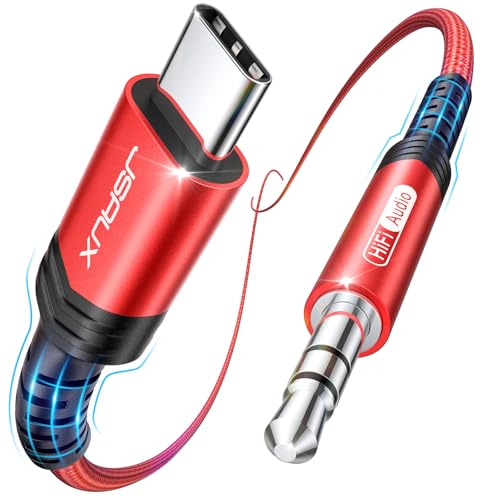
JSAUX USB-C to 3.5mm Aux Cable Review Summary
The JSAUX USB-C to 3.5mm aux cable makes sense for buyers who want a simple, dependable analog audio connection from a modern Type-C device.
It is especially relevant for drivers, commuters, and anyone who still relies on a 3.5mm input in a car, speaker dock, or pair of wired headphones.
Its main value is convenience first, audio quality second, and durability third, which is exactly the right order for this kind of accessory.
This is not the kind of product that tries to be an audiophile cable or a feature-rich hub.
Instead, it is a focused adapter cable with a built-in DAC, a 3.3-foot length, and a broad compatibility list that includes many recent iPhone, Samsung Galaxy, Pixel, iPad Pro, MacBook, and Nintendo Switch 2 models.
If that matches your use case, the JSAUX USB-C to 3.5mm Aux Cable review is fairly easy to summarize: it is a practical buy for people who want wired audio to just work.
Review Scorecard
| Category | Score | Rationale |
|---|---|---|
| Plug-and-play convenience | 10/10 | No software or driver setup is required. |
| Compatibility breadth | 9/10 | The listing supports many recent USB-C phones, tablets, and some laptops. |
| Durability | 9/10 | Braided nylon, aluminum housing, and 10,000+ bend claims point to a rugged design. |
| Audio path confidence | 8/10 | Built-in DAC and 16-bit/48 kHz support are good signs for basic wired listening. |
| Everyday portability | 8/10 | The 3.3-foot length suits cars and desks without being overly bulky. |
| Value for use cases | 8/10 | Best for buyers who need a reliable adapter more than advanced audio features. |
Key Features and Specifications of JSAUX USB-C to 3.5mm Aux Cable
The core specification is simple: this is a 3.3-foot USB-C to 3.5mm headphone cable intended to connect Type-C devices to any device with a standard auxiliary input.
That includes car stereos, speakers, headphones, and other AUX-in ports.
JSAUX states that it supports up to 16-bit/48 kHz audio and uses a built-in DAC decoding chip, which is the right architecture for a cable like this because the conversion happens in the cable itself rather than relying on a separate dongle.
The build is another part of the story.
The listing calls out strong fiber, a nylon braided cable, aluminum housing, and strain relief, along with 10,000+ bend testing claims.
Those are the kinds of details that matter for a cable likely to be plugged in and unplugged repeatedly in a car or bag.
Here are the practical details buyers usually care about:
| Spec | Detail |
|---|---|
| Brand | JSAUX |
| Product type | USB-C to 3.5mm aux cable |
| Length | 3.3 ft / about 1.0 m |
| Audio support | Up to 16-bit/48 kHz |
| Conversion | Built-in DAC decoding chip |
| Housing | Aluminum |
| Cable material | Nylon braided with strong fiber |
| Durability claims | 10,000+ bend tests / strain relief design |
| Intended devices | USB-C phones, tablets, and some laptops |
The compatibility list is broad and includes many iPhone 15, 16, and 17 series models, Samsung Galaxy S21 through S25 variants, Pixel phones, iPad Pro, iPad mini 6, MacBook, and several Huawei devices.
The listing also notes a limitation: it is not compatible with all OnePlus models.
That is the kind of detail worth checking before buying, because these cables are only useful when the source device and the DAC implementation line up.
Pros and Cons of JSAUX USB-C to 3.5mm Aux Cable
Pros
- Easy setup. It is plug and play, so there is no app, driver, or pairing step.
- Good fit for cars. The 3.3-foot length is convenient for dashboard and console use.
- Durable design cues. Braided cable, aluminum housing, and strain relief are all practical choices.
- Wide device support. The product targets many recent USB-C phones and tablets.
- Built-in DAC. This matters for devices that no longer include a headphone jack.
Cons
- Not a universal guarantee. The listing itself says it is not compatible with all OnePlus models.
- Single-purpose accessory. It only solves wired audio output, so buyers wanting charging, data, or multiport features should look elsewhere.
- No customization. There are no controls, buttons, or extra functions beyond audio conversion.
- Sound expectations should stay realistic. It is a practical DAC cable, not a replacement for a dedicated audio interface.
Who Should Buy JSAUX USB-C to 3.5mm Aux Cable?
Buy this if you want a clean, low-friction way to connect a USB-C device to a 3.5mm input.
That includes drivers whose car stereo still uses AUX, students or office workers with wired speakers, and anyone who prefers wired listening over Bluetooth latency or battery dependence.
If you need a cable that is likely to survive regular daily use, this one fits that brief well.
It also makes sense if you are buying for a newer phone that dropped the headphone jack and you do not want to carry a separate dongle.
The integrated DAC and broad compatibility list are useful for people who want a single cable that can live in a glove box, backpack, or desk drawer.
You should skip it if you are trying to solve multiple problems at once.
This is not a charging cable, not a USB hub, and not a high-end audio tool.
If you need something for studio monitoring, a wireless setup, or a more complex car-audio chain, a different category of product will serve you better.
The ideal buyer wants straightforward analog playback, nothing more.
Audio Performance and Car Use
Why the built-in DAC matters
The built-in DAC decoding chip is the main reason this cable exists.
For a USB-C phone without a headphone jack, the cable has to convert digital audio to analog before it can feed a car stereo or pair of headphones.
JSAUX says the cable supports up to 16-bit/48 kHz, which is a sensible specification for everyday listening and navigation prompts.
The listing also emphasizes stable decoding performance and low power consumption, both of which matter when you are using the cable for long periods in a car.
Fit for car stereos
This is the most obvious use case.
A 3.3-foot cable is long enough to route from a phone mount or console to an AUX port without feeling excessive.
In a car, that length is often the sweet spot: long enough to be usable, short enough not to create clutter.
For anyone who wants reliable playback from music apps, podcasts, or navigation audio, the simplicity of a direct cable is hard to beat.
Daily durability
Car accessories get handled more roughly than desktop gear.
The nylon braided jacket, aluminum housing, and strain relief are meaningful because they reduce the chance of the cable failing at a bend or connector.
JSAUX also highlights 10,000+ bend testing, which does not guarantee lifetime durability, but it does suggest the cable is designed with repeat use in mind.
For a product that will likely live in a vehicle or bag, that is a useful quality signal.
Compatibility check before buying
The product’s real-world success depends on device matching.
JSAUX lists support for many Apple, Samsung, Google, and other USB-C devices, but it also notes that not all OnePlus models are compatible.
That means the best buying decision is not just “does this have USB-C?” but “does this specific phone support USB-C audio output through this DAC cable?” If you are buying for a common recent flagship, chances are better than average.
If you are buying for a niche handset, verify first.
Alternatives to JSAUX USB-C to 3.5mm Aux Cable
If you want a similar product, the most credible alternatives are other known USB-C DAC cable or adapter lines from brands that specialize in mobile accessories:
- Anker USB-C to 3.5mm adapter
- UGREEN USB-C to 3.5mm cable
- Apple USB-C to 3.5mm adapter
- Belkin USB-C audio adapter
These are worth considering if you already trust a specific accessory brand or if you want to compare cable length, connector shape, and device compatibility before deciding.
For basic car use, the main choice is usually not audio theory but build quality and how well the cable integrates into your daily routine.
Is JSAUX USB-C to 3.5mm Aux Cable Worth It?
Yes, if your goal is simple wired audio from a USB-C device into a 3.5mm input.
The JSAUX USB-C to 3.5mm Aux Cable is worth it for buyers who value plug-and-play convenience, a durable braided build, and broad support for modern phones and tablets.
It is especially sensible as a car cable or everyday backup for people who still want AUX compatibility.
It is less compelling if you need a multiuse accessory or if your device compatibility is uncertain.
But for the right buyer, this is a focused, sensible product that does one job well.
If you want a no-drama solution for analog audio, this is a reasonable pick.