
Choosing the right meter can make automotive diagnostics faster, safer, and far more accurate. If you need duty cycle measurement for ignition, fuel, or sensor testing, the right tool matters.
This roundup of automotive multimeters with duty cycle focuses on practical features, solid readability, and the kind of automotive functions that help you diagnose problems with confidence.
Best 10 Automotive Multimeters with Duty Cycle Picks for 2026
Premium diagnostic pick
Fluke 88V Deluxe Automotive Multimeter

- Measures pulse width and duty cycle
- 10 meg ohm input impedance
- Large backlit display with Min/Max/Avg
Best For: Advanced vehicle diagnostics and hybrid troubleshooting
Budget-friendly feature pack
T21D Auto-Ranging Digital Multimeter

- Auto-ranging with duty cycle support
- Non-contact voltage and live-wire testing
- Backlit LCD with flashlight and data hold
Best For: DIY automotive and home electrical testing
Automotive test tool specialist
OTC 3980 750 Series Automotive Multimeter

- Duty cycle plus RPM, dwell, and pulse width
- True RMS with Min/Max readings
- Includes PC cable software and case
Best For: Automotive diagnostics with engine-specific measurements
High-value all-rounder
KAIWEETS HT118A Automotive TRMS Multimeter
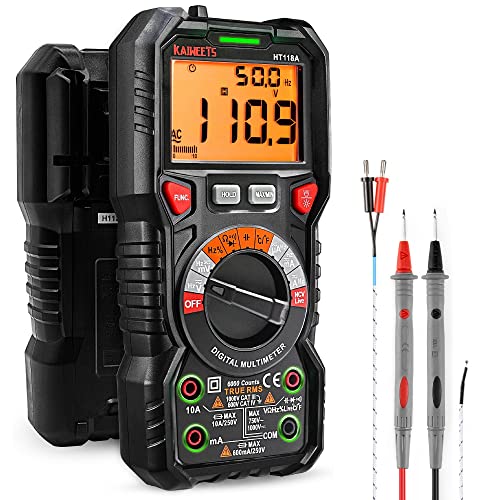
- Duty cycle, frequency, and temperature testing
- Auto-ranging 6000-count TRMS display
- NCV, Live function, and Min/Max/Average
Best For: Flexible DIY automotive and general electrical testing
Ignition-Test Automotive Multimeter
ALLOSUN EM127 for Engine & Duty Cycle Checks

- Reads RPM, dwell angle, duty cycle, and temperature
- Also covers voltage, current, resistance, continuity, and frequency
- LED display supports ignition and battery testing
Best For: Engine and ignition testing in the garage
Safety-Focused Auto-Ranging Meter
Crenova MS8233D for General Auto Troubleshooting

- Measures duty cycle plus AC/DC voltage, current, resistance, capacitance, and frequency
- 6000-count backlit display with auto/manual ranging
- CAT III 600V rating with fuses and rubber holster
Best For: General auto troubleshooting with added safety features
High-Count Flip-Display Automotive Analyzer
ANENG 623 with RPM & Duty Cycle
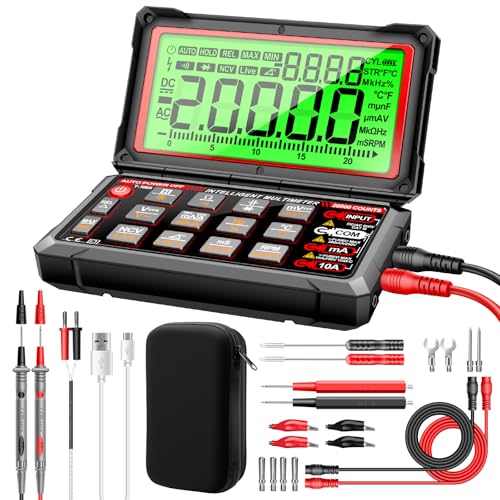
- 20,000-count meter with RPM, dwell, pulse-width, and duty cycle
- Rechargeable design with auto hibernation
- Double fuse protection and impact-resistant housing
Best For: Detailed automotive diagnostics and engine testing
Precision Automotive & General Diagnostics
6000 Counts True RMS Multimeter

- True RMS with 6000-count auto-ranging display
- Duty cycle plus frequency, capacitance, and temperature
- CAT III 1000V / CAT IV 600V safety with dual fuses
Best For: DIY users needing one versatile meter for car and home diagnostics
Engine-Test Specialist
SZ26 Automotive Multimeter and Tachometer

- Includes duty cycle, dwell angle, and 500-10000 RPM tachometer
- Large LCD with data hold for car diagnostics
- Rugged shockproof case with stand and accessory kit
Best For: Mechanics who want engine testing features in one compact tool
Premium diagnostic pick – Fluke 88V Deluxe Automotive Multimeter
If you want automotive multimeters with duty cycle support for serious troubleshooting, the Fluke 88V stands out with the measurement functions and accuracy needed for conventional and hybrid vehicles. It also measures pulse width, includes Min/Max/Avg recording, and uses a 10 meg ohm input impedance designed not to damage computer circuits.
Best For: Technicians who need a dependable automotive multimeter for advanced vehicle diagnostics, including hybrid systems and circuit-sensitive troubleshooting.
Pros:
- Measures pulse width and duty cycle for automotive signal checks.
- 10 meg ohm input impedance helps protect computer circuits.
- Large display with bright backlight improves visibility.
- Min/Max/Avg recording supports tracking changing readings.
Cons:
- Battery-powered design requires regular battery management.
- Built for diagnostic work, so it may be more tool than casual users need.
The Fluke 88V is the most specialized option here, especially if you value vehicle-focused functions and a layout made for troubleshooting. It is a strong fit when you need more than basic voltage checks and want a proven multimeter for demanding automotive work.
Budget-friendly feature pack – T21D Auto-Ranging Digital Multimeter
For shoppers comparing automotive multimeters with duty cycle support, the T21D offers a broad feature set at a practical everyday level. It covers AC/DC voltage, current, resistance, continuity, frequency, capacitance, diode testing, temperature, and duty cycle, making it a flexible choice for cars, outlets, and general electrical work.
Best For: DIYers and homeowners who want an auto-ranging multimeter with useful automotive and household test functions.
Pros:
- Auto-ranging design simplifies everyday testing.
- Includes duty cycle, frequency, capacitance, and temperature measurements.
- Non-contact voltage testing adds safer checking options.
- Large backlit LCD, flashlight, and data hold improve usability.
Cons:
- More of a general-purpose meter than a dedicated automotive specialist.
- Maximum operating voltage is listed at 600V.
The T21D is a well-rounded pick if you want one meter for multiple jobs and still need duty cycle measurement. Its safety features and easy operation make it appealing for casual users who still want a capable test tool.
Automotive test tool specialist – OTC 3980 750 Series Automotive Multimeter
The OTC 3980 is built for automotive work and includes the kind of functions shoppers expect from automotive multimeters with duty cycle measurement. Along with frequency, duty cycle, diode, and continuity tests, it adds automotive-specific readings like RPM, dwell, pulse width, and temperature, plus true RMS and Min/Max support.
Best For: Mechanics who want an automotive-focused multimeter with specialized engine and sensor testing functions.
Pros:
- Includes duty cycle, frequency, diode, and continuity testing.
- Automotive-specific features include RPM, dwell, pulse width, and temperature.
- True RMS and Min/Max support improve diagnostic usefulness.
- Includes auto power off, PC cable software, and a canvas case.
Cons:
- More specialized than a basic all-purpose multimeter.
- Uses battery power, so long sessions depend on charge management.
This OTC model is a strong match if you want a meter centered on automotive diagnostics rather than general household use. Its extra engine-related functions make it especially useful when duty cycle is only one part of a larger test workflow.
High-value all-rounder – KAIWEETS HT118A Automotive TRMS Multimeter
If you need automotive multimeters with duty cycle support and a long list of everyday test functions, the KAIWEETS HT118A is a practical all-rounder. It measures voltage, current, resistance, capacitance, frequency, temperature, diode, continuity, and duty-cycle readings, while also offering NCV and Live testing for added convenience.
Best For: DIY users and car owners who want a feature-rich TRMS meter with broad measurement coverage.
Pros:
- Measures duty cycle along with frequency, capacitance, and temperature.
- Auto-ranging and 6000-count display simplify reading and setup.
- NCV and Live functions add practical safety checks.
- Includes Min/Max/Average, backlight, flashlight, and data retention.
Cons:
- Not as automotive-specialized as meters built around engine diagnostics.
- Maximum operating voltage is listed at 80 volts in the supplied details.
The HT118A offers a lot of flexibility for the price-minded buyer who still wants duty cycle testing. It is a solid choice when you need one meter for car work and general electrical troubleshooting without moving into pro-grade specialization.
Ignition-Test Automotive Multimeter – ALLOSUN EM127 for Engine & Duty Cycle Checks
If you want one of the more specialized automotive multimeters with duty cycle support, the ALLOSUN EM127 is built around engine diagnostics rather than general household testing. It adds RPM, dwell angle, ignition system testing, duty cycle, and temperature alongside standard multimeter functions, making it a practical pick for garage work where those automotive readings matter.
Best For: Mechanics and DIYers who want a dedicated automotive meter for ignition testing, RPM, dwell, and duty cycle measurements.
Pros:
- Measures RPM, dwell angle, duty cycle, and temperature in addition to voltage, current, resistance, diode, continuity, and frequency
- 3 1/2-digit LCD with 1999 max reading for straightforward basic measurements
- Includes LED light display for ignition system and battery tests
- Auto power off helps conserve battery life
Cons:
- Suggested for indoor use, so sunlight readability may be limited
- Lower 1999-count display is less detailed than higher-count multimeters
- More automotive-focused than a do-everything shop meter
The EM127 makes sense if your priority is automotive diagnostics over maximum versatility. Its mix of ignition-specific readings and standard meter functions gives it a clear niche for engine troubleshooting.
Safety-Focused Auto-Ranging Meter – Crenova MS8233D for General Auto Troubleshooting
Among automotive multimeters with duty cycle support, the Crenova MS8233D stands out as a safer all-round tester for mixed use. It handles duty cycle, frequency, voltage, current, resistance, capacitance, diode, continuity, live wire, and NCV testing, so it works well when you need one meter for automotive and basic electrical troubleshooting.
Best For: Drivers, hobbyists, and technicians who want a feature-rich multimeter for auto and household diagnostics with safety protection.
Pros:
- Measures duty cycle, frequency, AC/DC voltage and current, resistance, capacitance, continuity, and diode
- 6000-count LCD with backlight for clearer readings in dim spaces
- IEC61010-1 CAT III 600V safety rating with built-in fuses and rubber holster
- Includes auto/manual ranging, max/min, data hold, low battery indicator, and auto power off
Cons:
- More general-purpose than automotive-specific meters with RPM or dwell functions
- Not as specialized for ignition system testing as dedicated engine analyzers
- NCV and live-wire features may be unnecessary for simple car-only use
This is a sensible choice if you want one tool that can cover vehicle checks and other electrical tasks. The safety features and balanced feature set make it easy to recommend for mixed workshop use.
High-Count Flip-Display Automotive Analyzer – ANENG 623 with RPM & Duty Cycle
If you need automotive multimeters with duty cycle plus more engine-focused features, the ANENG 623 is the most fully loaded option here. It combines 20,000 counts with RPM, dwell angle, pulse width, duty cycle, temperature, and standard electrical measurements, giving it a broader diagnostics toolbox for garage and field work.
Best For: Users who want a rechargeable automotive analyzer with RPM, dwell, pulse-width, and duty cycle testing.
Pros:
- Measures engine RPM, dwell angle, pulse width, and duty cycle for automotive diagnostics
- 20,000-count display offers finer resolution than basic meters
- Rechargeable design with auto hibernation when idle
- Includes double fuse protection and impact-resistant ABS housing with rubber over-mold
Cons:
- Feature-rich setup may be more than needed for simple voltage or continuity checks
- Flip-cover design adds a mechanical element some buyers may not want
- Large automotive feature set can be overkill if you do not need RPM or dwell readings
For shoppers who want the most diagnostics-oriented meter in this group, the ANENG 623 is the strongest fit. Its high-count display and engine-specific functions make it especially useful when duty cycle is only one part of a wider automotive test workflow.
Precision Automotive & General Diagnostics – 6000 Counts True RMS Multimeter
If you want automotive multimeters with duty cycle support that still work well around the house, this Neoteck model is a practical all-rounder. It combines True RMS measurement, auto-ranging, and a full spread of functions including capacitance, frequency, temperature, and duty cycle, so you can cover basic car electrical checks without giving up broader troubleshooting capability.
Best For: DIY users and technicians who want one feature-rich meter for automotive and general electrical testing.
Pros:
- 6000 counts with True RMS for more stable readings
- Includes duty cycle, frequency, capacitance, and temperature measurements
- CAT III 1000V / CAT IV 600V rating with dual fuses and overload protection
- Backlit display, flashlight, data hold, and continuity buzzer for easier use
Cons:
- Not a dedicated engine analyzer or tachometer meter
- Handheld design is more general-purpose than automotive-specialized
This is a strong pick if you want a safe, well-rounded meter that can handle duty cycle work and still remain useful for many other diagnostics. Its feature set is broad without being overly complicated, which makes it a sensible choice for mixed-use testing.
Engine-Test Specialist – SZ26 Automotive Multimeter and Tachometer
Among automotive multimeters with duty cycle support, the ANENG SZ26 stands out because it adds engine-focused testing that many basic meters do not offer. Along with duty cycle, it measures dwell angle, RPM from 500 to 10000, DC current, AC/DC voltage, and resistance, making it especially useful when you need more than standard electrical checks.
Best For: Mechanics and DIY car owners who want a multimeter with built-in tachometer and dwell testing.
Pros:
- Measures duty cycle plus dwell angle and 500-10000 RPM
- Large LCD and data hold for easier car diagnostics
- Rugged shockproof case with built-in stand
- Includes accessory kit, storage bag, and 9V battery
Cons:
- 1999 counts is lower than some higher-resolution meters
- Fewer advanced electrical functions than feature-heavy general multimeters
If your priority is automotive troubleshooting, this meter has the right mix of engine and electrical functions. The added tachometer and dwell angle readings make it more specialized than a standard multimeter, while the duty cycle feature rounds out its diagnostic value.
High-Sensitivity Parasitic Draw Tool – 1mA Clamp Meter
If you’re shopping for automotive multimeters with duty cycle support and need current measurement as a priority, this BSIDE clamp meter is built for that job. Its 1 mA clamp sensitivity, rechargeable design, and True RMS readout make it well suited for parasitic draw checks, while duty cycle, frequency, temperature, capacitance, and V-Alert add extra diagnostic range.
Best For: Users who need a clamp-style meter for automotive parasitic current testing and general voltage work.
Pros:
- 1 mA clamp sensitivity for detailed current readings
- Measures duty cycle, frequency, temperature, capacitance, diode, Live Check, and V-Alert
- Rechargeable battery removes the need for disposable cells
- Large color screen improves readability in bright or dim conditions
Cons:
- DC current jaw readings require careful zeroing and orientation
- Clamp design is less compact than a standard handheld meter
For diagnosing parasitic drain, this clamp meter offers more current-focused utility than a basic multimeter. The duty cycle feature is there, but the standout value is the combination of sensitive clamp measurement and broad test coverage in a portable, rechargeable package.
How We Picked the Best Automotive Multimeters with Duty Cycle
We prioritized Automotive Multimeters with Duty Cycle based on the features that matter most in real garage use: duty cycle support, RPM or dwell functions where available, accurate voltage and resistance testing, auto-ranging convenience, and display readability. We also looked for meters that balance automotive-specific tools with everyday electrical troubleshooting.
Quick Comparison
For most buyers, the best choice depends on how you work. Dedicated automotive meters are typically better if you frequently test ignition, fuel injectors, or engine timing circuits. General-purpose TRMS meters are a good fit if you want one tool for vehicle and home electrical work. Clamp meters can help when current measurement is a priority, while engine analyzer-style meters are useful for older vehicles and dwell-based diagnostics.
Key Buying Factors for Automotive Multimeters with Duty Cycle
Duty Cycle Range and Accuracy
Make sure the meter supports duty cycle in a range that matches the systems you test. Higher resolution and stable readings are especially helpful when checking pulse-width signals on modern vehicles.
Automotive Functions
Look for RPM, dwell, ignition, and tachometer features if you work on engines regularly. These functions can save time compared with using separate tools.
TRMS, Auto-Ranging, and Display Quality
TRMS improves usefulness for varied electrical signals, while auto-ranging makes daily testing simpler. A clear backlit display and enough count resolution help reduce reading errors in dim engine bays.
Safety and Build Quality
Good lead quality, proper input protection, and sturdy casing matter, especially if you work around battery systems, alternators, or hybrid components. If you need a meter for broader electrical tasks, consider the test category and current handling as well.
Who Should Buy Which Automotive Multimeters with Duty Cycle?
If you want a serious all-around automotive tool, choose a dedicated multimeter with strong duty cycle and engine-test features. If you mainly need an affordable everyday tester, a TRMS auto-ranging meter may be enough. Technicians who frequently diagnose injector or ignition signals should favor models with clearer automotive measurement modes, while users who also test household circuits may prefer a versatile clamp or general-purpose digital meter.
In short, the best Automotive Multimeters with Duty Cycle are the ones that match your diagnostic workflow, not just the longest spec sheet.