
The best channel strips for podcasting combine microphone gain with tools that make speech easier to record, mix, and understand. Compression, de-essing, gating, and tone shaping can help create a more consistent vocal sound before it reaches your recorder or DAW.
This roundup compares 10 options for solo hosts, interview setups, home studios, live production, and more advanced recording workflows. Pay close attention to connectivity and control layout, not just the number of processing features.
Best 10 Channel Strips for Podcasting Picks for 2026
Versatile Voice Control

- Mic preamp with four dedicated processors
- Compression, de-essing, enhancement, and gating
- Rackmount design with insert/loop-out connectivity
Best For: Solo podcasters wanting hands-on vocal processing
Tube-Toned Simplicity

- Class A vacuum tube preamplifier
- Variable VCA compressor
- Three-band parametric EQ in a rack unit
Best For: Podcasters seeking tube character with core processing
Connected Tube Processing

- Tube preamp with vocal dynamics control
- Compressor, expander, de-esser, and gate
- USB and multiple digital output formats
Best For: Podcasters needing flexible computer and digital routing
Multi-Mic Podcast Hub

- 12-channel mixer for multiple audio sources
- Onyx preamps and built-in GigFX effects
- USB, XLR, and TRS connectivity
Best For: Multi-person podcasts and USB content-creation setups
Premium Voice Shaping

- Discrete preamp with Lundahl I/O transformers
- Transient Designer, tube saturation, and compressor
- Heavy-duty mono channel-strip design
Best For: Studio podcasters refining one microphone channel
Portable Podcast Mixing
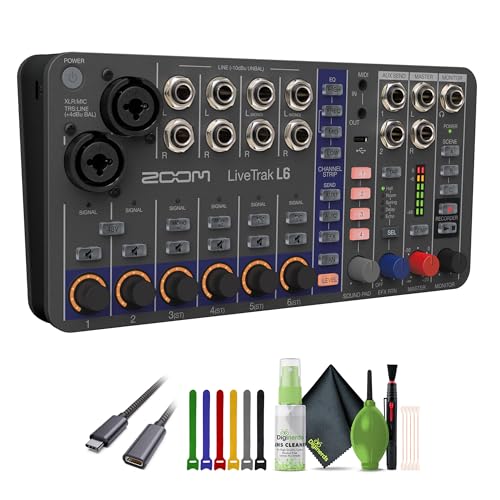
- Battery-powered six-channel digital mixer
- 12-track 32-bit float SD recording
- EQ, effects, aux sends, and sound pads
Best For: Mobile podcasts with multiple sources or live sound needs
Compact 500-Series Processing
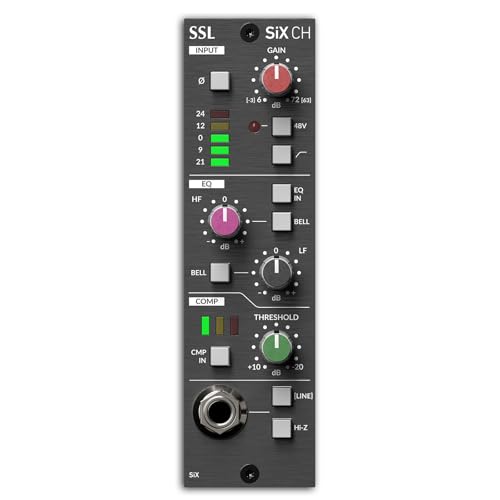
- Mic preamp, EQ, and single-knob compressor
- +48V phantom power and 75 Hz high-pass filter
- Front-panel Hi-Z input in a 500-series module
Best For: 500-series studio owners recording polished spoken-word tracks
USB Podcast Hub

- One-channel mic/line preamp with USB interface
- Built-in compressor, gate, and de-esser
- Supports up to 192 kHz sample rates
Best For: Solo podcasters wanting integrated vocal processing and USB recording
Analog Noise Control
Rodweil RO05 Channel Strip Processor

- Analog expander/gate for background-noise reduction
- Must follow a mic preamp in the signal chain
- Compact 10.6-ounce design with included cable
Best For: Existing podcast setups needing dedicated analog noise control
Tube Tone Shaper

- Mono tube channel-strip design
- Selectable opto/FET compression voicings
- Four-band semi-parametric EQ and impedance switching
Best For: Studio podcasters wanting hands-on analog vocal shaping
Versatile Voice Control – dbx 286s
The dbx 286s is a practical choice among channel strips for podcasting when you want microphone preamp functionality plus dedicated dynamics and tone shaping in one rackmount unit. Its compressor, de-esser, enhancer, and expander/gate provide useful control for spoken-word recording.
Best For: Podcasters who want hands-on vocal processing before the signal reaches their mixer or interface.
Pros:
- Combines a microphone preamp with compression, de-essing, enhancement, and expander/gate processing.
- Compression helps reduce differences between loud and quiet vocal passages.
- Offers XLR and 1/4-inch inputs, an insert/loop-out connection, status LEDs, and rackmount hardware.
- The enhancer can add high- and low-frequency detail, while the de-esser targets sibilance.
Cons:
- It is a single-channel processor, so it is not designed to process multiple microphones independently.
- Its connectivity is wired and centered on XLR and 1/4-inch connections rather than USB.
For a solo podcast setup needing direct control over vocal dynamics and clarity, the dbx 286s offers a broad set of dedicated tools without requiring separate processors.
Tube-Toned Simplicity – PreSonus Studio Channel
The PreSonus Studio Channel is a straightforward option among channel strips for podcasting, pairing a Class A vacuum tube preamplifier with variable VCA compression and a three-band parametric EQ. It suits users who want preamp, dynamics, and tonal shaping in a single 1U rack unit.
Best For: Podcasters who prefer tube preamp character and basic integrated compression and equalization.
Pros:
- Uses a Class A vacuum tube preamplifier.
- Includes variable VCA compression for dynamic control.
- Provides a three-band parametric EQ for shaping voice tone.
- The 1.75-inch-high, 19-inch-wide design fits standard rack setups.
Cons:
- The supplied notes do not list a de-esser, expander, gate, or digital connectivity.
- It is a single-channel unit, limiting use with multiple microphones.
The Studio Channel is a focused choice if your podcast workflow benefits most from tube preamp coloration, compression, and EQ rather than an extensive collection of vocal processors.
Connected Tube Processing – ART VoiceChannel
The ART VoiceChannel combines a tube preamp with compressor, expander, de-esser, and gate processing, making it a flexible contender among channel strips for podcasting. Its extensive digital outputs and USB direct connection also make it suitable for computer-based recording workflows.
Best For: Podcasters who want tube-based vocal processing with flexible digital routing to a computer or other digital equipment.
Pros:
- ART tube preamp design is intended to provide warmth and definition.
- Includes compressor, expander, de-esser, and gate controls for voice management.
- Supports USB plus ADAT, AES/EBU, S/PDIF, and TOSLink digital connectivity.
- Supports sample rates up to 192 kHz and carries a listed two-year warranty.
Cons:
- It is a single-channel unit, so it does not independently process several microphones.
- The extensive connectivity may be more than needed for a simple analog podcast chain.
For creators building a more connected recording system, the VoiceChannel offers a broad mix of analog voice processing and digital output options in one device.
Multi-Mic Podcast Hub – Mackie ProFX12v3 Mixer
The Mackie ProFX12v3 is a mixer rather than a single-channel processor, but it can be a practical alternative when channel strips for podcasting need to accommodate several sources. It provides 12 channels, Onyx preamps, USB connectivity, and built-in GigFX effects for recording, live sound, and content creation.
Best For: Multi-person podcasts, live content, and setups that need several inputs plus USB recording.
Pros:
- Offers 12 channels for multiple microphones and other audio sources.
- Includes Onyx preamps and a built-in GigFX effects engine.
- USB connectivity supports computer-based recording and content creation.
- Provides XLR and TRS connections alongside USB.
Cons:
- It is a full mixer, not a dedicated single-channel strip with specialized de-essing or gating listed in the notes.
- Its larger footprint may be unnecessary for a one-microphone podcast.
- The supplied details identify the product as ProFX12v3 but list model number ProFX16v3, so verify the exact variant before buying.
The ProFX12v3 makes the most sense when channel count and USB workflow matter more than dedicated per-voice channel-strip processing.
Premium Voice Shaping – SPL Channel One MK3
For podcasters seeking high-end channel strips for podcasting, the SPL Channel One MK3 combines a discrete preamp with focused dynamics and tone-shaping tools. Its mono design, Lundahl I/O transformers, Transient Designer, tube saturation, and compressor are suited to detailed single-mic recording chains.
Best For: Studio podcasters who want extensive processing for one microphone channel.
Pros:
- Discrete preamp with Lundahl input and output transformers
- Includes Transient Designer, tube saturation, and compression
- Stainless-steel construction
Cons:
- Mono channel design limits multi-microphone setups
- At 16.78 pounds, it is less convenient for portable recording
- Large 21.5-inch-wide form factor may require dedicated rack or desk space
The Channel One MK3 is a feature-rich choice when vocal polish and hands-on processing matter more than portability or channel count.
Portable Podcast Mixing – Zoom LiveTrak L-6
The Zoom LiveTrak L-6 is a practical alternative to traditional channel strips for podcasting when portability and multichannel control are priorities. It offers two XLR-1/4-inch combo inputs, four stereo line inputs, channel-strip controls, internal effects, and multitrack recording to an SD card.
Best For: Mobile podcasters and creators who need multiple inputs, battery power, and onboard recording.
Pros:
- Compact, portable, battery-powered design
- Six input channels with two XLR-1/4-inch combo inputs and four stereo line inputs
- 12-track simultaneous 32-bit float recording to an SD card
- Includes 3-band EQ, two aux sends, five internal effects, and assignable sound pads
Cons:
- It is a digital mixer and multitrack recorder rather than a dedicated single-channel strip
- Its broader feature set may be more than needed for a simple one-microphone setup
Choose the LiveTrak L-6 if your podcast workflow involves guests, instruments, live sound, or recording away from a fixed studio. USB-C connectivity and MIDI support also make it flexible for wider creator setups.
Compact 500-Series Processing – SSL SiX Channel Strip
Solid State Logic SiX Channel Strip 500 Series | Mic-Pre, EQ, and Single Knob Compressor
Check Price On AmazonThe Solid State Logic SiX Channel Strip is a compact 500-series option for channel strips for podcasting, combining a mic preamp, EQ, and single-knob compressor in one module. Its +48V phantom power, high-pass filter, switchable shelf or bell EQ curve, and front-panel Hi-Z input support flexible voice and instrument recording.
Best For: Podcasters with a 500-series setup who want focused preamp, EQ, and compression control.
Pros:
- Combines mic preamp, EQ, and single-knob compressor
- Provides +48V phantom power and a switchable 75 Hz high-pass filter
- Front-panel TRS line input includes a 1MΩ Hi-Z switch
- Compact 500-series format
Cons:
- Requires a compatible 500-series enclosure or rack
- Single-channel design is not intended for multi-mic mixing by itself
- Compressor uses a single-knob control rather than extensive parameter controls
The SiX Channel Strip makes sense for a modular studio where space and straightforward voice processing are important. Its integrated core controls can provide a tidy recording path without requiring several separate modules.
USB Podcast Hub – Behringer Ultravoice UV1
For podcasters who want recording and vocal processing in one unit, the Behringer Ultravoice UV1 combines a one-channel mic/line preamp with a USB audio interface. Its compressor, gate, and dedicated de-esser make it a practical choice among channel strips for podcasting, while USB connectivity supports Windows 10 and Mac OS X 10.4 or higher.
Best For: Solo podcasters seeking a one-channel preamp, vocal processing, and USB computer connectivity.
Pros:
- Combines a mic/line preamp and USB audio interface.
- Includes compressor, gate, and de-esser processing.
- Supports sample rates up to 192 kHz.
- Works with Windows 10 and Mac OS X 10.4 or higher.
Cons:
- Provides only one channel.
- At 5 pounds, it is less portable than smaller interfaces.
The UV1 is a straightforward all-in-one option when you want to handle a single microphone and apply basic vocal processing before or during USB recording. Its one-channel design is best suited to solo setups rather than multi-mic podcasts.
Analog Noise Control – Rodweil RO05 Channel Strip Processor
The Rodweil RO05 is a compact analog expander/gate designed to reduce ambient and preamp-floor noise in home studio, podcasting, and stage setups. As a supporting processor among channel strips for podcasting, it should be placed after a microphone preamp in a line-level signal chain rather than connected directly to a microphone.
Best For: Podcasters who already have a mic preamp and need analog background-noise control.
Pros:
- Uses a fully analog signal path with no signal conversion.
- Designed to reduce ambient background and preamp-floor noise.
- Compact 3.35 x 2.95 x 1.97-inch enclosure weighs 10.6 ounces.
- Includes an XLR-to-TRS cable.
Cons:
- It is not a microphone preamp and cannot process raw mic-level signals properly.
- Its analog design has higher power consumption.
- A slight circuit echo at power-off can occur as components release voltage.
The RO05 is best viewed as a dedicated noise-control stage rather than a complete recording channel strip. Its placement requirement is important, but it can suit a podcast chain that already includes suitable preamplification and needs smoother analog gating.
Tube Tone Shaper – ART Pro Channel III
The ART Pro Channel III is a mono tube channel strip built for hands-on vocal shaping. Its switchable microphone impedance, selectable opto/FET compression voicings, and four-band semi-parametric EQ provide useful control for podcasters comparing channel strips for podcasting, especially when detailed analog tone adjustment is a priority.
Best For: Podcasters who want mono tube processing with flexible compression and EQ controls.
Pros:
- Uses a mono tube channel-strip design.
- Offers switchable microphone impedance.
- Provides selectable opto and FET compression voicings.
- Includes a four-band semi-parametric EQ.
Cons:
- Its mono design is intended for one channel.
- At 10.61 pounds, it is relatively heavy.
- It is substantially larger than the compact RO05 processor.
The Pro Channel III is a strong fit for a fixed podcast studio where you want multiple analog options for compression and equalization. Its tube format and extensive controls favor deliberate sound shaping over the simplicity of an all-in-one USB interface.
How We Picked the Best Channel Strips for Podcasting
We selected products that address common podcast recording needs: clean microphone preamplification, practical dynamics control, vocal-focused tone shaping, and straightforward routing. The list includes dedicated mono channel strips, 500 Series hardware, mixers, digital recorders, and USB-equipped interfaces because podcast workflows vary widely.
We also considered whether each unit suits spoken-word recording, how easily it can be adjusted during a session, and whether its inputs and outputs fit a typical home or mobile setup. A feature-rich processor is not automatically the best choice if it complicates gain staging or leaves you without the connections you need.
Quick Comparison
| Best For | Look For | Product Types |
|---|---|---|
| Simple solo recording | Mic preamp, compressor, de-esser, USB or direct output | Dedicated vocal channel strips |
| Multiple microphones | Several preamps, monitoring, routing, and effects | Mixers and multitrack recorders |
| Studio integration | Balanced I/O, detailed controls, and low noise | Premium mono and 500 Series strips |
| Budget home studios | Essential processing and easy setup | Entry-level channel strips and interfaces |
Key Buying Factors for Channel Strips for Podcasting
Microphone Preamp and Gain Range
Check whether the preamp provides enough clean gain for your microphone. Dynamic broadcast microphones often need more gain than condenser models. Phantom power is essential for most condenser microphones, while a pad can help prevent clipping with loud sources.
Voice Processing Controls
A compressor can reduce volume swings, an expander or gate can limit room noise between phrases, and a de-esser can tame harsh “s” sounds. Look for controls that are easy to adjust rather than relying on complicated menus. Enhancers and EQ sections can add presence, but they should be used carefully to avoid an unnatural or fatiguing voice.
Connections and Workflow
Decide whether you need analog outputs for an audio interface, USB connectivity for direct computer recording, digital outputs, or multichannel routing. A mixer or recorder may be more practical than a single channel strip for co-hosts, remote guests, live shows, or music cues.
Noise, Headroom, and Monitoring
Low-noise circuitry and adequate headroom matter when recording quiet speech or heavily compressing a signal. Direct monitoring can prevent distracting latency, while a headphone output with level control makes solo recording easier.
Who Should Buy Which Channel Strips for Podcasting?
Choose a dedicated vocal channel strip if you record one primary microphone and want hands-on control over dynamics before the signal enters your computer. A USB-equipped unit is convenient for a minimal setup, while an analog model works well with an existing interface.
Choose a mixer or multitrack recorder if you regularly use several microphones, need headphone mixes, or want to handle live podcast production. These devices provide broader routing and monitoring, though they may offer less specialized vocal processing per input.
Choose a premium or 500 Series channel strip if you already have suitable rack or modular hardware and prioritize refined controls, studio integration, and long-term expandability. For beginners, focus first on clean gain, usable compression, monitoring, and the right connections rather than buying the most complex processor.