
The right trailer brake controller can make towing feel more controlled, especially when hauling a heavy load, traveling downhill, or stopping in changing traffic. The best choice depends on your trailer’s axle count, your vehicle’s wiring, and how much braking refinement you need.
We compared 10 trailer brake controllers for towing across proportional and time-delay designs, installation flexibility, adjustment options, compatibility, and useful safety features. Use the guide below to narrow the list to the controller that best matches your rig and towing habits.
Best 10 Trailer Brake Controllers for Towing Picks for 2026
Best Dual-Mode Pick
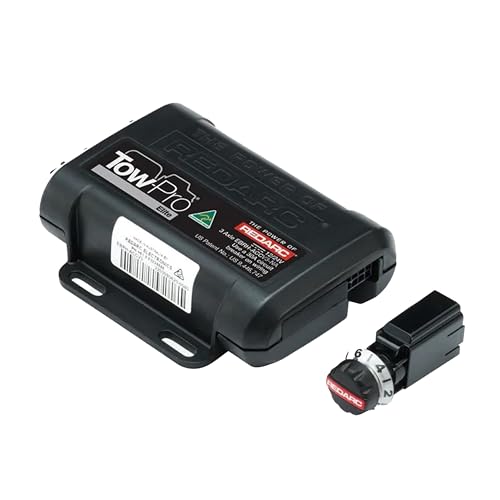
- Selectable proportional and user-controlled braking
- Supports one to three trailer axles
- Compact dash dial with 12V/24V compatibility
Best For: Mixed on-road and off-road towing
Best Visible-Display Value
Proportional 8508211 Controller

- Proportional braking responds to vehicle deceleration
- Supports one to four axles
- LED display offers real-time visibility
Best For: Compatible trucks needing broad axle support
Best Low-Profile Time-Delay Pick
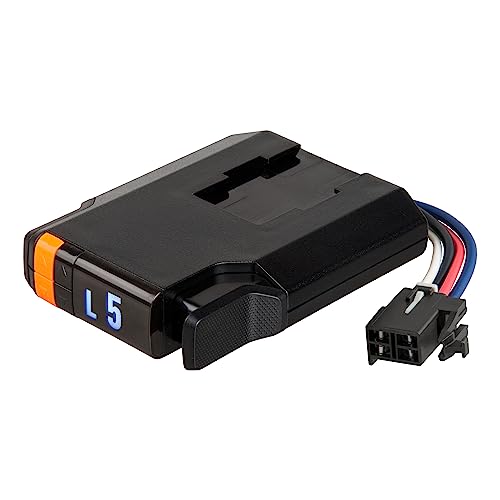
- Slim design improves dash clearance
- Adjustable power and ramp time
- Controls two to eight brakes on one to four axles
Best For: Simple adjustable time-delay towing control
Best Safety-Feature Pick
briidea Proportional Controller

- Motion-sensor proportional braking with boost mode
- LED feedback for settings and output voltage
- Overcurrent, short-circuit, and fault detection
Best For: Frequent towing with heavier multi-axle trailers
Low-Profile Adjustability

- Slim design with improved dash clearance
- Adjustable power and ramp time
- Supports 1–3 trailer axles
Best For: Space-conscious towing setups needing adjustable time-delay braking
Responsive Proportional Braking

- Senses slowing and stopping automatically
- LED display shows voltage delivery
- Handles 1–4 trailer axles
Best For: Towing users wanting adjustable proportional braking with live display feedback
Safety-Focused Time Delay

- Supports 1–4 braked axles
- Displays settings, voltage, and faults
- Includes overload and short-circuit protection
Best For: Light-duty and occasional towing with added fault monitoring
Best Low-Profile Proportional Controller

- Triple-axis sensing for smooth stops
- Dynamic adjustments on hills
- Supports 1–4 axles
Best For: Compact proportional-braking setups
Best Budget Time-Delayed Controller
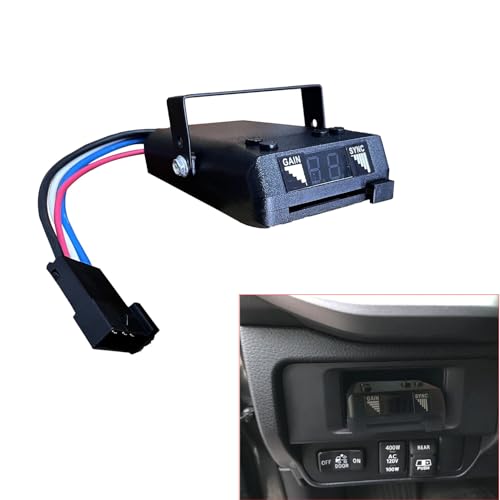
- Supports up to 4 axles
- Adjustable time-delayed braking
- LED braking-force display
Best For: Broad-compatibility towing setups
Best Toyota Plug-and-Play Kit
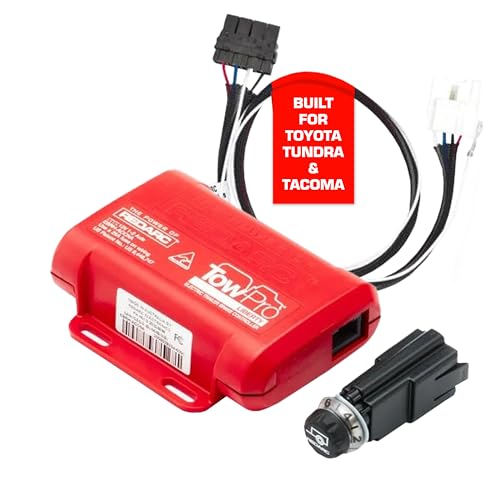
- Proportional braking for smoother control
- Toyota-specific harness and switch insert
- Compact dash dial with sway control
Best For: Supported Toyota Tundra and Tacoma owners
Best Dual-Mode Pick – REDARC Tow-Pro Elite
For drivers comparing trailer brake controllers for towing across changing road conditions, the REDARC Tow-Pro Elite stands out for its selectable braking modes and compact dash control. It supports trailers with one to three axles and is compatible with 12V and 24V systems.
Best For: RV, camper, boat, and trailer owners who want proportional braking on the road plus user-controlled braking for off-road use.
Pros:
- Offers proportional and user-controlled braking modes.
- Supports one to three trailer axles.
- Compact remote dial helps preserve dash space.
- Includes a plug-and-play-oriented universal harness and mounting setup.
Cons:
- The universal installation may still require vehicle-specific wiring work.
- Its feature set may be more than needed for basic towing.
The Tow-Pro Elite is a versatile choice when smooth on-road braking and precise off-road control matter more than having the simplest possible controller.
Best Visible-Display Value – Proportional 8508211 Controller
This proportional controller is a practical option for shoppers seeking trailer brake controllers for towing with a clear display and broad axle coverage. It is designed to adjust trailer braking as the tow vehicle slows and supports two-, four-, six-, and eight-brake systems.
Best For: Ram, Silverado, and other compatible vehicle owners who want an LED display and support for trailers with one to four axles.
Pros:
- Automatically adjusts brake pressure in proportion to vehicle deceleration.
- Supports one to four axles and two to eight brakes.
- LED screen provides visible monitoring and adjustment feedback.
- Can be installed at different angles and positions.
Cons:
- The supplied notes do not identify a vehicle-specific plug-in harness.
- Fitment should be verified carefully for the intended vehicle.
Its proportional operation and digital display make this controller worth considering when you want straightforward feedback without a large in-cab footprint.
Best Low-Profile Time-Delay Pick – CURT Discovery NEXT
The CURT Discovery NEXT is a straightforward choice among trailer brake controllers for towing when adjustable time-delay braking and a slim installation are priorities. Its controls let you set power and ramp time, while the design requires no leveling.
Best For: Drivers who want a low-profile controller for trailers using two to eight brakes and prefer adjustable time-delay operation.
Pros:
- Slim design helps maintain dash clearance.
- Power and ramp time are fully adjustable.
- Operates two to eight trailer brakes across one to four axles.
- No internal moving parts or leveling requirement.
Cons:
- It uses time-delay braking rather than proportional braking.
- Time-delay setup may require more adjustment for different loads and conditions.
Choose the Discovery NEXT if compact packaging and user-adjustable time-delay control fit your towing routine better than automatic proportional response.
Best Safety-Feature Pick – briidea Proportional Controller
For shoppers evaluating trailer brake controllers for towing, the briidea Proportional Controller combines motion-sensor braking with boost adjustment and an information-rich LED display. It is designed for one to four braked axles and includes protections intended to help identify electrical faults.
Best For: Frequent towing with travel, cargo, boat, commercial, or other trailers requiring support for up to eight brakes.
Pros:
- Motion sensors adjust trailer braking to vehicle deceleration.
- Boost mode helps fine-tune braking for trailer weight distribution.
- LED display shows settings, output voltage, and boost levels.
- Includes overcurrent, short-circuit, and fault-detection features.
Cons:
- The display and controls may take more setup than a basic controller.
- It should be mounted under the dash so it does not obstruct visibility.
The briidea is a strong fit when proportional response, adjustable boost, and electrical-status feedback are useful for heavier or frequent towing.
Low-Profile Adjustability – CURT Venturer NEXT
For shoppers comparing trailer brake controllers for towing, the CURT Venturer NEXT is a compact time-delay option with straightforward adjustment controls. Its low-profile design and plug-and-play format suit installations where dashboard space and setup simplicity matter.
Best For: Drivers who want an adjustable controller for trailers with 1 to 3 axles.
Pros:
- Slim, low-profile design helps preserve dashboard clearance.
- Power and ramp time are fully adjustable.
- Supports 2 to 6 trailer brakes and requires no leveling.
Cons:
- Time-delay operation does not automatically mirror braking intensity.
- Its stated capacity is limited to 1 to 3 axles.
The Venturer NEXT focuses on uncomplicated, space-conscious installation. It is a practical pick when adjustable time-delay braking and a clean dash layout are higher priorities than proportional braking.
Responsive Proportional Braking – Timilge Digital Controller
Among trailer brake controllers for towing, this Timilge proportional model is designed to sense vehicle deceleration and apply trailer braking in line with it. Its digital LED display shows voltage delivery, while adjustable braking power and sync let you tailor the response.
Best For: Towing setups with 1 to 4 axles where proportional braking and live voltage visibility are useful.
Pros:
- Proportional operation is designed to match the tow vehicle’s braking intensity.
- LED display shows voltage delivery in real time.
- Supports 2 to 8 brakes with adjustable power and sync.
- Wiring ports support vehicle-specific harness connections.
Cons:
- Requires four-wire installation using power, stop-light, ground, and trailer-brake connections.
- Must be powered down or disconnected when the truck is shut off or unused for long periods.
This controller offers a feature-rich proportional approach for users who want responsive braking and visible operating information. Confirm the wiring and vehicle harness requirements before installation.
Safety-Focused Time Delay – briidea BR-121
The briidea BR-121 is a time-delay choice among trailer brake controllers for towing, built for light-duty and occasional use. Its LED display reports settings, output voltage, and fault information, while overload and short-circuit protections add useful monitoring during operation.
Best For: Light-duty or occasional towing with trailers using 1 to 4 braked axles.
Pros:
- Supports trailers with 2 to 8 brakes across 1 to 4 axles.
- Provides overload, short-circuit, and fault detection protection.
- LED display shows gain, output voltage, and fault diagnosis.
- Mounting bracket and accessories allow installation at different angles.
Cons:
- Time-delay braking applies power over a set period rather than automatically matching braking intensity.
- Recommended under-dash placement may require a dedicated installation area.
- Positioned for light-duty and occasional towing rather than stated heavy-duty use.
The BR-121 combines basic time-delay control with clear status information and fault alerts. It is a sensible fit for occasional tow users who value installation flexibility and built-in protection features.
Best Low-Profile Proportional Controller – CURT TriFlex NEXT
The CURT TriFlex NEXT is a strong option for drivers comparing trailer brake controllers for towing and wanting smooth, responsive braking in a compact package. Its triple-axis motion-sensing accelerometer adjusts braking dynamically, including when traveling uphill or downhill.
Best For: Towing setups with 1 to 4 axles that need proportional braking and a space-conscious dash installation.
Pros:
- Triple-axis accelerometer supports responsive, smooth stops.
- Dynamic power adjustments help account for hills.
- Low-profile design and unique bracket improve dash clearance.
- Operates 2 to 8 trailer brakes across 1 to 4 axles.
Cons:
- Its feature set may be more than needed for basic towing.
- The supplied notes do not specify vehicle-specific harness compatibility.
Choose the TriFlex NEXT when proportional control, compact placement, and multi-axle capability matter more than a basic, time-delayed design.
Best Budget Time-Delayed Controller – Towpower 8507111 Brakeman IV
The Towpower 8507111 is a practical choice among trailer brake controllers for towing when adjustable time-delayed braking and broad vehicle compatibility are priorities. Its LED display shows braking force, while the compact design is intended for straightforward installation.
Best For: Trucks, RVs, tour buses, and other compatible vehicles towing trailers with 1 to 4 axles.
Pros:
- Supports 2-, 4-, 6-, and 8-brake systems.
- Adjustable time delay helps provide smoother braking transitions.
- LED display shows current braking force.
- Package includes a bracket, mounting screws, and instructions.
Cons:
- Time-delayed braking is less immediate than proportional control.
- Vehicle-specific plug-and-play wiring is not listed in the supplied notes.
This controller makes sense for buyers who want adjustable braking force and broad 1- to 4-axle support without requiring proportional braking features.
Best Toyota Plug-and-Play Kit – REDARC Tow-Pro Liberty
The REDARC Tow-Pro Liberty is tailored for Toyota owners shopping for trailer brake controllers for towing with proportional braking and factory-style integration. The kit includes a vehicle-specific harness and switch insert for supported Tundra and Tacoma applications.
Best For: Toyota Tundra and Tacoma owners seeking a compact dash dial, proportional highway braking, and a plug-and-play installation.
Pros:
- Proportional mode helps reduce push and pull during braking.
- Includes a Toyota-compatible harness and switch insert.
- Compact dash dial blends with the vehicle interior.
- Active calibration and sway control support steady towing.
Cons:
- Compatibility is focused on specified Toyota Tundra and Tacoma model years.
- Some 2022–2023 Tundra installations require additional listed harness and switch components.
For supported Toyota applications, the Tow-Pro Liberty is a focused choice that combines proportional braking with a discreet control and vehicle-specific installation parts.
How We Picked These Trailer Brake Controllers for Towing
We focused on controllers that cover the most common towing setups, from compact single-axle trailers to larger multi-axle applications. The selection includes proportional models that respond to the tow vehicle’s deceleration and time-delay models that apply a preset braking force. We also considered axle-range compatibility, plug-and-play installation, manual override access, display or status indicators, adjustment range, and vehicle-specific kits.
Because installation requirements vary, always confirm that your tow vehicle has compatible wiring, a suitable brake-control connector, and the correct adapter or harness before buying.
Quick Comparison
| Controller type | Best suited to | Main advantage | What to check |
|---|---|---|---|
| Proportional | Frequent or varied towing | Smoother braking that tracks vehicle deceleration | Mounting orientation and vehicle compatibility |
| Time-delay | Occasional or budget-conscious towing | Simple adjustment and broad installation flexibility | Gain, delay, and brake-feel tuning |
| Universal proportional | Multiple trailers or tow vehicles | More natural braking across changing loads | Harness, sensor, and axle-range requirements |
| Vehicle-specific kit | Compatible Toyota applications | Streamlined installation | Exact year, trim, and factory connector fit |
Key Buying Factors for Trailer Brake Controllers for Towing
Proportional Vs. Time-Delay Braking
Proportional controllers generally provide the most natural response because trailer braking increases as the tow vehicle slows more aggressively. They are a strong choice for frequent towing, changing road conditions, and heavier loads. Time-delay controllers are often simpler and less expensive, but they require careful adjustment of braking power and delay to avoid grabbing or under-braking.
Trailer Axle and Brake Compatibility
Check the controller’s stated axle range against your trailer. A controller rated for one to three axles may not be appropriate for a four-axle trailer. Also verify that the trailer uses electric brakes and that the controller supports the vehicle’s electrical system, commonly 12 volts.
Installation and Controls
Plug-and-play wiring can reduce installation time, but the correct vehicle harness may still be required. Consider where the manual override and gain controls are located. A low-profile remote knob or compact controller can be preferable when dashboard space is limited.
Adjustability and Safety Feedback
Look for independent adjustment of braking strength and, on time-delay models, activation delay. LED displays, status indicators, overload protection, and short-circuit alerts can make setup and troubleshooting easier. After installation, test the trailer brakes at low speed and retune for the load.
Who Should Buy Which Trailer Brake Controllers for Towing?
Choose a proportional controller if you tow regularly, carry variable loads, or want smoother braking with less manual correction. The REDARC and CURT proportional options are particularly relevant for shoppers comparing refined response with broad axle support.
Choose a time-delay controller if you tow occasionally, want straightforward controls, or need a cost-conscious solution. These models can work well when properly adjusted for trailer weight, road conditions, and brake response.
Choose a vehicle-specific kit when your truck is supported and you want the simplest path to a clean installation. Confirm the exact vehicle year and model before ordering. For a universal setup, prioritize axle compatibility, wiring support, and accessible controls over extra features you may not use.