
A glanceable display can make engine temperature, RPM, voltage, and other driving data easier to track than digging through dashboard menus. But these devices vary in what they show, where they sit, and which readings your car actually provides.
These 10 picks span compact trip computers, dash-mounted gauges, and head-up displays (HUDs). Use the guide below to match the display and data you want to your vehicle.
Best 10 Engine Monitoring Gauges with Display Picks for 2026
Best for Trip Data

- Four live gauges at once
- Fuel-economy and trip data
- Reads and clears trouble codes
Best For: OBD2 drivers tracking fuel use and engine readings
Best Dual-Mode Display
- OBD and GPS modes
- 10 display interfaces
- Dashboard or windshield mounting
Best For: Drivers prioritizing visible speed and available OBD data
Best for Driver Alerts
- Projected driving metrics
- Automatic brightness adjustment
- Speed and drowsiness alerts
Best For: Drivers seeking projected readings and multiple alerts
Best Customizable Readout
- Customizable gauge layouts
- Visual and audible ECU alerts
- Maintenance-mileage reminders
Best For: Compatible-vehicle owners seeking tailored ECU data
Large-Screen Pick

- 5.5-inch multi-data display
- Speed, RPM, temperature, and voltage alerts
- Automatic or manual brightness
Best For: Drivers prioritizing a large readout and driving alerts
Performance-Data Pick
- Displays turbo pressure and other live data
- Reads and clears engine codes
- Includes acceleration tests and alerts
Best For: Drivers seeking turbo monitoring and performance tests
Diagnostics Pick
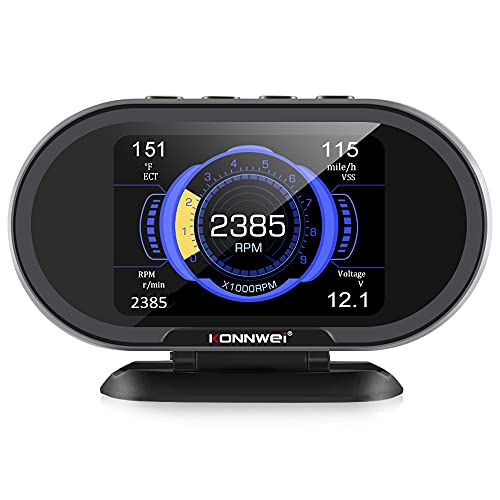
- 3.5-inch color live-data display
- Reads and erases engine codes
- Four adjustable vehicle-data alarms
Best For: Owners combining daily monitoring with code scanning
Flexible Mounting
wiiyii P8 OBD2/GPS Gauge Display

- Dashboard or A-pillar placement
- Eight switchable interfaces
- OBD2 readings plus GPS mode
Best For: Drivers prioritizing flexible mounting and compact readouts
Adjustable Alerts

- Configurable speed, temperature, voltage, and RPM alarms
- Scans and clears engine fault codes
- 10 interfaces and adjustable brightness
Best For: Compatible-car owners who want customizable warnings
Expanded OBD Readings

- Lists coolant and oil-temperature readouts
- Live data and fault-code clearing in OBD2 mode
- GPS fallback for speed and trip data
Best For: Compatible-car owners seeking broader engine data
Best for Trip Data – ScanGauge SG2
The ScanGauge SG2 is a compact choice among engine monitoring gauges with display if you want trip data, diagnostic codes, and live readings in one device. Its high-contrast LCD shows four gauges at once, with up to 37 available depending on your vehicle.
Best For: Drivers of 1996 or newer OBD2 vehicles who want fuel-economy tracking alongside engine data.
Pros:
- Displays fuel consumption, coolant temperature, engine speed, and other available readings in real time.
- Reads and clears diagnostic trouble codes.
- Offers 63 backlight colors and adjustable brightness.
Cons:
- Only four gauges appear on screen at once.
- Additional XGauge readings depend on the vehicle’s sensors.
The single OBD2 connection handles power and data, keeping setup straightforward. Choose it for flexible monitoring rather than a touchscreen interface.
Best Dual-Mode Display – wiiyii P6 HUD
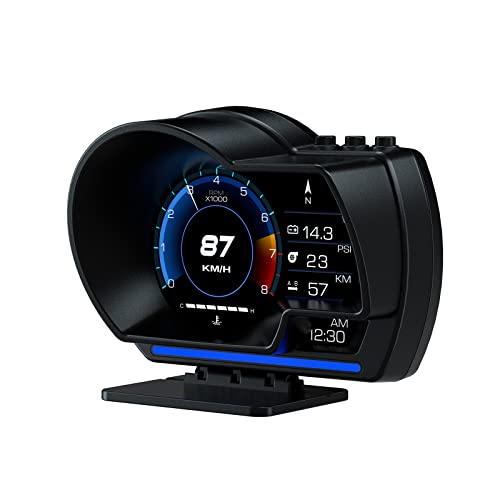
The wiiyii P6 stands out among engine monitoring gauges with display for pairing OBD2 data with GPS-based speed information. It offers 10 switchable interfaces and can sit on the dashboard or attach to the windshield with its adjustable bracket.
Best For: Drivers who want prominent speed information plus available OBD2 readings.
Pros:
- Displays speed alongside available data such as voltage, fuel consumption, RPM, and water temperature.
- Combines OBD and GPS modes; GPS display remains available when OBD2 protocol is unsupported.
- Provides an overspeed warning and ambient-light color change.
Cons:
- On vehicles without supported OBD2 protocol, it displays GPS functions only.
- The range of OBD data depends on the vehicle.
Its mounting choices make placement flexible. Check your vehicle’s OBD compatibility if engine metrics, rather than speed alone, are your priority.
Best for Driver Alerts – POCREATION OBD2 HUD
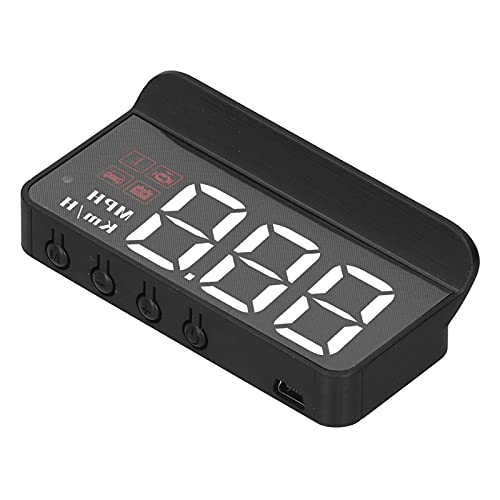
For shoppers comparing engine monitoring gauges with display, this POCREATION HUD emphasizes projected driving information and alerts. It shows speed, coolant temperature, voltage, and trip odometer data, with automatic brightness adjustment for changing light.
Best For: Drivers who want a projected readout with speed, drowsiness, and engine-fault alerts.
Pros:
- Projects key readings using the included reflector sticker.
- Automatically adjusts brightness with its built-in light sensor.
- Includes overspeed, drowsy-driver, and engine-fault alerts.
Cons:
- Requires a vehicle with an OBD2 interface and protocol.
- The listed readings are narrower than those of more configurable multi-gauge units.
This is a practical pick if warnings and an easy-to-see projection matter more to you than extensive gauge customization.
Best Customizable Readout – Lufi XF-06
Lufi XF OBD2 Gauge Display – Fuel Car Companion, Multi-Function & Overload Protection
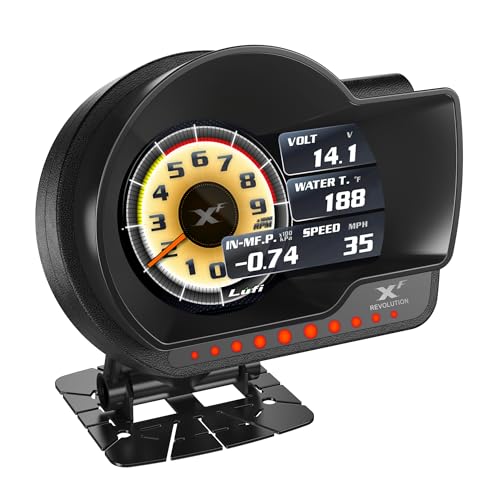
Check Price On AmazonThe Lufi XF-06 is one of the more configurable engine monitoring gauges with display in this group. It connects to a 16-pin OBD2 port and lets you arrange available ECU readings, change display colors, and set maintenance-mileage reminders.
Best For: Owners of compatible vehicles who want customizable readings and audible ECU alerts.
Pros:
- Can show available readings such as water temperature, boost pressure, fuel consumption, and speed.
- Uses pop-up and sound alerts when monitored values exceed set thresholds.
- Supports display customization, fault-code clearing, and maintenance reminders.
Cons:
- Compatibility is limited by vehicle brand and model year; pure electric vehicles are excluded.
- Oil and transmission readings are not supported by every vehicle.
- Mounts with double-sided tape; no suction cup is included.
Verify your exact vehicle and desired sensor data before buying. Its customization is valuable only when your car supplies the readings you want.
Large-Screen Pick – B3 OBD2 Gauge Display
For drivers comparing engine monitoring gauges with display, the B3 puts speed, RPM, coolant temperature, voltage, and trip data on a 5.5-inch screen. Its automatic brightness adjustment helps keep the readout visible as lighting changes.
Best For: Drivers who want a larger OBD2 display with configurable driving and temperature alerts.
Pros:
- Shows multiple vehicle readings at once on a 5.5-inch screen.
- Offers overspeed, water-temperature, voltage, and fatigue-driving reminders.
- Adjusts screen brightness automatically or manually.
Cons:
- The notes list several excluded vehicle brands and advise checking OBD compatibility before purchase.
- Unlike the other gauges here, its listed features do not include reading or clearing fault codes.
The spacious screen and alert options make the B3 a practical choice for everyday monitoring, provided you confirm that your vehicle is supported.
Performance-Data Pick – Lufi X1 OBD2 Gauge
Lufi X1 Obd2 Gauge Display – Fuel Car Companion, Multi-Function & Overload Protection
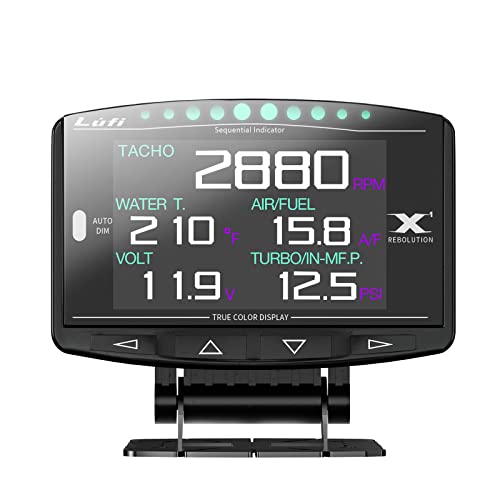
Check Price On AmazonThe Lufi X1 stands out among engine monitoring gauges with display for its mix of everyday readings and performance-focused data, including turbo pressure and acceleration tests. It also reads and clears engine fault codes.
Best For: Drivers who want turbo-pressure monitoring, adjustable alerts, and basic fault-code functions in one gauge.
Pros:
- Displays speed, RPM, coolant temperature, fuel consumption, voltage, and turbo pressure.
- Reads and clears engine fault codes and offers several configurable warnings.
- Includes 0–60 mph, 0–100 mph, and quarter-mile tests.
Cons:
- The manufacturer cautions that the TFT screen can appear blurry through polarized sunglasses.
- Vehicle support should be checked rather than assumed from the listed brand examples.
Choose the X1 if turbo data and acceleration measurements matter alongside routine engine checks; the polarized-sunglasses warning is worth weighing for daily use.
Diagnostics Pick – KONNWEI KW206 Digital Meter
The KONNWEI KW206 is a useful option among engine monitoring gauges with display if you also want an OBD2 scan tool. Its 3.5-inch color screen shows live vehicle data, while its diagnostic functions read and erase engine fault codes.
Best For: Owners who want ongoing engine readings and check-engine-light diagnostics in one plug-in device.
Pros:
- Shows live readings such as speed, RPM, coolant temperature, and fuel consumption.
- Reads and erases engine fault codes and displays live data streams.
- Provides adjustable speed, RPM, coolant-temperature, and voltage alarms.
- Supports automatic brightness, sleep mode, and software updates.
Cons:
- Its 3.5-inch screen is smaller than the B3’s 5.5-inch display.
- Compatibility is specified for 2003-or-newer OBDII-certified vehicles, so certification matters more than model year alone.
The KW206 makes the most sense when code scanning is as important as at-a-glance monitoring. Confirm OBDII certification before buying, especially for an older vehicle.
Flexible Mounting – wiiyii P8 OBD2/GPS Gauge Display
The wiiyii P8 is a compact option among engine monitoring gauges with display if you want speed and basic vehicle readings closer to your line of sight. It can sit on the dashboard or mount to the A-pillar trim.
Best For: Drivers who want flexible placement and switchable display layouts.
Pros:
- OBD2 and GPS modes provide two ways to display driving information.
- Shows readings including RPM, voltage, and water temperature in OBD2 mode.
- Offers eight switchable display interfaces.
Cons:
- OBD mode is described as working with most 2008-and-newer cars, not every vehicle.
- GPS speed may take time to appear while the device acquires satellites.
The P8 makes the most sense when mounting flexibility matters more than having a large screen; its listed display is 1.8 inches.
This MH model suits shoppers comparing engine monitoring gauges with display who want configurable warnings alongside live OBD2 readings. It displays data such as RPM, water temperature, voltage, and fuel consumption, and can scan and clear engine fault codes.
Best For: Drivers with a compatible post-2008 OBDII/EOBD car who want adjustable alerts and fault-code functions.
Pros:
- Set alerts for speed, engine temperature, voltage, and RPM.
- Offers 10 switchable interfaces, eight brightness levels, and selectable units.
- Can mount on the dashboard or attach to the windshield.
Cons:
- OBD2 mode excludes several vehicle types and listed brands; check compatibility before buying.
- On vehicles without a compatible OBD2 protocol, only GPS functions are available.
Its adjustment options are useful if you want to tailor the readout, but confirm OBD2 support before counting on the diagnostic features.
The MH Hexagon HUD is worth considering among engine monitoring gauges with display when you want more than speed and RPM. Its listed OBD2 readouts include coolant and oil temperature, air-fuel ratio, intake pressure, and turbo pressure, with availability dependent on a compatible vehicle.
Best For: Owners of compatible post-2008 OBDII/EOBD cars seeking a broader set of engine readouts.
Pros:
- OBD2 mode supports live data streams and fault-code clearing.
- Alerts cover overspeed, high RPM, high water temperature, low voltage, and fatigue driving.
- GPS mode provides speed, trip data, altitude, and travel direction when OBD2 is unavailable.
Cons:
- OBD2 mode does not apply to the listed truck, pickup, diesel, electric, or large/medium bus categories.
- GPS-only operation does not provide the listed OBD2 engine readings.
The broader reading list is the draw here. Check your vehicle’s OBDII/EOBD compatibility before buying it specifically for oil-temperature or other engine data.
How We Picked Engine Monitoring Gauges with Displays
We organized these 10 products around practical differences: OBD2 versus GPS data, dash-mounted versus projected displays, stated readouts and alerts, and whether the device emphasizes fuel economy or a broader set of driving information. This is a comparison of the listed features, not a claim of hands-on testing. Availability of any specific reading depends on the vehicle, its sensors, and what it shares through the diagnostic port.
Quick Comparison: Which Display Type Fits?
For a compact trip computer: The ScanGauge SG2 focuses on customizable digital gauges and real-time fuel-economy information. For an all-in-one dash meter: The KONNWEI KW206 lists speed, water temperature, and other vehicle data. For a HUD-style speed readout: The wiiyii P6 and P8 and the other OBD2 HUD options prioritize information placed higher in the driver’s sightline. For an OBD2/GPS option: The two MH dual-system displays add GPS-based speed as an alternative to OBD2-derived speed. Compare their specific readouts before choosing.
Key Buying Factors for Engine Monitoring Gauges with Display
Vehicle Compatibility and Data Access
Check your vehicle’s model year and OBD2 compatibility, then confirm any specific reading you care about. A product listing may mention oil temperature or fuel pressure, but the gauge cannot show a value your vehicle does not make available through its diagnostic system. GPS can provide speed without relying on OBD2 speed data; it does not replace OBD2 access to engine readings.
Placement and Readability
Decide whether you want a small screen on the dash or a HUD-style display near the windshield. Check mounting space, cable routing, screen brightness, and whether the display will be readable in daylight and unobtrusive at night. Auto-dimming may help, but it is worth confirming how a particular model handles it.
Readouts, Alerts, and Setup
Choose the few readings you will use regularly rather than paying attention to the longest feature list. Coolant temperature, RPM, voltage, and speed are common priorities; fuel-economy data may matter more to commuters. If you want overspeed or temperature warnings, check whether alert thresholds are adjustable. Also verify units, display layouts, and whether the device requires calibration or a particular windshield film.
Who Should Buy Which Engine Monitoring Gauges with Display?
Choose the ScanGauge SG2 if fuel-economy tracking and customizable gauges matter more than a HUD presentation. Consider the KONNWEI KW206 or a Lufi model if you prefer a dedicated dash-mounted readout; compare the X1 and XF layouts and stated functions. Pick a wiiyii P6 or P8, or another OBD2 HUD, if easy-to-spot speed and driving alerts are your priorities. An MH OBD2/GPS model makes sense if GPS speed is useful alongside vehicle data. Whichever style you choose, confirm compatibility and your must-have readings before ordering.