
Replacing a tired factory 4-inch speaker can bring back clear vocals and detail without changing your car’s interior. The challenge is choosing a pair that fits the opening, clears the door or dash trim, and works with your existing stereo.
We’ve gathered 10 coaxial speaker pairs from familiar car-audio brands. Use the picks to narrow your options, then check the buying guide for the measurements and specifications that matter before you order.
Best 10 4 Inch Coaxial Car Speakers Picks for 2026
Soft-Dome Pick
Skar Audio RPX4 4-Inch Speakers

- 20 mm silk-dome tweeters
- Paper cones and rubber surrounds
- 120W peak per pair
Best For: Drivers seeking silk tweeters in a 4-ohm replacement pair
Kenwood Flush-Mount Option
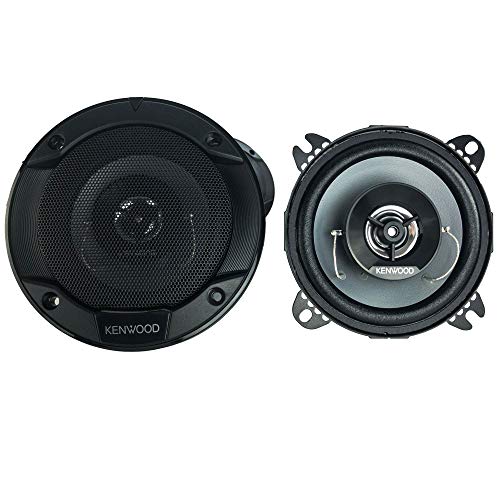
- Two-way flush-mount design
- Polypropylene construction
- 4-ohm impedance
Best For: Shoppers seeking a Kenwood flush-mount car speaker
Low-Profile Pick
KICKER 46CSC44 CS-Series Speakers

- Reduced mounting depth
- Zero-protrusion PEI tweeters
- UV-treated foam surrounds
Best For: Factory upgrades with limited mounting clearance
Fit-Check Pick
Rockford Fosgate Prime R14X2 Speakers

- 3.62-inch mounting diameter
- 1.72-inch mounting depth
- Grilles and hardware included
Best For: Factory replacements requiring a careful fit check
Higher-Power Pick
Pioneer A-Series Plus TS-A1081F

- 50W continuous power handling
- 90 dB sensitivity
- 82 Hz–40 kHz stated response
Best For: Drivers prioritizing power handling and clear highs
Factory-Head-Unit Pick
KICKER DSC40 4-Inch Coaxial Speakers

- Designed for factory head units
- 4-ohm speaker pair
- 88 dB sensitivity
Best For: Factory-head-unit upgrades
Factory-Replacement Pick

- 30W continuous power handling
- Two-way woofer and tweeter
- Two speakers and screws included
Best For: Replacing factory 4-inch speakers
Shallow-Mount Pick
JVC CS-J420X 4-Inch 2-Way Speakers

- 17 mm listed mounting depth
- 21 W RMS; 210 W maximum
- Hardware and speaker cable included
Best For: Shallow speaker locations
Fiberglass-Cone Pick
Skar Audio TX4 4-Inch Speakers

- Fiberglass cone and TPE surround
- 60 W RMS per pair
- Two-year limited warranty
Best For: Buyers prioritizing fiberglass-cone construction
Rubber-Surround Pick
ORION Cobalt CB42 4-Inch Speakers
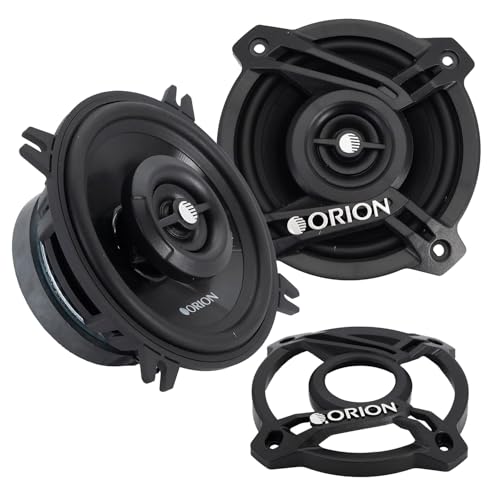
- Polypropylene cone, butyl surround
- 40 W RMS; 160 W peak
- Hardware and manual included
Best For: Buyers seeking a rubber-surround pair
Soft-Dome Pick – Skar Audio RPX4 4-Inch Speakers
The Skar Audio RPX4 pair is worth considering among 4 inch coaxial car speakers if you want a soft-dome tweeter and a published frequency-response range. Each two-way speaker combines a microfiber paper cone, butyl rubber surround, and 20 mm silk tweeter.
Best For: Drivers seeking a 4-ohm factory-speaker replacement with a silk tweeter.
Pros:
- 20 mm soft-dome silk tweeters.
- Microfiber paper cones with butyl rubber surrounds.
- Published 50–20,000 Hz response and 89 dB sensitivity.
Cons:
- The quoted 120-watt pair rating is peak power, not a stated continuous-power rating.
- Not waterproof.
The specified materials and sensitivity make this a useful pair to compare against your existing setup; check fit and amplifier power requirements before ordering.
The Kenwood KFC-1066S is a flush-mount, two-way choice among 4 inch coaxial car speakers. Its polypropylene construction and 4-ohm impedance make the basic specifications straightforward to compare with your vehicle’s original speakers.
Best For: Shoppers looking for a 4-inch Kenwood coaxial speaker for an in-car audio system.
Pros:
- Flush-mount design.
- Polypropylene woofer construction.
- 4-ohm impedance and a stated 210-watt peak rating.
Cons:
- The 210-watt figure is peak power; confirm continuous-power needs separately.
- Not water-resistant.
This is a straightforward option if the mounting dimensions work in your vehicle. Do not use the peak rating alone to choose an amplifier.
If clearance is a concern when shopping for 4 inch coaxial car speakers, consider the KICKER 46CSC44 pair. The CS-Series design reduces mounting depth and uses zero-protrusion PEI tweeters, though you should still check the fit in your vehicle.
Best For: Factory-speaker upgrades where mounting depth and tweeter protrusion matter.
Pros:
- Reduced-depth design with zero-protrusion tweeters.
- Rigid polypropylene cones and stamped-steel frames.
- UV-treated poly-foam surrounds resist heat and direct sunlight.
Cons:
- The stated 100-watt maximum does not establish a continuous-power rating.
- Vehicle-specific fit still needs checking.
The low-profile construction is its clearest buying advantage. Its heavy-duty motor structure and Extended Voice Coil are intended to improve low-end performance, but a 4-inch speaker is still a compact upgrade.
The Rockford Fosgate Prime R14X2 pair stands out among 4 inch coaxial car speakers for its clearly listed installation measurements. These two-way factory replacements include grilles and mounting hardware, with a 30-watt RMS rating per speaker.
Best For: Buyers who want published mounting dimensions before replacing factory speakers.
Pros:
- Specified 3.62-inch mounting diameter and 1.72-inch mounting depth.
- Includes grilles and mounting hardware.
- 30 watts RMS and 60 watts maximum per speaker.
Cons:
- New screw holes may be needed for some installations.
- Not waterproof.
Measure the speaker opening and depth before purchase, then review the installation instructions. This pair is especially easy to assess against a factory location because its key fit measurements are provided.
Higher-Power Pick – Pioneer A-Series Plus TS-A1081F
Among 4 inch coaxial car speakers, the Pioneer A-Series Plus TS-A1081F stands out for its 50-watt continuous power rating. Its two-way design separates high- and low-frequency reproduction for a balanced sound.
Best For: Drivers looking for a 4-inch speaker with a higher continuous power rating and clear highs.
Pros:
- 50 watts continuous and 230 watts maximum power handling.
- 90 dB sensitivity supports output with lower power inputs.
- Two-way design with a stated 82 Hz–40 kHz frequency response.
Cons:
- Its stated frequency response starts at 82 Hz, so it is not the pick for deep bass on its own.
This is the stronger power-handling choice of the three, but consider additional bass support if low-end output is a priority.
Factory-Head-Unit Pick – KICKER DSC40 4-Inch Coaxial Speakers
The KICKER DSC40 pair is a practical option among 4 inch coaxial car speakers if you plan to keep a factory head unit. KICKER describes its DS motor as designed for increased volume with either a factory unit or an amplifier.
Best For: Drivers seeking a 4-ohm speaker pair for an in-car audio upgrade using a factory head unit.
Pros:
- 88 dB sensitivity and a design intended to work with factory head units.
- 4-ohm impedance and a stated 60 Hz–20 kHz frequency response.
- Described as fitting many vehicles without drilling new door holes.
Cons:
- The supplied specifications give a 120-watt peak figure but no clear continuous power rating.
- Not water resistant.
The factory-unit focus makes this pair worth considering for a straightforward upgrade, though you should confirm fitment for your specific vehicle before ordering.
Factory-Replacement Pick – Pioneer G-Series TS-G1020S
The Pioneer G-Series TS-G1020S is a two-way option among 4 inch coaxial car speakers for replacing factory speakers. The supplied package includes two speakers and eight mounting screws, and Pioneer recommends professional installation for optimal performance.
Best For: Drivers replacing 4-inch factory speakers with a two-way coaxial pair.
Pros:
- 30 watts continuous and 210 watts maximum power handling.
- Two-way construction pairs an IMPP composite-cone woofer with a 30 mm balanced-dome tweeter.
- Includes two speakers and eight mounting screws.
Cons:
- 87 dB sensitivity is lower than the ratings listed for the other two speakers here.
- Professional installation is recommended for optimal performance.
With its included hardware and stated factory-replacement compatibility, this is a sensible upgrade candidate; check your vehicle’s fitment before installation.
Shallow-Mount Pick – JVC CS-J420X 4-Inch 2-Way Speakers
The JVC CS-J420X pair is worth a look if you’re shopping for 4 inch coaxial car speakers and have limited mounting depth. Its listed 17 mm mounting depth is the standout specification; the 2-way design pairs a composite-fiber cone woofer with an Imid dome tweeter.
Best For: Cars with shallow speaker locations where mounting depth is a priority.
Pros:
- Listed 17 mm mounting depth.
- 90 dB/W·m sensitivity and 45–22,000 Hz stated frequency range.
- Pair includes fixing screws and speaker cable.
Cons:
- Rated at 21 W RMS; the 210 W figure is maximum power, not continuous output.
- Vehicle-specific fit still needs checking.
This is the fit-focused option of the three. Check your car’s speaker opening and available depth before ordering, and size your expectations around its RMS rating rather than the peak number.
Fiberglass-Cone Pick – Skar Audio TX4 4-Inch Speakers
The Skar Audio TX4 pair offers a fiberglass cone, TPE surround, and 1.25-inch copper voice coil for shoppers comparing 4 inch coaxial car speakers by construction. Its stated power handling is 60 W RMS per pair and 120 W maximum per pair.
Best For: Buyers who want a fiberglass-cone 4-inch pair with a clearly stated pair-level RMS rating.
Pros:
- Fiberglass cone and TPE surround.
- 60 W RMS per pair, with 120 W maximum power listed.
- 4-ohm impedance and a two-year limited warranty.
Cons:
- Not water-resistant.
- Supplied specifications do not state mounting depth, so clearance needs verification.
The TX4 is a construction-focused choice, but confirm the mounting dimensions against your vehicle before buying. Treat its 120 W figure as maximum power, not its continuous rating.
Rubber-Surround Pick – ORION Cobalt CB42 4-Inch Speakers
The ORION Cobalt CB42 pair is an option among 4 inch coaxial car speakers if you prefer a polypropylene cone and butyl rubber surround. Its 2-way design is rated at 40 W RMS and up to 160 W peak power in the supplied specifications.
Best For: Buyers seeking a rubber-surround 4-inch pair with included installation hardware.
Pros:
- Polypropylene cone with butyl rubber surround.
- Stated 75 Hz–20 kHz frequency range, 88 dB sensitivity, and 4-ohm impedance.
- Pair includes hardware and a manual.
Cons:
- The 160 W rating is peak power; the stated RMS rating is 40 W.
- Not waterproof, and vehicle-specific fit should be checked.
The CB42 makes sense if its materials and supplied hardware match your priorities. Verify your car’s mounting space and use the RMS specification when comparing power handling.
How We Picked the Best 4 Inch Coaxial Car Speakers
This roundup focuses on 4-inch, two-way coaxial speaker pairs intended for compact factory locations. We included options from several established car-audio brands so shoppers can compare different price points and approaches to a straightforward replacement. We prioritized specifications that help with an actual purchase: nominal size, impedance, power handling, and installation needs. Published wattage alone does not establish sound quality, and the listed speakers should not be treated as identical fits for every vehicle.
Quick Comparison: Where to Start
Start with your vehicle and stereo rather than the largest number on a box. If you are keeping a factory or aftermarket head unit without an external amplifier, compare fit and sensitivity first, then look for an RMS power rating appropriate for your setup. If you already have an amplifier, check that its output at the speaker’s impedance is compatible with the speaker’s RMS rating. Across these 10 choices, the most useful differences may be mounting dimensions, available clearance, and the sound balance you prefer—not advertised peak watts.
Key Buying Factors for 4 Inch Coaxial Car Speakers
Fit Is More Than Diameter
A 4-inch label does not guarantee a drop-in installation. Confirm the factory opening, mounting-hole pattern, mounting depth, and clearance behind and in front of the speaker. Dash grilles and door panels can interfere with a protruding tweeter. Vehicle-specific brackets or wiring adapters may also be needed; verify whether they are included or sold separately.
Match Power and Impedance to Your System
Use continuous RMS ratings when comparing speakers and amplifier output; maximum or peak ratings are less useful for system matching. Check nominal impedance before replacing factory speakers, especially in vehicles with an amplified factory audio system. A different impedance can change the load on the amplifier and affect performance. Sensitivity can be helpful when powering speakers directly from a head unit, but measurements from different brands may not use identical test conditions.
Set Realistic Bass Expectations
Small speakers can improve vocal clarity and high-frequency detail, but 4-inch drivers have limited low-bass output. For fuller bass, plan on larger speakers elsewhere in the car or a properly integrated subwoofer. Also inspect the mounting surface: a secure installation and a working door or dash enclosure can matter as much as a modest change in speaker specifications.
Who Should Buy Which 4 Inch Coaxial Car Speakers?
For a simple factory refresh, choose a pair that fits with minimal modification and suits your existing head unit. For a system with an external amplifier, prioritize confirmed impedance and RMS compatibility over a high peak-power claim. If space is especially tight, measure available depth and tweeter clearance before narrowing your shortlist. And if bass is your main goal, treat these coaxials as a clarity upgrade rather than a substitute for a subwoofer.