
If you diagnose modern vehicles, an oscilloscope with CAN decoding can save time by showing what the network is actually doing, not just what a scanner reports.
Below, we’ve narrowed the field to 10 workshop-friendly options with the channel count, portability, bandwidth, and interface features most buyers need in 2026.
Best 10 Automotive Oscilloscopes with Can Decoding Picks for 2026
Portable Android Scope
Micsig SATO1004 4-Channel Automotive Oscilloscope

- 4-channel, 100MHz scope with 1GSa/s sampling
- Supports CAN, LIN, FlexRay, and K communication tests
- 32GB storage plus Wi-Fi, LAN, HDMI, and USB ports
Best For: portable vehicle diagnostics with broad communication-test support
Fast-View Diagnostic Scope Add-On
TOPDON Phoenix Scope 4-Channel Module

- 50M memory depth with one-tap waveform storage
- Replay, math operations, and FFT analysis supported
- Works only with compatible Phoenix diagnostic tools
Best For: Phoenix platform users needing fast waveform capture and analysis
High-Bandwidth Tablet Scope
Micsig ATO3004 4-Channel Bus-Decode Scope
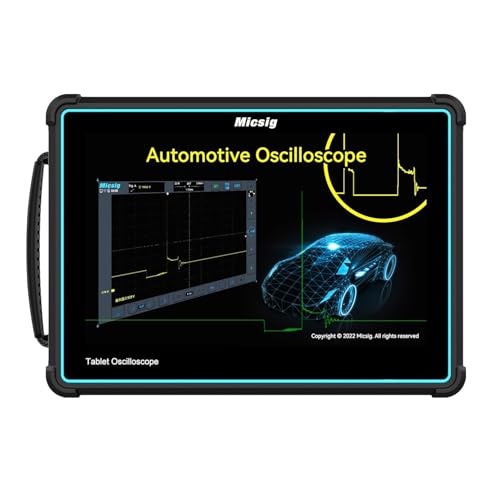
- 4-channel scope with 300MHz bandwidth and 2GSa/s sampling
- Supports CAN, CAN FD, LIN, UART, SPI, and I2C decoding
- 220Mpts memory depth plus TXT-to-CSV export
Best For: technicians needing portable high-bandwidth diagnostics with bus decoding
PC-Based 8-Channel Diagnostic Platform
Hantek1008C 8-Channel USB Automotive Scope
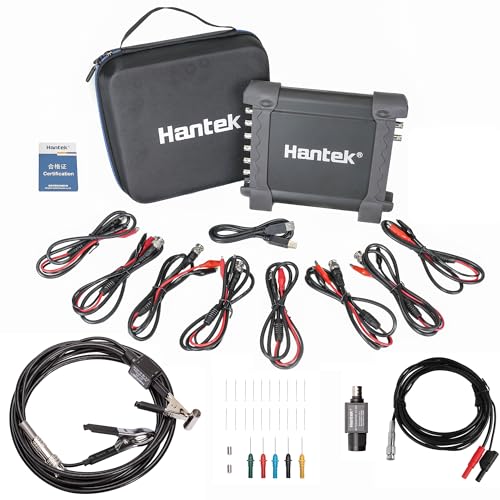
- Eight analogue channels with 12-bit resolution
- More than 80 automotive diagnostic functions included
- Works with Windows PC software over USB 2.0
Best For: Windows-based users who need broad automotive diagnostics and 8 channels
High-Resolution All-in-One Pick
UNI-T UPO2074HD 70MHz 4-Ch Touchscreen Scope

- 12-bit resolution for detailed waveform viewing
- CAN, CAN-FD, LIN, FlexRay, and SENT decoding
- 100 Mpts memory with 2.5 GSa/s sampling
Best For: Techs who want a touchscreen bench scope with broad protocol decoding
Portable Tablet Diagnostic Pick
Micsig ATO2004 4-Ch Automotive Scope
- Battery-powered for more than 5 hours
- CAN, CAN FD, LIN, SPI, and I2C decoding
- 220 Mpts memory with 300,000 wfms/s capture rate
Best For: Mobile techs who want a battery-powered automotive scope
Budget-Friendly Bench Pick
Hantek 6254BE 250MHz 4-Ch Auto Scope

- 4 channels with 250MHz bandwidth
- 20+ automatic measurements and pass/fail check
- USB plug-and-play with Windows support
Best For: Portable Windows-connected diagnostic work
Automotive Diagnostic Tablet Scope
Micsig ATO2004 4-Ch Master Kit

- Supports CAN, CAN FD, LIN, and FlexRay tests
- Covers charging, starter, ignition, and sensor diagnostics
- Built for 12V and 24V vehicle systems
Best For: Technicians needing broad automotive network and waveform coverage
Portable Touchscreen Scope

- 100MHz two-channel scope with 1 GSa/s sampling
- 7-inch touchscreen with gesture controls
- Portable battery-powered design for field use
Best For: Portable general-purpose signal testing
Connected Automotive Tablet Scope

- Supports CAN, LIN, FlexRay, and K-line tests
- Wi-Fi app enables remote monitoring
- 32GB storage and 130,000 wf/s capture rate
Best For: Shops needing a connected automotive diagnostics platform
Portable Android Scope – Micsig SATO1004 4-Channel Automotive Oscilloscope
If you want automotive oscilloscopes with can decoding in a portable tablet-style package, the Micsig SATO1004 is built for broad vehicle diagnostics rather than bench-only work. It supports CAN, LIN, FlexRay, and K communication tests, while the Android-based interface, physical control buttons, and remote smartphone app access aim to make day-to-day testing faster and easier.
Best For: Technicians who want a handheld 4-channel oscilloscope with wide automotive communication support and remote viewing options.
Pros:
- Supports communication testing including CAN, LIN, FlexRay, and K.
- Runs on Android with added physical buttons and optimized diagnostic software.
- Includes 4 channels, 100MHz bandwidth, and 1GSa/s sampling rate.
- Offers 32GB internal storage for waveforms, screenshots, and recorded videos.
Cons:
- Remote operation depends on a stable network or Wi-Fi connection.
- Specific CAN decoding workflow details are not listed in the supplied notes.
The SATO1004 stands out as a practical automotive diagnostic scope if you need channel flexibility, communication-test coverage, and portable hardware in one unit. Its storage and connectivity features make it easier to capture and review evidence on the job.
Fast-View Diagnostic Scope Add-On – TOPDON Phoenix Scope 4-Channel Module
For buyers comparing automotive oscilloscopes with can decoding, the TOPDON Phoenix Scope is designed around fast signal capture, replay, and analysis when paired with compatible Phoenix tools. It focuses on quick waveform storage, detailed zooming, and advanced measurement tools, which makes it a strong fit for technicians who already work inside the Phoenix ecosystem.
Best For: Phoenix-tool users who want a 4-channel scope module with fast waveform handling and advanced analysis features.
Pros:
- Captures and replays waveforms for later fault analysis.
- 50M memory depth with zoom views for global and detailed inspection.
- Advanced math functions and FFT analysis for deeper diagnostics.
- Includes 23 automatic measurements for quick on-screen reading.
Cons:
- Works exclusively with compatible Phoenix diagnostic tools.
- It does not operate independently as a standalone scope.
- Compatibility excludes Phoenix Nano and XLink.
This is less of a general-purpose standalone oscilloscope and more of a performance-focused add-on for the right diagnostic platform. If you already use a compatible Phoenix tool, the scope’s speed, storage, and analysis features should fit a busy shop workflow well.
High-Bandwidth Tablet Scope – Micsig ATO3004 4-Channel Bus-Decode Scope
The Micsig ATO3004 is a strong option if you need automotive oscilloscopes with can decoding plus broader serial-bus support in a portable tablet format. It combines a 4-channel 300MHz scope with CAN, CAN FD, LIN, and other bus decoding, along with text-mode export and large memory depth for capturing more diagnostic detail.
Best For: Automotive techs who want a high-bandwidth portable scope with multiple serial bus decoding options.
Pros:
- Supports more than 6 serial bus decoding types, including CAN and CAN FD.
- Includes TXT decoding text mode and CSV export for decoded data.
- Offers 4 channels, 300MHz bandwidth, 2GSa/s sampling, and 220Mpts memory depth.
- Battery-powered with a 10.1-inch touchscreen and over 5 hours of runtime.
Cons:
- Bulkier than a small handheld meter-style diagnostic tool.
- The supplied notes do not list a dedicated CAN decoding workflow beyond supported protocols.
Overall, the ATO3004 is built for users who want more performance headroom and stronger bus-decoding coverage in a field-friendly format. Its memory depth and export tools make it especially useful when you need to review captured data after the test.
PC-Based 8-Channel Diagnostic Platform – Hantek1008C 8-Channel USB Automotive Scope
If you want automotive oscilloscopes with can decoding support in a PC-driven package, the Hantek1008C system is built for broad diagnostic coverage rather than standalone portability. It combines eight analogue channels, more than 80 automotive diagnostic functions, and a programmable signal generator, making it a flexible choice for users who work from a Windows laptop or desktop.
Best For: Windows users who want an 8-channel automotive diagnostic scope with lots of built-in test coverage.
Pros:
- Eight analogue channels for multi-signal testing.
- More than 80 automotive diagnostic functions, including bus detection.
- Programmable signal generator can simulate crankshaft and camshaft signals.
- 12-bit resolution with 4K memory depth and 20 automatic measurement modes.
Cons:
- Requires PC software and works only with Windows.
- Not a standalone handheld unit.
- USB-connected design is less portable than tablet-style scopes.
The Hantek1008C is best suited to technicians who prefer a computer-based workflow and want lots of channels plus broad automotive test support. Its diagnostic breadth is the main selling point if portability is not the priority.
High-Resolution All-in-One Pick – UNI-T UPO2074HD 70MHz 4-Ch Touchscreen Scope
UNI-T UPO2074HD Oscilloscope - 70MHz 4 Channel, 12-Bit, 2.5GSa/s, 10.1" Touchscreen
Check Price On AmazonIf you want automotive oscilloscopes with can decoding that also cover a wider mix of lab and car diagnostics, the UNI-T UPO2074HD is built around versatility. Its 12-bit resolution, deep memory, and fast capture rates make it a strong fit for reading cleaner waveforms and spotting brief faults, while the built-in decoding tools cover CAN, CAN-FD, LIN, FlexRay, SENT, and more.
Best For: Technicians who want a feature-rich bench scope for automotive, embedded, and protocol-analysis work.
Pros:
- 12-bit high resolution with 4096 quantization levels for finer signal detail
- Built-in CAN, CAN-FD, LIN, FlexRay, SENT, SPI, I2C, and other decoding support
- 100 Mpts memory depth and 2.5 GSa/s sampling for long captures with detail intact
- Fast waveform capture up to 1,000,000 wfms/s in sequence mode
Cons:
- Less portable than tablet-style handheld automotive scopes
- May be more scope than you need if you only want basic CAN checking
Overall, this model stands out when you need one instrument to handle detailed automotive troubleshooting and protocol decoding without giving up memory depth or waveform visibility. It is especially appealing if you want a touchscreen, multi-function platform rather than a bare-bones scan tool companion.
Portable Tablet Diagnostic Pick – Micsig ATO2004 4-Ch Automotive Scope
For buyers comparing automotive oscilloscopes with can decoding, the Micsig ATO2004 is a portable tablet-style option aimed squarely at field diagnostics. It combines a 10.1-inch touchscreen, battery operation, and automotive test focus with support for multiple bus decoding modes, making it practical for checking ignition, sensors, actuators, and network signals on the move.
Best For: Mobile repair work and shop technicians who want a battery-powered automotive scope with decoding support.
Pros:
- Battery-powered design with more than 5 hours of runtime
- Supports CAN, CAN FD, LIN, SPI, I2C, and other serial bus decoding
- 10.1-inch 1280 x 800 touchscreen for easier on-tool operation
- 220 Mpts memory depth and up to 300,000 captures per second
Cons:
- 200MHz bandwidth may be more than enough for many jobs, but not the highest in this group
- Accessory and workflow focus is more automotive-specific than general-purpose
This is a strong fit if portability matters as much as decoding. The combination of handheld convenience, long battery life, and broad bus support makes it well suited to everyday car diagnostics where you need to move quickly between vehicles.
Budget-Friendly Bench Pick – Hantek 6254BE 250MHz 4-Ch Auto Scope
If you need automotive oscilloscopes with can decoding support in a compact, practical package, the Hantek 6254BE is a straightforward bench-style choice. It pairs four channels and 250MHz bandwidth with 1GSa/s sampling, plus automated measurements and pass/fail checks, making it useful for routine troubleshooting and waveform comparison.
Best For: Users who want a portable Windows-connected automotive oscilloscope for everyday diagnostic work.
Pros:
- 4 channels with 250MHz bandwidth and 1GSa/s real-time sampling
- More than 20 automatic measurement functions plus pass/fail checking
- Supports waveform record and replay for review work
- USB 2.0 plug-and-play design with no extra power supply needed
Cons:
- No CAN or other protocol decoding is listed in the supplied specs
- Depends on a connected Windows device rather than having its own built-in display
Even though this model does not list CAN decoding in the provided notes, it can still be a practical option if you want a compact oscilloscope for general automotive signal testing. Its mix of high bandwidth, measurement tools, and simple USB operation makes it a sensible day-to-day diagnostic instrument.
Automotive Diagnostic Tablet Scope – Micsig ATO2004 4-Ch Master Kit
If you want automotive oscilloscopes with can decoding coverage in a lab-style package, the Micsig ATO2004 is built for broad vehicle diagnostics. It supports CAN High/CAN Low along with CAN FD, LIN, FlexRay, ignition, charging, starter, and many common sensor tests, so it can serve as a central tool for many repair workflows.
Best For: Technicians who need a versatile automotive oscilloscope with CAN and network support plus broad system coverage.
Pros:
- Supports CAN, CAN FD, LIN, and FlexRay communication tests.
- Covers charging ripple, cranking current, ignition, actuators, and sensors.
- Designed for 12V and 24V charging/start diagnostics.
- Combination test functions help streamline common automotive checks.
Cons:
- Bulkier 7.7-pound master kit than a compact handheld scope.
- May be more tool than needed if you only need basic waveform viewing.
Overall, this ATO series model stands out when your diagnostics need to move beyond simple signals into network and system-level testing. It is especially appealing if you want one platform that covers CAN decoding-related workflows alongside a wide range of vehicle measurements.
Portable Touchscreen Scope – FNIRSI 1013D Plus 100MHz
The FNIRSI 1013D Plus is a practical choice if you want a general-purpose oscilloscope for waveform checks, but it is not a dedicated automotive oscilloscope with CAN decoding features. It offers a 100MHz two-channel design, touchscreen control, and portable battery power, which makes it useful for basic electrical troubleshooting where convenience matters more than vehicle-network depth.
Best For: Users who want a portable touchscreen oscilloscope for general signal testing rather than vehicle network decoding.
Pros:
- 100MHz, 2-channel scope with 1 GSa/s sampling rate.
- 7-inch touchscreen with trigger modes and gesture-based operation.
- Built-in battery supports portable use for about 4 hours.
- Includes storage and waveform review tools like screenshots and data browsing.
Cons:
- No supplied notes mention CAN, CAN FD, LIN, or other automotive decoding support.
- Less specialized for vehicle diagnostics than dedicated automotive scopes.
In a roundup focused on automotive oscilloscopes with can decoding, this model is the least specialized option. It still has value as a portable touchscreen scope, but buyers needing car-network diagnostics should look to a more automotive-focused instrument.
Connected Automotive Tablet Scope – Micsig SATO1004 8-Inch
The Micsig SATO1004 is aimed squarely at vehicle diagnostics and fits the automotive oscilloscopes with can decoding category well. It supports CAN, LIN, FlexRay, and K-line communications, while also covering ignition, sensors, charging/starter circuits, and pressure testing, so it can handle both network and traditional waveform work.
Best For: Shops that want a tablet-style automotive oscilloscope with network diagnostics, remote viewing, and onboard storage.
Pros:
- Supports CAN, LIN, FlexRay, and K network communication testing.
- Remote operation is available through a smartphone app over Wi-Fi.
- 32GB internal storage helps keep waveforms, screenshots, and videos onboard.
- High capture rate of 130,000 waveforms per second aids transient detection.
Cons:
- Heavier, 7.72-pound tablet scope is less pocketable than compact units.
- Feature set may be more advanced than needed for simple repairs.
This model is a strong fit if you want a modern diagnostic platform with network support and workflow conveniences like remote monitoring and internal storage. For technicians working across CAN decoding-related tasks and broader mechanical/electrical tests, it offers a very complete package.
How We Picked These Automotive Oscilloscopes with Can Decoding
We focused on tools that make real-world vehicle diagnostics easier: usable channel counts, enough bandwidth for common sensor and actuator testing, practical sample rates, and workflow features that matter in a bay or mobile setting. We also weighed portability, display quality, included accessories, and overall value for technicians who need one tool to cover ignition, sensors, injectors, and network work.
For Automotive Oscilloscopes with Can Decoding, the most important factor is not just raw speed. It’s how well the scope helps you capture, interpret, and compare signals while keeping setup simple enough for fast diagnosis.
Quick Comparison: What Stands Out
In this lineup, tablet-style and handheld scopes are the best fit for mobile use and quick under-hood checks, while PC-based models often offer more channels and a lower cost per feature. Four-channel models are the sweet spot for most technicians because they let you compare crank, cam, injector, and network activity without constantly swapping leads. Higher bandwidth options are better when you want more headroom for faster signals, but many everyday automotive tests do not require extreme bandwidth.
Key Buying Factors for Automotive Oscilloscopes with Can Decoding
Channels and Workflow
Two channels can be enough for basic testing, but four channels usually give you a much smoother diagnostic workflow. If you regularly compare multiple sensors or want to watch CAN activity alongside a known-good signal, more channels can reduce setup time.
Bandwidth and Sampling
Choose bandwidth based on the signals you test most often. For general automotive work, moderate bandwidth is usually sufficient, while higher-bandwidth scopes provide extra flexibility for edge detail and mixed-use bench testing. Sampling rate and memory depth matter because they help preserve waveform detail during longer captures and when you’re zooming in on network events.
CAN Decoding and Vehicle Network Work
CAN decoding is useful when you want to inspect message timing, bus behavior, and communication faults without relying only on scan-tool data. Make sure the interface makes decoded data easy to read and correlate with the waveform view. If you work on newer vehicles, this feature can be especially valuable alongside standard scope functions.
Portability, Display, and Accessories
Handheld and tablet units are convenient for road calls and cramped engine bays, while larger touchscreens can improve readability in the shop. Bundled probes, clamps, and leads can add immediate value, especially if you need to get productive out of the box.
Who Should Buy Which Automotive Oscilloscopes with Can Decoding?
If you’re a mobile tech or want a compact all-in-one diagnostic tool, a handheld or tablet model is the easiest to live with. If you need the best multi-signal flexibility for advanced diagnostics, look closely at four-channel options with strong sampling and memory. If you want a budget-conscious setup or a bench-based workflow, PC USB models can deliver a lot of capability for the money. For general-purpose use, prioritize Automotive Oscilloscopes with Can Decoding that balance channel count, usability, and enough performance headroom for the vehicles you service most.