
Finding the right diagnostic scanner for a Japanese car means looking beyond basic check-engine-code reading. Compatibility with manufacturer systems, reset functions, live data, and active tests can vary significantly between tools and vehicles.
This roundup compares 10 options ranging from simple OBD2 readers to advanced scanners with ABS, SRS, transmission, service-reset, and bidirectional capabilities, helping you choose the right level of coverage for your garage.
Best 10 Car Diagnostic Scanners for Japanese Cars Picks for 2026
Best Full-System Choice
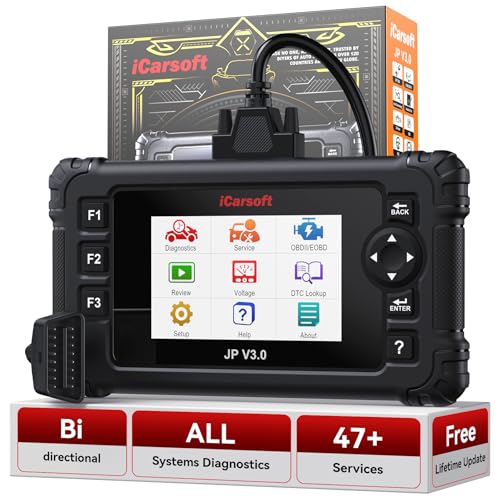
- Full-system diagnostics for Japanese and Korean vehicles
- 47+ resets plus bi-directional tests
- AutoVIN, CAN-FD, ECU coding, and lifetime updates
Best For: Serious DIYers and independent repair shops
Best Affordable Four-System Scanner

- Engine, ABS, SRS, and transmission diagnostics
- Live data, I/M readiness, and AutoVIN
- Lifetime updates with protective carrying case
Best For: Basic warning-light diagnosis and DIY troubleshooting
Best for JDM Protocol Support

- JOBD support for compatible Japanese imports
- Reads and clears codes with live data
- Lifetime updates and simple plug-in operation
Best For: JDM enthusiasts and compatible Japanese vehicles
Best Smart Bidirectional Option

- AI-assisted fault-code analysis and repair suggestions
- 15 resets, active tests, and four-system diagnostics
- Touchscreen, AutoVIN, CAN-FD, and lifetime updates
Best For: Advanced DIY users needing guided diagnostics and resets
Best All-Systems Coverage
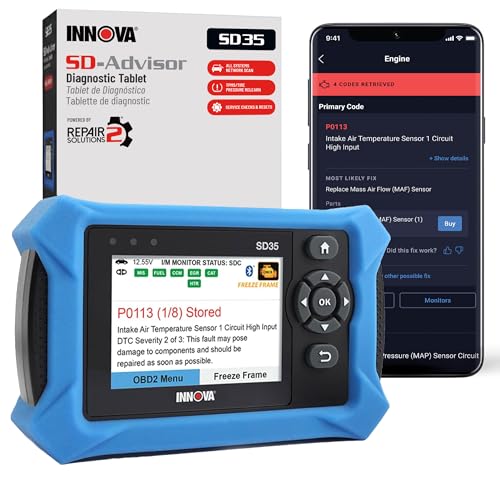
- Reads engine, ABS, SRS, and TPMS codes
- Provides live data and service resets
- Includes free repair guidance with no subscription
Best For: DIY owners wanting broad diagnostics and maintenance features
Best for Advanced Testing

- Adds bidirectional active testing
- Includes 12 service reset functions
- Offers automatic VIN and lifetime free updates
Best For: Experienced users and small repair shops
Best Budget Check-Engine Reader

- Reads and clears standard engine codes
- Supports many Asian vehicles and nine protocols
- Compact, vehicle-powered design with live data
Best For: Basic check-engine and emissions-readiness checks
Best Midrange Pick

- Four-system diagnostics for engine, transmission, ABS, and SRS
- Six service resets, including oil, BMS, EPB, and throttle
- AutoVIN, live-data graphs, and 67+ brand coverage
Best For: DIY owners wanting broader diagnostics and maintenance resets
Best Budget Code Reader
ANCEL AD310 Classic OBD2 Scanner

- Reads and clears emission-related engine codes
- Supports major OBD2 protocols and compatible vehicles
- Compact, cable-powered design for simple checks
Best For: Basic check-engine-light diagnosis and code clearing
Best Advanced Service Tool
BLCKTEC 460T All-System Scanner

- Scans engine, transmission, ABS, and SRS systems
- Provides 12+ service resets and workshop functions
- Includes AutoVIN, RepairSolutions2, and lifetime updates
Best For: Advanced DIY diagnostics and vehicle service procedures
Best Full-System Choice – iCarsoft JP V3.0
For shoppers comparing car diagnostic scanners for Japanese cars, the iCarsoft JP V3.0 is the most comprehensive option here. It covers full-system diagnostics across many Japanese and South Korean brands, including engine, transmission, ABS, and SRS, although its thorough scans may take 30–80 seconds.
Best For: Serious DIYers and independent repair shops working on multiple Japanese or Korean brands.
Pros:
- Full-system diagnostics and 47+ reset services.
- Bi-directional actuation tests help verify component operation.
- AutoVIN, CAN-FD support, ECU coding, and lifetime free updates.
- Supports numerous Toyota, Lexus, Nissan, Honda, Mazda, Subaru, Kia, and Hyundai vehicles.
Cons:
- Detailed scans can take 30–80 seconds.
- Available resets, tests, and coding functions vary by vehicle and installed systems.
This is the strongest pick when broad coverage and advanced repair functions matter more than a quick basic scan. Check the vehicle-specific compatibility details before purchase.
Best Affordable Four-System Scanner – FOXWELL NT604 Elite
The FOXWELL NT604 Elite is a practical choice among car diagnostic scanners for Japanese cars when you mainly need engine, ABS, SRS, and transmission diagnostics. It works out of the box with no initial software download and includes live data, I/M readiness, and a protective case.
Best For: Owners who want straightforward warning-light diagnosis without advanced maintenance resets.
Pros:
- Reads and clears codes from engine, ABS, SRS, and transmission systems.
- Includes live data, freeze-frame-style diagnostic tools, I/M readiness, and data playback.
- Supports more than 60 worldwide brands and offers AutoVIN.
- Includes lifetime updates and a solid protective case.
Cons:
- Does not support oil resets, battery registration, ABS bleeding, throttle relearn, or ABS relearn.
- SRS crash or collision data cannot be cleared.
- AutoVIN may not work on some older vehicles or brands.
Choose the NT604 Elite if you need dependable coverage of the most common warning-light systems at a reasonable cost. It is less suitable for maintenance procedures or advanced coding.
Best for JDM Protocol Support – ANCEL JP700
The ANCEL JP700 stands out among car diagnostic scanners for Japanese cars because it supports the JOBD protocol used by many Japanese-market vehicles and imports. It focuses on engine-related code reading, live data, freeze frame, and emissions readiness rather than full-system service functions.
Best For: JDM enthusiasts and owners of compatible Toyota, Honda, Nissan, Mazda, and Subaru vehicles.
Pros:
- Supports JOBD for compatible Japanese imports.
- Reads and clears codes with a built-in DTC library.
- Provides live data, freeze frame, and I/M readiness checks.
- Plug-and-play design with lifetime free software updates.
Cons:
- Designed primarily for engine and check-engine diagnostics, not full-system scanning.
- Updates require a Windows PC.
- Compatibility should be confirmed for the specific JDM vehicle and model year.
The JP700 is a focused, affordable tool for owners concerned about JOBD communication and emissions checks. Select it over a generic reader when protocol compatibility with a Japanese import is the priority.
Best Smart Bidirectional Option – MUCAR 632 Elite
The MUCAR 632 Elite combines broad diagnostics with AI-assisted code explanations, bidirectional capabilities, and 15 reset services. For buyers comparing car diagnostic scanners for Japanese cars, it offers a modern touchscreen platform with AutoVIN, CAN-FD support, and lifetime software updates, subject to vehicle compatibility.
Best For: Advanced DIY users who want guided troubleshooting, service resets, and active tests in one device.
Pros:
- AI-assisted DTC analysis provides possible causes and repair suggestions.
- Reads engine, ABS, SRS, and transmission codes with live data.
- Includes 15 reset and maintenance functions, plus actuation tests.
- Offers AutoVIN, CAN-FD, AutoAuth/FCA support, and lifetime updates.
Cons:
- AI assistance requires an internet connection and current software.
- Some manufacturer access may require third-party services.
- Functions vary by vehicle, so compatibility should be checked before purchase.
The MUCAR 632 Elite is a strong fit when a touchscreen interface and guided diagnostics are worth paying for. Its reset and active-test coverage makes it more capable than a basic code reader, but vehicle-specific support remains important.
Best All-Systems Coverage – Innova SD35
For drivers comparing car diagnostic scanners for japanese cars, the Innova SD35 is a versatile tablet-style option for checking multiple vehicle systems. It can read engine, ABS, SRS, and TPMS codes, display live data, and provide service functions, although coverage should be confirmed with Innova’s checker.
Best For: DIY owners who want broad diagnostics, live data, and maintenance functions in one easy-to-use scanner.
Pros:
- Scans engine, transmission, ABS, SRS, and other systems.
- Includes live data such as RPM, fuel trims, temperatures, and oxygen-sensor performance.
- Offers TPMS checks, oil reset, battery and alternator testing, and repair guidance through the free app.
- Works with iPhone and Android and has no subscription fees.
Cons:
- Vehicle and feature coverage varies, so compatibility should be checked before purchase.
- The 3.5-inch screen may feel compact for reviewing detailed data.
The SD35 is a strong choice when Japanese-car owners need more than basic check-engine diagnostics. Its system coverage and service features are useful for routine maintenance, provided the specific vehicle is supported.
Best for Advanced Testing – THINKCAR THINKSCAN 662
Among car diagnostic scanners for japanese cars, the THINKSCAN 662 stands out for bidirectional testing and deeper service functions. It can communicate with systems such as the engine, transmission, ABS, and SRS, while its active tests help identify whether components respond correctly.
Best For: Experienced DIY mechanics, mobile technicians, and small repair shops needing active tests and multiple reset functions.
Pros:
- Supports bidirectional tests for components including fuel injectors, fans, pumps, and throttle systems.
- Handles ECM, TCM, ABS, and SRS diagnostics with real-time data.
- Includes 12 reset functions, such as oil, brake, BMS, TPMS, DPF, and throttle adaptation resets.
- Features automatic VIN recognition, diagnostic reports, and lifetime free updates.
Cons:
- Its advanced functions may be more than casual users need.
- Specific functions and coverage can vary by vehicle.
The THINKSCAN 662 is the most capable option here for hands-on troubleshooting. Its bidirectional controls can shorten diagnosis time, but users should verify support for their particular Japanese vehicle and intended service functions.
Best Budget Check-Engine Reader – MOTOPOWER MP69033
If you need a straightforward choice among car diagnostic scanners for japanese cars, the MOTOPOWER MP69033 focuses on standard OBD2 engine diagnostics. It reads and clears check-engine codes, displays live data, and supports many Asian vehicles from the applicable model years.
Best For: Budget-conscious owners who mainly need basic engine fault-code checks and emissions-readiness information.
Pros:
- Supports nine OBD2 protocols and many Asian vehicles from 2000 onward, plus applicable newer OBD II cars.
- Provides code reading and clearing, freeze-frame data, I/M readiness, and live data.
- Uses vehicle power through the OBD2 port, so no separate charger is required.
- Has a compact design, 2.8-inch LCD, six languages, and a built-in code lookup library.
Cons:
- Does not support ABS, airbag, oil-service, or other non-OBD2 systems.
- Its 30-day manufacturer warranty is relatively limited.
The MP69033 is a practical low-cost tool for basic check-engine troubleshooting. It is not suited to full-system diagnostics, but its simple operation and Asian-vehicle compatibility make it useful for routine engine-code checks.
Best Midrange Pick – TOPDON ArtiDiag500
For drivers comparing car diagnostic scanners for japanese cars, the TOPDON ArtiDiag500 is a versatile step up from a basic check-engine reader. It covers four major systems—engine, transmission, ABS, and SRS—and adds several useful maintenance resets.
Best For: DIY owners who want broader diagnostics and service-reset functions in one scanner.
Pros:
- Reads fault codes and live data from the engine, transmission, ABS, and SRS systems.
- Includes six reset functions, including oil, SAS, TPMS, BMS, EPB, and throttle adaptation.
- Offers AutoVIN, battery-voltage monitoring, a 5-inch display, and support for 67+ brands.
Cons:
- Feature availability can vary by vehicle make, model, and year.
- Its broader functions may be more than needed for simple check-engine-light checks.
The ArtiDiag500 is a strong all-around option for Japanese-car DIYers who want to inspect more than emissions codes and handle common maintenance resets. Confirm vehicle coverage before purchase, especially for brand-specific functions.
Best Budget Code Reader – ANCEL AD310 Classic OBD2 Scanner
If you need a straightforward option among car diagnostic scanners for japanese cars, the ANCEL AD310 focuses on the basics. It reads and clears emission-related engine codes, displays live and freeze-frame data, and supports OBD2 vehicles from 1996 onward where compatible.
Best For: Drivers who mainly want to investigate and clear a check-engine light.
Pros:
- Supports common OBD2 protocols, including CAN, ISO9141, J1850, and KWP2000.
- Compact, lightweight design with a sturdy 2.5-foot cable and clearly labeled buttons.
- Draws power directly from the vehicle, so no battery or charger is required.
Cons:
- Only supports emission-related engine diagnostics.
- Does not diagnose ABS, SRS, or transmission systems.
- Compatibility should be confirmed for the specific vehicle before purchase.
The AD310 is a practical travel or home code reader for basic engine troubleshooting on compatible Japanese vehicles. Choose a more advanced scanner if you need system-level diagnostics or service resets.
Best Advanced Service Tool – BLCKTEC 460T All-System Scanner
For shoppers seeking feature-rich car diagnostic scanners for japanese cars, the BLCKTEC 460T combines all-system scanning with an extensive set of workshop functions. It can read engine, transmission, ABS, and SRS codes while providing live data, AutoVIN, and repair-information integration.
Best For: Experienced DIYers and home mechanics who want advanced diagnostics and service procedures.
Pros:
- Performs all-system diagnostics and supports live, freeze-frame, and recorded data.
- Includes 12+ reset and service functions, such as ABS bleeding, DPF, BMS, TPMS, EPB, and throttle resets.
- Offers AutoVIN, AutoScan, AutoReLink, free lifetime updates, and RepairSolutions2 access.
Cons:
- Function availability depends on the vehicle’s year, make, and model.
- The advanced feature set may be unnecessary for owners needing only basic engine-code reading.
- Vehicle compatibility should be checked before purchase.
The 460T is the most capable choice here for deeper troubleshooting and maintenance work, provided its advertised functions are supported by your particular Japanese vehicle. Use BLCKTEC’s compatibility checker before ordering.
How We Picked the Best Car Diagnostic Scanners for Japanese Cars
We focused on scanners that offer useful coverage for Japanese makes and JDM vehicles, while comparing their diagnostic depth, supported systems, service functions, ease of use, and overall value. Basic code readers can be suitable for checking engine faults, but broader all-system tools are more useful when diagnosing ABS, airbag, transmission, or body-control issues.
We also considered practical features such as live data, bidirectional or active testing, automatic vehicle identification, update support, display quality, and compatibility with common OBD2 and JOBD protocols. Always verify coverage for your exact year, model, engine, and market before purchasing.
Quick Comparison
| Scanner type | Best suited to | Typical capabilities |
|---|---|---|
| Basic engine-code reader | Routine DIY checks | Read and clear powertrain codes, emissions readiness, basic data |
| Enhanced system scanner | Home mechanics | Engine plus selected ABS, SRS, transmission, or service functions |
| All-system scanner | Advanced DIY users | Multiple control modules, live data, resets, and broader diagnostics |
| Bidirectional scanner | Testing and troubleshooting | Active tests that command supported vehicle components |
Key Buying Factors for Car Diagnostic Scanners for Japanese Cars
Vehicle and Protocol Compatibility
Confirm that the scanner supports your vehicle’s model year, region, communication protocol, and control modules. “OBD2 compatible” generally guarantees emissions diagnostics, not full access to manufacturer-specific systems. JDM imports may require JOBD or enhanced Asian-vehicle coverage.
Diagnostic System Coverage
Decide whether you only need engine codes or want access to ABS, SRS, transmission, TPMS, and other modules. A wider system list is valuable for newer vehicles and warning lights that are not related to the engine.
Reset Services and Active Tests
Oil, battery, electronic parking brake, steering-angle, throttle, and diesel-related resets can reduce workshop visits, but availability varies by vehicle. Bidirectional testing is more advanced and can help verify whether a component responds to commands; it should be used carefully.
Updates and Usability
Look for clear menus, readable live-data displays, reliable cables or wireless connections, and a practical update policy. A scanner with more functions is not necessarily better if its coverage is difficult to verify or operate.
Who Should Buy Which Car Diagnostic Scanners for Japanese Cars?
Choose a basic reader if you mainly want to check a check-engine light, clear compatible codes, and monitor emissions readiness. These tools are affordable and simple but offer limited access beyond the powertrain system.
Choose an enhanced scanner if you maintain your own Japanese vehicle and need ABS, SRS, transmission, or common service-reset functions. This is the best balance for many home garages.
Choose an all-system or bidirectional model if you troubleshoot multiple vehicles, perform deeper repairs, or need active tests and broader module coverage. Before buying, compare the manufacturer coverage list with your exact vehicle rather than relying only on the scanner’s feature count.