
Wireless tuning has made DSP setup far more approachable, letting you adjust crossover points, EQ, time alignment, and output levels from your phone or tablet.
If you want cleaner staging, tighter bass, and a simpler install, this roundup of the best car DSP processors with wireless tuning will help you narrow the field fast.
Best 10 Car Dsp Processors with Wireless Tuning Picks for 2026
Wireless Multi-Channel DSP Tuning
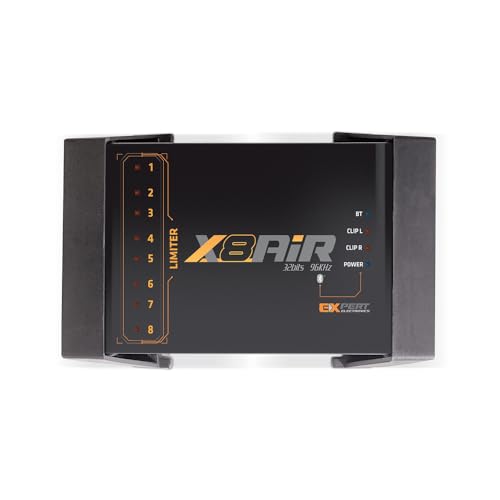
Banda Audiopart X8AiR 8-Channel DSP
- Bluetooth app tuning with real-time adjustments
- 79-band EQ, time alignment, phase, and limiter control
- 4 inputs and 8 outputs for complex systems
Best For: Advanced users building multi-amp systems with phone-based tuning
Compact Bluetooth DSP
Expert PX1R 4-Channel Processor

- Bluetooth app control for wireless adjustments
- 11-band input EQ plus per-channel parametric EQ
- Compact aluminum chassis with preset memory
Best For: Compact 4-channel systems needing wireless tuning and presets
Bluetooth EQ with Remote Level Control

- Built-in Bluetooth for wireless tuning
- 15-band parametric EQ with crossover control
- Tone generator and time adjustment for setup
Best For: Aftermarket systems that need wireless control and precise tuning
Factory Integration DSP Matrix

- Multiple input types for factory and aftermarket systems
- DM Smart App control from laptop or PC
- AccuBASS, RTA, and 30-band EQ for tuning
Best For: OEM integration builds needing detailed correction and bass recovery
Wireless Entry Pick
Timpano TPT-SP4BT Bluetooth DSP

- Bluetooth tuning from Android or iOS
- Real-time EQ, crossover, alignment, and gain control
- Includes voltmeter, sweep, and pink noise tools
Best For: compact builds and first-time DSP users
Feature-Rich 6-in/8-out Choice

- 6 inputs and 8 configurable outputs
- Bluetooth 5.0, remote control, app, and PC tuning
- 31-band EQ, crossovers, and time alignment
Best For: custom systems and OEM upgrades
Budget Bluetooth Tuner

- Bluetooth app control for Android and Apple devices
- 12-band graphic EQ with crossover and filter tools
- RCA and high-level inputs for factory or aftermarket radios
Best For: simple wireless tuning and OEM integration
Bluetooth Tuning DSP
PRV AUDIO Car Audio Bluetooth DSP 2.4X BT

- Bluetooth app control with LCD interface
- 4-channel output with per-channel EQ and crossover
- High-level input for factory radio integration
Best For: Factory-system upgrades and easy wireless tuning
App-Control DSP
LOWDR LDX 2.4 Digital Signal Processor

- Bluetooth app control for full wireless tuning
- RCA and high-level inputs for flexible installs
- Delay, limiter, and calibration tools included
Best For: Wireless tuning with flexible input routing
Pro Bluetooth DSP
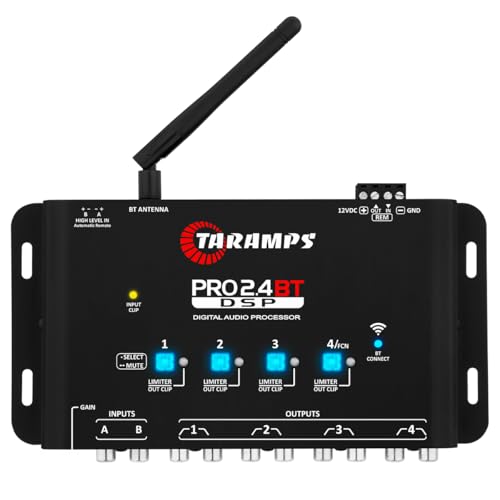
Taramps Pro 2.4 BT Bluetooth DSP Crossover Full
- Bluetooth 5.4 BLE wireless tuning support
- 15-band graphic EQ plus crossover and limiter tools
- High-level input with auto turn-on and preset sharing
Best For: Advanced tuning and preset management
Wireless Multi-Channel DSP Tuning – Banda Audiopart X8AiR 8-Channel DSP
If you want car dsp processors with wireless tuning that feel closer to a pro install tool than a basic sound upgrade, the Banda Audiopart X8AiR is built for detailed control. It combines a 32-bit/96kHz DSP, Bluetooth app control, and a 79-band equalizer to help you shape a cleaner, more precise in-car sound.
Best For: Enthusiasts who want app-based tuning, multi-channel control, and a premium-grade DSP for complex audio builds.
Pros:
- Bluetooth and app control let you adjust EQ, crossover points, limiter settings, and channel gains from your phone.
- 79 EQ bands per channel plus time alignment, phase control, and peak limiter support detailed tuning.
- 4 inputs and 8 outputs make it suitable for multi-amp, component speaker, and subwoofer setups.
- 32-bit/96kHz processing is positioned for cleaner sound and reduced distortion.
Cons:
- Best suited to users comfortable with advanced tuning options.
- May be more processor than needed for simple factory-upgrade installs.
The X8AiR stands out if your priority is flexible wireless control and deep DSP adjustment. For more ambitious systems, it offers the kind of routing and tuning range that can help a build sound more polished and consistent.
Compact Bluetooth DSP – Expert PX1R 4-Channel Processor
For shoppers comparing car dsp processors with wireless tuning, the Expert PX1R offers a compact, practical way to manage a 4-channel system. It pairs Bluetooth app control with digital inputs, configurable routing, and detailed crossover tools for users who want straightforward DSP adjustment without a bulky chassis.
Best For: Users who want a compact DSP with Bluetooth tuning, preset memory, and flexible crossover control.
Pros:
- Bluetooth connectivity allows wireless control through a dedicated app.
- 11 bands of input EQ and 1 parametric EQ band per channel provide tuning flexibility.
- Butterworth, Linkwitz-Riley, and Expert crossover filters support precise frequency separation.
- Preset memory makes it easy to save and recall custom settings.
Cons:
- Limited to 4 channels, so it may not suit larger builds.
- It is a more specialized processor rather than an all-in-one source unit.
The PX1R is a strong fit if you want wireless control in a small DSP package with pro-style adjustment tools. Its feature set is especially appealing for focused systems where routing, delay, and crossover precision matter more than channel count.
Bluetooth EQ with Remote Level Control – NVX XDSP28 8-Channel DSP
The NVX XDSP28 is a practical choice if you want car dsp processors with wireless tuning and a flexible 8-channel output layout. With built-in Bluetooth, a 15-band parametric EQ, and a remote level controller, it gives you the core tools needed to fine-tune an aftermarket system with precision.
Best For: Drivers who want an 8-channel DSP with Bluetooth, easy menu access, and useful tuning presets.
Pros:
- Built-in Bluetooth supports wireless tuning control.
- 15-band parametric EQ and crossover options provide detailed sound shaping.
- Time adjustments in 0.02 ms increments help with alignment tuning.
- Integrated tone generator with frequency sweep and pink noise aids setup.
Cons:
- Only 2 RCA inputs, so source flexibility is more limited than some rivals.
- Designed primarily for aftermarket systems rather than factory integration.
Overall, the XDSP28 focuses on hands-on tuning features rather than extra complexity. It is a sensible option if you want wireless control, solid output flexibility, and setup tools that help you dial in a system accurately.
Factory Integration DSP Matrix – AudioControl DM-810 8×10 DSP
If you are looking at car dsp processors with wireless tuning for factory or aftermarket upgrades, the AudioControl DM-810 is built around integration and precise system correction. It combines multiple input types, AccuBASS processing, RTA support, and the DM Smart App so you can manage tuning from a laptop or PC.
Best For: Factory-integration builds that need advanced tuning, summing, and recovery of lost bass.
Pros:
- Supports speaker-level, RCA, S/PDIF, and TOSLINK inputs for broad integration.
- DM Smart App enables full processor tuning from a laptop or PC.
- AccuBASS helps restore bass lost at higher volumes.
- 30-band EQ, RTA support, summing, and signal clip indication aid precise setup.
Cons:
- Wireless control is app-based through a computer or laptop workflow rather than phone-only tuning.
- More focused on integration and correction than on simple plug-and-play use.
The DM-810 is one of the stronger options when factory system integration matters as much as tuning detail. Its feature set is especially useful if you need to sum signals, align channels, and correct a complex OEM or aftermarket installation.
Wireless Entry Pick – Timpano TPT-SP4BT Bluetooth DSP
If you want car dsp processors with wireless tuning in a compact package, the Timpano TPT-SP4BT is built for quick phone or tablet adjustments. Its Bluetooth control lets you manage EQ, crossovers, alignment, gain, phase, routing, and more without being tied to the dash, which is useful for custom systems or factory-radio upgrades.
Best For: Drivers who want an affordable, compact DSP with app-based tuning and simple wireless setup.
Pros:
- Bluetooth control from Android or iOS devices
- Real-time tuning for EQ, crossover filters, time alignment, gain, phase, and routing
- Built-in voltmeter plus frequency generator, sweep, and pink noise tools
- Sequencer feature can control startup and shutdown of up to three products
Cons:
- Only 4 output channels, so it may be too small for larger active systems
- Wireless setup depends on the companion app
For compact builds, the TPT-SP4BT focuses on the tuning features most users actually need while keeping the interface wireless and mobile. It is a practical choice if you want straightforward DSP control and system-test tools in a very small footprint.
Feature-Rich 6-in/8-out Choice – CIARE CDSP1 Bluetooth DSP
Among car dsp processors with wireless tuning, the CIARE CDSP1 stands out for installers who want more routing flexibility and deeper adjustment options. Its Bluetooth 5.0 connection, remote control, and app or PC tuning support make it well suited to complex OEM upgrades, aftermarket systems, and multi-channel builds.
Best For: Custom audio builds that need 6 inputs, 8 outputs, and detailed tuning control.
Pros:
- 6 inputs and 8 configurable outputs for flexible system design
- Bluetooth 5.0 with aptX streaming plus remote control
- 31-band parametric EQ, active crossovers, and time alignment
- Supports RCA and high-level inputs for OEM and aftermarket integration
Cons:
- More advanced than a basic plug-and-play processor
- Best results may require app or PC tuning time
The CDSP1 is the most full-featured option in this group for users who want wireless access without giving up advanced tuning tools. If you are building a more serious system and need versatile input/output handling, it offers a lot of control for the money.
Budget Bluetooth Tuner – Stetsom STX 2436 DSP PRO
If you are shopping for car dsp processors with wireless tuning and want a compact, app-based option, the Stetsom STX 2436 DSP PRO keeps setup simple. It offers Bluetooth control through Android and Apple apps, plus a range of adjustments for EQ, crossover settings, filters, limiter control, and input compatibility with factory or aftermarket stereos.
Best For: Users who want a small Bluetooth DSP with straightforward tuning tools and factory radio support.
Pros:
- Bluetooth control with Android and Apple app support
- 12-band graphic EQ and high-precision crossover tools
- RCA and high-level inputs for factory-original stereo systems
- Includes voltmeter, limiter, and password protection for setup
Cons:
- 12-band EQ is less detailed than more advanced parametric options
- Bluetooth range is listed up to 49 feet in unobstructed areas
The STX 2436 is a practical pick if you want wireless tuning without a bulky processor or a complicated feature set. It gives you the core DSP controls needed for everyday system optimization and OEM integration.
Bluetooth Tuning DSP – PRV AUDIO Car Audio Bluetooth DSP 2.4X BT
If you want car dsp processors with wireless tuning that are easy to work with, the PRV AUDIO DSP 2.4X BT keeps things practical with smartphone app control and a simple LCD interface. It gives you 4-channel processing, high-level input for factory systems, and per-channel crossover, EQ, delay, and limiter tools for dialing in a clean install.
Best For: Factory radio upgrades and users who want Bluetooth tuning with built-in speaker wire integration.
Pros:
- Wireless app control plus an easy LCD-based interface for real-time adjustments
- 4-channel output with independent gain, crossover, and parametric EQ per channel
- High-level speaker input helps integrate with OEM infotainment systems
- Includes PRV speaker, driver, and tweeter crossover presets
Cons:
- Only 4 output channels, so larger systems may need more processing flexibility
- No mention of advanced preset sharing or multi-device management
- Wireless tuning is app-based, but the notes don’t specify antenna or range details
This is a strong pick if you want a DSP that simplifies tuning without replacing the head unit. The preset support and OEM-friendly input options make it especially approachable for common car audio upgrades.
App-Control DSP – LOWDR LDX 2.4 Digital Signal Processor
For shoppers comparing car dsp processors with wireless tuning, the LOWDR LDX 2.4 stands out for full Bluetooth app control and a feature set aimed at precise setup. It combines 4 outputs, 2 inputs, parametric EQ, crossover filtering, delay, limiter controls, and flexible routing for systems that need real tuning control from a phone.
Best For: Users who want wireless tuning plus practical calibration tools and factory-radio compatibility.
Pros:
- Dedicated mobile app lets you tune all DSP parameters wirelessly
- Supports RCA and high-level inputs for flexible installation options
- Includes delay adjustment, limiter controls, and a built-in frequency generator
- Password protection and auto save/load add convenience and security
Cons:
- Only 4 outputs, so it may feel limiting for larger active systems
- Bluetooth app control depends on the mobile app experience
- Smartphone is not included
The LOWDR LDX 2.4 is a solid middle-ground choice if you want wireless control without giving up core tuning features. Its routing flexibility and calibration tools make it practical for a wide range of installs.
Pro Bluetooth DSP – Taramps Pro 2.4 BT Bluetooth DSP Crossover Full
If you’re shopping car dsp processors with wireless tuning and want a more feature-packed option, the Taramps Pro 2.4 BT brings Bluetooth 5.4 BLE control, a 15-band graphic EQ, parametric EQ, and detailed crossover tools. It also supports high-level input with auto turn-on, RCA input up to 9V RMS, and preset sharing for a more complete tuning workflow.
Best For: Enthusiasts and installers who want advanced wireless tuning, strong input flexibility, and preset sharing.
Pros:
- Bluetooth 5.4 BLE app control for real-time wireless configuration
- 15-band graphic EQ plus parametric EQ, crossover, delay, phase, and limiter tools
- High-level input with auto turn-on works well with factory head units
- External Bluetooth antenna and preset sharing features add convenience
Cons:
- Feature-rich interface may be more than casual users need
- Advanced preset sharing and multi-processor support are useful, but not essential for basic installs
- More complex than simpler DSPs if you only want quick tuning
The Taramps Pro 2.4 BT is the most advanced of this group for wireless tuning and system management. It’s a strong fit if you want deeper control, robust connectivity, and the ability to manage presets more like a pro setup.
How We Picked the Best Car Dsp Processors with Wireless Tuning
We focused on Car Dsp Processors with Wireless Tuning that offer practical setup tools, stable app control, and enough adjustment range for real-world systems. Priority went to models with useful channel counts, EQ flexibility, crossover control, time alignment, and integration features that matter in factory and aftermarket installs.
We also considered ease of use, remote-level control, input/output flexibility, and whether the processor is better suited to a simple active front stage or a more complex multi-amplifier build.
Quick Comparison
For simple two- or four-channel systems, compact DSPs with Bluetooth app control can be the easiest path. For factory integration or larger builds, look for more outputs, stronger routing options, and tools like sum mixing, matrix processing, and signal delay. If you want a set-and-forget solution, choose a model with a straightforward app and clear presets. If you like fine-tuning, pick one with parametric EQ, RTA support, or broader channel routing.
Key Buying Factors for Car Dsp Processors with Wireless Tuning
Channel Count and Routing
Match the processor to your system layout first. A 4-output DSP may be enough for front speakers and a sub, while 8-channel and matrix-style units are better for active front stages or multi-amp systems.
EQ, Crossovers, and Time Alignment
Wireless tuning is most valuable when the software gives you enough control to correct cabin acoustics. Look for at least parametric EQ, adjustable crossovers, and time alignment so you can shape response without relying on hardware changes.
Input and Integration Options
If you are retaining a factory radio, make sure the processor supports high-level or OEM-friendly integration, signal summing, and turn-on control. For aftermarket head units, RCA inputs and strong voltage handling are often more important.
App Quality and Stability
A good app should connect reliably, save presets cleanly, and make changes without lag. With Car Dsp Processors with Wireless Tuning, the software experience can matter as much as the hardware itself.
Installation Extras
Useful add-ons include remote level controls, output voltage matching, mute or phase tools, and visual aids like LCD screens or RTA support. These features can make tuning faster and system matching easier.
Who Should Buy Which Car Dsp Processors with Wireless Tuning?
Choose a compact Bluetooth DSP if you want a cleaner, simpler upgrade to a basic system. Step up to a more advanced multi-channel processor if you are building an active front stage, adding multiple amps, or integrating with a factory system. If you want the easiest tuning experience, prioritize a polished app and basic but reliable controls. If you want maximum precision, select a DSP with deeper EQ, crossover detail, and more flexible routing.
In short, the best choice depends on how many channels you need, how much tuning control you want, and whether your priority is easy wireless setup or advanced system optimization.