
A car DSP can make a bigger difference than another round of speaker swaps, but only if its outputs, inputs, and tuning tools fit your system. Bluetooth control adds the convenience of adjusting settings from your phone instead of reaching for a processor tucked away in the car.
These seven options cover compact four-output processors and more flexible eight-output models. The right choice depends on how many speakers you plan to tune, how you’ll connect your source, and what the Bluetooth connection actually controls.
Best 7 Car Dsp with Bluetooth Control Picks for 2026
Precision Tuning Pick

- Bluetooth app tuning
- Four outputs with per-channel EQ
- Adjustable delay and limiter
Best For: Detailed tuning of four-output systems
Factory-Radio Upgrade Pick

- Built-in high-level input
- LCD and smartphone controls
- PRV speaker crossover presets
Best For: Keeping a factory radio in a four-output upgrade
Eight-Output Pick

- Eight DSP outputs
- 32-bit, 96 kHz processing
- Bluetooth app tuning and presets
Best For: Larger multi-speaker systems
Bluetooth Streaming Pick

- Bluetooth music streaming
- Separate app-tuning connection
- RCA and high-level inputs
Best For: Compact systems needing streaming and DSP control
Best for Complex Systems
Banda Audiopart X8AiR 8-Channel DSP
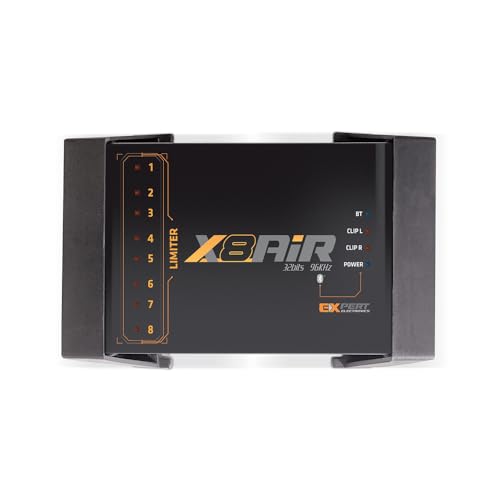
- Four inputs and eight outputs
- 79 EQ bands per channel
- Bluetooth app-based tuning
Best For: Multi-amplifier, multi-speaker installations
Best for Flexible Four-Channel Tuning
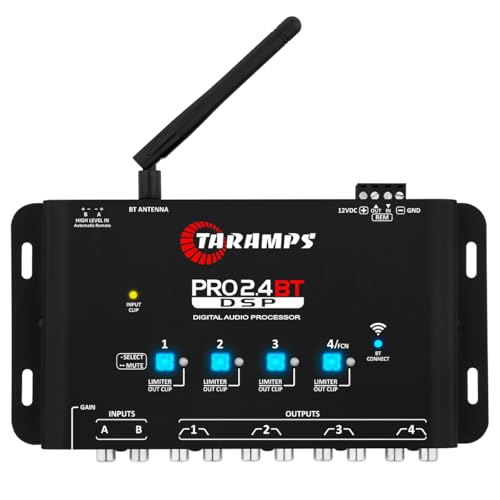
- Two inputs and four outputs
- Bluetooth 5.4 app control
- High-level and RCA input options
Best For: Four-output factory or aftermarket upgrades
Best for Compact Installations
Timpano TPT-SP4BT Bluetooth DSP

- Compact 3.15 x 2.36-inch footprint
- Android and iOS app tuning
- Voltmeter and three-product sequencer
Best For: Tight spaces and sequenced remote startup
Precision Tuning Pick – LOWDR LDX 2.4 DSP
If you want a car DSP with Bluetooth control for detailed speaker tuning, the LOWDR LDX 2.4 pairs smartphone app adjustments with two inputs and four outputs. It accepts RCA and high-level signals, making it suitable for either aftermarket or factory-source integration.
Best For: Four-output systems that need detailed crossover, timing, and limiter adjustments.
Pros:
- App control covers the DSP settings without requiring access to the unit.
- Per-output parametric EQ and Butterworth, Linkwitz-Riley, and Bessel crossover options support precise tuning.
- Adjustable delay and limiter controls help align speakers and manage output levels.
- Password protection and automatic save/load add setup convenience.
Cons:
- Four outputs may be limiting for larger multi-speaker builds.
- The supplied features describe Bluetooth tuning, not Bluetooth music streaming.
Choose this model when control over a compact four-output setup matters more than adding extra output channels.
Factory-Radio Upgrade Pick – PRV AUDIO DSP 2.4X BT
The PRV AUDIO DSP 2.4X BT is a car DSP with Bluetooth control aimed at upgrading sound while keeping a factory radio. Its built-in high-level input accepts speaker-wire signals, while the LCD and smartphone app offer ways to make adjustments.
Best For: Factory-radio upgrades and four-output systems using PRV speakers, drivers, or tweeters.
Pros:
- High-level input supports integration with an OEM head unit.
- Independent gain, crossover, and parametric EQ settings are available across four outputs.
- Built-in PRV crossover presets simplify starting settings for compatible PRV components.
- LCD interface provides on-unit adjustment alongside app control.
Cons:
- Two inputs and four outputs may not cover a more elaborate system.
- The supplied notes do not describe Bluetooth music streaming.
Its main advantage is a straightforward path from factory speaker wiring to independently tuned outputs, especially if your build uses PRV components.
Eight-Output Pick – Marts Digital BTX8-DSP
For a larger speaker layout, the Marts Digital BTX8-DSP offers eight outputs in a car DSP with Bluetooth control. Its app lets you adjust EQ, crossover, gain, and presets from a smartphone, while the listed processing specification is 32-bit at 96 kHz.
Best For: Multi-speaker builds that need more than four DSP outputs and app-based tuning.
Pros:
- Eight outputs provide room to tune a larger system.
- 31-band input EQ, per-channel output EQ, and adjustable Q support detailed sound shaping.
- Bluetooth app control provides wireless access to tuning settings and presets.
Cons:
- Its broader tuning options may be more than a simple four-output setup needs.
- The supplied notes specify Bluetooth app control but do not establish Bluetooth music streaming.
Pick this unit primarily for its output count and tuning scope; those are the clearest reasons to choose it over a smaller DSP.
Bluetooth Streaming Pick – Taramps PRO 2.4BT + Audio
The Taramps PRO 2.4BT + Audio stands out if your car DSP with Bluetooth control also needs to play music from a phone. It uses one Bluetooth connection for audio streaming and another for DSP adjustments through an Android or iOS app.
Best For: Compact installations that need both Bluetooth music streaming and wireless DSP tuning.
Pros:
- Built-in Bluetooth audio can serve a setup without a traditional head unit.
- Separate Bluetooth connections handle streaming and app-based tuning.
- RCA and high-level inputs support factory radios and aftermarket sources.
- Compact housing helps with placement in tight spaces.
Cons:
- The supplied notes do not specify the number of inputs and outputs.
- Using both streaming and app control involves two Bluetooth connections.
Choose this Taramps model when phone-sourced music is part of the plan, rather than assuming any Bluetooth-controlled DSP can stream audio.
Best for Complex Systems – Banda Audiopart X8AiR 8-Channel DSP
If you need a car dsp with bluetooth control for a multi-amplifier setup, the X8AiR offers four inputs, eight outputs, and smartphone-based tuning. Its 32-bit/96kHz processing and extensive per-channel EQ give you room to tailor a more involved system.
Best For: Drivers building multi-speaker systems that need eight independently tunable output channels.
Pros:
- 79 EQ bands per channel, plus crossover, time-alignment, and phase controls.
- Bluetooth app adjusts EQ, crossovers, limiters, and gains.
- Four inputs and eight outputs accommodate complex speaker and amplifier layouts.
Cons:
- Its broad tuning options may be more than a simple four-channel system needs.
Choose this model when output count and detailed tuning matter most; a smaller DSP may be easier to justify for a basic installation.
Best for Flexible Four-Channel Tuning – Taramps PRO 2.4BT DSP
The Taramps PRO 2.4BT is a car dsp with bluetooth control suited to a two-input, four-output upgrade. It combines phone-based setup with independent output routing, making it practical for systems with separate subwoofer, woofer, midrange, or tweeter channels.
Best For: Factory or aftermarket audio upgrades that need four tunable outputs and app-based setup.
Pros:
- Bluetooth 5.4 app can tune up to four processors and share encrypted presets.
- Adjustable crossovers, time alignment, phase inversion, and output limiters.
- High-level input with auto turn-on and RCA inputs up to 9V RMS.
Cons:
- Four outputs may not cover a larger system without adding another processor.
- 15-band graphic EQ offers fewer listed bands than the X8AiR’s 79 per channel.
This is a strong fit when installation flexibility and controlled four-channel tuning matter more than having eight outputs.
Best for Compact Installations – Timpano TPT-SP4BT Bluetooth DSP
For a car dsp with bluetooth control that takes up little space, the Timpano TPT-SP4BT measures 3.15 x 2.36 x 0.5 inches. Its Android and iOS app provides remote access to core tuning controls for factory-radio or aftermarket systems.
Best For: Space-conscious installs that can use four outputs and want phone-based tuning plus remote-start sequencing.
Pros:
- Compact housing makes placement easier in tight installations.
- App controls EQ, crossovers, alignment, gain, phase, limiters, and routing.
- Built-in battery voltmeter and sequencer for programmed startup and shutdown of up to three products.
Cons:
- Four outputs may limit more elaborate speaker configurations.
- The supplied specifications do not state EQ band count or audio processing resolution.
Its small footprint and sequencing feature distinguish it, particularly if managing amplifier startup is part of your installation plan.
How We Picked the Best Car Dsp with Bluetooth Control
We focused on practical differences among the seven selected processors: output count, stated tuning tools, Bluetooth functionality, and installation considerations. Product names alone do not establish app compatibility, input types, or every available adjustment, so confirm those details in the current manual and listing before ordering. We treated the two Taramps PRO 2.4BT listings as closely related options, not automatically as different processors.
Quick Comparison
Start with the number of outputs you need. The LOWDR LDX 2.4, PRV AUDIO DSP 2.4X BT, Taramps PRO 2.4BT listings, and Timpano TPT-SP4BT are four-output options. The Marts BTX8-DSP and Banda Audiopart X8AiR are eight-output options for systems needing more independently adjustable channels. The Banda listing highlights a 79-band equalizer, while the LOWDR listing specifies a parametric EQ and crossover. Check the latest documentation for the exact controls, connection methods, and included accessories on each unit.
Key Buying Factors for a Car Dsp with Bluetooth Control
Count Outputs Before Comparing Features
Map each amplifier channel or speaker group you want to tune separately. A four-output DSP can suit a simpler front-and-sub setup, depending on how channels are assigned. An active front stage, rear speakers, and subwoofer may call for more outputs. Leave room for future upgrades if you expect the system to grow.
Check What Bluetooth Actually Does
Bluetooth audio streaming and Bluetooth app control are different features. Verify whether your phone can change EQ, crossover settings, levels, and saved presets—or whether Bluetooth is primarily an audio input. Also check whether the app supports your phone’s operating system and how the processor is configured if the app becomes unavailable.
Match Inputs and Tuning Tools to Your Installation
Confirm that the DSP accepts the signal your head unit or factory system provides. If you are retaining a factory radio, check for suitable high-level inputs and any integration requirements; do not assume every unit has them. For tuning, look for the crossover controls, EQ adjustment, level setting, and delay options your layout requires. Published bit depth and sample rate are useful specifications, but they do not replace the right connections or a careful setup.
Plan Power and Control Wiring
Check power requirements, grounding, remote turn-on behavior, and whether a remote relay or controller is included or sold separately. Allow space to reach the wiring during setup, even if you plan to make later changes by phone.
Who Should Buy Which Car Dsp with Bluetooth Control?
Choose a four-output model if your channel plan is straightforward and you want a compact way to add tuning. Consider the LOWDR if its stated parametric EQ and crossover suit your needs; compare the PRV AUDIO, Taramps, and Timpano options against their manuals for the controls and accessories you require. Move to the Marts or Banda eight-output option if you need more independently adjustable channels. If phone-based tuning is your priority, verify the exact app-control functions for your chosen Car Dsp with Bluetooth Control before you buy.