
Road and tire noise can make an otherwise comfortable car feel tiring on long drives. Treating the floor can help reduce panel vibration and add a barrier between the cabin and the road.
These 10 options include adhesive butyl mats, closed-cell foam, and a thicker floor barrier. The right choice depends on your noise problem, available space, and how much interior trim you are willing to remove.
Best 10 Car Floor Sound Deadening Materials Picks for 2026
Thicker Butyl Pick

- 80 mil butyl-and-foil sheets
- 36 sq ft across 33 sheets
- Embossed foil guides rolling
Best For: DIY floor-panel vibration damping
Large-Area DIY Pick
KILMAT 50 Mil Butyl Mat, 50 Sq Ft

- 50 sq ft across 47 sheets
- Self-adhesive 50 mil butyl
- Embossed foil aids installation
Best For: Broad DIY floor and panel coverage
Under-Carpet Barrier Pick

- 12 sq ft composite floor barrier
- No adhesive; movable and reusable
- Targets heat and low-frequency noise
Best For: Removable under-carpet floor insulation
Black-Foil Coverage Pick
MAT66 ProBlack 50 Mil Mat, 50 Sq Ft

- 50 sq ft across 47 sheets
- Self-adhesive 50 mil butyl
- Roller tool not included
Best For: Multi-panel DIY butyl-mat installation
Wide-Coverage Pick
80 Mil Butyl Sound Deadening Mat

- 36 sq ft across 33 sheets
- 80 mil butyl with foil face
- Peel-and-stick adhesive backing
Best For: Larger floor, door, and trunk projects
Small-Project Pick
Amazon Basics 10-Pack Sound Deadening Mat

- 10 sq ft in ten pieces
- Pliable, self-adhesive sheets
- Aluminum-foil thermal layer
Best For: Targeted floor or trunk treatment
Thick-Foam Pick
GOSCHE 394 Mil Closed-Cell Mat

- 394 mil (10 mm) foam
- 16 sq ft across 15 sheets
- Peel-and-stick application
Best For: Measured areas with room for thick foam
Best Large-Area Butyl Roll
36 Sq Ft Butyl Sound Deadening Roll
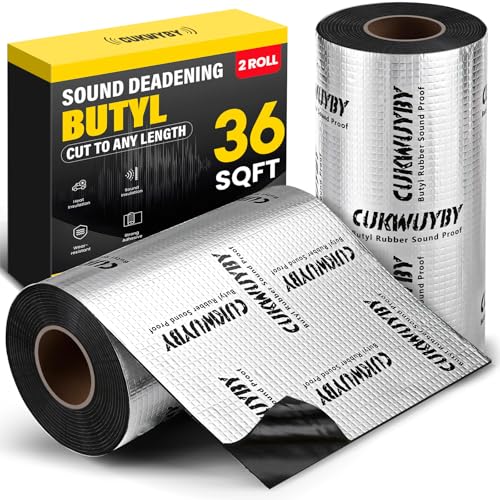
- 36 sq ft for floors and other panels
- Butyl-and-aluminum vibration damping
- Cut-to-fit, self-adhesive roll
Best For: Large-area floor and metal-panel coverage
Best Foam Heat Barrier
Siless Liner 157 Closed-Cell Foam
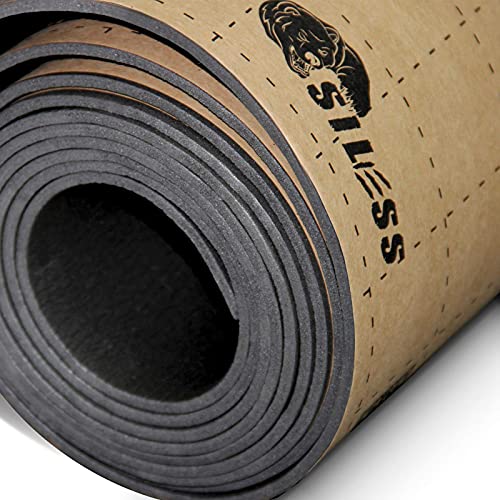
- 36 sq ft of 4 mm PE foam
- Waterproof, moisture-resistant construction
- Self-adhesive flexible roll
Best For: Floor heat insulation and a closed-cell foam layer
Best for Small Floor Sections
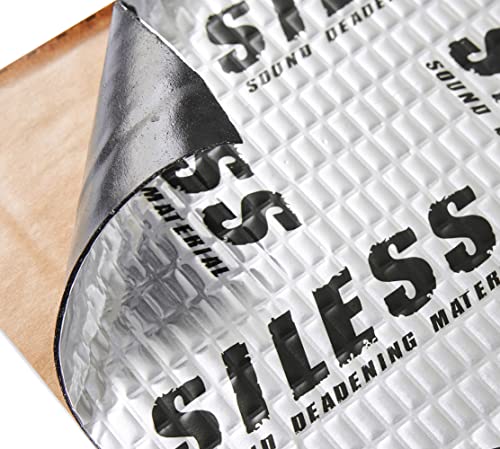
- 10 sq ft for targeted treatment
- 80 mil (2 mm) damping material
- Peel-and-place; roller not included
Best For: Targeted floor vibration damping
Thicker Butyl Pick – 80 Mil Butyl Mat, 36 Sq Ft
Among car floor sound deadening materials, this 80 mil butyl-and-foil mat offers a thicker self-adhesive option for damping floor-panel vibration. Its 33 sheets cover up to 36 square feet, with actual coverage depending on your vehicle.
Best For: DIY installers who want an 80 mil butyl mat for floors and other vehicle panels.
Pros:
- Pure butyl construction contains no asphalt fillers and is described as odorless.
- Embossed foil helps show when each sheet has been rolled smooth.
- Sheets can be trimmed to fit corners and curved panels.
Cons:
- 36 square feet may not cover every planned area in a larger vehicle.
- Requires a clean, dry surface and thorough rolling for proper contact.
This is a practical choice when panel vibration is the priority; measure the floor first so you can plan how far the pack will go.
Large-Area DIY Pick – KILMAT 50 Mil Butyl Mat, 50 Sq Ft
If your search for car floor sound deadening materials starts with coverage, KILMAT supplies 50 square feet of self-adhesive butyl mat in 47 manageable sheets. Its 50 mil thickness is suited to damping rattling panels without the thickness of an 80 mil mat.
Best For: DIY projects that need broad butyl-mat coverage across a vehicle floor or multiple panels.
Pros:
- 50 square feet of coverage offers room for a larger installation plan.
- Small sheets are easier to cut and position than one large piece.
- Foil embossing provides a visual cue to roll each sheet smooth.
Cons:
- At 50 mil, it is thinner than the 80 mil option in this roundup.
- Adhesive-backed sheets are less convenient to reposition than a loose under-carpet pad.
Choose KILMAT when coverage and straightforward sheet-by-sheet installation matter most, and plan to roll the embossed foil flat as you work.
Under-Carpet Barrier Pick – Dynamat DynaPad, 12 Sq Ft
Dynamat DynaPad takes a different approach to car floor sound deadening materials: it is a heavy composite under-carpet barrier rather than an adhesive-backed butyl mat. The supplied sheet covers 12 square feet and is intended to help block heat and low-frequency exhaust and road noise.
Best For: Floor installations that call for a removable under-carpet noise and heat barrier.
Pros:
- No adhesive, so the pad can be moved and reused.
- Designed specifically for placement under vehicle carpet.
- Combines a heavy barrier with heat-blocking capability.
Cons:
- 12 square feet may require additional material for a larger floor.
- For best results, the manufacturer recommends installing it over Dynamat Xtreme, an additional product.
Pick DynaPad if you want a substantial, repositionable floor barrier; it serves a different role from stick-on mats that bond directly to sheet metal.
Black-Foil Coverage Pick – MAT66 ProBlack 50 Mil Mat, 50 Sq Ft
MAT66 ProBlack is a 50 mil self-adhesive butyl option for shoppers comparing car floor sound deadening materials by coverage and installation format. It comes as 47 cuttable sheets totaling 50 square feet, intended to damp panel rattles and vibration.
Best For: DIY installers covering a floor and other panels with 50 mil adhesive-backed sheets.
Pros:
- 50 square feet provides substantial coverage for a multi-panel project.
- Individual sheets are sized for cutting and positioning.
- Embossed foil shows when the material has been rolled smooth.
Cons:
- A roller tool is not included.
- 50 mil construction is thinner than the 80 mil mat in this roundup.
MAT66 makes sense if you want a broad-coverage butyl mat and already have, or plan to buy, a roller for pressing the sheets into place.
Wide-Coverage Pick – 80 Mil Butyl Sound Deadening Mat
For car floor sound deadening materials, this 80 mil butyl mat offers 36 square feet across 33 sheets, making it a practical option when you also plan to treat doors or the trunk. Its aluminum-foil face and adhesive backing combine vibration dampening with a peel-and-stick installation.
Best For: Larger DIY jobs that need enough material for the floor and other interior panels.
Pros:
- 36 square feet of coverage in 33 cuttable sheets.
- 80 mil butyl construction is designed to dampen vibrations.
- Foil face adds a heat-reflective layer; adhesive backing simplifies placement.
Cons:
- Each sheet measures 15.75 by 9.84 inches, so broad floor areas will require multiple seams.
- The supplied notes do not specify a measured, vehicle-specific noise reduction.
Choose this when coverage is the priority. Plan your sheet layout before removing the backing, especially around floor contours and seat mounts.
Small-Project Pick – Amazon Basics 10-Pack Sound Deadening Mat
If you need car floor sound deadening materials for a limited area, this Amazon Basics pack provides 10 square feet in ten 14.5-by-10-inch pieces. Its pliable, self-adhesive butyl-rubber-based material is intended to reduce vibration and road noise, while the aluminum-foil face helps with thermal insulation.
Best For: A small cabin-floor section, trunk area, or other targeted interior treatment.
Pros:
- Pliable sheets are easy to cut for interior shapes.
- Self-adhesive backing supports straightforward placement.
- Reflective aluminum-foil face provides a thermal-insulation layer.
Cons:
- 10 square feet may not cover an entire vehicle floor.
- Thickness is not specified in the supplied product details.
This is a sensible starting point for targeted work; measure the intended area first so you know whether one pack is enough.
Thick-Foam Pick – GOSCHE 394 Mil Closed-Cell Mat
Among car floor sound deadening materials, this GOSCHE option stands out for its 394 mil (10 mm) closed-cell foam construction. The 15 peel-and-stick sheets provide 16 square feet for treating flat metal areas such as floors, doors, or a firewall, with a focus on noise reduction and heat insulation.
Best For: Buyers seeking a thick foam layer for a measured floor area or other flat metal panels.
Pros:
- 394 mil closed-cell foam is designed to reduce noise and vibration.
- 16 square feet of coverage across 15 sheets.
- Peel-and-stick format can be cut to fit the intended area.
Cons:
- Its 10 mm thickness needs clearance beneath trim and carpet.
- 16 square feet may require additional material for a larger floor project.
Check available space before installation: the substantial foam thickness is the reason to consider this mat, but it also makes fitment more important.
Best Large-Area Butyl Roll – 36 Sq Ft Butyl Sound Deadening Roll
For car floor sound deadening materials that can also cover doors, roofs, and trunks, this 36 sq ft butyl-and-aluminum roll offers broad coverage in a cut-to-fit format. Its self-adhesive backing makes it a practical choice for a DIY installation.
Best For: Drivers covering large floor areas and other metal panels with a butyl damping layer.
Pros:
- 36 sq ft of roll-format material suits larger panels.
- Butyl-and-aluminum construction is intended to damp vibration and reduce road and engine noise.
- Peel-and-stick backing can be cut to fit floors, doors, and wheel arches.
Cons:
- The 9.8-inch roll width may require multiple strips across a wide floor.
- Coverage depends on how many vehicle areas you plan to treat.
This is the broad-coverage butyl option in the group: a sensible pick when floor vibration is the priority and you want enough material for additional panels.
Best Foam Heat Barrier – Siless Liner 157 Closed-Cell Foam
Among car floor sound deadening materials, Siless Liner 157 stands out as a 4 mm closed-cell polyethylene foam roll focused on thermal insulation. Its 36 sq ft of self-adhesive material can be used on the floor as well as the firewall, doors, roof, and trunk.
Best For: Drivers who want a lightweight, waterproof foam layer for floor insulation and heat control.
Pros:
- 36 sq ft of coverage in one roll.
- Closed-cell foam does not absorb moisture, according to the supplied specifications.
- Flexible, self-adhesive material can be installed with or without a roller.
Cons:
- Its foam construction serves a different purpose from a butyl damping mat.
- The 4 mm thickness needs clearance beneath flooring and trim.
Choose this when heat insulation and a moisture-resistant foam layer matter most. If your main goal is damping metal-floor vibration, consider how it fits alongside a dedicated butyl mat.
Best for Small Floor Sections – Siless VIBRO 80 Mil Butyl Mat
If you need car floor sound deadening materials for a limited area rather than an entire cabin, Siless VIBRO provides 10 sq ft of 80 mil (2 mm) butyl-based damping material. The peel-and-place pieces can be trimmed to fit the sections you want to treat.
Best For: Targeted floor-area or other automotive metal-panel vibration damping.
Pros:
- 80 mil (2 mm) damping material is designed for automotive applications.
- Trim, peel, place, and hand-roll installation requires no spray-on adhesive.
- Installation instructions are included.
Cons:
- 10 sq ft may not be enough for a full vehicle floor.
- A roller is not included.
This is the compact butyl choice for treating specific noisy sections. Measure your intended floor area first so you know whether one pack will be sufficient.
How We Picked the Best Car Floor Sound Deadening Materials
We focused on materials suited to vehicle floors and compared their stated construction, thickness, package coverage, and intended use. The selection includes butyl mats for damping metal panels, closed-cell foam for a secondary layer, and a thicker floor barrier. Listed dimensions help with planning, but they do not establish how much noise a product will remove in your vehicle; tire choice, vehicle design, and installation all matter.
Quick Comparison: Match the Material to the Job
Adhesive butyl mats are the starting point for a floor pan that vibrates or sounds hollow. The list includes 50 mil and 80 mil options, with packages ranging from small-area coverage to larger boxes. Closed-cell foam, such as the 4 mm Siless Liner 157, is better considered as a layer over a damping mat where space permits; foam is not a direct substitute for damping sheet metal. Thick floor barriers, including Dynamat DynaPad and the listed 394 mil material, may suit buyers seeking an additional layer, but their added height needs careful fit checks. Product names and thicknesses alone cannot predict cabin noise reduction.
Key Buying Factors for Car Floor Sound Deadening Materials
Choose the Right Layer
Start by identifying what you hear. A resonant floor pan calls for vibration damping, so apply butyl mat directly to clean, dry metal and press it down firmly with a roller. If the remaining problem is airborne road noise, a suitable second layer may help, provided it does not interfere with trim, wiring, or seat installation. Do not assume a product labeled for heat and noise performs both jobs equally well.
Measure Coverage and Check Thickness
Measure the areas you can actually reach beneath the carpet, then allow for cutouts, contours, and installation waste. A 10-square-foot pack can work for a focused area, while larger packs are more practical for broad floor coverage. Check total layer thickness near door sills, seat mounts, pedals, and console edges before ordering. Never place material over mounting points or block drain paths.
Plan for Installation Conditions
Most of the work is removing and refitting interior parts, not cutting the mat. Follow the product’s temperature and surface-preparation instructions, keep adhesive surfaces free of dust and grease, and secure any wiring as originally routed. Avoid covering factory labels, connectors, or service access points. If you are unsure about removing seats or working near airbag wiring, use a qualified installer.
Who Should Buy Which Car Floor Sound Deadening Materials?
Choose a butyl mat if you want to address floor-panel vibration first; pick pack size according to the area you measured. Consider a closed-cell foam liner if you already have damping in place and have clearance for another layer. Look at a thicker floor barrier if space and installation complexity are acceptable and your priority is reducing noise passing through the floor. For a limited budget, treat the noisiest accessible areas first rather than buying more material than you can install properly.