
A quiet microphone helps preserve subtle detail without adding hiss that competes with vocals, instruments, or spoken-word recordings. The best condenser microphones with low self-noise combine clean circuitry with the pickup pattern, connection options, and sensitivity your setup requires.
This roundup compares 10 options for home studios, podcasting, voice work, and instrument recording, from USB-ready models to professional XLR microphones.
Best 10 Condenser Microphone with Low Self Noise Picks for 2026
Best Overall
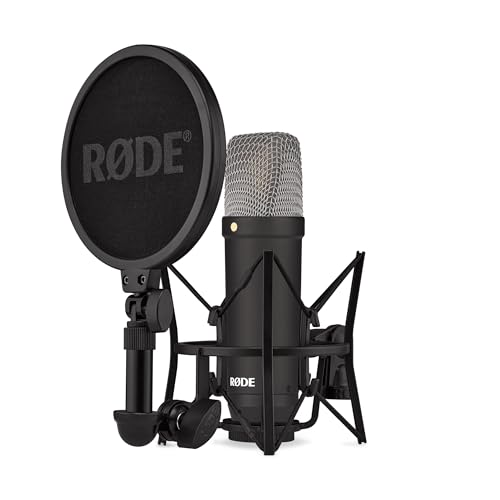
- 4.5 dBA self-noise
- Cardioid pattern for focused vocals
- Includes shock mount, pop filter, and XLR cable
Best For: Vocalists and streamers building a quiet XLR recording setup
Best USB/XLR Flexibility

- USB-C and XLR connectivity
- Ultra-low-noise studio capsule
- 32-bit float USB output helps prevent clipping
Best For: Computer recording and traditional interface-based studio setups
Best High-SPL Studio Choice
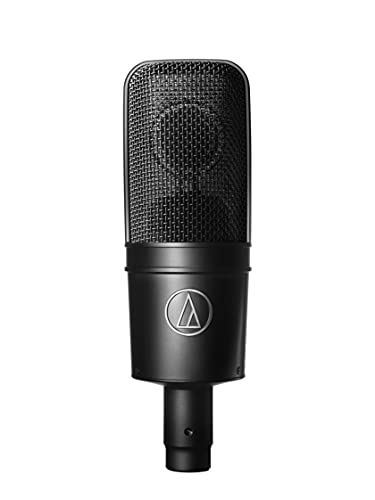
- Exceptionally low-noise design
- Smooth, natural large-diaphragm sound
- High-SPL capability for versatile recording
Best For: Studio vocals and louder instruments through an XLR interface
Warm Low-Noise Vocalist

- Warm, smooth vocal tone with clear detail
- Very low proximity effect for close recording
- XLR mic for vocals, guitars, and piano
Best For: Vocalists and home-studio instrument recording
Precision Instrument Capture
Shure SM137 Cardioid Condenser

- Low self-noise transformerless circuitry
- 15 dB pad for higher-SPL sources
- Natural cardioid sound for instruments
Best For: Acoustic instruments and high-volume performance recording
Plug-and-Play Studio Starter
FIFINE T669 USB Condenser Microphone

- Plug-and-play USB recording for PC and laptop
- Cardioid capsule helps limit ambient sound
- Bundle includes arm, shock mount, and pop filter
Best For: Podcasting, streaming, and voice-over recording
Lowest-Noise Pick
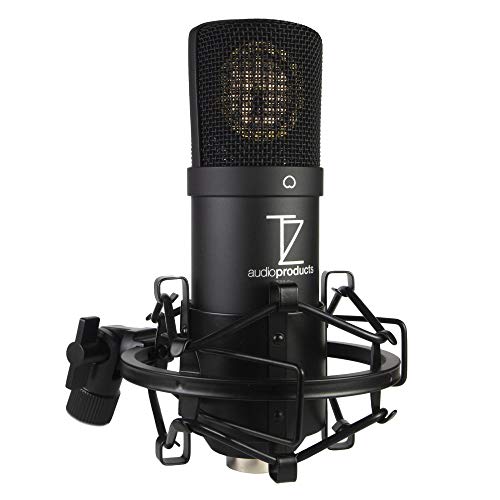
- Less-than-13 dBA noise floor
- Balanced, neutral sound
- Includes shockmount and case
Best For: Quiet home and project studio recording
Proven Studio Value
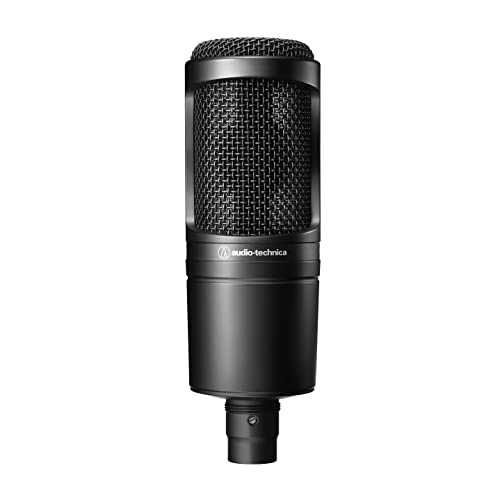
- 20 dB stated audible noise
- Cardioid source isolation
- Handles high SPL and wide dynamics
Best For: Budget-conscious home-studio recording
Budget Large-Diaphragm Option

- Affordable studio condenser
- Cardioid ambience reduction
- Includes shock mount and XLR cable
Best For: Entry-level vocal and instrument recording
Best Overall – RØDE NT1 Signature Series
If you want a condenser microphone with low self noise for vocals, streaming, or studio recording, the RØDE NT1 Signature Series is a strong all-in-one option. Its 4.5 dBA self-noise rating, cardioid pattern, and included accessories make it ready to pair with an audio interface.
Best For: Vocalists, streamers, and home-studio users who want a quiet XLR setup with the essential accessories included.
Pros:
- Very low 4.5 dBA self-noise for clean recordings
- Cardioid pattern focuses on the voice and rejects room sound
- Includes SM6 shock mount, pop filter, XLR cable, and dust cover
- 10-year warranty available with registration
Cons:
- Requires an audio interface for operation
- Does not offer direct USB connectivity
The NT1 Signature is especially practical when quiet vocal capture matters and you want to avoid buying a separate shock mount, pop filter, and XLR cable. Choose it over the NT1 5th Gen if you only need traditional XLR connectivity.
Best Two-Mic Value – NEEWER Pencil Condenser Mic 2-Pack
The NEEWER two-pack suits buyers seeking a condenser microphone with low self noise for instruments, ensembles, and varied recording positions. Interchangeable capsules provide omnidirectional, cardioid, and super-cardioid options, while the included clips, windscreens, and case simplify transport.
Best For: Recording acoustic instruments, strings, horns, orchestras, choirs, and live sound with flexible pickup patterns.
Pros:
- Two microphones provide useful stereo or multi-mic coverage
- Interchangeable omni, cardioid, and super-cardioid capsules
- Includes clips, foam windscreens, and a padded aluminum carrying case
- Broad application range for instruments and ensemble recording
Cons:
- Listed audible noise is 24 dB, higher than the other microphones here
- Requires XLR connections and suitable recording equipment
- Supplied details identify the form factor as shotgun rather than large diaphragm
This kit is more about versatility and quantity than the quietest possible studio floor. It is a sensible choice when interchangeable patterns and two microphones are more valuable than an exceptionally low self-noise specification.
Best USB/XLR Flexibility – RØDE NT1 5th Gen
The RØDE NT1 5th Gen is a flexible condenser microphone with low self noise for users who may record through an interface or directly into a computer. It combines XLR and USB-C connectivity with an ultra-low-noise capsule and 32-bit float USB output designed to prevent clipped takes.
Best For: Vocalists, podcasters, and home recordists who want both computer-friendly USB recording and conventional XLR operation.
Pros:
- Offers both USB-C and XLR connections
- Ultra-low-noise studio capsule for detailed recordings
- 32-bit float USB output helps avoid clipping from loud takes
- Includes shock mount, pop filter, XLR cable, and USB-C cable
Cons:
- More features may be unnecessary for users who only need XLR
- Supplied details list a 1-year standard warranty unless extended
This is the most adaptable option in the group. Its USB mode lowers the barrier to computer recording, while XLR keeps it compatible with a traditional interface-based studio as your setup grows.
Best High-SPL Studio Choice – Audio-Technica AT4040
The Audio-Technica AT4040 is a focused studio pick for anyone comparing a condenser microphone with low self noise for vocals and instruments. Its large diaphragm, transformerless circuitry, wide dynamic range, and high-SPL capability are designed for smooth sound and versatile recording.
Best For: Studio users recording vocals and instruments who prioritize low noise, natural response, and the ability to handle louder sources.
Pros:
- Exceptionally low-noise design with an 82 dB signal-to-noise ratio listed
- Large diaphragm provides smooth, natural sonic characteristics
- High-SPL capability supports versatile source recording
- Includes shock mount, dust cover, and protective carrying case
Cons:
- Requires an audio interface and XLR connection
- Does not include a pop filter or XLR cable in the listed contents
- Intended as a microphone-only studio package
The AT4040 is a strong fit when clean, natural capture and high-SPL versatility matter more than USB convenience. Plan on adding an XLR cable and pop filter if you are recording vocals.
Warm Low-Noise Vocalist – MXL-V87 Condenser Microphone
The MXL-V87 is a practical choice if you want a condenser microphone with low self noise and a warmer vocal character. Its solid-state design combines smoothness and clarity, while the low proximity effect helps keep close-up recordings controlled.
Best For: Vocalists and home-studio users recording R&B, pop, rock, acoustic guitar, or piano through an XLR setup.
Pros:
- Warm, smooth vocal presentation with clear detail
- Very low proximity effect for close-up recording
- Well suited to acoustic guitars and pianos
- Reported 85.5 dB signal-to-noise ratio
Cons:
- Uses XLR connectivity rather than direct USB
- Requires an appropriate recording setup and power source
The MXL-V87 stands out for users who want low-noise condenser performance with a flattering, musical tone. Choose it when warmth and close vocal recording matter more than plug-and-play computer connectivity.
Precision Instrument Capture – Shure SM137 Cardioid Condenser
The Shure SM137 is a strong fit for shoppers seeking a condenser microphone with low self noise for natural instrument recording. Its ultra-thin diaphragm, cardioid pattern, and transformerless Class-A circuitry are designed for smooth high frequencies and controlled low end.
Best For: Acoustic instruments and high-volume performance sources where flat, natural sound and SPL flexibility are important.
Pros:
- Low self-noise with transformerless preamplifier circuitry
- Ultra-thin diaphragm provides smooth highs and controlled lows
- 15 dB pad supports louder sound sources
- Includes a swivel adapter and zippered pouch
Cons:
- Requires phantom power and an XLR connection
- More specialized for instrument recording than general computer use
With its low self-noise design and 15 dB pad, the SM137 offers a focused solution for detailed instrument capture. It is especially appealing when natural reproduction and performance consistency are priorities.
Plug-and-Play Studio Starter – FIFINE T669 USB Condenser Microphone
The FIFINE T669 is a convenient option if you want a condenser microphone with low self noise for computer-based recording without extra audio hardware. Its USB connection, cardioid capsule, gain knob, boom arm, shock mount, and dual pop filter make it ready for podcasting and voice work.
Best For: Podcasters, streamers, voice-over creators, and home users recording directly to a PC or laptop.
Pros:
- Plug-and-play USB connection for PC and laptop recording
- Cardioid capsule helps reduce ambient sound from behind
- Includes boom arm, shock mount, dual pop filter, and USB cable
- Reported 78 dB signal-to-noise ratio
Cons:
- Not compatible with Xbox according to the supplied notes
- USB setup is aimed at computer recording rather than traditional XLR systems
The T669 is the most accessible pick of the group for voice-focused computer recording. Its bundled accessories reduce setup costs, making it a practical starting point for podcasting, streaming, and voice-over work.
Lowest-Noise Pick – TZ Stellar X2
The TZ Stellar X2 is a strong choice if you want a condenser microphone with low self noise for vocals, instruments, or other detailed sources. Its transformerless JFET circuit is rated at less than 13 dBA of audible noise, while the balanced, neutral response is designed to avoid harshness and fatigue. An audio interface with 48V phantom power and an XLR cable are required.
Best For: Home and project studios prioritizing a quiet, neutral capture.
Pros:
- Less-than-13 dBA noise floor supports quiet recording.
- Balanced, neutral frequency response is suitable for varied sources.
- Includes a spring shockmount, flight case, pouch, wind cover, and adapter.
- Durable iron body and protective grille.
Cons:
- Requires an XLR connection and 48V phantom power.
- Does not connect directly to a computer without an audio interface.
Choose the Stellar X2 when low noise and a restrained tonal balance matter more than plug-and-play convenience. Its included accessories also make it a well-equipped starting point for an interface-based setup.
Proven Studio Value – Audio-Technica AT2020
The Audio-Technica AT2020 is a dependable entry point for anyone seeking a condenser microphone with low self noise for project or home-studio work. Its stated audible noise is 20 dB, and the cardioid pattern helps isolate the intended source by reducing pickup from the sides and rear. It uses an XLR output and phantom power.
Best For: Home-studio vocals, instruments, and general recording on a budget.
Pros:
- Cardioid pattern improves isolation of the desired sound source.
- High SPL handling and wide dynamic range add versatility.
- Low-mass diaphragm supports extended frequency and transient response.
- Established price-performance option for project studios.
Cons:
- Requires phantom power and an XLR connection.
- Includes the microphone and user manual but no shockmount or cable in the supplied details.
The AT2020 is a practical all-rounder rather than the quietest option in this group. Its familiar cardioid design and broad recording capabilities make it a sensible first studio condenser when value and versatility are priorities.
Budget Large-Diaphragm Option – Mackie EM-91C
The Mackie EM-91C offers an affordable way to add a large-diaphragm condenser to a studio setup. Its cardioid polar pattern reduces ambience, and it is designed for studio vocals and instruments. The supplied specifications list an audible-noise figure of 78 dB, so buyers specifically focused on a condenser microphone with low self noise should compare that specification carefully.
Best For: Entry-level vocal and instrument recording where low cost is the main priority.
Pros:
- Affordable professional-quality condenser design.
- Large-diaphragm capsule suits studio vocals and instruments.
- Cardioid pattern helps reduce ambient pickup.
- Includes a shock mount and XLR cable.
Cons:
- The supplied audible-noise specification is relatively high at 78 dB.
- Its suitability for very quiet sources is less clear than the other listed options.
- Requires an XLR-connected audio setup.
The EM-91C is best considered a straightforward, budget-friendly studio microphone with useful included accessories. If minimizing self noise is the central requirement, the supplied specifications favor looking closely at alternatives before choosing it.
How We Picked the Best Condenser Microphone with Low Self Noise
We focused on microphones that are practical for recording and offer a strong balance of self-noise performance, sound quality, connectivity, versatility, and price. The selection includes large-diaphragm and pencil-style condensers, USB and XLR designs, and cardioid or switchable-pattern options.
We also considered features that affect real-world use, including pad switches, interchangeable pickup patterns, phantom-power requirements, included accessories, and compatibility with interfaces, mixers, computers, and other recording equipment. A quiet microphone alone cannot eliminate room noise, so suitability for the intended environment was part of the comparison.
Quick Comparison
| Best For | What to Prioritize | Recommended Type |
|---|---|---|
| Podcasts and voiceovers | Clear speech, easy setup, and close-range consistency | USB or cardioid large-diaphragm condenser |
| Vocals | Low self-noise, smooth high frequencies, and pop protection | Large-diaphragm XLR condenser |
| Acoustic instruments | Transient detail and accurate off-axis response | Pencil condenser or neutral cardioid model |
| Flexible studio recording | Multiple patterns, pad options, and broad frequency response | Versatile XLR condenser |
| Simple computer recording | Built-in conversion and headphone or software compatibility | USB condenser microphone |
Key Buying Factors for a Condenser Microphone with Low Self-Noise
Self-Noise and Recording Environment
Self-noise is the microphone’s internally generated hiss, usually specified in decibels A-weighted. Lower figures are preferable for quiet vocals, acoustic instruments, classical sources, and heavy editing. However, a quiet microphone will still capture a noisy computer fan, reflective room, or traffic outside. Room treatment, microphone placement, and appropriate gain remain essential.
Connection and Power
XLR microphones require an audio interface, mixer, or preamp that supplies 48V phantom power. They generally provide more flexible upgrade paths and monitoring options. USB models connect directly to a computer and are easier for beginners, but they may offer fewer expansion choices. Check the required cable and operating-system compatibility before buying.
Pickup Pattern and Sensitivity
Cardioid microphones reduce sound arriving from behind and are often the safest choice for untreated rooms. Omni patterns can sound natural in suitable spaces but capture more ambient sound. Pencil condensers can deliver precise detail for instruments, while large-diaphragm designs are commonly chosen for vocals and spoken word.
Headroom and Tonal Character
Look for a pad switch when recording loud guitar cabinets, drums, or brass. A neutral microphone gives more flexibility during mixing, while a deliberately voiced model may add presence or warmth. Compare frequency response and maximum SPL specifications, but treat them as starting points rather than guarantees of how every source will sound.
Who Should Buy Which Condenser Microphone with Low Self Noise?
Choose a USB model if you want the fastest path to podcasting, streaming, lessons, or home recording. Choose an XLR cardioid condenser if you already own an interface and want better integration with studio hardware. Vocalists and voiceover creators should favor a quiet large-diaphragm model with a smooth top end, while acoustic-instrument players may prefer the focused transient response of a pencil condenser.
For untreated rooms, a cardioid microphone used close to the source is usually the most forgiving choice. For a growing studio, prioritize low self-noise, reliable construction, phantom-power compatibility, and useful accessories over headline features you will rarely use.