
Choosing the best DJ mixer for clubs means balancing sound quality, channel count, effects, software support, and the connections your booth actually needs. The right choice should fit both your performance style and the club’s existing setup.
This roundup compares 10 notable mixers and DJ systems, from compact two-channel models to four-channel controllers designed for more advanced sets.
Best 10 Dj Mixer for Clubs Picks for 2026
Best Entry-Level Club Mixer

- Two-channel club-style workflow
- Free rekordbox DVS upgrade
- Channel filters and Magvel Fader
Best For: Beginners building a separates DJ setup
Best Controller-Style Option
Hercules DJControl Inpulse 500

- Serato and DJUCED compatibility
- Built-in audio interface
- Pads, jog wheels, and fold-out feet
Best For: Software-based two-deck mixing
Best Effects-Focused Club Mixer

- Beat FX and Sound Color FX
- Built-in USB sound card
- Rekordbox DVS included
Best For: Two-channel DJs wanting effects and DVS
Best Standalone Club Controller
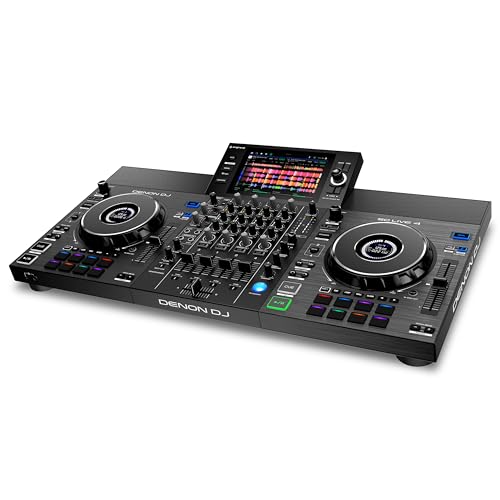
- Laptop-free four-deck operation
- Seven-inch touchscreen and streaming
- XLR, RCA, and booth outputs
Best For: Flexible standalone club and mobile performances
Battle-Ready Choice

- Two-channel mixer with dual USB audio interfaces
- 16 performance pads and 22 built-in Beat FX
- Magvel Fader Pro crossfader for scratch routines
Best For: Serato DJs and battle-style club performances
All-in-One Starter

- Integrated two-channel DJ system
- Seven-inch touchscreen with velocity pads
- USB connectivity for computer-based workflows
Best For: DJs wanting a self-contained, easy-to-use setup
Hybrid Club Hub

- Three-channel design for layered club mixes
- Four-band EQ, compressors, and six Send FX
- USB-C, DVS, PRO DJ LINK, and SonicLink support
Best For: Creative DJs running layered hybrid club setups
Easy-Start All-Rounder
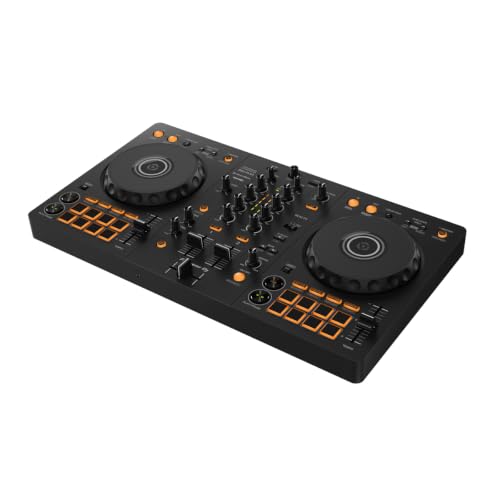
- Smart Fader simplifies early blends
- 16 pads support performance features
- Portable, streaming-ready connectivity
Best For: Beginners and developing DJs
Club-Layout Stepping Stone

- Club-inspired layout builds booth familiarity
- Full-size jog wheels support expressive control
- Groove Circuit and Stems FX add remix options
Best For: DJs preparing for club performances
Pro Performance Powerhouse
DDJ-FLX10 4-Channel Controller

- Four-channel workflow suits club-style sets
- Track Separation enables live mashups
- DMX output adds lighting control
Best For: Advanced DJs and professional performers
Best Entry-Level Club Mixer – Pioneer DJM-250MK2
If you want a straightforward dj mixer for clubs, the Pioneer DJM-250MK2 provides a familiar two-channel layout modeled on professional booth workflows. Its dedicated channel filters, Magvel Fader, and rekordbox DVS upgrade make it a practical choice for learning and building a separates setup.
Best For: Beginners who want a simple, club-style mixer for home practice and digital or turntable-based setups.
Pros:
- Two-channel layout teaches a standard club workflow.
- Free rekordbox DVS unlock supports digital mixing with turntables or media players.
- Dedicated Sound Color FX Filter on each channel.
- Magvel Fader is designed for smooth blending and light scratching.
Cons:
- Two channels may feel limiting for more complex club setups.
- Its feature set is intentionally focused rather than extensive.
The DJM-250MK2 is a no-fuss option for developing core mixing skills. It makes the most sense when you value a familiar Pioneer DJ layout over a larger effects section or additional channels.
Best Controller-Style Option – Hercules DJControl Inpulse 500
The Hercules DJControl Inpulse 500 is a two-deck USB controller for DJs who want software control rather than a traditional standalone mixer. For a dj mixer for clubs setup that starts with Serato or DJUCED, it combines an audio interface, hardware input mixer, performance pads, and large touch-detecting jog wheels.
Best For: Beginner and intermediate DJs who want a computer-based two-deck controller with performance features and practical setup protection.
Pros:
- Works with Serato and DJUCED.
- Built-in audio interface and hardware input mixer.
- Sixteen backlit RGB pads, vinyl function, and loop controls.
- Retractable feet help lift the controller away from spilled drinks.
Cons:
- It is a USB DJ controller rather than a conventional club mixer.
- Its two-deck design may not suit DJs who need more decks.
The Inpulse 500 is a flexible software-oriented choice with useful hands-on controls. Choose it when portability, pads, jog wheels, and guided two-deck mixing matter more than a traditional mixer-only workflow.
Best Effects-Focused Club Mixer – Pioneer DJM-450
The Pioneer DJM-450 brings a familiar professional booth layout to a compact two-channel format. As a dj mixer for clubs and home practice, it adds Beat FX, Sound Color FX, a built-in sound card, rekordbox DVS support, and the durable Magvel Fader.
Best For: DJs who want a compact two-channel mixer with hands-on effects, USB recording, and DVS capability.
Pros:
- Club-style layout and controls for home practice.
- Beat FX and Sound Color FX provide hands-on transition options.
- Free rekordbox DVS support works with turntables or media players.
- Built-in sound card supports recording and software use over USB.
Cons:
- Two channels limit expansion compared with larger mixers.
- Its effects-focused design may be more than a beginner needs.
The DJM-450 is a strong fit for DJs who want a compact mixer that feels closer to club equipment while offering more creative control than a basic two-channel model. Its USB sound card also reduces the need for an extra interface.
Best Standalone Club Controller – Denon DJ SC LIVE 4
The Denon DJ SC LIVE 4 is a four-deck standalone controller for DJs who want a complete booth without relying on a laptop. It suits a flexible dj mixer for clubs setup with Engine DJ OS, a seven-inch touchscreen, Wi-Fi streaming, multiple media inputs, professional outputs, and compatibility with Serato DJ and VirtualDJ.
Best For: DJs who need a laptop-free, four-deck system for club practice, mobile performances, streaming, or guest-request-heavy sets.
Pros:
- Standalone Engine DJ OS supports laptop-free performances.
- Four-deck control with a seven-inch touchscreen.
- Wi-Fi streaming, Bluetooth, two USB inputs, and an SD card slot.
- Includes XLR main, RCA main, and 1/4-inch booth outputs.
Cons:
- Its larger feature set may be unnecessary for simple two-deck mixing.
- Built-in speakers and streaming features may matter less in a fixed club booth.
The SC LIVE 4 is the most self-contained option in this group. It is especially appealing when you want four-deck flexibility and broad connectivity, while still retaining compatibility with established DJ software.
Battle-Ready Choice – Pioneer DJ DJM-S7
The Pioneer DJ DJM-S7 is a focused two-channel option for DJs seeking a club-oriented dj mixer for clubs with strong Serato DJ support. Its performance pads, built-in effects, dual USB audio interfaces, and Magvel Fader Pro crossfader suit scratch routines, transitions, and back-to-back sets.
Best For: Serato DJs, battle-style performances, and two-channel club setups.
Pros:
- Dual USB audio interfaces support flexible DJ workflows.
- Includes 16 performance pads and 22 built-in Beat FX.
- Magvel Fader Pro crossfader is suited to scratch-focused mixing.
- Bluetooth 5.0 provides an additional audio-input option.
Cons:
- Two channels may limit DJs who regularly layer three or more sources.
- Its feature set is especially oriented toward Serato DJ users.
The DJM-S7 is a practical pick when hands-on performance control matters more than a larger channel count. Its XLR and RCA outputs also make it adaptable to different sound-system connections.
All-in-One Starter – Pioneer DJ XDJ-RR
The Pioneer DJ XDJ-RR combines core DJ controls in an all-in-one system, making it a straightforward entry point for a dj mixer for clubs setup. It has two channels, USB connectivity, a seven-inch touchscreen, and velocity pads for performance-focused mixing.
Best For: DJs who want a self-contained two-channel system with touchscreen control.
Pros:
- All-in-one design reduces the need for separate mixer and deck components.
- Seven-inch touchscreen supports system navigation and control.
- Velocity pads add hands-on performance options.
- USB connectivity supports a computer-based workflow.
Cons:
- Two channels may be restrictive for more complex club rigs.
- It is an integrated DJ system rather than a standalone mixer.
The XDJ-RR makes sense for DJs prioritizing convenience and a compact, unified setup. Choose it when touchscreen access and integrated operation are more important than expanding to a larger mixer format.
Hybrid Club Hub – AlphaTheta DJM-V5
The AlphaTheta DJM-V5 is a three-channel dj mixer for clubs built for layered blends and hybrid setups. Its four-band EQ, per-channel compressor, six Send FX, USB-C connectivity, DVS support, and SonicLink transmitter give club DJs several ways to shape and monitor a mix.
Best For: Creative club DJs building layered, hybrid, or effects-heavy three-channel sets.
Pros:
- Three channels provide more layering flexibility than a two-channel mixer.
- Four-band EQ and per-channel compressor support controlled, extended blends.
- Six Send FX and a cross-pass filter expand creative sound shaping.
- Supports PRO DJ LINK, USB-C for rekordbox and Serato DJ Pro, DVS, and USB send/return.
Cons:
- The extensive routing and effects options may require more setup familiarity.
- It is heavier than the other listed options at 17.6 pounds.
The DJM-V5 is the strongest fit here for DJs who need more than basic two-channel mixing. Its combination of three channels, send effects, and modern connectivity makes it a flexible centerpiece for a contemporary club booth.
Easy-Start All-Rounder – DDJ-FLX4 2-Channel Controller
If you want a forgiving dj mixer for clubs that can also support home practice and livestreaming, the Pioneer DJ DDJ-FLX4 is a practical entry point. Its simple two-channel layout, Smart Fader, performance pads, and broad device compatibility make it approachable while leaving room to develop core mixing skills.
Best For: Beginners and developing DJs who want portable two-deck control, streaming support, and an easy path into Pioneer DJ-style workflows.
Pros:
- Smart Fader can automatically adjust volume, bass, and BPM for easier blends.
- Sixteen performance pads support Hot Cues, Pad FX, Beat Jump, and Sampler functions.
- Works with rekordbox, Serato DJ Pro, and djay across PC, Mac, iOS, and Android devices.
- Built-in sound card, mic input, and USB or Bluetooth connectivity support flexible setups.
Cons:
- Two-channel, two-deck control is more limited than a four-channel club-oriented controller.
- Its beginner-focused layout may not provide the hands-on depth advanced club DJs want.
The DDJ-FLX4 is best viewed as a portable learning and streaming controller rather than a full club-booth replacement. It is a strong choice if ease of use and flexible connectivity matter more than four-channel expansion.
Club-Layout Stepping Stone – DDJ-GRV6 4-Channel Controller
The AlphaTheta DDJ-GRV6 is a compelling dj mixer for clubs shoppers who want practice hardware that feels closer to a professional booth. Its four-channel layout, full-size jog wheels, and rekordbox and Serato DJ Pro support help build transferable muscle memory, while Groove Circuit adds live-performance options.
Best For: DJs preparing for club booths who want a club-standard layout, expressive jog-wheel control, and creative remix or Stems features.
Pros:
- CDJ-3000 and DJM-A9-inspired layout is designed to support club-focused practice.
- Four-channel control and full-size jog wheels provide room for more complex sets.
- Groove Circuit can swap drum parts for loops in other genres during performance.
- Works with rekordbox and Serato DJ Pro and includes a Smart Rotary Selector for browsing.
Cons:
- Its 4.6 kg weight and large size make it less portable than smaller controllers.
- Some creative features depend on compatible software workflows.
The DDJ-GRV6 occupies a useful middle ground: more club-oriented than a beginner two-channel unit, but still centered on controller-based performance. Choose it when transferable layout familiarity and hands-on remixing are priorities.
Pro Performance Powerhouse – DDJ-FLX10 4-Channel Controller
For serious hobbyists, mobile DJs, and professionals, the Pioneer DJ DDJ-FLX10 is a feature-rich dj mixer for clubs alternative with a four-channel workflow built to translate to CDJ and DJM booths. Track Separation, large jog displays, professional effects, and DMX lighting control make it suited to ambitious performance setups.
Best For: Advanced DJs who want four-channel control, live mashup tools, rekordbox and Serato compatibility, and integrated lighting control.
Pros:
- Four-channel layout and pro FX mirror a club-standard workflow.
- Track Separation can split vocals, drums, and instruments for live mashups.
- Multicolor on-jog displays show waveforms, artwork, and playing parts.
- Supports rekordbox and Serato DJ Pro and includes built-in DMX output for lights.
Cons:
- Its advanced feature set may be more than beginners need.
- At 14.8 pounds, it is less convenient to transport than lightweight controllers.
The DDJ-FLX10 is the strongest fit here for DJs seeking a serious, future-focused performance controller. Its capabilities are best justified when live remixing, four-deck flexibility, and lighting integration are central to the setup.
How We Picked the Best Dj Mixer for Clubs
We focused on features that matter in real club environments: channel flexibility, durable controls, professional connectivity, dependable software integration, effects, monitoring options, and room to grow. Because the selection includes both traditional mixers and integrated DJ systems, we also considered workflow, portability, and whether each model suits booth-based or mobile performance.
Models with DVS support, multiple channels, standalone operation, or advanced performance controls earned attention for their flexibility. More compact options remain useful for smaller booths, practice spaces, and DJs who prefer a straightforward two-deck setup.
Quick Comparison
| Best For | Recommended Type | What to Look For |
|---|---|---|
| Traditional club mixing | Professional DJ mixer | Multiple channels, balanced outputs, booth control |
| Two-deck setups | Compact mixer or controller | Simple layout, reliable effects, manageable size |
| Turntablists and battle DJs | Performance mixer | Crossfader quality, Serato integration, pad controls |
| Flexible digital performance | Four-channel controller | Track separation, stems, software support, layered control |
| Computer-free sets | Standalone DJ system | Built-in screen, media support, independent operation |
Key Buying Factors for a Dj Mixer for Clubs
Channel Count and Layout
Two channels are enough for basic transitions, but four channels provide more room for layered sets, guest DJs, samplers, and multiple media players. Check the physical layout as well as the number of channels; familiar controls can reduce mistakes during a busy set.
Inputs, Outputs, and Booth Integration
Look for the connections your venue uses, including balanced master outputs, booth output, microphone inputs, line inputs, and phono inputs when turntables are involved. DVS compatibility is valuable if you want software control from traditional decks.
Effects and Performance Controls
Built-in beat effects, send effects, performance pads, track separation, and dedicated filter controls can expand your sound without external hardware. Prioritize controls that match your style rather than choosing based only on the number of features.
Software and Standalone Support
Confirm compatibility with your preferred platform, such as rekordbox, Serato DJ, or DJUCED. Standalone systems can simplify setup, while controllers usually provide deeper software control and easier access to newer performance features.
Build, Monitoring, and Upgrade Path
Club equipment faces frequent transport and heavy use, so solid knobs, faders, and switches matter. Also check headphone cueing, booth monitoring, and whether the unit can remain useful as your setup expands.
Who Should Buy Which Dj Mixer for Clubs?
Choose a compact two-channel mixer if you want a focused setup for two decks or a small booth. A performance mixer is better for scratch-focused sets and Serato workflows. DJs who want standalone operation should consider an integrated system with onboard media access and a screen.
For modern open-format, house, and techno sets with multiple layers, a four-channel controller offers more flexibility. Buyers who want advanced software features such as track separation should prioritize newer controller designs. Before purchasing, verify the venue’s players, cabling, software requirements, and available booth space so your new equipment fits the system rather than forcing an unnecessary rebuild.