
A GPS tracker can help you confirm a new driver arrived safely, locate a car when plans change, and spot driving habits worth discussing. The best choice depends on what you want to know—and how much access your teen is comfortable sharing.
These 10 options include plug-in OBD trackers and portable units. Compare their alerts, coverage, power needs, and total cost before choosing one for your family.
Best 10 Gps Trackers for Teen Drivers Picks for 2026
Best for Rapid Updates

- Updates as fast as once per second
- Speed and hard-braking alerts
- Vehicle-powered OBD setup
Best For: Frequent updates in a regularly driven car
Best for Driving Insights
- Speed and hard-braking insights
- Impact and geofence alerts
- Vehicle-health monitoring
Best For: Reviewing driving habits and vehicle health
Magnetic Mount Pick

- Magnetic, waterproof vehicle placement
- Updates as fast as every 3 seconds
- Subscription and periodic charging required
Best For: Flexible placement and location alerts
Driver Behavior Pick
- Speeding and driving-behavior alerts
- 10-second location refreshes
- Subscription follows five-day trial
Best For: Plug-in monitoring of teen driving habits
Fastest Location Updates

- Updates as often as every 3 seconds
- Up to one year of trip playback
- Subscription from $8.95/month per device
Best For: Parents prioritizing frequent location updates
No Monthly Fee

- SIM and data included
- Updates as often as every 5 seconds while moving
- Speed alerts and 180-day trip history
Best For: Families avoiding recurring tracking fees
Three Months Included

- First three months of service included
- Speed, ignition, and geofence alerts
- Up to one year of trip history
Best For: Parents wanting to try tracking before selecting a plan
Best Portable Pick – Spy Tec Mini GPS Tracker
Among GPS trackers for teen drivers, this compact Spy Tec model suits families who want a tracker they can move between vehicles rather than leave plugged into one car. The included first month lets you try its location tracking and alerts before paying for ongoing service.
Best For: Families who want portable tracking with speed and boundary alerts.
Pros:
- Compact, battery-powered design with up to 14 days of battery life.
- Adjustable location updates as fast as every five seconds, plus route-history review.
- Geofence and speed alerts; first month of service included.
Cons:
- Requires a paid subscription after the first month; the advertised $22.95 monthly starting price depends on a long-term prepaid plan.
- Needs periodic charging, unlike vehicle-powered OBD trackers.
Choose it if portability matters more than set-and-forget power. Its alerts address common teen-driving concerns, but factor recurring service and charging into your decision.
Best No-Monthly-Fee Pick – TuTrackAI OBD GPS Tracker
For shoppers comparing GPS trackers for teen drivers without a recurring bill, this TuTrackAI model includes its 4G SIM and data plan with no stated monthly fees. It draws power from the vehicle’s OBD-II port, so there is no tracker battery to charge.
Best For: Families seeking plug-in vehicle tracking without monthly subscription charges.
Pros:
- Included data plan with no stated monthly or activation fees.
- Plug-and-play OBD-II setup with no wiring or charging.
- Speed and geofence notifications, unplug alerts, and up to 180 days of trip history.
Cons:
- Requires access to a compatible vehicle’s OBD-II port and stays with that vehicle.
- Cellular coverage varies by country, carrier, and local network conditions.
Its combination of driving alerts, trip records, and vehicle power makes it a practical fixed-car option. Check the vehicle’s port and local network coverage before relying on it.
Best for Rapid Updates – Spytec OBD GPS Tracker
If frequent location updates top your list of GPS trackers for teen drivers, this Spytec OBD unit is designed to update as often as once per second. It plugs into the vehicle’s OBD port and runs on vehicle power, avoiding charging breaks.
Best For: Parents prioritizing frequent updates and driving-related notifications in one car.
Pros:
- Plug-in installation with no tracker battery to recharge.
- Location updates advertised as fast as once per second.
- Speed, geofence, hard-braking, ignition, and movement notifications.
Cons:
- Requires a subscription to activate; advertised plans start at $8.95 per month.
- Occupies the car’s OBD port and can be unplugged.
This is a stronger fit for ongoing monitoring than for portable tracking. The alert range is useful, but compare the subscription cost with the update frequency you actually need.
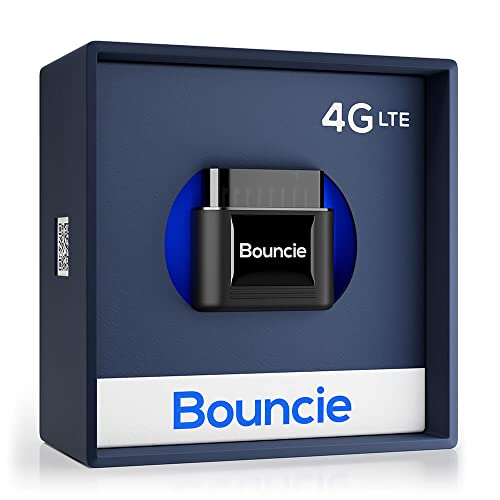
Best for Driving Insights – Bouncie GPS Tracker
Bouncie stands out among GPS trackers for teen drivers when you want more than a location dot. This OBD2 tracker records trips and driving metrics such as speed, acceleration, hard braking, and idle time, while also monitoring vehicle health.
Best For: Families who want driving-behavior and vehicle-health information alongside location tracking.
Pros:
- Detailed route history and driving insights, including speed and hard braking.
- Geofence notifications and impact-detection SMS alerts.
- Vehicle diagnostic monitoring; plugs into the OBD2 port without battery charging.
Cons:
- Requires a $9.65 monthly subscription.
- OBD2 installation is intended for most vehicles from 1996 onward, so check compatibility.
Pick Bouncie if reviewing driving patterns and maintenance signals is as important as seeing where the car went. Its monthly fee is the trade-off for those broader monitoring features.
Magnetic Mount Pick – LandAirSea 54 GPS Tracker
Among GPS trackers for teen drivers, the LandAirSea 54 suits families that want a magnetic tracker rather than an OBD-port device. Its compact, waterproof design can attach to a vehicle, while the SilverCloud app and web portal provide location tracking, alerts, and geofencing.
Best For: Families that prefer a rechargeable, magnetic tracker with location alerts and route history.
Pros:
- Magnetic, waterproof design offers flexible vehicle placement.
- Location updates can be as fast as every 3 seconds, with up to one year of historical playback.
- Motion-activated sleep helps preserve battery life when the vehicle is parked.
Cons:
- Requires a paid subscription for each device.
- Its rechargeable battery needs periodic charging; the listed average life is 30 days.
This is a location-focused choice for parents who value flexible placement. If speeding and braking alerts are the priority, an OBD tracker with those features may be a better fit.
Driver Behavior Pick – Benbengo OBD GPS Tracker
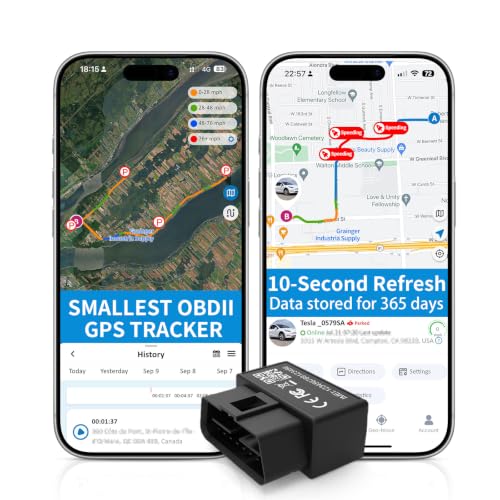
For shoppers comparing GPS trackers for teen drivers, this Benbengo OBD device puts driving behavior alongside location. Plug it into a vehicle’s OBDII port to view trips and receive alerts for speeding, hard braking, rapid acceleration, crashes, and geofence breaches.
Best For: Parents who want plug-in installation and configurable speeding alerts.
Pros:
- Plugs into the OBDII port without routine tracker charging.
- Offers 10-second location refreshes and a customizable speeding threshold.
- Stores up to 12 months of trip data and provides mileage reports.
Cons:
- Requires a subscription after the five-day free trial.
- Needs an available OBDII port and is less flexible to place than a magnetic tracker.
The combination of speed, braking, and acceleration alerts makes this the most directly teen-driving-focused option here. Budget for the ongoing plan: the notes list $6.49 per month with a one-year plan or $8.99 month-to-month.
Vehicle Health Pick – Vyncs OBD GPS Tracker
Vyncs adds vehicle diagnostics to the features many families seek in GPS trackers for teen drivers. This OBD-powered tracker provides trips, location, zones, and alerts for speeding, braking, rapid acceleration, and sharp turns, plus available fault-code and maintenance information.
Best For: Families that want driving alerts and vehicle-health data in one OBD device.
Pros:
- Runs from the OBD port, so there is no tracker battery to recharge.
- Provides driving alerts, customizable zone alerts, and unlimited trip history on a map.
- Includes vehicle information such as fault codes, maintenance, and battery voltage.
Cons:
- Despite the no-monthly-fee positioning, an activation fee and annual renewal are required.
- The stated server update cadence is every minute, rather than continuous second-by-second reporting.
Vyncs is a practical choice if you also want to keep an eye on the car itself. Confirm the activation and renewal costs before buying, and choose a faster-refresh option if frequent location updates matter most.
Fastest Location Updates – LandAirSea SYNC
Among GPS trackers for teen drivers, the LandAirSea SYNC stands out for location updates as frequent as every three seconds. It plugs into a vehicle’s OBD-II port and lets you check trips through the SilverCloud app or web dashboard.
Best For: Parents who want frequent location updates and a long trip-history window.
Pros:
- Offers geofencing, speed monitoring, and alerts.
- Provides up to one year of historical playback.
- Plugs into the OBD-II port without a separate installation.
Cons:
- Requires a subscription, with plans listed from $8.95 per month per device.
- Requires access to the vehicle’s OBD-II port.
The frequent updates make this a strong fit for checking a new driver’s route in near real time, provided the ongoing subscription fits your budget.
If you’re comparing GPS trackers for teen drivers by ongoing cost, the VITALGLOW OBD tracker is worth a look: its supplied 4G SIM and data do not require a monthly subscription. Plug it into a compatible vehicle’s OBD-II port to view location and driving activity in the TrackEase app or web dashboard.
Best For: Families seeking OBD-powered tracking without a recurring subscription.
Pros:
- Includes SIM and data with no monthly or activation fee.
- Provides moving-location updates as often as every five seconds and up to 180 days of trip history.
- Supports speeding, geofence, vehicle-movement, and disconnection alerts.
Cons:
- Tracking depends on local cellular availability.
- Needs a compatible vehicle with an OBD-II port.
Its fee structure is the main draw, while the alerts cover the essentials for checking on a teen driver. Confirm vehicle compatibility and cellular coverage before buying.
The GPSCOTECH OBD tracker gives shoppers comparing GPS trackers for teen drivers three months of service to try before choosing a paid plan. It plugs into an OBD-II port and reports location and speed through its app, with updates as fast as every 10 seconds where cellular coverage is available.
Best For: Parents who want an included trial period plus speed and ignition alerts.
Pros:
- Includes three months of tracking, SIM, and cellular data.
- Sends speed, ignition, movement, and geofence alerts.
- Stores up to one year of routes, stops, trip times, and mileage.
Cons:
- Requires a paid plan after the first three months.
- Requires an OBD-II-equipped vehicle and cellular coverage.
The included service period makes it easier to assess the alerts and trip records before committing; afterward, the listed plans start at $4.99 per month with a two-year commitment.
How We Picked the Best Gps Trackers for Teen Drivers
We focused on features that matter when a teen is behind the wheel: location and trip visibility, speeding or geofence alerts, straightforward installation, and predictable costs. The selection covers OBD plug-in and portable battery-powered designs, including options advertised without monthly fees. Product claims can vary by plan and seller, so verify current terms before purchasing. A tracker is a tool for check-ins and conversations, not a substitute for driving instruction or emergency services.
Quick Comparison: Plug-In Vs. Portable
OBD plug-in trackers draw power from a compatible vehicle’s diagnostic port, avoiding routine charging. They are a practical fit for a teen who regularly drives the same car. They may offer vehicle-derived data, but the exact alerts depend on the device and service.
Portable trackers can be placed in a vehicle without using its OBD port and may be easier to move between cars. Check battery life, mounting options, and whether the chosen placement affects GPS or cellular reception. Either style may require cellular coverage or a paid service for live features.
Key Buying Factors for Gps Trackers for Teen Drivers
Alerts You Will Actually Use
Prioritize arrival and departure notifications, geofences around common destinations, and speeding alerts if those support your family’s rules. Check whether speed alerts are based on a limit you set or on posted road limits. Trip history can be more useful for a calm follow-up conversation than a stream of notifications.
Update Frequency and Coverage
A device advertised with 10-second updates may report less often under different settings or signal conditions. Confirm coverage along your teen’s usual routes, whether the service works outside your home country, and what happens when the car is in a garage or an area with weak cellular reception.
Full Cost and Setup
Compare the purchase price with activation, subscription, renewal, and cancellation terms. “No monthly fee” does not necessarily mean every feature is free indefinitely. For OBD units, confirm vehicle compatibility and port accessibility; for portable units, plan for charging or battery replacement.
Privacy and Trust
Tell your teen what the tracker records, who can see it, and when you will check it. Agree on reasonable alerts and review access as their driving experience grows. Check the app’s account-security and location-sharing controls, too.
Who Should Buy Which Gps Trackers for Teen Drivers?
Choose an OBD tracker if your teen mainly uses one compatible car and you want low-maintenance power. Consider a portable tracker if you need placement flexibility and can manage its battery. If budget is the priority, compare the no-monthly-fee listings carefully against their included features and long-term terms. If you mainly want reassurance, start with location and arrival alerts; choose a device with driving alerts only if you plan to use them constructively.