
Big amplifiers can strain a vehicle’s electrical system, but a lithium battery is not a universal fix. The right choice depends on whether you need dedicated audio support, a replacement starting battery, or both.
These nine options range from compact auxiliary batteries to larger dual-purpose models. Compare their fit, chemistry, discharge capability, and charging requirements before choosing one for your build.
Best 9 Lithium Batteries for Car Audio Systems Picks for 2026
High-Power Compact Pick

- 6,000W stated maximum power rating
- 22Ah capacity; 293Wh energy
- Built-in cell balancing
Best For: Compact, high-power car audio builds
Auxiliary Electronics Pick

- 12.8V, 6Ah LiFePO4 auxiliary battery
- Built-in BMS; 200 CCA stated
- Harness and mounts not included
Best For: Compact auxiliary electronics support
LTO Group 34 Bundle
RSV-23 Battery with Rockville Backpack

- 23Ah actual capacity; 230Wh
- Up to 5,000W stated system support
- Includes a Rockville backpack
Best For: High-drain builds needing a compact Group 34 LTO battery
Starting Battery Pick
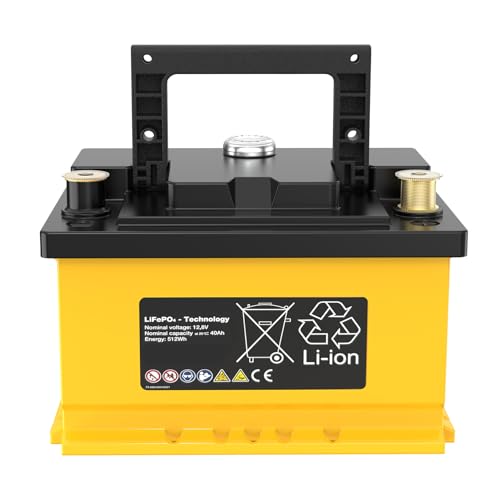
- 40Ah capacity and stated 660 CCA
- Built-in BMS and IP66-rated case
- Check M8 terminal height and fit
Best For: Compatible vehicle starting-battery replacement
Best for Easy Setup

- 12.8V, 8Ah auxiliary battery
- Compact case with built-in BMS
- Verify fit and conflicting warranty terms
Best For: Compact auxiliary-battery replacements
Car Audio Powercell Pick

- Marketed specifically for car audio
- Group 34 format; M6 bolts included
- 10Ah versus 20Ah capacity conflict
Best For: Audio builds needing a verified Group 34 LTO powercell
Compact H5/H6 Option
40Ah LiFePO4 Start-Stop Battery

- 660 CCA and 40Ah capacity
- About 15 lb; IP66-rated
- Low-temperature heating feature
Best For: Compact start-stop replacement with verified vehicle fitment
Dual-Purpose Pick

- 105Ah capacity and 1000 CCA
- Bluetooth battery monitoring
- Reserves 10%–15% for starting
Best For: Starting and accessory use with app-based monitoring
Lightweight H5 Starter

- 800 CCA starting rating
- About 12.8 lb; Group 47/H5
- Amp-hour capacity not stated
Best For: Lightweight H5 starting-battery replacement with verified fit
High-Power Compact Pick – Big Jeff Audio BJ-LI-22AH
Among lithium batteries for car audio systems, the Big Jeff Audio BJ-LI-22AH is a compact option for builds that need substantial output. It pairs a stated 6,000-watt maximum power rating with 22Ah of capacity and 293Wh of stored energy.
Best For: High-power car audio builds where a compact 12V battery is a priority.
Pros:
- Stated maximum power rating of 6,000 watts.
- 22Ah capacity and 293Wh of energy.
- Built-in cell balancing and support for up to 14.7V.
Cons:
- Check your charging setup against its stated 14.7V support before installing.
- Listing does not specify terminal hardware or mounting accessories.
Its small 3.61 x 7.09 x 6.4-inch dimensions make it worth considering when installation space is limited. Confirm the electrical and connection requirements of your specific build before buying.
Auxiliary Electronics Pick – Mighty Max MM-AUX12LI
The Mighty Max MM-AUX12LI fills a narrower role than many lithium batteries for car audio systems: it is a 12.8V, 6Ah auxiliary battery intended to support onboard electronics when the engine shuts off at a stop. Its LiFePO4 cells and built-in BMS make it a practical option for a compact auxiliary position.
Best For: Vehicles needing a small auxiliary battery for onboard electronics, rather than a high-output audio power bank.
Pros:
- Integrated BMS and stated resistance to vibration.
- Up to 60% lighter than comparable lead-acid auxiliary batteries.
- Multiple mounting positions are supported, and nut-and-bolt hardware is included.
Cons:
- Its 6Ah capacity is modest for demanding audio loads.
- Wire harness and mounting accessories are not included.
- Warranty information conflicts in the supplied listing: the bullets say five years, while the details say one year.
Check the 6 x 3.37 x 5.18-inch footprint and left-positive terminal placement against your vehicle. Also verify the warranty terms before ordering.
LTO Group 34 Bundle – RSV-23 Battery with Rockville Backpack
For shoppers comparing lithium batteries for car audio systems, this bundle centers on the RSV-23 Group 34 LTO battery. The battery is listed at 12V, 23Ah actual capacity and 230Wh, with stated support for setups up to 5,000 watts; the included Rockville backpack is an extra rather than an audio-install component.
Best For: Buyers seeking a compact Group 34 LTO battery for a high-drain car audio build who can use the bundled backpack.
Pros:
- Stated support for audio setups up to 5,000 watts.
- 23Ah actual capacity, 230Wh of energy and 750 CCA equivalent.
- Battery is described as weighing 10 pounds and uses M6 terminal hardware.
Cons:
- The backpack adds no battery capacity or audio-install hardware.
- The listed 69Ah figure is a lead-acid-equivalent rating, not the battery’s actual 23Ah capacity.
- The listing’s overall bundle dimensions should not be treated as verified battery-only dimensions.
The RSV-23 is the reason to consider this package: compare its actual capacity, terminal requirements and stated output with your system. Confirm battery fit separately before assuming the bundle’s listed dimensions describe the battery.
Starting Battery Pick – 12V 40Ah LiFePO4 Car Battery
Among lithium batteries for car audio systems, this 12V 40Ah LiFePO4 model is primarily a vehicle starting battery, with a stated 660 CCA and 100-minute reserve capacity. Its built-in BMS and compact case may appeal if you want a lithium replacement for a compatible car, but the listing does not specify an audio-system power rating.
Best For: Drivers replacing a compatible vehicle starting battery who want a 40Ah lithium option alongside their car audio setup.
Pros:
- Rated at 660 CCA, 40Ah, and 100-minute reserve capacity.
- Built-in BMS provides protection against overcharging, over-discharging, overheating, and short circuits.
- IP66-rated case and an emergency activation button.
Cons:
- Check terminal compatibility and clearance: the supplied M8 screw can raise the stated height from 8 inches to 9.18 inches.
- No dedicated car-audio output specification is provided.
The strongest case for this battery is as a starting-battery replacement, not as a proven solution for a particular amplifier load. Confirm your vehicle’s battery dimensions, terminals, and charging requirements before buying.
Best for Easy Setup – Mighty Max MM-AUX14LI 8Ah
If you’re comparing lithium batteries for car audio systems, the Mighty Max MM-AUX14LI is a small auxiliary battery rather than a dedicated high-output audio battery. Its 12.8V, 8Ah LiFePO4 design is described for keeping onboard electronics operating when an engine shuts off at a stop.
Best For: Vehicles that need a compact replacement auxiliary battery for onboard electronics, subject to fit and electrical compatibility.
Pros:
- Compact 6 x 3.37 x 5.93-inch case with a stated weight saving of up to 60% versus comparable lead-acid auxiliary batteries.
- Built-in BMS and stated 200 CCA with an 18-minute reserve capacity.
- Includes nut-and-bolt terminal hardware and allows multiple mounting positions, excluding upside down.
Cons:
- Its 8Ah capacity is modest for substantial audio power demands.
- Wire harness and mounting accessories are not included; the supplied warranty details also conflict on term length.
Choose this for an appropriately sized auxiliary-battery location, not on the assumption that it can support a large amplifier. Verify dimensions, left-positive terminal orientation, and the warranty terms before ordering.
Car Audio Powercell Pick – XS Power PWR-S5-3400 LTO
Of these lithium batteries for car audio systems, the XS Power PWR-S5-3400 is the one explicitly marketed for car audio and stereo applications. It’s a 12V Group 34 LTO powercell with M6 terminal bolts included, but the supplied specifications disagree on its amp-hour capacity.
Best For: Car audio buyers considering a Group 34 LTO powercell who can verify its electrical specifications against their system.
Pros:
- Specifically marketed for car audio, stereo, and performance-racing applications.
- Group 34 format with included M6 terminal bolts.
- Listing title states 1000 CA and a 2000-amp rating.
Cons:
- Capacity conflicts: the title states 10Ah, while the product details state 20Ah.
- The meaning and test conditions of the 2000-amp rating are not explained in the supplied notes.
This is the most directly audio-oriented option here, but don’t size an electrical system from the headline numbers alone. Confirm the actual capacity, applicable current ratings, fit, and charging requirements with the seller before purchase.
Compact H5/H6 Option – 40Ah LiFePO4 Start-Stop Battery
Among lithium batteries for car audio systems, this 12V 40Ah model is a compact starting-battery option rather than a dedicated high-capacity audio bank. It offers 660 CCA, a stated 100-minute reserve capacity, and a 400A BMS.
Best For: Drivers seeking a lightweight H5/H6-size start-stop replacement who will verify vehicle, charging-system, and audio-load compatibility.
Pros:
- Weighs about 15 lb and measures 9.5 x 6.9 x 8 inches.
- IP66-rated case and BMS protection against overcurrent, short circuits, and temperature extremes.
- Low-temperature heating before charging and a manual emergency restart button.
Cons:
- 40Ah capacity offers less stored energy than the larger 105Ah option in this roundup.
- Requires a full charge with a lithium battery charger before first use.
Its compact size and starting features are the draw, but check terminal fitment and charging compatibility before using it alongside an audio system. The emergency restart feature does not replace adequate capacity for extended listening.
Dual-Purpose Pick – VEVOR 105Ah Group 24 LiFePO4
For shoppers comparing lithium batteries for car audio systems, this VEVOR battery pairs a larger 105Ah capacity with a stated 1000 CCA for engine starting. Its dual-purpose design makes it worth considering when accessory runtime matters, provided the vehicle and charging setup are compatible.
Best For: Drivers who want a Group 24 starting battery with more capacity for vehicle accessories and app-based battery monitoring.
Pros:
- 105Ah capacity and stated 1000 CCA support both accessory use and engine starting.
- Bluetooth app displays capacity, voltage, current, temperature, and BMS status.
- Emergency reserve management preserves a stated 10%–15% of charge for starting.
Cons:
- At 22.3 lb, it is heavier than the other two batteries listed here.
- Group 24 dimensions and AT/M8 terminals need to be checked against the vehicle.
The capacity and monitoring features distinguish this model, but the emergency starting reserve means not all stored energy is intended for accessory use. Confirm fit and charging compatibility before installing it for an audio-heavy setup.
Lightweight H5 Starter – Group 47 800 CCA LiFePO4
Among lithium batteries for car audio systems, this Group 47 (H5) model is primarily a lightweight starting-battery candidate. It lists 800 CCA, a 12.8V rating, and BMS protections, but the supplied specifications do not state an amp-hour capacity for comparing audio runtime.
Best For: Drivers seeking a lightweight Group 47/H5 start-stop battery who can confirm vehicle fit and do not need a stated accessory-runtime rating.
Pros:
- Stated 800 CCA in a roughly 12.8 lb battery.
- Measures 9.4 x 6.9 x 7.5 inches for Group 47/H5 fitment checks.
- BMS lists high- and low-temperature, overcharge, over-discharge, and short-circuit protection.
Cons:
- No amp-hour capacity is provided, making audio-runtime comparisons difficult.
- Supplied warranty information conflicts: the bullet text says 60 months, while the details say 38 months.
Its low weight and starting rating make it a fit-focused alternative, not a clearly specified deep-cycle audio battery. Verify the warranty terms, physical fit, and vehicle charging compatibility before buying.
How We Picked These Lithium Batteries for Car Audio Systems
We compared the nine selected products by their stated use, chemistry, capacity, cranking ratings, form factor, and advertised battery-management features. The list includes small LiFePO4 auxiliary batteries, higher-capacity starter or dual-purpose batteries, and LTO options aimed at high-current use. Published specs are a starting point, not a guarantee of audio performance: listings do not always provide the continuous-discharge rating, voltage behavior, or charging details needed to plan a system.
Quick Comparison by Intended Use
- Compact auxiliary support: The Mighty Max 6Ah and 8Ah models suit builds where space matters, but their modest capacities call for realistic expectations about engine-off playback.
- Dedicated high-current options: The Big Jeff Audio 22Ah LFP battery and XS Power LTO powercell are worth investigating for amplifier support. Confirm sustained current ratings and installation requirements rather than relying on wattage or peak-amp claims alone.
- Starter-battery replacements: The 40Ah LiFePO4 and Group 47 listings emphasize cranking performance. Verify the exact group size, terminal layout, and vehicle compatibility before ordering.
- Larger or dual-purpose choices: The VEVOR 105Ah Group 24 model offers the largest stated capacity here; the Group 34 LTO bundle is another distinct option. Neither is automatically a drop-in fit for every vehicle.
Key Buying Factors for Lithium Batteries for Car Audio Systems
Current Delivery and Usable Capacity
Amplifiers draw current in bursts, while long listening sessions depend on usable energy. Compare continuous and peak discharge ratings separately, along with the BMS limits. Amp-hours alone do not tell you whether a battery can support a demanding amplifier, and a cranking-amp rating is not a substitute for a sustained-discharge specification.
Chemistry and Charging Compatibility
LiFePO4 and LTO batteries can have different voltage ranges, charging needs, and temperature behavior. Check the manufacturer’s charging specifications against your alternator, regulator, isolator, or DC-DC charger. If you plan to combine lithium with an existing lead-acid battery, get a system-level wiring and charging plan rather than connecting them in parallel by assumption.
Fit, Safety, and Real-World Installation
Match the battery group size, dimensions, hold-down, terminal position, and cable connections to your vehicle. Check for BMS protections, low-temperature charging restrictions, and any required fusing or ventilation guidance. A high-output alternator, sound wiring, and clean grounds may be just as important as the battery itself.
Who Should Buy Which Lithium Batteries for Car Audio Systems?
Choose a compact auxiliary model if your priority is a space-conscious addition and your measured power demand is moderate. Consider a purpose-built high-current battery when amplifier demand is the main problem, but request a continuous-discharge figure first. For a one-battery replacement, start with verified vehicle fit and cranking requirements; consider a larger dual-purpose model if you also want more reserve for engine-off listening. When specifications or charging compatibility are unclear, resolve those questions before buying.