
The best podcast recorders for musicians need to do more than capture clear speech. They should handle vocals, instruments, rehearsals, interviews, and location sessions without adding unnecessary setup or technical friction.
We selected 10 portable recorders spanning compact stereo models, flexible XLR interfaces, multitrack production units, and professional field recorders. Use the guide below to match features such as 32-bit float recording, input count, microphone design, and workflow to the way you actually create.
Best 10 Podcast Recorders for Musicians Picks for 2026
Best All-Around Choice

- 32-bit float, four-track recording
- Built-in mics plus two XLR/TRS inputs
- USB-C recording with SD backup
Best For: Musicians recording performances, podcasts, and interviews
Best Adjustable-Mic Option

- Adjustable AB/XY stereo microphones
- 32-bit float recording up to 96kHz
- USB-C 2-in/2-out audio interface
Best For: Portable stereo recording and computer-based sessions
Best Compact XLR Recorder

- Two locking XLR/TRS inputs
- 32-bit float recording up to 96kHz
- Compact design with waveform display
Best For: Portable external-mic and instrument recording
Best Portable Music Studio

- Eight-track touchscreen recording
- Built-in drum loops, synths, and MIDI
- Phantom power and Hi-Z input
Best For: Portable songwriting, arrangement, and multitrack music production
Best Layering Recorder

- Four-track recording with bounce workflow
- 32-bit float recording reduces clipping concerns
- Built-in rhythms, effects, and USB interface
Best For: Portable songwriting, rehearsals, and layered demos
Best All-Around Recorder
Zoom H6 Essential Handheld Recorder

- Six-track 32-bit float recording
- Four XLR/TRS inputs plus built-in X/Y mics
- Works as a recorder and USB interface
Best For: Podcasts, ensembles, interviews, and flexible field recording
Best Compact Pro Recorder
Zoom F3 Professional Field Recorder

- 32-bit float recording for unpredictable levels
- Two locking XLR/TRS inputs
- Low-noise preamps in a compact design
Best For: Professional microphones, mobile rigs, and demanding location recording
Best Portable Starter

- 32-bit float recording helps reduce clipping concerns
- Built-in X/Y stereo microphones
- USB-C microphone mode for streaming and calls
Best For: Musicians and creators who prioritize compact, easy stereo recording
Best Expandable Inputs
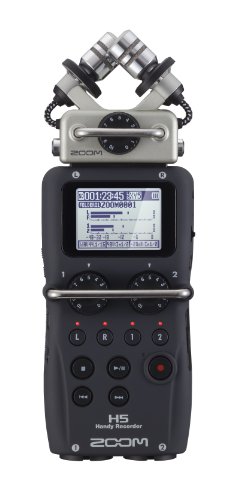
- Two XLR/TRS combo inputs with phantom power
- Interchangeable input capsules
- Four-track simultaneous recording
Best For: Musicians and podcasters using external microphones or line sources
Best Long-Session Value

- 32-bit float recording with X/Y microphones
- Up to 12 hours of recording time
- WAV and AAC formats plus USB-C microphone mode
Best For: Musicians recording concerts, podcasts, and mobile sessions
Best All-Around Choice – Zoom H4 Essential
The Zoom H4 Essential is a versatile pick among podcast recorders for musicians, combining built-in stereo microphones with two XLR/TRS inputs. Its four-track recording, 32-bit float capture, and USB-C connectivity make it suitable for music, interviews, podcasts, and live performances.
Best For: Musicians and creators who need one recorder for instruments, microphones, podcasts, and live sound.
Pros:
- 32-bit float recording helps provide clip-free audio.
- Built-in stereo mics and two XLR/TRS inputs support varied setups.
- Can record or stream over USB-C while saving a backup to an SD card.
- Spoken menu guidance can make operation more accessible.
Cons:
- Requires two AA batteries.
- The two-inch screen may feel limited for detailed navigation.
The H4 Essential is a strong general-purpose option when flexibility matters more than having extensive onboard production tools. It is especially practical for musicians who also record spoken content or live performances.
Best Adjustable-Mic Option – TASCAM DR-07XP
The TASCAM DR-07XP is a compact choice among podcast recorders for musicians, with adjustable stereo AB/XY condenser microphones and 32-bit float recording. It also works as a 2-in/2-out USB-C audio interface for direct computer recording.
Best For: Creators who want flexible built-in stereo microphone positioning and long battery operation.
Pros:
- Adjustable AB/XY microphones support different stereo recording approaches.
- Handles sources up to 125dB SPL for loud environments and performances.
- Offers 32-bit float, 24-bit, 16-bit, high-resolution, and MP3 recording modes.
- Runs for up to 17.5 hours on two AA alkaline batteries.
Cons:
- Memory card is not included.
- Its external microphone connection is a 3.5mm input rather than XLR.
The DR-07XP suits musicians who primarily want a portable stereo recorder with adaptable built-in microphones. Its USB-C interface adds useful flexibility when a computer-based workflow is needed.
Best Compact XLR Recorder – Zoom H1 XLR
The Zoom H1 XLR is a straightforward option among podcast recorders for musicians, offering two locking XLR/TRS combo inputs in a compact body. It records at up to 32-bit/96kHz and includes a waveform display for monitoring levels.
Best For: Musicians and podcasters who need a small recorder for external microphones, instruments, or line-level sources.
Pros:
- Two locking XLR/TRS inputs accommodate microphones and instruments.
- 32-bit float recording supports clip-free audio capture.
- Waveform display provides a quick view of recording levels.
- Supports SDXC cards up to 1TB for extended sessions.
Cons:
- Requires two AA batteries.
- The small 0.96-inch screen offers limited viewing space.
The H1 XLR focuses on essential connections and portability rather than multitrack production. It is a practical fit when you want external-input capability in a smaller recorder.
Best Portable Music Studio – Zoom R12
The Zoom R12 stands apart from typical podcast recorders for musicians by functioning as an eight-track portable workstation. Its touchscreen editing, onboard effects, drum loops, synths, MIDI support, and USB-C DAW control make it suited to building and arranging music without a computer.
Best For: Musicians who want multitrack recording, onboard arrangement tools, and portable songwriting features.
Pros:
- Records up to eight tracks with onboard cutting, looping, copying, and mixing.
- Includes 150 drum loops and 18 FM synth instruments.
- Both inputs provide 48V phantom power, while input 1 adds Hi-Z guitar and bass connectivity.
- Works as a USB-C stereo interface and DAW control surface.
Cons:
- Battery life is up to five hours using four AA batteries.
- It is larger and more production-focused than a basic handheld recorder.
The R12 is the strongest choice here for musicians who want to create complete arrangements on the device. It is less focused on simple spoken-word capture, but its track count and built-in tools offer substantially more music-making capability.
Best Layering Recorder – Zoom R4 Multi-Track Recorder
The Zoom R4 is a practical choice among podcast recorders for musicians who want to capture vocals, instruments, and ideas without constantly adjusting gain. Its four-track workflow, built-in microphones, effects, and rhythms make it especially useful for songwriting and layered demos.
Best For: Musicians who want a portable multitrack recorder for developing arrangements, rehearsing, and creating layered recordings.
Pros:
- Records up to four tracks and lets you bounce them to a dedicated track for continued layering.
- 32-bit float recording helps prevent clipping without manual gain adjustments.
- Two XLR/TRS combo inputs support microphones, instruments, keyboards, and other sources.
- Includes more than 80 rhythm patterns and works as a USB audio interface.
Cons:
- Four-track capacity is less suited to larger multi-microphone sessions.
- Runs on four AA batteries or USB-C, so battery management may be needed for mobile use.
The R4 stands out when creative layering matters more than extensive input capacity. Its bounce workflow, rhythms, and clip-resistant recording make it a flexible sketchpad for musicians.
Best All-Around Recorder – Zoom H6 Essential Handheld Recorder
The Zoom H6 Essential is one of the more versatile podcast recorders for musicians, combining built-in stereo microphones with four XLR/TRS inputs. Six-track 32-bit float recording and interchangeable capsules give it the flexibility to handle podcasts, ensembles, interviews, and location work.
Best For: Musicians and podcasters who need multiple inputs, built-in microphones, and a recorder that can also serve as a USB interface.
Pros:
- Six-track 32-bit float recording captures multiple sources while helping avoid clipped takes.
- Four XLR/TRS combo inputs work alongside built-in X/Y microphones.
- Interchangeable capsule support adapts the recorder to different stereo and mid-side setups.
- Can record to an SD card while functioning as a USB audio interface.
Cons:
- Its broader feature set may be more than needed for simple one- or two-source recordings.
- Uses four AAA batteries, adding another consumable to manage in the field.
The H6 Essential is a strong general-purpose option when your recording needs may expand. It offers more inputs and tracks than compact songwriting recorders while retaining a portable handheld format.
Best Compact Pro Recorder – Zoom F3 Professional Field Recorder
The Zoom F3 is a focused option among podcast recorders for musicians who prioritize clean input capture and a compact rig. Its dual locking XLR inputs, dual A/D converters, and 32-bit float recording are suited to unpredictable levels and demanding location work.
Best For: Musicians, recordists, and mobile creators using professional microphones in compact or hard-to-reach setups.
Pros:
- 32-bit float recording helps handle quiet passages and sudden peaks without stopping to adjust levels.
- Dual locking XLR/TRS inputs help keep microphone connections secure.
- Ultra-low-noise preamps support clean recording in less-controlled environments.
- Offers battery-powered, standalone, and USB workflows with wireless control support.
Cons:
- Only two inputs are available, limiting larger ensemble or multi-microphone sessions.
- Its design is centered on external microphones rather than built-in stereo capture.
The F3 is best viewed as a compact professional front end rather than a complete multitrack production box. Choose it when reliable XLR capture, secure connections, and level protection are more important than built-in microphones or numerous inputs.
Best Portable Starter – Zoom H1 Essential
For musicians seeking podcast recorders for musicians, the Zoom H1 Essential is a compact stereo recorder designed for quick, polished captures. Its 32-bit float recording helps provide clip-free audio, while the built-in X/Y microphones suit rehearsals, songwriting sessions, interviews, and content creation.
Best For: Musicians, podcasters, and creators who want a lightweight recorder that can also work as a USB microphone.
Pros:
- 32-bit float recording helps reduce clipping concerns.
- Built-in X/Y stereo microphones capture music, voices, and ambience.
- USB-C microphone mode supports streaming, calls, and computer or mobile recording.
- Compact 92 g design and up to 10 hours of recording time.
Cons:
- Uses two AAA batteries.
- Provides a built-in stereo microphone rather than the H5’s XLR inputs.
The H1 Essential is a straightforward choice when portability and easy operation matter more than expandable inputs. It is especially practical for capturing musical ideas, spoken content, and spontaneous recordings without manually setting gain.
Best Expandable Inputs – Zoom H5
The Zoom H5 is a flexible option for musicians who need more connection choices from their podcast recorder. Along with its detachable X/Y capsule, it offers two XLR/TRS combo inputs, phantom power, a -20 dB pad, and four-track simultaneous recording for more involved sessions.
Best For: Musicians, podcasters, and filmmakers who need external microphones or line-level sources alongside a stereo capsule.
Pros:
- Two XLR/TRS combo inputs support microphones and line-level equipment.
- Interchangeable input capsules allow the recording setup to expand.
- Four-track simultaneous recording supports more complex sessions.
- Functions as a multichannel or stereo USB audio interface for PC, Mac, and iPad.
Cons:
- Records to SD or SDHC cards up to 32GB.
- Uses two AA batteries.
The H5 is the stronger fit when a simple built-in stereo recorder may limit your setup. Its interchangeable capsule system and two combination inputs make it more adaptable for interviews, music recording, and audio-for-video work.
Best Long-Session Value – Xvive XV1-R Portable Recorder
The Xvive XV1-R combines high-dynamic-range recording features with a compact design, making it a versatile pick among podcast recorders for musicians. Its 32-bit float mode, X/Y microphones rated up to 130 dB SPL, auto-record features, and USB-C microphone function cover everything from concerts and rehearsals to podcasts and calls.
Best For: Musicians and creators who want extended battery life, flexible WAV or AAC recording, and USB compatibility with computers and mobile devices.
Pros:
- 32-bit float recording avoids manual gain adjustment in high-dynamic-range situations.
- X/Y microphones support levels up to 130 dB SPL without distortion.
- WAV and AAC formats provide quality and storage-flexibility options.
- Up to 12 hours of recording time and USB-C microphone functionality.
Cons:
- No headphone jack is listed.
- USB microphone mode uses a fixed 48 kHz sample rate.
The XV1-R stands out for musicians who may move between loud live sources, spoken recordings, and mobile workflows. Its lack of a headphone jack is worth considering, but the combination of 32-bit float recording, long battery life, and AAC support is useful for varied recording needs.
How We Picked the Best Podcast Recorders for Musicians
We focused on the features that matter when one recorder may need to cover both spoken-word and music duties: microphone quality, external input flexibility, recording resolution, portability, monitoring, battery practicality, and ease of use. We also considered whether each model suits quick ideas, formal podcast production, rehearsals, live sessions, or multitrack songwriting.
32-bit float models receive particular attention because they provide more protection against unexpected peaks when levels are difficult to monitor. However, bit depth does not replace good microphone placement, suitable gain, or a quiet recording environment.
Quick Comparison
| Best for | Look for | Recommended type |
|---|---|---|
| Voice notes and simple interviews | Compact body, built-in stereo microphones | Entry-level handheld recorder |
| Podcasting with microphones | XLR inputs, headphone monitoring, USB connectivity | Two-channel audio recorder |
| Music demos and layered arrangements | Multitrack recording, overdubbing, effects, rhythm tools | Portable multitrack recorder |
| Live or unpredictable sources | 32-bit float capture and strong limiters | Professional field recorder |
| Small ensemble recording | Multiple inputs and adaptable microphone configuration | Expandable handheld recorder |
Key Buying Factors for Podcast Recorders for Musicians
Inputs and Microphone Options
Built-in X/Y microphones are fast and useful for stereo room sound, rehearsals, and interviews. XLR or combo inputs let you connect dynamic microphones, condensers, instruments, and mixers. Check whether the recorder supplies phantom power if you use studio condenser microphones.
32-Bit Float Versus Conventional Recording
32-bit float recording is valuable for changing sources, field work, and musicians who want fewer worries about setting exact gain. Conventional 24-bit recording can still sound excellent and may offer a simpler or more established workflow. Either option benefits from careful placement and headphone checks.
Track Count and Workflow
A two-channel recorder is usually enough for a solo performer, interview, or stereo pair. Choose a multitrack unit when you want to overdub parts, balance several sources independently, add effects, or build a song without immediately moving to a computer. More tracks generally mean a larger body and a steeper learning curve.
Connectivity, Storage, and Power
USB audio functionality can turn a recorder into a computer interface for podcasting or home recording. Confirm the connector type, supported operating system, memory-card requirements, battery life, and whether the unit can run from USB power. Headphone output, input monitoring, and physical controls are especially useful during mobile sessions.
Who Should Buy Which Podcast Recorders for Musicians?
Choose a Compact Handheld Recorder If…
You want quick setup for spoken notes, interviews, acoustic performances, or rehearsal capture. Prioritize low weight, built-in microphones, straightforward controls, and reliable battery operation.
Choose an XLR Handheld Recorder If…
You record with external microphones, need cleaner control over each source, or want one device for podcast interviews and musical performances. Two-channel models offer a strong balance of portability and flexibility.
Choose a Multitrack Recorder If…
You create layered demos, record several performers, or prefer hands-on production without a laptop. Look for overdubbing, track bouncing, effects, rhythm patterns, and enough physical controls for your workflow.
Choose a Professional Field Recorder If…
You work with unpredictable volume, film or documentary audio, live music, or demanding location sessions. Extra headroom, dependable preamps, and robust monitoring can justify the higher price and more deliberate setup.