
The best samplers for live performances make it easier to trigger clips, reshape sounds, build loops, and keep a set moving without relying entirely on a computer. The right choice depends on your workflow, including whether you prioritize portability, deep sequencing, expressive effects, or fast hands-on control.
We’ve selected 10 stage-ready samplers spanning portable grooveboxes, performance workstations, creative effect samplers, and compact instruments. Use the guide below to compare the features that matter most before choosing one for your setup.
Best 10 Samplers for Live Performances Picks for 2026
Standalone Powerhouse

- Standalone, battery-powered MPC with built-in speakers
- 16 RGB pads and 7-inch multi-touch display
- Broad audio, MIDI, wireless, and CV/Gate connectivity
Best For: Computer-free live beat making and sampling
Performance Sequencing Specialist

- Eight stereo audio and eight dedicated MIDI tracks
- Real-time pitch shifting and time stretching
- Crossfader, encoders, and rugged backlit controls
Best For: Hands-on sample manipulation and live sequencing
Next-Generation MPC
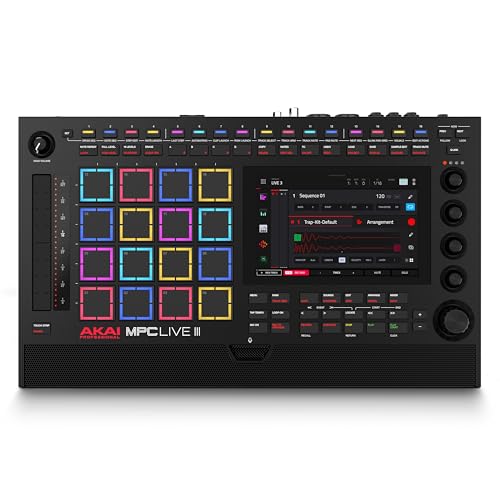
- 8-core standalone system with 8GB RAM and 128GB storage
- Expressive MPCe pads with pressure and X/Y control
- Clip launching, touch-strip control, microphone, and speakers
Best For: Advanced standalone live production and performance
Portable Effects-Driven Sampler

- 17 velocity-sensitive RGB pads and fast sample workflow
- 16GB storage, 32-voice polyphony, and 160 samples per project
- Extensive effects plus resampling and auto-chop tools
Best For: Portable pad performance and live sample effects
Best Portable Ableton Sampler

- Standalone groovebox with battery, speaker, and microphone
- 32 pads with polyphonic aftertouch
- On-device slicing, resampling, and Ableton integration
Best For: Mobile Ableton performers and untethered beatmakers
Best Performance-Focused Groovebox

- Eight sample tracks with 32-step patterns
- Records and resamples from external sources
- Grid FX include lo-fi tape and beat repeat
Best For: Beat-driven live sets and hands-on sample performance
Best Beginner-Friendly MPC Sampler

- Battery-powered standalone sampler with speaker and microphone
- 16 pads and Instant Sample Chop Mode
- Four FX processors with 60 effect types
Best For: New MPC users, finger drummers, and portable live rigs
Deep Sound Design

- Four parallel stereo tracks with five-device signal chains
- Granular processing, modulation, scenes, and macros
- Freeze-enabled reverb and delay for performance sound shaping
Best For: Layered live textures and advanced sound design
Pocket Sampling

- Built-in microphone for quick sample capture
- Chopping, step sampling, and chromatic polyphonic playback
- Granular controls plus dedicated filters and envelopes
Best For: Portable live sampling and quick sound capture
Beatmaking On the Go
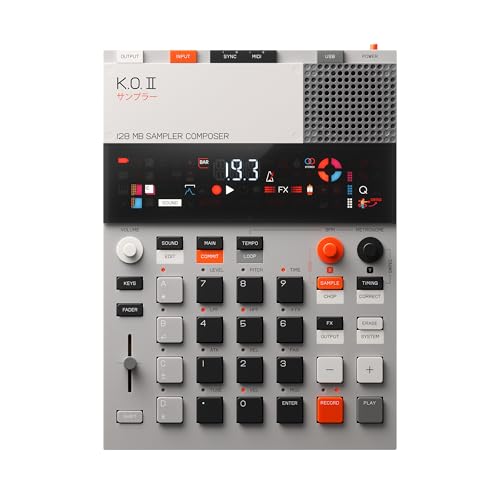
- Four groups of 99 patterns for fast live arrangement changes
- Six master effects and 12 punch-in effects
- Built-in mic, resampling, MIDI, sync, and battery operation
Best For: Portable beatmaking and pattern-based live sets
Standalone Powerhouse – Akai MPC Live II
The Akai Professional MPC Live II is a versatile choice among samplers for live performances, combining standalone beat making, sampling, sequencing, and monitoring in a battery-powered unit. Its pads, touchscreen, built-in speakers, and broad connectivity make it practical for performers who want a computer-free setup.
Best For: Performers and producers who need a standalone sampler, drum machine, and MIDI controller with built-in monitoring.
Pros:
- Standalone operation with a rechargeable battery and built-in stereo speakers.
- 16 velocity-sensitive RGB pads and a 7-inch multi-touch display support expressive control.
- Offers Wi-Fi, Bluetooth, MIDI, USB, CV/Gate, and multiple audio connections.
- Supports MPC Stems for isolating drums, bass, music, and vocals.
Cons:
- At 4 kg, it is less lightweight than some compact performance samplers.
- Its extensive feature set may require time to learn.
The MPC Live II is a well-rounded performance center for artists who value independence from a computer, integrated speakers, and deep studio connectivity in one portable unit.
Performance Sequencing Specialist – Elektron Octatrack MKII
Elektron Octatrack MKII 8-track Performance Sampling Workstation/Sequencer - Black
Check Price On AmazonThe Elektron Octatrack MKII is built specifically for hands-on manipulation, making it a strong option among samplers for live performances. Eight stereo audio tracks, real-time pitch shifting, time stretching, and a crossfader provide extensive control for transforming samples during a set.
Best For: Live electronic performers who want deep sample manipulation, sequencing, and tactile control.
Pros:
- Eight stereo audio tracks are paired with eight dedicated MIDI tracks.
- Real-time pitch shifting and time stretching support dynamic sample changes.
- A contactless crossfader, precision encoders, and dedicated buttons enable expressive performance control.
- Rugged backlit buttons and a compact design suit both stage and studio use.
Cons:
- The specialized workflow may be demanding for beginners.
- The supplied notes do not list built-in speakers or battery power.
The Octatrack MKII favors performers who want detailed, tactile control over samples and sequences rather than an all-in-one production workstation.
Next-Generation MPC – Akai MPC Live III
The Akai MPC Live III is a powerful standalone option among samplers for live performances, with an 8-core processor, 8GB of RAM, MPC3 OS, and integrated battery-powered operation. Its expressive MPCe pads, clip launching, touch-strip control, and built-in microphone and speakers are designed for improvised performance and complete track creation.
Best For: Advanced performers who want a feature-rich standalone workstation for sampling, clip launching, sequencing, and production.
Pros:
- 3D-sensing MPCe pads provide velocity, pressure, and X/Y control.
- Includes live clip looping, a performance touch-strip, and a clip-launch matrix.
- Built-in microphone, stereo monitors, rechargeable battery, and 128GB internal storage support mobile work.
- Offers USB-C, MIDI, CV/Gate, combo XLR/TRS inputs, and six TRS outputs.
Cons:
- Its extensive capabilities may be more than casual performers need.
- The supplied notes do not specify the unit’s weight.
With its modern pad system, large storage capacity, and robust standalone architecture, the MPC Live III is aimed at performers who want one central instrument for building and presenting complex sets.
Portable Effects-Driven Sampler – Roland SP-404MKII
The Roland SP-404MKII is a compact, performance-focused choice among samplers for live performances. Its velocity-sensitive RGB pads, fast workflow, extensive effects, resampling tools, and flexible USB-C, battery, and AC power options make it well suited to portable beat making and sample triggering.
Best For: Beatmakers and performers who prioritize fast pad-based sampling, resampling, and live effects.
Pros:
- 17 velocity-sensitive RGB pads and low-latency response support rapid performance.
- Includes 16GB internal storage, 32-voice polyphony, and 160 samples per project.
- Offers real-time and auto-chop editing, BPM detection, pitch shifting, and resampling.
- Extensive effects include Vinyl Simulator, DJFX Looper, cassette, resonator, vocoder, and amp simulation options.
Cons:
- The 2.6-pound unit is portable, but its compact interface may feel limited for users wanting a large display.
- It has fewer listed studio connection options than the MPC models.
The SP-404MKII is an especially practical pick for performers who want a lightweight sampler centered on immediate pad control, creative effects, and quick sample manipulation.
Best Portable Ableton Sampler – Ableton Move
For performers who want to sketch, sample, and play without a computer, Ableton Move is a compact option among samplers for live performances. Its rechargeable battery, built-in speaker and microphone, four flexible tracks, and onboard slicing support untethered beatmaking and set preparation.
Best For: Ableton users and mobile performers who want an all-in-one groovebox with direct Live integration.
Pros:
- Standalone operation with a rechargeable battery, speaker, microphone, and processor.
- 32 velocity-sensitive pads with polyphonic aftertouch provide expressive control.
- Samples can be recorded, sliced, resampled, and processed directly on the device.
- Wireless Ableton integration and included Live 12 Intro support expanded workflows.
Cons:
- Four flexible tracks may be limiting for larger, more complex live arrangements.
- Included Ableton Live 12 Intro has limited tracks, instruments, and effects.
- Its feature set may be more than needed for performers seeking a simple sample trigger.
Ableton Move stands out when portability and Ableton connectivity matter equally. It is especially useful for performers who want to capture sounds on location and turn them into playable material without immediately opening a computer.
Best Performance-Focused Groovebox – Novation Circuit Rhythm
The Novation Circuit Rhythm is built for hands-on beat construction and live manipulation, making it a strong choice among samplers for live performances. It records from sources such as phones, turntables, and synths, then provides eight sample tracks, sequenced patterns, and performance effects for shaping a set.
Best For: Performers who want an intuitive standalone sampler with multiple sample tracks and dedicated live effects.
Pros:
- Eight flexible sample tracks offer room for drums, chops, basslines, and melodies.
- Records, slices, processes, and resamples external sounds directly on the unit.
- Grid FX include lo-fi tape and beat repeat for live-oriented texture and transitions.
- Up to four hours of battery life supports portable sessions and performances.
Cons:
- The workflow centers on samples and patterns rather than broad synthesizer functionality.
- Its plastic body may not feel as substantial as heavier performance hardware.
- Advanced arrangements may require chaining patterns across tracks.
Circuit Rhythm is a practical pick for performers who prioritize quick sample capture, pattern building, and immediate manipulation. Its eight-track layout and Grid FX make it particularly suited to beat-driven live sets.
Best Beginner-Friendly MPC Sampler – Akai MPC Sample
Akai’s MPC Sample combines a compact standalone sampler, sequencer, and effects processor in a battery-powered format. For samplers for live performances, it offers built-in sampling tools, 16 MPC pads, onboard effects, a speaker, and practical audio and MIDI connections for integrating with a live rig.
Best For: Beginners, finger drummers, and performers seeking a portable entry into the MPC workflow.
Pros:
- Standalone operation includes a rechargeable battery, microphone, speaker, and microSD storage.
- Instant Sample Chop Mode, timestretching, repitching, and resampling streamline performance preparation.
- Four FX processors and 60 effect types provide substantial onboard sound shaping.
- Stereo line I/O, USB-C audio/MIDI, MIDI connectivity, and sync out support live setups.
Cons:
- The MIDI DIN adapter is not included.
- Its 16-pad layout offers fewer pads than some larger MPC-style controllers.
- Performers wanting a broader production workstation may find the compact format more focused.
MPC Sample is appealing when you want recognizable MPC-style sampling in a smaller, approachable package. Its combination of portable operation, fast chopping, effects, and live-oriented connectivity makes it versatile for both new users and DAWless performers.
Deep Sound Design – S4 Sculpting Sampler
For performers who want extensive sound shaping, the S4 is one of the most capable samplers for live performances in this lineup. Its four parallel stereo tracks, scenes, macros, granular processing, and multiple modulation sources support evolving textures as well as hands-on control.
Best For: Live performers and sound designers building layered, evolving textures.
Pros:
- Four parallel stereo tracks, each with a five-device signal chain.
- Granular processing offers control over grains, pitch, movement, and a four-second buffer.
- Scenes and global macros make complex parameter changes practical during performance.
- Includes stereo reverb and delay with freeze, plus a four-channel master mixer.
Cons:
- Its broad feature set may require more preparation and learning than a simpler sampler.
- The plastic body and textured finish may feel less premium than a metal enclosure.
The S4 stands out when live performance depends on transformation rather than simple playback. Its scenes, modulation, and layered processing are especially useful for creating movement and variation across a set.
Pocket Sampling – Roland AIRA Compact P-6
The Roland AIRA Compact P-6 is a portable choice for musicians seeking compact samplers for live performances. Its built-in microphone, onboard keyboard, chopping tools, chromatic playback, and granular parameters make it useful for capturing and reshaping sounds without much additional equipment.
Best For: Mobile performers who want quick sampling and hands-on playback in a small format.
Pros:
- Built-in microphone enables quick sample capture from the surrounding environment.
- Chop and step-sampling functions help turn recordings into playable segments.
- Samples support chromatic and polyphonic playback from the onboard keyboard.
- Dedicated filters, envelopes, and granular controls provide focused sound shaping.
Cons:
- Its compact size provides less physical workspace than larger performance samplers.
- Sample editing and import/export rely on the separate P-6 Sample Tool software for macOS and Windows.
The P-6 favors speed and portability over a large control surface. It is a practical option when you want to capture sounds quickly, create custom loops, and perform with a compact setup.
Beatmaking On the Go – EP-133 K.O. II Sampler
The teenage engineering EP-133 K.O. II combines sampling, sequencing, and effects in a portable instrument designed for fast beat creation. Among samplers for live performances, it is a strong fit for pattern-based sets, with real-time pattern changes, punch-in effects, a multifunctional fader, and battery operation.
Best For: Beatmakers performing pattern-based sets and creating arrangements on the fly.
Pros:
- Four groups of 99 patterns support quick beat and arrangement experimentation.
- Six master effects and 12 punch-in effects are accessible during performance.
- Samples through the line input or built-in microphone and supports resampling and chopping.
- Portable design runs on four AAA batteries or USB-C and includes MIDI and sync connections.
Cons:
- The 128MB memory is more limited than the S4’s larger sound-design-focused workflow.
- Its four-track sequencer is geared toward beatmaking rather than extensive multitrack sampling.
The K.O. II is built around immediacy: capture a sound, sequence a pattern, and manipulate it with the fader and punch-in effects. It suits performers who value fast transitions and portable, beat-driven control.
How We Picked These Samplers for Live Performances
We focused on instruments that support active performance rather than simple sample playback. Each pick offers some combination of responsive pads or controls, looping, sequencing, sample manipulation, effects, and quick access to sounds. We also considered portability, standalone operation, connectivity, onboard storage, and how easily each unit can fit into a live rig.
The selection includes battery-powered devices, computer-free workstations, compact samplers, and deeper production-focused units. Because live workflows vary, no single model is ideal for every performer.
Quick Comparison
| Best For | What to Prioritize |
|---|---|
| Beatmakers and finger drummers | Responsive pads, sequencing, and accessible sample editing |
| Electronic live performers | Scene or pattern changes, effects, and flexible routing |
| Loop-based performers | Fast recording, overdubbing, and reliable timing |
| Portable setups | Battery life, compact size, and built-in speakers or microphones |
| Sound designers | Granular processing, modulation, and deep sample control |
Key Buying Factors for Samplers for Live Performances
Performance Interface
Look for controls that can be reached without menu diving. Large pads, dedicated mute and track buttons, crossfaders, encoders, and clear displays can make transitions more dependable onstage. If you perform with both hands, consider whether the layout supports simultaneous triggering and sound shaping.
Sampling and Looping Workflow
Check how quickly the device can capture audio, trim samples, assign them to pads, and create loops. Real-time sampling is useful for vocalists and instrumentalists, while extensive editing tools matter more for prepared material and detailed sound design.
Sequencing, Effects, and Connectivity
Pattern chaining, clip launching, probability, and scene-based arrangement can determine how much of a set you can perform from one device. Also confirm the available inputs, outputs, MIDI, USB, audio routing, and synchronization options. Built-in effects are especially valuable when you want to reduce external equipment.
Portability and Reliability
For mobile performers, battery operation and a compact footprint may matter more than maximum track count. Check storage capacity, power requirements, screen visibility, construction, and whether the unit can recover quickly after an interruption. A sampler with fewer features may be the better live tool if it is faster and more reliable for your routine.
Who Should Buy Which Samplers for Live Performances?
Choose a portable MPC-style workstation if you want a central hub for beats, samples, sequencing, and performance control. An Elektron-style performance sampler is better suited to experienced users who want deep pattern manipulation and highly detailed sequencing. Creative effect samplers are a strong fit for performers who reshape incoming audio, vocals, or loops in real time.
Compact grooveboxes work well for beginners, traveling musicians, and anyone who wants a self-contained sketchpad that can also perform onstage. Granular or modulation-focused instruments suit experimental producers and sound designers, while smaller pocket-oriented samplers are ideal for quick ideas, compact rigs, and tactile sample triggering.
Before buying, map your actual set: decide how many tracks or parts you need, whether you will sample live, how much external gear you use, and whether you need battery power. The best sampler is the one that lets you execute those actions quickly and confidently under performance conditions.