
A compact midrange can bring vocals and instruments forward without taking up much dashboard space. But a speaker labeled 3 inches is not automatically a drop-in replacement—or a complete component system.
These nine picks span dedicated midranges, full-range drivers, and component packages in nearby sizes. Use the buying guide to narrow down what fits your vehicle and works with the rest of your audio system.
Best 9 Three Inch Component Midrange Speakers Picks for 2026
Best Three-Way Upgrade
Infinity Kappa 303S 3-Inch Midrange Pair

- 3-inch midrange pair
- Bandpass crossover included
- Made for compatible Kappa upgrades
Best For: Adding midrange drivers to a compatible Kappa setup
Best Compact Full-Range Alternative
DS18 ZXI-354 3.5-Inch Speaker Pair
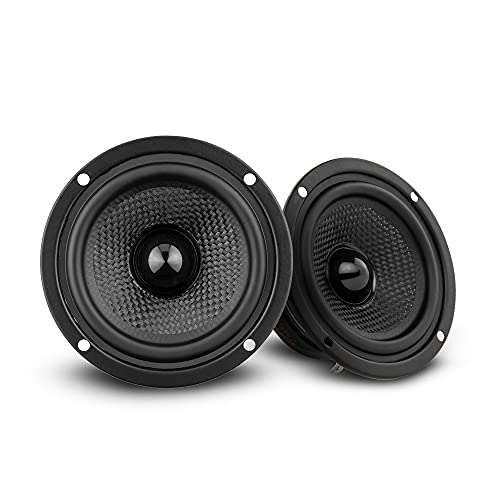
- Pair of 3.5-inch speakers
- Kevlar cones; 4-ohm impedance
- 40W RMS power rating
Best For: Compact full-range car audio where 3.5-inch speakers fit
Best Complete Three-Way System
KICKER 51KSS365 KS-Series Component Set

- 6.5-inch woofers; 2.75-inch mids
- 1-inch tweeters and in-line crossover
- Multiple midrange and tweeter mounts
Best For: Building a complete three-way car audio system
Best 4-Ohm DIY Driver
Dayton Audio PC83-4 3-Inch Full-Range Driver
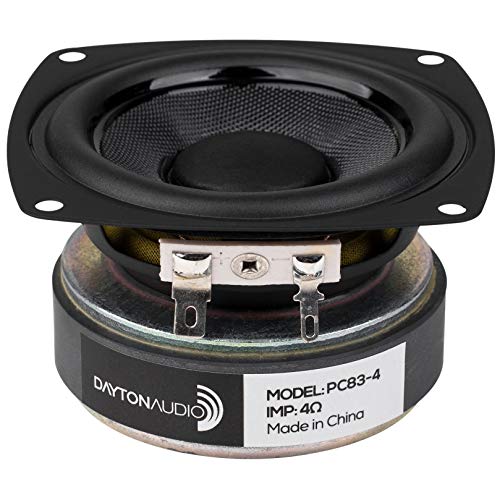
- Single 4-ohm full-range driver
- Poly-damped glass-fiber cone
- No crossover listed
Best For: Custom 4-ohm car-audio or home-speaker builds
Best Car-Audio Pair
AudioControl Altitude A35C 3.5-Inch Speakers
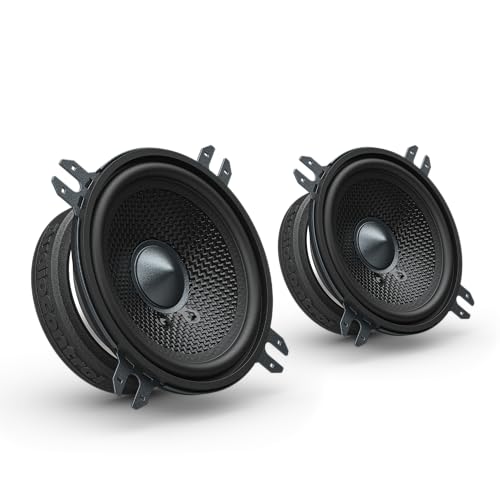
- Pair of 4-ohm speakers
- In-line crossover included
- Requires a 2.95-inch cutout
Best For: Car-audio installs that accommodate 3.5-inch speakers
Best 8-Ohm DIY Driver
Dayton Audio PC83-8 3-Inch Full-Range Driver

- Single 8-ohm full-range driver
- Poly-damped glass-fiber cone
- No crossover listed
Best For: Custom speaker projects specifying an 8-ohm driver
Best for Tight Spaces
AudioControl Altitude A275C 2.75-Inch Components

- 1.28-inch mounting depth
- In-line crossover included
- Pair of 4-ohm drivers
Best For: Compact passive two- or three-way installations
Best for Factory Integration
Rockford Fosgate Punch P3V2-25 Midrange Pair

- 2.5-inch midrange pair
- OEM adapters and crossovers included
- 75W RMS rating
Best For: Compatible factory-location center-channel or three-way builds
Best Full-Range Alternative
Memphis Power Reference PRX27 2.75-Inch Pair

- 2.75-inch coaxial design
- Pivoting PEI dome tweeters
- Not a midrange-only component
Best For: Compact full-range car speaker replacements
Best Three-Way Upgrade – Infinity Kappa 303S 3-Inch Midrange Pair
Infinity Kappa 303S 3" (89mm) Midrange with Bandpass Crossover Enclosure - Pair
Check Price On AmazonIf you’re shopping for three inch component midrange speakers to expand an existing car audio setup, the Infinity Kappa 303S pair is designed for that job. It includes a bandpass crossover enclosure for upgrading a compatible two-way Kappa component system to three-way sound.
Best For: Drivers adding a dedicated 3-inch midrange to a compatible Kappa component system.
Pros:
- Dedicated 3-inch midrange pair with an included bandpass crossover enclosure.
- Designed to integrate into a two-way-to-three-way Kappa upgrade.
- Compact size suits installations planned around a separate midrange position.
Cons:
- Not a complete three-way system; the other drivers must be purchased or already installed.
- Not water-resistant.
The included bandpass crossover is the key buying reason here: it makes this a purpose-built midrange addition rather than a general replacement speaker. Check your existing Kappa system and mounting space before ordering.
Best Compact Full-Range Alternative – DS18 ZXI-354 3.5-Inch Speaker Pair
DS18 ZXI-354 3.5" Full Range Car Audio Speaker with Kevlar Cone 120 Watts 4 Ohm (2 Speakers), Black
Check Price On AmazonThe DS18 ZXI-354 is worth considering alongside three inch component midrange speakers when a 3.5-inch car speaker fits your available space. This is a pair of 4-ohm, one-way full-range speakers with Kevlar cones—not a dedicated 3-inch component midrange kit.
Best For: Drivers seeking a matched pair of compact 3.5-inch full-range car speakers.
Pros:
- Sold as a pair of 3.5-inch speakers.
- Kevlar cones and 4-ohm impedance are specified.
- Rated at 40 watts RMS and 120 watts maximum power handling.
Cons:
- 3.5-inch size will not directly suit every 3-inch mounting location.
- No component crossover is listed.
Choose this pair if your priority is compact, full-range output and the larger mounting size works in your vehicle. For a dedicated three-way midrange upgrade, look for a purpose-built component driver instead.
Best Complete Three-Way System – KICKER 51KSS365 KS-Series Component Set
If you’re comparing three inch component midrange speakers but need the rest of the system too, the KICKER 51KSS365 offers a complete three-way component setup. It pairs 6.5-inch woofers with 2.75-inch midranges and 1-inch tweeters, so its midrange drivers are slightly smaller than 3 inches.
Best For: Drivers replacing or building a full three-way car audio system rather than adding midrange drivers alone.
Pros:
- Includes woofer, midrange, tweeter, and an in-line 12 dB crossover network.
- Provides three midrange mounting brackets and angled, surface, and flush tweeter mounting options.
- Designed to use factory holes and mounting points in listed vehicle makes and select imports.
Cons:
- The midrange measures 2.75 inches, not a full 3 inches.
- A complete component set may be more than you need for a midrange-only upgrade.
This is the practical pick when you want the drivers and crossover specified as one system. Confirm vehicle fit and available mounting locations before choosing it over a standalone midrange pair.
Best 4-Ohm DIY Driver – Dayton Audio PC83-4 3-Inch Full-Range Driver
If you’re comparing three inch component midrange speakers for a custom build, the Dayton Audio PC83-4 is a 4-ohm full-range driver sold individually. Its woven glass-fiber cone and copper cap are designed for smooth response and extended high-frequency output.
Best For: DIY car-audio, bookshelf, or line-array projects needing a single 4-ohm driver.
Pros:
- Full-range design can simplify speaker layouts.
- Poly-damped cone helps control breakup and smooth the roll-off.
- Ferrite magnet is designed to increase efficiency and output.
Cons:
- Sold as one driver, not a pair.
- No crossover is listed as included.
This is a flexible build component rather than a ready-to-install component set; plan the mounting and system integration around your project.
Best Car-Audio Pair – AudioControl Altitude A35C 3.5-Inch Speakers
Among three inch component midrange speakers, the AudioControl Altitude A35C is the car-focused option here—but it is a 3.5-inch pair, so check your opening before ordering. The 4-ohm speakers combine glass-fiber cones, butyl-rubber surrounds, and an included in-line crossover.
Best For: Vehicle installations with room for 3.5-inch speakers and a preference for an included passive crossover.
Pros:
- Includes two speakers and an in-line crossover.
- Shallow 1.35-inch mounting depth helps with tight locations.
- Designed to integrate into two-way or three-way car-audio systems.
Cons:
- Not a true 3-inch speaker; verify the 2.95-inch cutout and 3.38-inch overall diameter.
- Not water-resistant.
Choose this pair when the measured fit and included crossover matter more than matching a strict 3-inch size requirement.
Best 8-Ohm DIY Driver – Dayton Audio PC83-8 3-Inch Full-Range Driver
For shoppers considering three inch component midrange speakers in an 8-ohm DIY design, the Dayton Audio PC83-8 offers a single full-range driver rather than a packaged speaker pair. Its poly-damped woven glass-fiber cone and copper cap are intended to keep response smooth into the higher frequencies.
Best For: Custom bookshelf, line-array, or car-audio designs that call for an 8-ohm driver.
Pros:
- True full-range design suits simpler speaker layouts.
- Poly-damped cone is designed to control breakup.
- Ferrite magnet is intended to improve efficiency and output.
Cons:
- Sold individually; a pair requires two units.
- No crossover is listed as included.
The key decision is impedance: pick this PC83-8 when your design calls for 8 ohms, and account for the separate mounting and integration work of a DIY driver.
Best for Tight Spaces – AudioControl Altitude A275C 2.75-Inch Components
If you’re shopping for three inch component midrange speakers but have limited mounting space, this 2.75-inch AudioControl pair is worth measuring for. Its slimline basket and 1.28-inch mounting depth suit compact factory or custom locations, while the supplied in-line crossover supports passive installations.
Best For: Drivers building a compact two- or three-way car audio system who want a shallow-mount midrange pair.
Pros:
- Glass-fiber cones and butyl-rubber surrounds provide durable driver construction.
- Included in-line crossover can protect the drivers in passive installations.
- Specified 125 Hz–20 kHz bandwidth offers flexibility when integrating with other speakers.
Cons:
- At 2.75 inches, these are not an exact three-inch replacement; check the 2.55-inch cutout requirement.
- The included filter may be unnecessary if you use DSP or active crossover settings.
The A275C makes the strongest case where depth is the constraint. Measure the opening and plan your crossover setup before ordering.
Best for Factory Integration – Rockford Fosgate Punch P3V2-25 Midrange Pair
For a factory-location upgrade, the Rockford Fosgate P3V2-25 is a 2.5-inch alternative to three inch component midrange speakers. The pair is intended for center-channel or three-way component systems and comes with crossovers, OEM adapters, and mounting hardware.
Best For: Drivers planning a center-channel or three-way installation around compatible factory mounting locations.
Pros:
- OEM adapters and mounting hardware are included.
- Mounting flanges and a redesigned frame are intended to ease factory-location fitment.
- Multi-Configuration Crossover Chassis separates into units for flexible wiring.
- Rated at 75W RMS and 150W peak.
Cons:
- Grilles are not included and are sold separately.
- Its 2.5-inch size will not directly match every three-inch opening; verify mounting dimensions.
This is a practical pick when installation flexibility matters as much as output. Check the fit chart against your vehicle before buying, particularly if you need grilles.
Best Full-Range Alternative – Memphis Power Reference PRX27 2.75-Inch Pair
If you’re comparing three inch component midrange speakers but would rather use a small full-range speaker, consider the 2.75-inch Memphis PRX27 pair. These are coaxial speakers with PEI dome tweeters, not dedicated component midrange drivers.
Best For: Drivers seeking compact coaxial replacements rather than separate midrange and tweeter components.
Pros:
- Integrated PEI dome tweeters provide a full-range alternative to a midrange-only driver.
- Multi-direction pivot tweeter system offers aiming flexibility.
- Polypropylene cones and butyl-rubber surrounds are listed in the supplied construction details.
Cons:
- Coaxial design is not a substitute for a dedicated midrange in every component system.
- At 2.75 inches, fitment still requires checking rather than assuming a three-inch opening will work.
Choose the PRX27 when an integrated tweeter suits your layout. If your system calls for a midrange-only channel, one of the dedicated component options is the more direct match.
How We Picked the Best Three Inch Component Midrange Speakers
We focused on compact speakers relevant to shoppers seeking Three Inch Component Midrange Speakers, including true 3-inch drivers and nearby 2.5-, 2.75-, and 3.5-inch options. The selection covers dedicated midranges, full-range speakers, and component systems so you can compare different approaches to improving vocal clarity. We prioritized clearly stated sizes and system configurations; we did not treat every product as interchangeable or assume specifications not provided by its listing.
Quick Comparison: Which Type Do You Need?
Dedicated midrange: Choose this type for a multi-speaker system with a suitable crossover and separate drivers handling bass and treble. The Infinity Kappa 303S is listed as a midrange pair with a bandpass crossover enclosure.
Compact full-range: The Dayton PC83 drivers, DS18 ZXI-354, and Memphis PRX27 are listed as full-range options. They may suit a small factory location or a custom build, but check whether they are sold individually or as a pair.
Component package: The KICKER 51KSS365 includes a 6.5-inch woofer, 2.75-inch midrange, and tweeter; it requires space for the whole system. The AudioControl Altitude listings are component-speaker pairs in 2.75- and 3.5-inch sizes. Check each package’s included hardware and crossover arrangement before ordering.
Key Buying Factors for Three-Inch Component Midrange Speakers
Fit Comes First
Measure the mounting opening and available depth, then check screw pattern, grille clearance, and any dashboard or door obstructions. A 3.5-inch speaker is not a guaranteed fit in a 3-inch opening, and even two nominally 3-inch drivers can have different frames. Verify whether you need adapters or fabrication.
Match the Speaker to Your System
A midrange should receive only the frequencies it is designed to play. Confirm whether the product includes a crossover or needs one supplied by your amplifier, DSP, or component network. A full-range driver can cover a broader band, but it should not be confused with a dedicated midrange in a three-way setup.
Check Electrical and Package Details
Match impedance to your amplifier or head unit and use continuous, or RMS, power ratings when planning amplification—not peak-power claims alone. Compare sensitivity if you are mixing drivers, and confirm whether the price buys one speaker, a pair, or a complete kit. If replacing factory speakers, check for factory amplification and proprietary wiring before installation.
Who Should Buy Which Three Inch Component Midrange Speakers?
For a planned three-way upgrade, start with a dedicated midrange or a complete component system, depending on whether you already own the woofer, tweeter, and crossover. For a compact location where a broad frequency range is more useful, consider a full-range option after confirming fit and wiring. If your factory opening is 2.5 or 2.75 inches, shortlist those sizes rather than forcing in a nominal 3-inch driver. Choose a 3.5-inch model only when measurements confirm the extra space. The best purchase is the one that fits physically and integrates electrically—not simply the one with the largest wattage claim.