
The best compact headphone amplifiers can add useful power, cleaner volume control, and flexible connectivity without taking over your desk or travel bag. The right model depends on your headphones, source device, and whether you need one output or several.
We compared these 10 compact options across power, impedance support, inputs, portability, controls, and everyday value to help you choose with confidence.
Best 10 Compact Headphone Amplifiers Picks for 2026
Best Multi-Listener Value
Behringer HA400 4-Channel Headphone Amp

- Four stereo headphone outputs
- Independent volume controls
- Compact, low-noise monitoring design
Best For: Shared studio monitoring and recording sessions
Best High-Power Desktop Pick

- 1500mW output at 32Ω
- Drives 18Ω–600Ω headphones
- Replaceable op-amp architecture
Best For: Desktop systems with demanding headphones
Best Four-Channel Feature Set
LZSIG LHA2 Headphone Amplifier
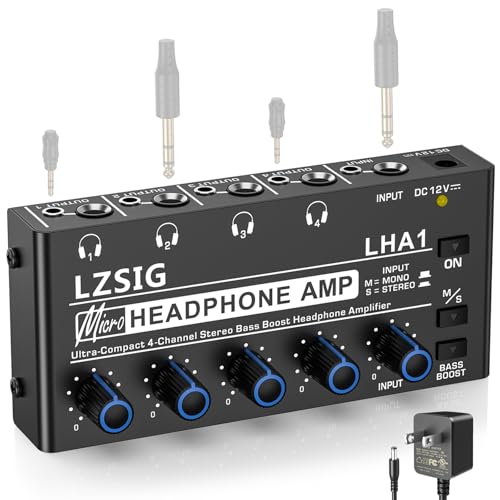
- Four independent headphone levels
- Bass boost and stereo/mono switch
- Metal chassis with 3.5mm and 6.35mm support
Best For: Shared monitoring in studios and stage setups
Best DIY-Friendly Desktop Amp
Douk Audio U3 Class A Amplifier

- 1300mW maximum output
- Supports high-impedance headphones
- Pluggable op-amp socket
Best For: Desktop listening and audio experimentation
Best Portable High-Impedance Pick
eSynic Rechargeable Headphone Amplifier

- Supports 16–600Ω headphones
- Over 12 hours of battery life
- Compact aluminum 3.5mm design
Best For: Portable listening with low- to high-impedance headphones
Best Desktop Gaming DAC
Fosi Audio K5 Pro Gaming DAC Amp
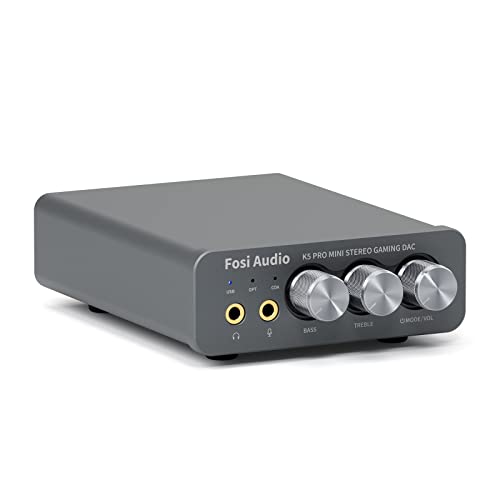
- USB-C, optical, and coaxial inputs
- Up to 1000mW output at 16Ω
- Mic, bass, and treble controls
Best For: Gaming desks needing headphone, microphone, and speaker connections
Best Simple Travel Value
Neoteck 16–300Ω Portable Headphone Amp
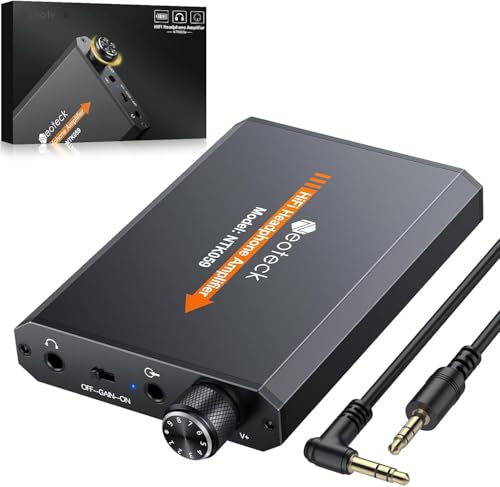
- Supports 16–300Ω headphones
- Over 12 hours of rechargeable use
- Lightweight aluminum portable design
Best For: Mobile and travel listening with 3.5mm audio devices
Best Pocket Hi-Fi Pick
LVY Rechargeable Headphone Amplifier
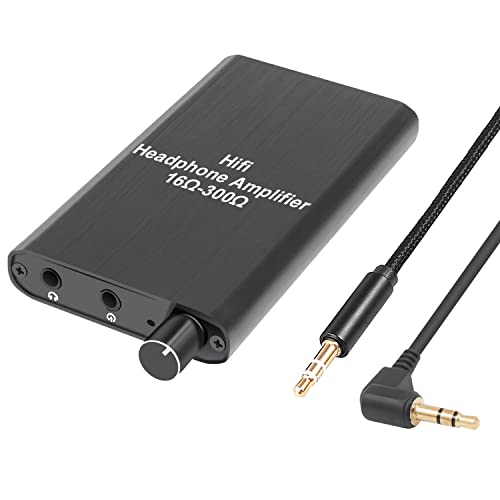
- Compact 3.6-inch portable design
- Two-stage gain for 16–300Ω headphones
- More than five hours of rechargeable use
Best For: Portable 3.5mm listening with adjustable gain
Best Versatile Home Pick
TNP Portable Headphone Amplifier

- RCA and 3.5mm analog inputs
- 3.5mm and 6.3mm headphone outputs
- Analog volume knob with included power adapter
Best For: Desktop and home audio with varied analog connections
Best Monitor-Style Pick
Donner EM1 Analog Headphone Amplifier

- XLR and TRS inputs with locking connector
- Up to 12 hours of rechargeable battery life
- Stereo/mono switching for monitor use
Best For: Portable professional in-ear and on-ear monitoring
Best Multi-Listener Value – Behringer HA400 4-Channel Headphone Amp
For shared monitoring, the Behringer HA400 is one of the most practical compact headphone amplifiers available. Its four stereo outputs let up to four people listen to the same source while adjusting their own volume independently.
Best For: Home studios, recording sessions, and playback monitoring with multiple listeners.
Pros:
- Drives up to four pairs of headphones simultaneously.
- Independent level control for every output.
- Ultra-compact design with low-noise 4580 op-amps.
- Includes a dedicated 12V DC adapter.
Cons:
- Designed for shared monitoring rather than headphone-specific sound customization.
- Requires external DC power.
The HA400 focuses on straightforward distribution and individual volume control rather than audiophile experimentation. It is a sensible, space-saving choice when several musicians or collaborators need to monitor one stereo mix.
Best High-Power Desktop Pick – Douk Audio U3 PRO Class A Amp
The Douk Audio U3 PRO stands out among compact headphone amplifiers for its high output and broad impedance support. It is built to drive headphones from 18Ω to 600Ω while offering both desktop-friendly inputs and two headphone jack sizes.
Best For: Desktop listeners using a wide range of low- and high-impedance headphones.
Pros:
- Up to 1500mW output at 32Ω.
- Supports headphones rated from 18Ω to 600Ω.
- Includes 3.5mm and 6.35mm headphone outputs.
- Replaceable op-amp design allows customization.
Cons:
- Its feature set is more than needed for simple headphone splitting.
- Designed for desktop use rather than portable operation.
With a voltage-boost circuit, Class A architecture, and replaceable op-amp socket, the U3 PRO is aimed at listeners who want substantial drive and room to experiment. Its compact enclosure makes it a strong fit for a home or office audio setup.
Best Four-Channel Feature Set – LZSIG LHA2 Headphone Amplifier
The LZSIG LHA2 combines four-channel distribution with useful controls for shared listening. As compact headphone amplifiers go, it offers independent volume adjustment, stereo/mono switching, and a selectable bass-boost function in a durable metal chassis.
Best For: Small studios, stage setups, and groups sharing one audio source.
Pros:
- Four outputs with independent level controls.
- Accepts both 3.5mm and 6.35mm connections.
- Includes stereo/mono switching and bass boost.
- Solid metal construction with heavy-duty knobs.
Cons:
- Supports headphones in the stated 32–100Ω range.
- It is a headphone amplifier and distributor, not a mixer.
The LHA2 is a flexible choice when multiple listeners need separate volume control and connection options. Its bass boost and stereo/mono switch add convenience, while the metal build suits regular desktop or gigging use.
Best DIY-Friendly Desktop Amp – Douk Audio U3 Class A Amplifier
The Douk Audio U3 is a compact Class A headphone amplifier for desktop systems that need extra drive. Its wide 5–20V input range, RCA input, and support for 3.5mm and 6.35mm headsets make it a versatile option among compact headphone amplifiers.
Best For: Home or office listeners using high-impedance headphones and enjoying audio upgrades.
Pros:
- 1300mW maximum output with strong drive capability.
- Designed to handle many high-impedance headphone models.
- Pluggable op-amp socket supports experimentation.
- Class A circuit is designed for low distortion and a warm presentation.
Cons:
- Provides one headphone output rather than multi-listener distribution.
- Its upgrade-oriented design may be unnecessary for plug-and-play users.
The U3 is best viewed as a small desktop amplifier for listeners who want more power and hands-on flexibility. Its Class A circuit and replaceable op-amp design make it particularly appealing for high-impedance headphone users and DIY-minded audiophiles.
Best Portable High-Impedance Pick – eSynic Rechargeable Headphone Amplifier
If you need compact headphone amplifiers for both sensitive in-ear monitors and demanding full-size headphones, the eSynic offers a practical portable setup. Its two-stage gain switch supports 16–600Ω loads, while the rechargeable battery provides more than 12 hours of playback.
Best For: Listeners who want a small, rechargeable amplifier with broad impedance compatibility and a simple 3.5mm connection.
Pros:
- Supports headphones from 16–600Ω with low/high gain settings.
- Offers over 12 hours of continuous playback.
- Aluminum enclosure helps with durability, heat dissipation, and interference shielding.
- Includes both short and 1-meter 3.5mm cables.
Cons:
- Uses analog 3.5mm connections rather than USB, optical, or coaxial inputs.
- Single-channel specification may be less appealing for buyers seeking a feature-rich desktop DAC setup.
The eSynic is a straightforward choice when portability, battery life, and high-impedance support matter more than digital inputs or extensive desktop controls.
Best Desktop Gaming DAC – Fosi Audio K5 Pro Gaming DAC Amp
Among compact headphone amplifiers, the Fosi Audio K5 Pro stands out as a desktop gaming DAC and amp with multiple digital inputs. It connects through USB-C, optical, or coaxial sources, drives 16–300Ω headphones, and adds microphone, bass, and treble controls.
Best For: PC, Mac, and PS5 users who want one compact desktop unit for headphones, microphone input, and powered-speaker or amplifier output.
Pros:
- Provides USB-C, optical, and coaxial input options.
- Delivers up to 1000mW at 16Ω and supports headphones from 16–300Ω.
- Includes microphone input plus separate bass and treble controls.
- Offers RCA output for an amplifier or powered speakers.
Cons:
- Designed for desktop use rather than battery-powered portable listening.
- Its feature set and multiple connections may be unnecessary for users who only need a basic 3.5mm amplifier.
The K5 Pro is the most versatile option here for a gaming or computer desk, especially if you need digital conversion, tone controls, microphone support, and speaker connectivity in one device.
Best Simple Travel Value – Neoteck 16–300Ω Portable Headphone Amp
The Neoteck is one of the more approachable compact headphone amplifiers for mobile listening. It uses a rechargeable battery, a 3.5mm input and output, and a two-stage gain switch to support headphones from 16–300Ω while remaining small enough for travel.
Best For: Smartphone, laptop, MP3 player, and portable CD player users who want a lightweight analog amplifier with physical volume control.
Pros:
- Supports a broad 16–300Ω headphone range.
- Provides more than 12 hours of continuous use from its rechargeable battery.
- Compact aluminum design weighs about 102g according to the product bullets.
- Includes volume adjustment and a two-stage gain switch.
Cons:
- Limited to 3.5mm analog connectivity.
- Does not offer the digital inputs, microphone features, or speaker output found on the Fosi Audio model.
Choose the Neoteck when you want a simple, affordable-feeling portable setup for several 3.5mm audio sources without adding a larger desktop DAC to your system.
Best Pocket Hi-Fi Pick – LVY Rechargeable Headphone Amplifier
For listeners seeking compact headphone amplifiers for phones, computers, or portable players, the LVY emphasizes portability and clean output. Its rechargeable design, two-stage gain switch, and 3.5mm input/output make it a practical match for everyday wired listening.
Best For: Portable users with 16–300Ω headphones who want a small rechargeable amp with adjustable gain.
Pros:
- Compact 3.6-by-0.5-by-1.9-inch design weighs 0.16 kg.
- Two-stage gain switch helps match the signal to different headphones.
- Supports 16–300Ω loads and offers more than five hours of use.
- 3.5mm connectivity works with MP3/4 players, phones, laptops, and other compatible devices.
Cons:
- Uses 3.5mm connections only, with no listed digital or balanced input.
- Battery life is specified as more than five hours, which may require regular recharging.
The LVY is a straightforward choice when size and portability matter most. Its gain switch and broad stated impedance range add flexibility, while the simple 3.5mm layout keeps setup easy.
Best Versatile Home Pick – TNP Portable Headphone Amplifier
The TNP stands out among compact headphone amplifiers for home and desktop systems because it combines RCA or 3.5mm input with both 3.5mm and 6.3mm headphone outputs. A front volume knob and included power options make it suited to straightforward, adjustable listening.
Best For: Home audio users who need flexible analog connections and support for both standard and larger headphone plugs.
Pros:
- Accepts either stereo 3.5mm or RCA input, with one input used at a time.
- Provides 3.5mm and 6.3mm stereo outputs for different headphones.
- Smooth analog volume control includes a power switch and LED indicator.
- Includes Micro-USB power support or a DC adapter and weighs 70 g.
Cons:
- Requires a 5V power source rather than operating as a rechargeable battery amp.
- Its listed 5.9-by-4.5-by-2.1-inch dimensions are less pocket-friendly than the smallest portable models.
Choose the TNP when connection flexibility is more important than ultra-small size. The analog knob and dual output formats are useful for desktop, home component, studio, or shared listening setups.
Best Monitor-Style Pick – Donner EM1 Analog Headphone Amplifier
The Donner EM1 is one of the more specialized compact headphone amplifiers here, designed around in-ear and on-ear monitoring. Its XLR and TRS inputs, stereo/mono switch, rechargeable battery, and belt-pack clip suit musicians and monitor users who need a portable analog setup.
Best For: Professional in-ear or on-ear monitoring where long battery life, high output, and XLR/TRS connectivity are useful.
Pros:
- Designed for high-impedance professional headphones and high-volume environments.
- Offers XLR and TRS inputs with a locking mechanism.
- Stereo/mono source switch supports different cable connections.
- Rechargeable Li-ion battery runs up to 12 hours and includes LED power and charging indicators.
Cons:
- Does not support a microphone.
- Uses a 3.5mm output, which may require an adapter for other headphone plug sizes.
- Its monitoring-focused interface may be more specialized than needed for casual phone listening.
The EM1 is a strong fit for users who need a compact belt-pack monitor amplifier rather than a general-purpose desktop unit. Its extended battery rating and professional input options make it particularly practical for portable monitoring.
How We Picked These Compact Headphone Amplifiers
We focused on the features that matter most in real listening setups: stated headphone impedance support, output format, available power, input and output connections, gain controls, battery operation, and ease of use. The selection includes desktop distribution amps, portable rechargeable models, analog headphone amps, and DAC-equipped options for gaming or computer audio.
Specifications can vary by source and load, so treat published power ratings as a comparison guide rather than a guarantee of sound quality. A good match between the amplifier and headphones is more important than chasing the largest number.
Quick Comparison
| Best For | Look For | Models In This Roundup |
|---|---|---|
| Multiple listeners | Several independent headphone outputs | Behringer HA400, LZSIG |
| Desktop hi-fi | Higher power, broad impedance support, RCA or USB connectivity | Douk Audio U3 PRO, Douk Audio U3, Fosi Audio K5 Pro |
| Portable listening | Rechargeable battery, compact body, gain control | eSynic, Neoteck, LVY, TNP, Donner |
| Gaming and computer audio | DAC features, convenient controls, microphone or tone functions | Fosi Audio K5 Pro |
Key Buying Factors for Compact Headphone Amplifiers
Headphone Impedance and Power
Check your headphones’ impedance before buying. Low-impedance earbuds and portable headphones usually need modest power, while 150–600-ohm headphones may benefit from a stronger desktop amplifier. A gain switch can help accommodate different headphones, but excessive gain may increase hiss or make volume adjustment touchy.
Inputs, Outputs, and Compatibility
Match the amplifier’s input to your source. RCA suits many desktop components, while 3.5mm is convenient for phones, laptops, and portable players. Some models provide both 3.5mm and 6.35mm headphone connections; an adapter may still be required for your specific plug. Multi-output units are useful for shared listening, recording, or teaching, but they are generally less travel-friendly.
Portability and Battery Life
Rechargeable amplifiers are practical when a phone or player cannot provide enough volume, but they add another device to charge. For a permanent desk setup, a compact AC- or USB-powered model is usually simpler and can offer more consistent output.
Controls and Extra Features
Prioritize a clean volume knob, accessible gain switch, bass control, or DAC features only when you will use them. Bass boost can be useful, but it should be optional and easy to disable. Also consider whether the amplifier passes a signal cleanly at normal listening levels without audible noise.
Who Should Buy Which Compact Headphone Amplifiers?
Choose a multi-channel desktop amp if several people need to listen at once or you need multiple monitoring outputs. Choose a higher-power desktop model for demanding full-size headphones and a fixed computer or hi-fi setup. Choose a rechargeable portable amp for mobile listening with headphones that sound underpowered directly from a phone or player. Choose a DAC-equipped gaming model if you want a convenient computer connection and extra desktop controls.
Before ordering, confirm the connector sizes, power supply requirements, battery expectations, and your headphones’ impedance. Those details will usually determine whether a compact amplifier is genuinely useful in your setup.