
The best headphone amplifiers with balanced output can give demanding headphones more power, cleaner channel separation, and greater flexibility for desktop listening. The right model depends on whether you need a serious DAC and amp, a compact gaming setup, or a simple multi-headphone splitter.
This roundup compares 10 options across power levels, input types, balanced connectivity, portability, and listening use cases so you can choose confidently without paying for features you will not use.
Best 10 Headphone Amplifiers with Balanced Output Picks for 2026
Best Overall
Fosi Audio ZH3 Fully Balanced DAC Headphone Amp
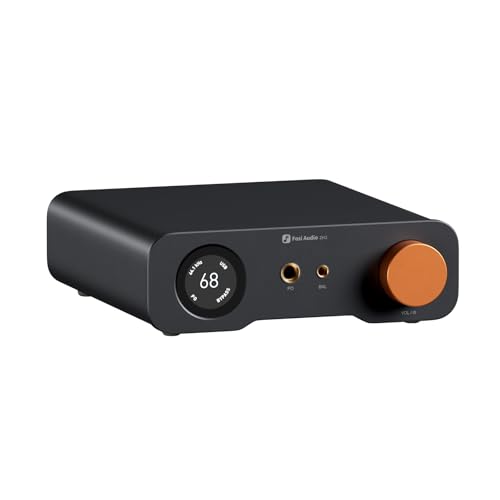
- 4.4mm balanced output with up to 2570mW at 32 ohms
- High-resolution PCM 768kHz/32-bit and DSD512 support
- DAC, amp, and preamp functions with extensive connectivity
Best For: HiFi desktop systems needing power, balanced output, and customization
Best for Shared Listening
Mackie HM-4 Four-Channel Headphone Amp

- Four independent headphone outputs
- Individual volume control for every listener
- Compact metal design for desks, racks, or stands
Best For: Shared monitoring, rehearsals, and tracking sessions
Best for Gaming and Wireless Use
Fosi Audio K7 DAC Headphone Amp

- 4.4mm balanced output with up to 2100mW power
- Bluetooth aptX HD/LL plus USB-C, optical, and coaxial inputs
- 3.5mm microphone input supports gaming and communication
Best For: Desktop gaming and listening with wired or wireless sources
Best for Four-Listener Monitoring
LZSIG LHA2 Four-Channel Headphone Amp
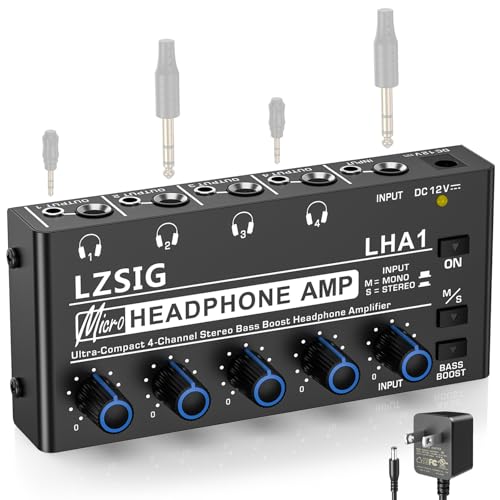
- Four independent volume-controlled headphone channels
- 3.5mm and 6.35mm TS/TRS compatibility
- Stereo/mono switching and selectable bass boost
Best For: Home studios and stage setups needing shared monitoring
Best Compact DAC/Amp

- 4.4mm balanced and 3.5mm outputs
- Up to 1100mW at 32 ohms
- USB-C and optical DAC inputs
Best For: Compact desktop systems needing DAC, amp, and preamp functions
Best for Multi-Listener Monitoring
FIFINE N6 4-Channel Headphone Amp
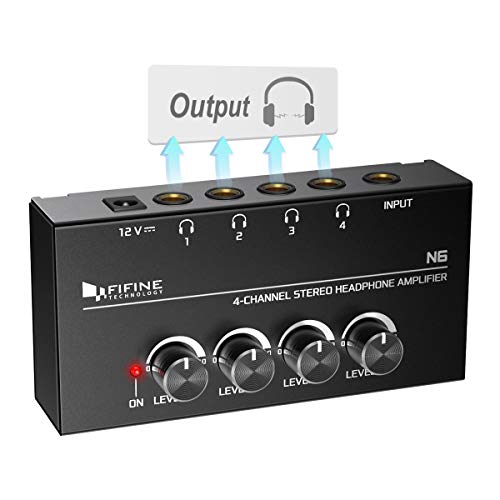
- Four independently controlled outputs
- Balanced TRS input
- Compact metal studio design
Best For: Shared monitoring in studios, rehearsals, and live setups
Best High-Power Desktop Amp

- Up to 4600mW per channel balanced
- Discrete Class AB amplification
- 5V or 12V USB-C PD power
Best For: Planar magnetic and high-impedance headphones
Best Budget Class-A Pick
Douk Audio U3 Desktop Headphone Amp
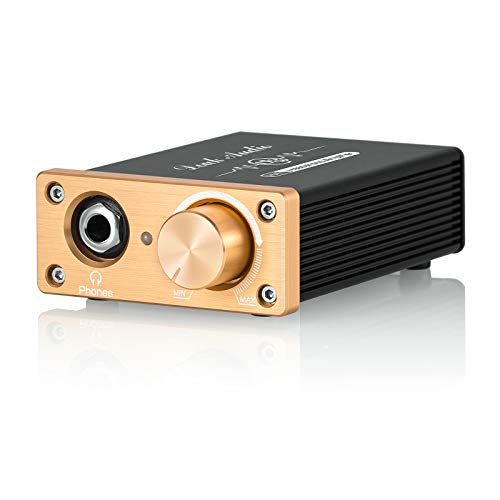
- 1300mW Class A output
- Replaceable op-amp socket
- 3.5mm and 6.35mm outputs
Best For: Compact desktop listening with many headphone types
Best Multi-Listener Splitter
Pyle PHA40 4-Channel Headphone Amp

- Four simultaneous outputs
- Independent volume controls
- Compact 1/4-inch TRS design
Best For: Shared studio and rehearsal monitoring
Best High-Power Desktop Option
Douk Audio U3 PRO Headphone Amp

- 1500mW at 32Ω
- Drives 18Ω–600Ω headphones
- RCA, AUX, 3.5mm, and 6.35mm connections
Best For: Power-demanding desktop headphones
Best Overall – Fosi Audio ZH3 Fully Balanced DAC Headphone Amp
For listeners seeking headphone amplifiers with balanced output, the Fosi Audio ZH3 combines a DAC, headphone amplifier, and preamp in one desktop component. Its 4.4mm balanced output, broad input selection, high-resolution support, and adjustable gain make it a flexible choice for both headphones and desktop audio systems.
Best For: HiFi listeners who want a fully balanced desktop DAC/amp with extensive connectivity and sound customization.
Pros:
- 4.4mm balanced output delivers up to 2570mW at 32 ohms, while the 6.35mm output handles up to 640mW.
- Supports PCM up to 768kHz/32-bit and DSD512 through its AKM4493SEQ DAC and XMOS XU316 processor.
- Works as a DAC, headphone amp, or preamp with USB, optical, coaxial, and RCA inputs plus XLR and RCA outputs.
- Includes three gain levels, bass and treble adjustment, six filter types, and two swappable op-amps.
Cons:
- RCA and XLR output levels differ significantly, so output selection requires attention to the connected equipment.
- EQ adjustments apply only to the headphone output, not the preamp output.
The ZH3 is the most feature-rich option in this group for users who specifically want balanced headphone connectivity. It is less suited to buyers seeking only a simple headphone splitter, but its power, inputs, and customization make it a strong centerpiece for a desktop system.
Best for Shared Listening – Mackie HM-4 Four-Channel Headphone Amp
The Mackie HM-4 is a compact four-channel headphone amplifier for sharing one audio source. It is not a balanced-output headphone amp in the 4.4mm or XLR sense, but it offers a practical multi-listener setup with four independent volume controls and 1/4-inch connections.
Best For: Tracking sessions, rehearsals, and shared monitoring where four listeners need individual level control.
Pros:
- Drives four headphones from a single source.
- Each listener gets an independent volume control.
- Compact metal design can be attached to a desk, rack, or stand with Velcro.
- Plug-and-play operation uses a corded power connection without complicated setup.
Cons:
- Uses 1/4-inch connections and does not provide a listed 4.4mm balanced headphone output.
- It is designed for distribution rather than high-resolution DAC conversion or extensive sound shaping.
Choose the HM-4 when the priority is giving multiple people convenient monitoring access. Buyers specifically searching for headphone amplifiers with balanced output should look elsewhere, but this is a straightforward solution for four-person listening and recording setups.
Best for Gaming and Wireless Use – Fosi Audio K7 DAC Headphone Amp
The Fosi Audio K7 is a versatile desktop DAC and headphone amp for users comparing headphone amplifiers with balanced output for music, gaming, or work. Its 4.4mm balanced output is joined by USB-C, Bluetooth aptX HD/LL, optical, coaxial, and microphone connectivity, making it especially adaptable for modern desktop and console setups.
Best For: PC and console gamers, desktop listeners, and users who want balanced headphone output with Bluetooth and microphone support.
Pros:
- Provides a 4.4mm balanced output alongside 3.5mm and RCA outputs.
- Up to 2100mW of output power helps drive demanding headphones.
- Supports PCM up to 384kHz/32-bit and DSD256 with AK4493S, XMOS XU208, and TPA6120 components.
- Includes USB-C, optical, coaxial, Bluetooth aptX HD/LL, and 3.5mm microphone input.
Cons:
- Its high-resolution support is below the ZH3’s stated PCM 768kHz/32-bit and DSD512 capability.
- The feature-rich layout may be more than needed for a simple wired headphone-only system.
The K7 is a strong all-purpose choice when balanced output needs to coexist with wireless audio, console compatibility, and microphone input. Its aluminum chassis, display, and dual control knobs also make it convenient for frequent desktop use.
Best for Four-Listener Monitoring – LZSIG LHA2 Four-Channel Headphone Amp
The LZSIG LHA2 is a compact four-channel analog headphone amplifier aimed at home studios and stage applications. While it does not list a dedicated balanced headphone output, it supports both 3.5mm and 6.35mm plugs and provides separate volume controls for up to four listeners.
Best For: Studio monitoring and shared listening with multiple 32–100-ohm headphones.
Pros:
- Four independently controlled headphone channels can support up to four pairs of 32–100-ohm headphones.
- Accepts both 3.5mm and 6.35mm TS/TRS plugs for broad device compatibility.
- Includes stereo/mono switching and a bass-boost function covering specified vocal and bass frequency bands.
- Metal chassis and heavy-duty knobs are suited to regular desk or gig use.
Cons:
- It is not a balanced-output amplifier based on the supplied specifications.
- This is a headphone amplifier and distributor, not a mixer.
- Its listed headphone range is 32–100 ohms, which may not suit every headphone model.
The LHA2 makes sense for practical multi-person monitoring rather than audiophile balanced-output systems. Its independent controls, format flexibility, and stereo/mono switch are useful in studio and stage contexts, but buyers requiring 4.4mm balanced connectivity should consider one of the Fosi Audio models instead.
Best Compact DAC/Amp – Fosi Audio SK02
The Fosi Audio SK02 is a versatile choice among headphone amplifiers with balanced output, combining USB-C and optical DAC inputs with 4.4mm balanced and 3.5mm outputs. Its compact desktop design, high-resolution decoding, and 1100mW balanced output at 32 ohms make it suitable for headphones and IEMs rated from 16 to 300 ohms.
Best For: Desktop listeners who want a compact DAC, headphone amplifier, and preamp in one unit.
Pros:
- Offers 4.4mm balanced and 3.5mm single-ended headphone outputs.
- Supports DSD256 and PCM up to 32-bit/384kHz through USB and optical inputs.
- Includes a large multifunction control knob, gain switching, and plug-and-play operation.
- Can act as a preamp for active speakers or an amplifier-based system.
Cons:
- Its 4.4mm balanced output requires headphones or a cable with the matching connector.
- It is designed for tabletop use rather than portable listening.
The SK02 stands out when you need more than a basic amplifier. It provides useful source flexibility, strong output, and convenient controls in a durable aluminum enclosure.
Best for Multi-Listener Monitoring – FIFINE N6 4-Channel Headphone Amp
The FIFINE N6 is a practical distribution amplifier for sharing one stereo source with up to four listeners. While it is not a modern 4.4mm headphone amplifier, its balanced TRS input and four 1/4-inch outputs make it useful for studio, stage, rehearsal, and shared-monitoring setups.
Best For: Musicians, performers, and small studios that need four independently controlled headphone outputs.
Pros:
- Provides four separate headphone outputs with individual volume controls.
- Uses a balanced TRS input for compatible stereo source connections.
- Maintains the source signal when all four outputs are connected, according to the supplied notes.
- Compact metal construction and included 12V power adapter suit studio and stage use.
Cons:
- It has 1/4-inch TRS outputs rather than a 4.4mm balanced headphone output.
- It is a one-input, four-output amplifier, not a mixer.
- Required TRS/TS cables are not included.
The N6 is best viewed as a headphone distribution solution rather than a high-resolution audiophile amp. Choose it when multiple people need to monitor the same stereo feed with their own volume control.
Best High-Power Desktop Amp – FiiO JadeAudio GIGAS 1
The FiiO JadeAudio GIGAS 1 is built for listeners who need substantial power from headphone amplifiers with balanced output. Its discrete Class AB design can deliver up to 4600mW per channel through the 4.4mm balanced output at 32 ohms, making it especially suited to demanding planar magnetic and high-impedance headphones.
Best For: Desktop listeners driving power-hungry headphones who want both 4.4mm balanced and 3.5mm connectivity.
Pros:
- Delivers up to 4600mW+4600mW through the 4.4mm balanced output at 32 ohms.
- Uses a discrete Class AB output stage for high current capability and control.
- Accepts analog sources through RCA and 3.5mm inputs.
- Supports standard 5V USB power or 12V USB-C PD for greater output capability.
Cons:
- The highest stated output capability depends on using 12V USB-C PD power.
- Its powerful desktop-focused design may be more than sensitive IEM users need.
GIGAS 1 is the strongest match here for difficult-to-drive headphones. Its gain modes, dual output formats, and flexible power options also make it adaptable to both sensitive and demanding loads.
Best Budget Class-A Pick – Douk Audio U3 Desktop Headphone Amp
The Douk Audio U3 is a compact choice for listeners seeking headphone amplifiers with balanced output-style connectivity for a desktop setup, though its listed headphone connections are 3.5mm and 6.35mm rather than balanced outputs. Its Class A design, RCA input, and high-current output stage are aimed at adding drive and a warm presentation to many headphones.
Best For: Home or office desktop listeners who want a small amp for headphones, including many high-impedance models.
Pros:
- 1300mW maximum output and a high-current Class A output stage.
- Designed to drive many headphones from 18Ω-style common loads through high-impedance models such as HD600, HD650, K701, and DT880.
- Replaceable op-amp socket adds upgrade and DIY flexibility.
- Compact design with RCA input plus 3.5mm and 6.35mm headphone connections.
Cons:
- The supplied specifications do not list a balanced headphone output.
- It uses a 5–20V DC power input and requires a suitable power source.
The U3 makes the most sense when compact size, strong drive, and a warm Class A sound matter more than true balanced connectivity. For a balanced-output roundup, treat it as a conventional single-ended alternative.
Best Multi-Listener Splitter – Pyle PHA40 4-Channel Headphone Amp
The Pyle PHA40 is built for shared monitoring rather than audiophile headphone amplification. While it is relevant to shoppers comparing headphone amplifiers with balanced output because it uses 1/4-inch TRS connections, the supplied information does not confirm a balanced signal path. Its main advantage is distributing one source to four listeners with individual volume controls.
Best For: Small studios, rehearsals, and recording sessions where up to four people need separate headphone volume control.
Pros:
- Four headphone outputs allow four listeners to monitor the same source.
- Each channel has an independent rotary volume control.
- Compact body is suited to studio, stage, or mobile use.
- Uses 1/4-inch TRS input and output connectors.
Cons:
- The supplied details do not establish true balanced headphone output operation.
- It is intended for multi-channel distribution, not a high-power amp for difficult headphones.
- The enclosure is plastic.
Choose the PHA40 for practical multi-person monitoring, not for adding premium balanced amplification. Independent controls and four outputs are its strongest selling points.
Best High-Power Desktop Option – Douk Audio U3 PRO Headphone Amp
The Douk Audio U3 PRO targets desktop listeners who need substantial power across a broad range of headphones. It belongs in a comparison of headphone amplifiers with balanced output only with an important qualification: the supplied specifications list 3.5mm and 6.35mm headphone outputs, not a dedicated balanced output. Its voltage-boost circuit and 1500mW rating make it the more powerful Douk option here.
Best For: Desktop users driving headphones from 18Ω to 600Ω who want multiple input and output formats.
Pros:
- Up to 1500mW at 32Ω and compatibility with headphones rated from 18Ω to 600Ω.
- Voltage-boost circuit maintains high operating voltage from a DC 5V input.
- Replaceable op-amp design supports experimentation and upgrades.
- Provides RCA and 3.5mm inputs plus 3.5mm and 6.35mm headphone outputs.
Cons:
- No dedicated balanced headphone output is listed in the supplied specifications.
- Its compact desktop format may offer fewer controls than larger amplifiers.
The U3 PRO is the strongest fit here for demanding headphone loads and flexible desktop connections. If balanced output is essential, verify the connection type carefully before buying; otherwise, its power range is a notable advantage.
How We Picked the Best Headphone Amplifiers with Balanced Output
We focused on the features that matter most in everyday headphone systems: output power, supported headphone impedances, balanced and single-ended connections, digital input options, analog versatility, physical controls, and intended use. Models range from compact four-channel distribution amps to desktop DAC/headphone amplifiers with USB, optical, coaxial, Bluetooth, or RCA connectivity.
Because product specifications and included accessories can vary, verify the current listing for exact power ratings, connector types, supported sample rates, and whether a balanced cable is required. A 4.4mm output is not automatically evidence of superior sound; system matching and headphone sensitivity remain important.
Quick Comparison
| Best For | What to Look For | Most Suitable Type |
|---|---|---|
| Desktop hi-fi | High output power, low noise, balanced output | Dedicated Class A or Class AB amplifier |
| USB computer setups | Built-in DAC, USB-C or USB-B, volume control | DAC/headphone amp combo |
| Gaming consoles | Console compatibility, simple switching, useful outputs | Desktop DAC amp with USB or optical input |
| Multiple listeners | Several independent outputs and shared input | Four-channel headphone distribution amp |
| Small or budget systems | Compact housing, analog input, low power needs | Mini single-ended headphone amplifier |
Key Buying Factors for Headphone Amplifiers with Balanced Output
Balanced Output and Connector Compatibility
Check whether the amplifier provides a true balanced 4.4mm or XLR output and match it to headphones with a compatible balanced cable. Do not connect a balanced output to an adapter or wiring scheme that ties channels together. If your headphones only use 3.5mm or 6.35mm single-ended cables, choose an amplifier that supports those outputs too.
Power, Impedance, and Sensitivity
High-impedance headphones may benefit from additional voltage, while low-sensitivity planar headphones often need more current. More wattage is not always better: excessive gain can reduce usable volume range or increase the risk of hearing damage. Look for selectable gain or a smooth, precise volume control when possible.
DAC, Inputs, and System Matching
A built-in DAC is useful for computers, consoles, and digital sources, but it is unnecessary if you already own a quality DAC. USB, optical, coaxial, RCA, and Bluetooth each serve different setups. Confirm operating-system and console compatibility before buying.
Noise, Controls, and Practical Design
For sensitive in-ear monitors, prioritize a quiet output and fine volume adjustment. Preamp outputs, bass boost, multiple headphone jacks, and channel controls can be valuable, but only if they fit your equipment and listening habits.
Who Should Buy Which Headphone Amplifiers with Balanced Output?
Choose a feature-rich DAC/headphone amp if you want one desktop hub for a computer, console, or several digital sources. Pick a powerful dedicated balanced amplifier for demanding high-impedance or planar headphones and serious hi-fi listening. A four-channel model makes more sense for recording, teaching, rehearsals, or sharing one source with several listeners. For a compact desk or basic analog setup, a mini amplifier is often the most economical choice.