
Finding the right condenser microphone for vocals means balancing clarity, sensitivity, room noise, connectivity, and budget. The models in this roundup cover practical home-studio microphones, versatile recording tools, and more refined options for serious vocal work.
Each microphone uses an XLR connection and is designed for recording applications, but their capsules, accessories, output character, and tolerance for untreated rooms differ. Use the guide below to narrow the list before choosing.
Best 10 Condenser Microphone for Vocals Picks for 2026
Best Value Classic
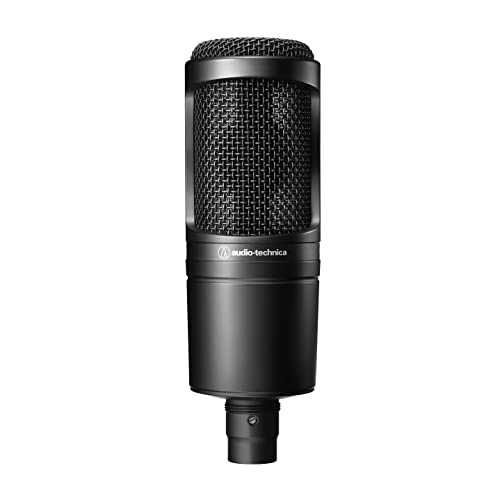
- Cardioid isolation for home studios
- High SPL handling and wide dynamics
- Low-mass diaphragm for detailed response
Best For: Budget-conscious home-studio vocal recording
Best Vocal Detail

- One-inch capsule captures vocal nuance
- Cardioid pattern provides rear rejection
- Shock mount and pop filter included
Best For: Detailed vocals and versatile home recording
Best Complete Setup
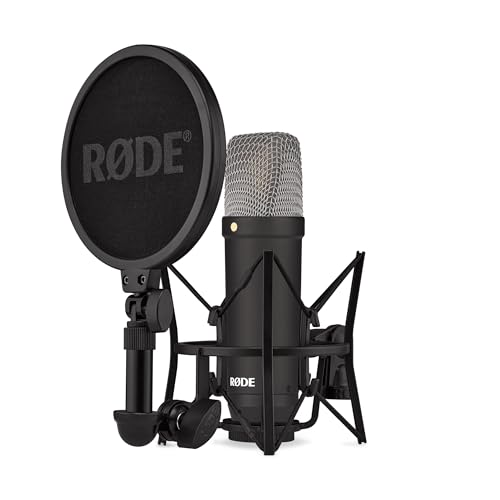
- Whisper-quiet 4.5 dBA self-noise
- Tight cardioid vocal focus
- Shock mount, pop filter, and cable included
Best For: Quiet vocal recording and streaming setups
Best Pattern Flexibility

- Three selectable polar patterns
- Pad and high-pass filter included
- Shock mount supplied for studio use
Best For: Flexible vocal, podcast, and instrument recording
Best for Clean, Mix-Ready Vocals
Shure SM4 XLR Studio Condenser Microphone Kit

- Smooth dual-diaphragm sound with controlled low end
- Integrated pop filter and RF interference shielding
- Includes shock mount, adapter, and carrying case
Best For: Home-studio vocalists and creators wanting a complete XLR kit
Best Budget Studio Pick
Mackie EM-91C Large-Diaphragm Condenser

- Affordable option for home or professional studios
- Cardioid pickup reduces ambient sound
- Includes shock mount and XLR cable
Best For: Budget-conscious vocalists starting an XLR studio setup
Best for Flexible Vocal Recording
Audio-Technica AT2035 Cardioid Condenser

- Smooth, natural large-diaphragm sound
- Switchable 80 Hz filter and 10 dB pad
- High SPL handling for versatile recording
Best For: Vocalists and creators using one mic across studio and streaming setups
Reliable Studio Starter

- Clear cardioid capture for vocals and instruments
- Handles up to 150 dB SPL
- Includes bass-cut filter and -20 dB pad
Best For: Home and project studio recording
Complete Vocal Setup

- Cardioid design helps reduce background sound
- Includes boom arm, shock mount, pop filter, and cable
- Designed for vocals, streaming, and voice-over
Best For: Bundled home studio and streaming setups
Large-Diaphragm Vocal Pick

- 26mm gold cardioid capsule for vocal recording
- Includes shock mount, filter, cable, and mic bag
- Metal body and grille offer durable construction
Best For: Singing and home-studio vocal recording
Best Value Classic – Audio-Technica AT2020
The Audio-Technica AT2020 is a practical entry point for anyone seeking a condenser microphone for vocals in a project or home studio. Its cardioid pattern helps isolate the singer, while high SPL handling and a wide dynamic range support varied recording applications.
Best For: Home-studio vocalists who want a dependable XLR condenser with strong price-to-performance value.
Pros:
- Cardioid pattern reduces sound pickup from the sides and rear.
- High SPL handling and wide dynamic range suit multiple sources.
- Low-mass diaphragm supports extended response and transient detail.
Cons:
- Requires phantom power and an XLR-equipped audio interface.
- Does not include a shock mount or pop filter in the supplied details.
The AT2020 is a straightforward, versatile choice for building a vocal recording setup without unnecessary complexity.
Best Vocal Detail – LEWITT LCT440PURE
The LEWITT LCT440PURE is a large-diaphragm condenser microphone for vocals designed to capture nuance with depth and clarity. Its cardioid pattern provides rear rejection, and the included shock mount and magnetic pop filter make it especially convenient for vocal recording.
Best For: Singers and home recordists who want detailed vocal capture with useful accessories included.
Pros:
- One-inch true condenser capsule captures vocal detail and depth.
- Cardioid pattern helps reject sound from behind the microphone.
- Includes a shock mount and magnetic pop filter.
- Also supports acoustic instruments, drums, cymbals, amplifiers, and piano.
Cons:
- Requires equipment with an XLR input.
- Does not include an audio interface according to the supplied details.
With its vocal-friendly capsule and practical included accessories, the LCT440PURE is a strong all-around studio option for polished home recordings.
Best Complete Setup – RØDE NT1 Signature
The RØDE NT1 Signature is a condenser microphone for vocals that arrives with key recording accessories already included. Its large-diaphragm design, tight cardioid pattern, and notably low self-noise make it a practical choice for singers, streamers, and home-studio users.
Best For: Vocalists and streamers who want a quiet, ready-to-connect XLR setup.
Pros:
- Very low 4.5 dBA self-noise keeps the recording path quiet.
- Tight cardioid pattern focuses on vocals and rejects room sound.
- Includes an SM6 shock mount, pop filter, six-meter XLR cable, and dust cover.
- Ten-year warranty is available with registration.
Cons:
- Still requires an audio interface to record.
- Its XLR connection may be less convenient for plug-and-play users.
The NT1 Signature stands out when minimizing setup purchases and background microphone noise matters as much as vocal clarity.
Best Pattern Flexibility – Warm Audio WA-87jr
The Warm Audio WA-87jr is a condenser microphone for vocals with a studio-oriented sound and three selectable polar patterns. Its detailed mids, pristine highs, built-in pad, and high-pass filter give it added flexibility for vocals, instruments, podcasts, and louder sources.
Best For: Studio users who want one microphone for vocals and a range of recording situations.
Pros:
- Offers cardioid, figure-eight, and omnidirectional patterns.
- Built-in pad helps accommodate loud sources.
- High-pass filter can reduce unwanted low-frequency noise.
- Includes a professional shock mount and five-year warranty.
Cons:
- Requires phantom power and an XLR connection.
- Its 1.62 kg weight may require a sturdy microphone stand.
The WA-87jr is the most adaptable option here for creators who want vocal capability plus multiple pickup patterns and recording controls.
Best for Clean, Mix-Ready Vocals – Shure SM4 XLR Studio Condenser Microphone Kit
If you want a condenser microphone for vocals that helps reduce common recording problems, the Shure SM4 combines a smooth-sounding dual-diaphragm capsule with an integrated pop filter and RF interference shielding. Its cardioid pattern and large sweet spot also make close-miked vocal recording more consistent.
Best For: Home-studio vocalists, podcasters, and creators who want a complete XLR kit with noise-control features.
Pros:
- Smooth, detailed reproduction with controlled low end and natural highs.
- Integrated pop filter helps reduce plosives and rumble.
- RF shielding helps block interference from phones, laptops, and Wi-Fi routers.
- Includes a shock mount, magnetic pop filter, stand adapter, and carrying case.
Cons:
- Requires an audio interface and phantom power.
- Its 2.5-pound build may be heavier than simpler studio microphones.
The SM4 is a strong choice when clean, mix-ready vocal tracks and included accessories matter more than a minimal setup. Its high-SPL handling also gives it added flexibility for louder sources.
Best Budget Studio Pick – Mackie EM-91C Large-Diaphragm Condenser
The Mackie EM-91C is a practical condenser microphone for vocals when you want an affordable XLR option for a home or large studio. Its large-diaphragm capsule and cardioid pattern are designed for studio vocals and instruments while helping reduce ambient sound.
Best For: Budget-conscious singers and home-studio users building a basic XLR recording setup.
Pros:
- Affordable professional-quality condenser microphone.
- Cardioid pattern helps reduce sound from the surrounding space.
- Rugged construction is suited to regular studio use.
- Includes a shock mount and XLR cable.
Cons:
- Requires compatible XLR equipment such as an audio mixer.
- Offers fewer listed control features than the AT2035 or SM4.
The EM-91C keeps the essentials straightforward: a large-diaphragm condenser capsule, cardioid pickup, and useful included accessories. It is a sensible entry point for vocal recording without a premium feature set.
Best for Flexible Vocal Recording – Audio-Technica AT2035 Cardioid Condenser
The Audio-Technica AT2035 is a versatile condenser microphone for vocals, podcasting, streaming, and studio work. Its large diaphragm is designed for smooth, natural sound, while the switchable high-pass filter and 10 dB pad help adapt the microphone to different sources and sound levels.
Best For: Vocalists and creators who need one XLR microphone for home recording, streaming, and live-performance applications.
Pros:
- Large diaphragm delivers smooth, natural sound with low noise.
- Cardioid pattern improves isolation from side and rear sound.
- 80 Hz high-pass filter and 10 dB pad add recording flexibility.
- High SPL handling and wide dynamic range suit varied sources.
Cons:
- Requires compatible XLR equipment such as an audio mixer.
- Does not include the broader accessory bundle supplied with the Shure SM4 kit.
The AT2035 stands out for its adjustable recording controls and broad application range. It is a strong middle-ground choice if you want a dependable vocal mic that can also handle louder sources and non-vocal duties.
Reliable Studio Starter – AKG P120
The AKG P120 is a practical condenser microphone for vocals, speech, and instruments when you want clear, detailed recording without an overly complicated setup. Its cardioid pattern helps focus on the sound in front of the mic, while the XLR connection works with compatible audio interfaces and other recording hardware.
Best For: Home and project studios recording vocals, speech, or instruments.
Pros:
- Low-mass diaphragm provides clear, detailed sound for vocals and instruments.
- Handles sound levels up to 150 dB for loud sources with reduced distortion risk.
- Includes a stand adapter and features a durable metal enclosure.
- Offers a -20 dB preattenuation pad and a 300 Hz bass-cut filter.
Cons:
- Requires phantom power through compatible recording equipment.
- The package includes the microphone and stand adapter, rather than a complete accessory bundle.
- XLR connectivity is less direct than USB for computer-only setups.
Choose the P120 if you want a straightforward, durable XLR condenser with useful controls and high-SPL handling. It is especially appealing for buyers building a flexible home recording setup.
Complete Vocal Setup – TONOR TC20 Kit
The TONOR TC20 is a condenser microphone for vocals that comes as a ready-to-mount XLR kit. Its cardioid capsule is designed to reduce sound from the sides and rear, while the included boom arm, shock mount, pop filter, and cable simplify a home studio, streaming, or voice-over setup.
Best For: Vocal recording, podcasting, streaming, and voice-over users who need a bundled desk setup.
Pros:
- Cardioid pattern helps suppress off-axis and rear background sound.
- Includes a steel T20 boom arm, shock mount, pop filter, cover, and 2-meter XLR cable.
- Low-noise FET preamplifier and high SPL handling support clear, natural sound.
- Desk clamp fits surfaces up to 2.4 inches thick and supports microphones up to 4 pounds.
Cons:
- Requires 48V phantom power from an audio interface, mixer, or preamp.
- XLR connectivity means it is not a direct USB computer microphone.
- The included arm and accessories make the overall package heavier than a standalone mic.
The TC20 is a strong value when you need more than the microphone itself. Its bundled mounting hardware makes it convenient for creators assembling a vocal or streaming station from scratch.
Large-Diaphragm Vocal Pick – Melon Audio MA-87
The Melon Audio MA-87 is a large-diaphragm condenser microphone for vocals, built around a 26mm gold cardioid capsule. It is intended for singing, vocal recording, and podcasting, with a balanced low end, smooth midrange, and clear high frequencies, plus several useful recording accessories.
Best For: Singers and home-studio users seeking a large-diaphragm XLR microphone with included accessories.
Pros:
- 26mm cardioid capsule is designed for vocal recording and singing.
- Large-diaphragm design aims for balanced lows, silky mids, and clear highs.
- Includes a metal shock mount, foam/pop filter, 4-foot XLR cable, and mic bag.
- Solid metal body and grille provide a durable build.
Cons:
- Requires 48V phantom power and an audio interface is recommended.
- Cardioid XLR operation requires more equipment than a USB microphone.
- The supplied cable is 4 feet long, which may limit placement in some setups.
The MA-87 makes sense for vocalists who want a traditional large-diaphragm studio microphone and a useful accessory package. Its included shock mount and filter help make the transition to home vocal recording easier.
How We Picked the Best Condenser Microphone for Vocals
We focused on microphones suitable for vocal recording, then compared capsule design, polar pattern, sensitivity, expected tonal character, build quality, included accessories, and overall value. Large-diaphragm condenser models typically capture detailed vocals with a broad, polished presentation, while cardioid patterns help reduce sound arriving from behind the microphone.
Because condenser microphones are sensitive, we also considered how practical each option is in a home studio. A good choice should pair reliably with an audio interface or mixer that supplies 48V phantom power and should offer a useful balance between detail and unwanted room sound.
Quick Comparison
| Best For | What to Prioritize | Shortlist Direction |
|---|---|---|
| First home studio | Affordable price, cardioid pickup, simple XLR setup | AT2020, P120, EM-91C |
| Detailed lead vocals | Clean high-frequency response and large diaphragm | LCT440PURE, NT1 Signature |
| Flexible recording | Higher headroom, shock isolation, broad usability | AT2035, SM4 |
| Complete starter package | Stand or boom arm, shock mount, and pop protection | TONOR XLR kit, MA-87 package |
| Classic-style studio sound | Rich voicing and robust construction | WA-87jr |
Key Buying Factors for a Condenser Microphone for Vocals
Polar Pattern and Room Quality
Cardioid microphones favor sound from the front and reject much of the rear signal. They are a sensible default for vocals, particularly when recording in a bedroom or other untreated space. However, they will not eliminate reflections from nearby walls, so placement and basic acoustic treatment still matter.
Phantom Power and Recording Hardware
Most XLR condenser microphones require 48V phantom power from an audio interface, mixer, or compatible preamp. Check that your recording setup supplies it before buying. You will also need a balanced XLR cable and a stable stand or boom arm.
Sound, Sensitivity, and Headroom
Condenser microphones reveal breath, articulation, room reflections, and background noise. Look for a clear, controlled top end if the vocalist has a bright or sibilant voice. A microphone with strong headroom or a pad option can be useful for louder singers and instruments.
Accessories and Vocal Protection
A pop filter helps reduce plosive bursts from sounds such as “p” and “b,” while a shock mount can limit desk and stand vibration. Included accessories improve value, but verify their quality and compatibility rather than choosing a microphone on bundle contents alone.
Who Should Buy Which Condenser Microphone for Vocals?
Choose the AT2020, AKG P120, or Mackie EM-91C if you want an affordable entry point for a home studio. Step up to the LEWITT LCT440PURE or RØDE NT1 Signature when detailed, polished vocal capture is the priority. The Audio-Technica AT2035 and Shure SM4 are better fits for buyers who want a more adaptable recording setup, while the Warm Audio WA-87jr suits singers seeking a richer, classic-inspired studio presentation.
If you need a package with basic recording accessories, the TONOR kit or Melon Audio MA-87 can reduce setup costs. Whichever model you choose, budget for an audio interface, pop filter, dependable stand, and some room treatment—the surrounding recording environment can affect vocal quality as much as the microphone itself.