
The best network audio players with headphone output combine convenient streaming with serious personal listening. They can feed a headphone amplifier or powered speakers directly, while also fitting into a larger hi-fi system.
This roundup compares 10 options ranging from compact streamers and Android-based players to premium CD, SACD, DAC, and professional IP-audio components. Focus on connectivity, headphone performance, software support, and the sources you use most.
Best 10 Network Audio Players with Headphone Output Picks for 2026
Best All-in-One Value
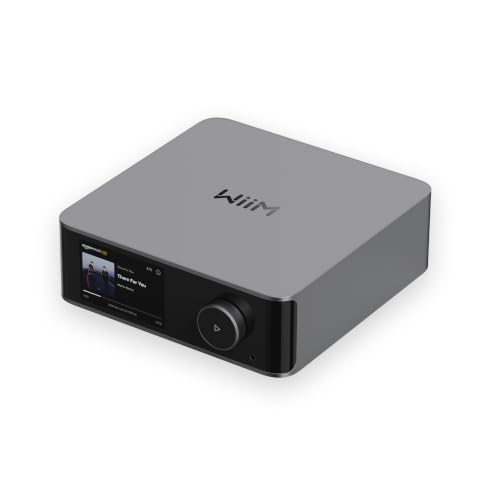
- Dedicated headphone output and extensive connections
- 24-bit/192 kHz streaming with ESS DAC
- Touchscreen, multiroom, HDMI ARC, and phono support
Best For: Flexible stereo, headphone, and TV-based systems
Best Network CD Player

- Combines CD playback with network streaming
- Supports PCM 384 kHz/32 bit and DSD 128
- Adds a 3.5mm headphone jack and HDMI ARC
Best For: CD-focused two-channel systems with headphones
Best Audiophile Headphone Streaming

- THX AAA headphone amplifier with 1/4-inch jacks
- Dual ESS SABRE DACs and balanced XLR outputs
- BluOS multiroom, AirPlay 2, Bluetooth, and HDMI eARC
Best For: High-end headphone and multiroom listening
Best for CD and SACD Collections

- Plays SACD and CD collections with network streaming
- Includes a dedicated headphone amplifier
- HEOS built-in supports network and multiroom audio
Best For: Disc collectors adding streaming and headphone listening
Simple Network Audio

- Supports multiple common audio formats
- Wired Ethernet and USB connectivity
- Includes 3.5mm headphone output
Best For: Basic network audio and internet-radio listening
Headphone-Focused Flagship

- Android platform with major streaming apps
- Powerful integrated headphone amplifier
- HDMI, USB, Bluetooth, and network playback
Best For: High-end desktop headphone and streaming systems
Flexible Hi-Res Streaming

- Dedicated headphone output and ESS DAC
- Wi-Fi 6, Bluetooth, HDMI ARC, and USB
- Hi-res streaming with multiroom support
Best For: Versatile stereo and multiroom audio systems
Premium Desktop Control

- Dual-mono design for separated channels
- 4-pin XLR headphone amplifier
- MQA decoding and RCA/XLR preamp inputs
Best For: Premium desktop headphone and two-channel systems
Portable Network Streaming
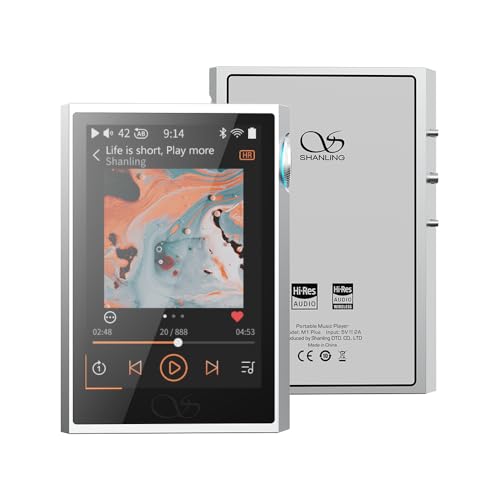
- DLNA and AirPlay network playback
- 4.4mm balanced and 3.5mm outputs
- Compact 116-gram design
Best For: Portable network listening with flexible headphone connections
Android Hi-Fi Powerhouse

- Android 13 with major music apps
- 800mW balanced output at 32 ohms
- DLNA, NAS, and AirPlay 2 support
Best For: Powerful app-based portable listening with balanced headphones
Best All-in-One Value – WiiM Ultra
The WiiM Ultra is a flexible choice among network audio players with headphone output, combining high-resolution streaming, a dedicated headphone jack, touchscreen control, and broad system connectivity in one compact component. It supports playback up to 24-bit/192 kHz and includes HDMI ARC, phono, optical, coaxial, RCA, USB, and subwoofer connections.
Best For: Listeners building a versatile stereo or headphone system with streaming, TV audio, and analog-source support.
Pros:
- Dedicated headphone output plus RCA, optical, coaxial, USB, HDMI ARC, and phono connectivity
- ESS ES9038 Q2M DAC with support for up to 24-bit/192 kHz audio
- 3.5-inch touchscreen, Wi-Fi 6, Bluetooth 5.3, multiroom support, and room correction
Cons:
- Not compatible with AirPlay or usable as an AirPlay receiver
- Its many features may be more than needed for a simple streaming setup
The WiiM Ultra stands out for connection flexibility and easy control. It is particularly compelling if you want one network player to serve headphones, powered speakers, an amplifier, a TV, and analog sources.
Best Network CD Player – Marantz CD 50n
The Marantz CD 50n combines network audio streaming with a dedicated CD player and a 3.5mm headphone jack. It supports high-resolution formats up to PCM 384 kHz/32 bit and DSD 128, while HDMI ARC adds a straightforward way to connect a television.
Best For: CD listeners who want high-resolution network playback, TV integration, and direct headphone listening in a premium two-channel component.
Pros:
- Plays CDs and supports network audio streaming
- High-resolution support up to PCM 384 kHz/32 bit and DSD 128
- Built-in 3.5mm headphone jack, HDMI ARC, and digital preamp volume control
Cons:
- Focused on two-channel playback rather than surround sound
- Single-disc design requires manually changing discs
The CD 50n is a strong fit for a traditional listening setup that still embraces network sources. Its headphone output and digital volume control make it suitable for both private listening and direct connection to a power amplifier.
Best Audiophile Headphone Streaming – Bluesound NODE ICON
The Bluesound NODE ICON is a premium network audio player with headphone output, built around dual ESS SABRE DACs and a THX AAA headphone amplifier. It supports high-resolution network playback, AirPlay 2, Bluetooth, HDMI eARC, balanced XLR outputs, and BluOS multiroom control.
Best For: Headphone enthusiasts and audiophiles who want powerful network streaming, balanced system connections, and multiroom capability.
Pros:
- THX AAA headphone amplifier with full-sized 1/4-inch headphone jacks
- Dual-mono DAC design using two ESS SABRE ES9039Q2M DACs
- AirPlay 2, aptX Adaptive Bluetooth, HDMI eARC, XLR outputs, and BluOS multiroom
Cons:
- Dirac Live requires an upgrade and a separately purchased calibration microphone
- Its advanced audiophile features may exceed the needs of casual streamers
The NODE ICON is the most headphone-focused option in this group. Its THX AAA amplification, premium DAC architecture, display, and broad connectivity make it well suited to a serious personal listening system that can also serve a whole-home setup.
Best for CD and SACD Collections – Marantz SACD 30n
The Marantz SACD 30n is a network-ready disc player for listeners who want SACD and CD playback alongside digital files and built-in streaming services. It includes a dedicated headphone amplifier and 3.5mm headphone jack for direct listening.
Best For: Music collectors who want SACD and CD playback, network audio, and Marantz-focused headphone listening in one component.
Pros:
- Supports SACDs, CDs, digital files, and multiple built-in streaming services
- Dedicated headphone amplifier and 3.5mm headphone jack
- HEOS built-in enables network and multiroom audio
Cons:
- Designed around physical-disc playback, so it may be more than streaming-only users need
- Supplied details identify a 3.5mm headphone connection but do not specify balanced headphone output
The SACD 30n is a natural choice for a physical-media collection that is expanding into network audio. Its integrated headphone stage lets you enjoy discs and streams privately without adding a separate headphone amplifier.
Simple Network Audio – Barix Exstreamer 100
The Barix Exstreamer 100 is a practical choice for anyone seeking network audio players with headphone output for basic internet-radio and streamed-audio playback. Its Ethernet connection, broad format support, and 3.5mm headphone jack make it well suited to straightforward listening setups.
Best For: Basic network audio playback, internet radio, and headphone listening.
Pros:
- Supports MP3, AAC+, WMA, Ogg Vorbis, and linear PCM formats.
- Includes a 10/100 Ethernet interface for wired network connectivity.
- Provides a 3.5mm headphone jack, stereo line output, and USB flash-memory support.
Cons:
- Uses wired Ethernet rather than built-in Wi-Fi.
- Its feature set is focused on audio decoding rather than touchscreen or advanced streaming control.
The Exstreamer 100 stands out as a compact, format-flexible decoder for users who value dependable wired networking and a direct headphone connection over a broad modern app ecosystem.
Headphone-Focused Flagship – FiiO R9 Network Player
The FiiO R9 is a high-end option among network audio players with headphone output, combining Android streaming, local network playback, DAC functionality, and a powerful headphone amplifier. Its touchscreen and extensive connectivity make it suitable for a central desktop audio system.
Best For: Headphone enthusiasts who want streaming, local playback, decoding, and amplification in one unit.
Pros:
- Supports third-party apps including Amazon Music, Apple Music, Tidal, and Spotify.
- Offers DLNA, AirPlay, and Roon Ready support for network playback.
- Provides substantial headphone output power, with up to 7300mW per channel under 32Ω.
- Includes HDMI decoding, HDMI output, HDMI ARC, Bluetooth, USB, and a 6-inch touchscreen.
Cons:
- Its extensive feature set may be more than needed for a simple streaming setup.
- The desktop all-in-one design is less suited to users seeking a small, discreet streamer.
With its combination of streaming flexibility, high-resolution decoding, and powerful amplification, the R9 is the most comprehensive choice here for listeners who primarily use headphones but also want broad system connectivity.
Flexible Hi-Res Streaming – WiiM Ultra Music Streamer
The WiiM Ultra is a versatile pick among network audio players with headphone output, pairing a dedicated headphone connection with an ESS DAC, touchscreen control, Wi-Fi 6, and extensive digital and analog inputs. It also supports multiroom playback and home-theater integration.
Best For: Flexible stereo systems that need headphone listening, multiroom streaming, and multiple source connections.
Pros:
- Includes a dedicated headphone output alongside RCA, optical, coaxial, USB, and HDMI ARC connections.
- Streams up to 24-bit/192kHz from services including Spotify, Amazon Music, TIDAL, and Qobuz.
- Supports multiroom audio with WiiM, Amazon Echo, and Google Home devices.
- Offers room correction, independent EQ settings, Roon Ready support, NAS, and DLNA compatibility.
Cons:
- It is incompatible with AirPlay and cannot function as an AirPlay receiver.
- Its broad connectivity may be unnecessary for a simple headphone-only setup.
The WiiM Ultra is a strong all-rounder for listeners who want headphone output without giving up system-building flexibility, home-theater features, or convenient app-based multiroom control.
Premium Desktop Control – TEAC UD-701N
The TEAC UD-701N is a substantial desktop choice for listeners seeking network audio players with headphone output and broader system control. Its dual-mono design, analog preamplifier functions, MQA decoding, and switchable 4-pin XLR headphone amplifier make it especially suited to a dedicated listening setup.
Best For: Audiophiles building a premium desktop or two-channel system with balanced headphone connectivity.
Pros:
- Dual-mono construction is designed to reduce interference between channels.
- Includes a 4-pin XLR headphone amplifier with balanced and active-ground modes.
- Offers RCA/XLR line inputs, four digital inputs, Bluetooth LDAC and aptX HD, and full MQA decoding.
Cons:
- Its desktop component format is less convenient than a portable player.
- The 4-pin XLR headphone output may require an appropriate balanced cable or adapter.
The UD-701N stands out when headphone listening is only part of the system. Choose it for its preamp flexibility and connection options rather than portability.
Portable Network Streaming – SHANLING M1 Plus
The SHANLING M1 Plus is a compact option for shoppers comparing network audio players with headphone output. It combines Wi-Fi streaming through DLNA and AirPlay with local microSD playback, Bluetooth 5.2, and both 4.4mm balanced and 3.5mm headphone outputs.
Best For: Portable listeners who want network streaming, flexible headphone connections, and a compact player for daily use.
Pros:
- Supports DLNA and AirPlay for streaming from a home network or NAS.
- Provides both 4.4mm balanced and 3.5mm single-ended headphone outputs.
- Compact aluminum-and-glass body weighs about 116 grams and offers approximately 12.5 hours of playback.
Cons:
- Its smaller 3.2-inch screen may be less comfortable for extensive library browsing than a larger player.
- Playback time is shorter than the standby figure and varies by use.
The M1 Plus is a strong fit when portability matters without giving up network features. Its dual headphone outputs also make it easy to switch between common cable types.
Android Hi-Fi Powerhouse – SHANLING M3 Plus
The SHANLING M3 Plus is a feature-rich pick for those seeking network audio players with headphone output and app-based streaming. Its Android 13 platform supports services such as Tidal, Qobuz, Spotify, and Apple Music, while the 4.4mm balanced output reaches 800mW at 32 ohms.
Best For: Users who want a powerful portable player with Android apps, network playback, and balanced headphone drive.
Pros:
- Supports DLNA, NAS, AirPlay 2, dual-band Wi-Fi, and downloadable music apps.
- Offers 3.5mm and 4.4mm outputs with three gain settings.
- Uses four CS43198 DACs and supports PCM up to 768kHz/32-bit, DSD512, and MQA 16X.
Cons:
- Its larger 4.7-inch player body is less pocket-friendly than the M1 Plus.
- Balanced output battery life is listed at approximately 11 hours.
The M3 Plus is the better choice for listeners who prioritize app access and output power. It offers broad streaming support and strong balanced output in a portable Android design.
How We Picked the Best Network Audio Players with Headphone Output
We selected models that support network or IP-based audio playback and offer a practical path to headphone listening, either through a built-in headphone output or through a clearly defined headphone-focused design. The lineup covers different budgets and use cases, including streaming, CD and SACD playback, USB DAC duties, local file playback, multi-room audio, and professional installation.
We also considered format support, control options, display quality, digital and analog connectivity, software ecosystems, and whether each player is better suited to a desktop, living-room, rack, or whole-home system. Product specifications and capabilities can vary by firmware, region, and connected equipment, so confirm current compatibility before buying.
Quick Comparison
| Best For | Look For |
|---|---|
| Streaming-focused systems | Reliable app support, Wi-Fi or Ethernet, multi-room compatibility |
| Headphone and desktop listening | Dedicated headphone output, volume control, compact design, USB support |
| Disc collections | CD or SACD transport, network playback, and suitable analog outputs |
| High-resolution files | Broad PCM and DSD support, USB input, and a capable DAC section |
| Installed or commercial audio | Stable Ethernet operation, protocol support, and system-management features |
Key Buying Factors for Network Audio Players with Headphone Output
Headphone Output and Amplification
Check whether the output is designed for low-impedance portable headphones, demanding high-impedance models, or both. A player with a strong integrated amplifier can simplify a desktop or secondary-room setup, while a line-level output may be better if you already own a separate headphone amplifier.
Streaming Services and Network Stability
Confirm support for your preferred services, such as Spotify Connect, Tidal, Qobuz, internet radio, or proprietary multi-room platforms. Ethernet is usually the most dependable choice for fixed installations; dual-band Wi-Fi is more convenient when cabling is difficult.
Inputs, Outputs, and System Matching
Count the connections you actually need. HDMI, optical, coaxial, USB, balanced outputs, and subwoofer outputs can make a player more versatile, but they may add cost and complexity. Match analog output levels and connector types to your amplifier, powered speakers, or headphone setup.
Formats, Control, and Display
High-resolution PCM and DSD support matters only if your library or services use those formats. A touchscreen can improve direct control, while app-based products may be preferable for sofa listening. Review update policies and app quality as carefully as headline resolution numbers.
Who Should Buy Which Network Audio Players with Headphone Output?
Choose a compact streamer if you mainly want network services added to an existing amplifier. Pick a touchscreen or Android-based player if you value direct browsing, local storage, USB devices, and broad format support. A CD or SACD/network player suits listeners who want physical discs and streaming in one component. Premium DAC/network players are best for resolving systems where balanced connectivity and careful source conversion matter. For commercial or distributed audio, prioritize protocol compatibility, dependable wired networking, and installation features over consumer conveniences.