
The best desktop AV receivers bring serious audio and video control to compact entertainment systems, whether you are building a two-channel music setup or a full surround-sound theater.
This roundup compares 10 options across stereo receivers, 5.2-channel models, and 7.2-channel platforms, with attention to connectivity, video support, room size, and everyday usability.
Best 10 Desktop Av Receivers Picks for 2026
Best Overall
Onkyo TX-NR6100 7.2-Channel AV Receiver

- THX Select Certified amplification
- Dolby Atmos and DTS:X support
- Three 40Gbps HDMI 2.1 inputs
Best For: Feature-rich home theater systems
Best Stereo Value
Yamaha R-S202BL Stereo Receiver
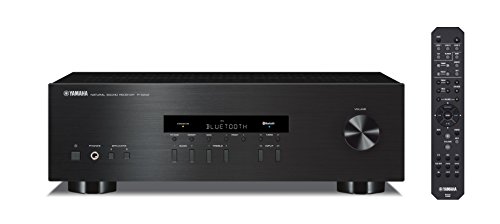
- 85-watt two-channel output
- Bluetooth music streaming
- Speaker selector for two systems
Best For: Simple stereo music systems
Best for 8K Gaming
Denon AVR-S570BT 5.2-Channel Receiver

- Four HDMI 2.1 8K inputs
- VRR and QFT gaming support
- Bluetooth and app control
Best For: Modern 8K TV and gaming setups
Best Budget Connectivity
Donner MAMP8 5.2-Channel AV Receiver

- Bluetooth 5.3, phono, USB, and HDMI ARC
- 4K HDR pass-through
- Customizable bass, midrange, and treble
Best For: Mixed-source systems on a budget
Best All-Around Atmos Value

- 5.2 channels with Dolby Atmos and DTS Virtual:X
- 4K/120 and 8K/60 HDMI with VRR and ALLM
- Automatic room correction and Bluetooth Multipoint
Best For: Compact home theaters and gaming setups
Best for Expandable Surround

- 7.2 channels with 80 watts of output
- 4K/120 HDR pass-through with VRR, ALLM, and QFT
- eARC supports Dolby Atmos and DTS:X formats
Best For: Gaming-focused surround systems
Best for Karaoke and Multiroom Audio

- Six independently controlled audio channels
- Bluetooth 5.3, USB, FM, RCA, optical, and coaxial inputs
- Dual mic inputs with echo and Talk Over controls
Best For: Karaoke, hosting, and distributed speaker setups
Best Stereo Pick
Sony STRDH190 2-Channel Receiver

- 100 watts per channel for stereo listening
- Phono input and Bluetooth built in
- A/B speaker switching with low-profile design
Best For: Vinyl listeners and simple two-channel systems
Best Value Surround Option
Pyle PT865BT 5.2-Channel Receiver

- 5.2-channel surround sound configuration
- 4K Ultra HD pass-through with four HDMI ports
- Bluetooth, USB/MP3, DAC, and protection features
Best For: Budget home theater setups with varied sources
Best Sony Home Theater Pick
Sony STRDH590 5.2-Channel Receiver

- 5.2-channel surround sound with S-Force PRO
- 4K HDR pass-through with HDCP 2.2
- Four HDMI inputs, Bluetooth, and Audio Return Channel
Best For: 4K movie and TV home theater systems
Best Overall – Onkyo TX-NR6100 7.2-Channel AV Receiver
For shoppers comparing desktop av receivers for a full home theater, the Onkyo TX-NR6100 combines 7.2-channel processing with network connectivity, Dolby Atmos and DTS:X support, and HDMI 2.1 features. Its three 40Gbps HDMI 2.1 inputs and 8K support make it a strong fit for modern displays and gaming systems.
Best For: Home theater setups that need immersive audio, multiple HDMI connections, and network music streaming.
Pros:
- THX Select Certified with a 210-watt-per-channel dynamic audio amplification system
- Supports 5.2.2-channel Dolby Atmos and DTS:X playback
- Three HDMI 2.1 inputs with 40Gbps bandwidth and 8K support
- Includes Wi-Fi, Bluetooth, streaming services, and discrete Zone 2 audio and video
Cons:
- Its larger feature set may be more than needed for a basic stereo system
- At 21 inches deep, it requires substantial shelf space
The TX-NR6100 is the most versatile choice here for buyers building a connected, high-performance home theater. It offers the broadest combination of immersive audio, HDMI capability, and wireless networking in this group.
Best Stereo Value – Yamaha R-S202BL Stereo Receiver
YAMAHA R-S202BL Stereo Receiver | Phono input, Subwoofer output, Bluetooth, AM FM Tuner
Check Price On AmazonThe Yamaha R-S202BL is a straightforward option among desktop av receivers for listeners who primarily want two-channel music playback. It provides Bluetooth streaming, FM/AM preset tuning, and speaker terminals for two systems in a simple brushed-aluminum design.
Best For: Stereo music listening, simple Bluetooth streaming, and households running two speaker pairs.
Pros:
- Two-channel design with 85 watts of output power
- Bluetooth supports wireless music playback from compatible devices
- Speaker selector supports two speaker systems
- Includes 40 FM/AM presets and a headphone terminal
Cons:
- Does not provide multichannel surround sound
- Its listed connectivity is more limited than the HDMI-equipped models
Choose the R-S202BL when clean, uncomplicated stereo operation matters more than theater features. It is a practical fit for music-focused systems and users who want a traditional receiver with Bluetooth.
Best for 8K Gaming – Denon AVR-S570BT 5.2-Channel Receiver
The Denon AVR-S570BT is a sensible pick for desktop av receivers when 8K video and gaming compatibility are priorities. It has four HDMI 2.1 inputs, eARC, HDR format support, and gaming features including VRR and QFT, while its 5.2-channel layout handles conventional surround sound.
Best For: 8K TV and gaming setups that need several HDMI 2.1 inputs and straightforward surround sound.
Pros:
- Four HDMI 2.1 8K inputs with eARC support up to 40Gbps
- Supports HDR, HLG, Dolby Vision, HDR10+, VRR, and QFT
- 5.2-channel surround configuration with 70 watts of output power
- Includes Bluetooth streaming, app control, and an on-screen setup assistant
Cons:
- Does not offer the 7.2-channel or object-based audio support listed for the Onkyo
- Wireless connectivity is listed as Bluetooth rather than Wi-Fi
The AVR-S570BT focuses on accessible home theater and current video standards. Its four HDMI 2.1 inputs are especially useful for systems connecting multiple 8K sources or gaming devices.
Best Budget Connectivity – Donner MAMP8 5.2-Channel AV Receiver
The Donner MAMP8 stands out among desktop av receivers for its broad collection of wired inputs in a compact chassis. It supports 4K HDR pass-through, Bluetooth 5.3, USB, HDMI ARC, optical, coaxial, RCA, FM radio, and phono, making it adaptable to home theater, music, and turntable setups.
Best For: Budget-conscious users who need flexible connections for a TV, turntable, media players, and speakers.
Pros:
- Offers HDMI ARC, Bluetooth 5.3, USB, optical, coaxial, RCA, phono, and FM inputs
- Supports 5.2-channel speaker layouts and two active subwoofers
- Provides 4K HDR pass-through
- Independent treble, midrange, and bass controls with saved settings
Cons:
- Dolby and DTS decoding are not supported
- Only two HDMI ports are listed, including one output
- Its surround output is specified as stereo rather than immersive object-based audio
The MAMP8 is best viewed as a flexible audio hub rather than a full-featured cinematic receiver. Its phono input and extensive analog and digital connectivity make it particularly useful for mixed-source systems.
Best All-Around Atmos Value – Yamaha RX300A
The Yamaha RX300A is a practical pick among desktop av receivers for compact home theaters that need modern video support, immersive sound, and straightforward setup. Its 5.2-channel design delivers 70 watts of power, supports Dolby Atmos layouts such as 3.1.2, and includes 4K/120 and 8K/60 HDMI connectivity.
Best For: Home theater users who want easy room correction, immersive audio, and gaming-ready HDMI features.
Pros:
- Dolby Atmos and DTS Virtual:X support for dimensional surround sound
- 4K/120, 8K/60, Dolby Vision, HDR10+, ALLM, and VRR support
- Included setup microphone automatically optimizes sound for the room
- Bluetooth Multipoint allows two source devices to be paired
Cons:
- Limited to five HDMI ports
- 5.2 channels provide less expansion than larger receivers
The RX300A stands out for balancing accessible setup with strong home theater and gaming features. It is especially appealing when you want a compact receiver with room correction and current-generation video support without moving to a larger channel count.
Best for Expandable Surround – Onkyo TX-NR5100
The Onkyo TX-NR5100 is one of the more flexible desktop av receivers for users who want a 7.2-channel foundation and current gaming features. It provides 80 watts of output, 8K capability, and HDMI 2.1 functions designed to improve fast-moving gameplay and reduce latency.
Best For: Gamers and home theater owners who want seven-channel surround sound with streaming support.
Pros:
- 7.2-channel configuration offers more speaker-layout flexibility
- 4K/120Hz HDR pass-through supports fast, detailed gameplay
- VRR, ALLM, and QFT help address tearing, stutter, and latency
- eARC supports high-bitrate formats including Dolby Atmos and DTS:X
Cons:
- Only four HDMI ports are listed
- The supplied notes do not specify automatic room correction
With its larger channel count and gaming-focused HDMI 2.1 features, the TX-NR5100 is a strong choice for a growing surround system. Chromecast built-in, AirPlay 2, and DTS Play-Fi also make it useful for multi-source listening.
Best for Karaoke and Multiroom Audio – Donner MAMP6
The Donner MAMP6 takes a different approach from traditional desktop av receivers, focusing on flexible stereo and distributed audio rather than HDMI-based home theater switching. It offers six independently controlled channels, Bluetooth 5.3, USB, FM, optical and coaxial inputs, plus dual microphone inputs for karaoke and presentations.
Best For: Karaoke rooms, hosting spaces, and multi-speaker audio setups that do not need HDMI input.
Pros:
- Six independently controlled channels can support multiple speaker groups
- Wide input selection includes Bluetooth 5.3, USB, RCA, optical, coaxial, and FM
- Dual microphone inputs with echo and Talk Over functions suit karaoke and speech
- Treble, midrange, and bass controls are available from the unit and remote
Cons:
- No HDMI input
- Listed output is 25 watts RMS per channel despite the 1000-watt peak claim
- Remote-control battery is not included
The MAMP6 is best viewed as a versatile multi-input amplifier rather than a conventional surround AV receiver. Its microphone features and independent channel controls make it a compelling fit for entertainment spaces where karaoke, announcements, or distributed speakers matter more than Dolby Atmos and HDMI switching.
Best Stereo Pick – Sony STRDH190 2-Channel Receiver
For shoppers seeking straightforward desktop av receivers or a compact home stereo setup, the Sony STRDH190 focuses on two-channel listening with 100 watts per channel, Bluetooth, and a dedicated phono input. Its low-profile design and multiple analog connections make it practical for music-focused systems.
Best For: Vinyl listeners and buyers building a simple stereo system.
Pros:
- Dedicated phono input supports a turntable.
- Built-in Bluetooth enables wireless streaming from compatible devices.
- A/B speaker switching supports up to four speakers.
- Low-profile 5.2-inch design fits many AV cabinets.
Cons:
- Two-channel design is not intended for surround-sound home theater.
- Connectivity is primarily analog, with no HDMI inputs listed.
The STRDH190 is a sensible choice when music quality, vinyl compatibility, and easy Bluetooth playback matter more than video switching or immersive surround formats.
Best Value Surround Option – Pyle PT865BT 5.2-Channel Receiver
The Pyle PT865BT is one of the more feature-focused desktop av receivers for buyers who want surround sound, 4K pass-through, and flexible digital connectivity at once. It combines 5.2-channel audio with Bluetooth, USB/MP3 support, and a DAC interface for compatible sources.
Best For: Budget-conscious home theater users wanting surround sound and 4K pass-through.
Pros:
- 5.2-channel surround configuration supports an immersive speaker setup.
- Passes through 4K Ultra HD content.
- Bluetooth enables wireless music and podcast streaming.
- Includes overcurrent, short-circuit, and overvoltage protection.
Cons:
- The listed 1,000-watt output is a maximum rating, so real-world performance may vary.
- Product details list stereo and surround modes but provide limited format information.
Choose the PT865BT if broad connectivity and a multi-speaker setup are priorities. It offers a practical feature list, though buyers wanting extensive premium theater-processing specifications may prefer a more specialized receiver.
Best Sony Home Theater Pick – Sony STRDH590 5.2-Channel Receiver
The Sony STRDH590 is a strong choice among desktop av receivers for a conventional home theater system. It pairs 5.2-channel surround sound with four HDMI inputs, 4K HDR pass-through, Bluetooth, and Sony’s S-Force PRO virtual surround feature for two-speaker setups.
Best For: Movie and TV viewers who want 4K HDR support and flexible surround options.
Pros:
- 5.2-channel configuration supports a dedicated surround system.
- 4K HDR pass-through and HDCP 2.2 support help preserve compatible video quality.
- Four HDMI inputs and Audio Return Channel simplify source connections.
- Bluetooth Standby can turn on the receiver from a phone.
Cons:
- It is more complex and less music-specialized than a two-channel stereo receiver.
- The supplied specifications list 145 watts of output but do not describe continuous power conditions.
With HDMI switching, 4K HDR compatibility, and both conventional and virtual surround options, the STRDH590 is well suited to a living-room theater system rather than a minimalist desktop stereo.
How We Picked These Desktop Av Receivers
We selected models that cover the main ways shoppers use Desktop Av Receivers: two-channel music listening, compact home theater, gaming, TV audio, and multi-speaker systems. We considered channel count, HDMI and video capabilities, wireless connectivity, speaker compatibility, ease of setup, and the features most likely to affect long-term value.
The list includes established brands such as Onkyo, Yamaha, Denon, and Sony, along with feature-focused budget alternatives from Donner and Pyle. Specifications can vary by configuration and region, so confirm the current manufacturer listing before purchasing.
Quick Comparison
| Setup type | Best fit | What to prioritize |
|---|---|---|
| Music-first stereo system | Two-channel receiver | Phono input, Bluetooth, tuner, and clean speaker connections |
| Compact surround system | 5.2-channel AV receiver | HDMI inputs, 4K support, room correction, and subwoofer outputs |
| Gaming or larger theater | 7.2-channel AV receiver | 8K or 4K/120 support, Dolby Atmos capability, and network features |
| Flexible low-cost setup | Feature-rich budget receiver | Input variety, stated power ratings, warranty, and control layout |
Key Buying Factors for Desktop Av Receivers
Channel Count and Room Size
A stereo receiver is usually the simplest choice for music and a pair of passive speakers. A 5.2-channel model supports a conventional center, left/right, and surround arrangement with two subwoofer outputs. Choose a 7.2-channel receiver if you want additional surround speakers, more expansion room, or compatible height-channel configurations.
HDMI, Resolution, and Gaming Support
Check the number of HDMI inputs and whether they support the formats your sources need. 4K HDR is sufficient for many TVs, while 4K at 120Hz and 8K support matter more for newer consoles, gaming PCs, and future upgrades. Verify features such as eARC, HDR format compatibility, and the exact HDMI version rather than relying only on a headline resolution.
Audio Formats and Connectivity
Dolby Atmos and DTS support are important for immersive theater layouts, while Bluetooth is useful for quick listening from a phone. Network streaming, Wi-Fi, Ethernet, USB, optical inputs, and a phono stage can each eliminate the need for separate equipment. Also check whether the receiver includes the speaker terminals and analog inputs you actually need.
Power, Placement, and Usability
Manufacturer power claims are not always measured under identical conditions, so treat wattage as a comparison point rather than a guarantee of loudness. Confirm speaker impedance compatibility, allow ventilation around the chassis, and measure the available shelf depth. A clear remote, on-screen setup, automatic calibration, and a well-designed app can make a larger difference than extra headline features.
Who Should Buy Which Desktop Av Receivers?
Choose a Yamaha R-S202BL or Sony STR-DH190 when you mainly want straightforward two-channel listening, Bluetooth, and traditional inputs. For a compact TV and surround setup, a 5.2-channel model from Denon, Sony, Yamaha, Donner, or Pyle may be a better match.
Buy an Onkyo TX-NR6100 or TX-NR5100 when you need more channels, network functionality, or room to expand. A newer Yamaha model is worth considering for a modern theater or gaming system with immersive audio and high-refresh video. Budget-focused shoppers should compare Donner and Pyle models carefully against their speaker needs, connection requirements, warranty coverage, and independently stated specifications.