
The best audio interfaces with better preamps can make microphones sound cleaner, give you more usable gain, and provide a stronger foundation for home recording. The right choice depends on your microphone, input needs, monitoring preferences, and budget.
We compare 10 popular USB interfaces across entry-level and enthusiast setups, highlighting the features that matter most for vocals, instruments, streaming, podcasting, and mobile production.
Best 10 Audio Interfaces with Better Preamps Picks for 2026
Best for Expandable Home Studios
Focusrite Scarlett 4i4 4th Gen

- Two 4th-generation mic preamps with 120dB dynamic range
- 4-in/4-out connectivity with MIDI I/O
- Auto Gain, Clip Safe, and Air modes
Best For: Home studios with multiple instruments and external gear
Best for Vintage-Style Vocal Tracking

- Vintage mode modeled on classic UA 610 preamps
- Built-in 1176-style analog compressor
- Two-channel interface with mobile-device support
Best For: Vocalists and songwriters seeking colored preamp tone
Best for Clear Two-Channel Recording

- Two preamps with 2-in/2-out operation
- 24-bit/192kHz recording support
- Hardware monitoring and over 6GB of free content
Best For: Solo recording setups needing two inputs
Best for First-Time Artists
Focusrite Scarlett 2i2 4th Gen

- Two 4th-generation mic preamps and 120dB dynamic range
- Two Hi-Z inputs for guitars and instruments
- Auto Gain, Clip Safe, Air modes, and included software
Best For: Beginner musicians recording vocals or guitar
Vintage Character Pick

- UA 610-inspired Vintage preamp mode
- Built-in 1176-style analog compressor
- Mac, Windows, iPad, and iPhone support
Best For: Vocalists and mobile creators wanting preamp color and compression
Modern Clarity Pick
Focusrite Scarlett Solo 4th Gen

- 120dB dynamic range
- Air modes add presence and harmonic drive
- One mic preamp plus Hi-Z instrument input
Best For: Solo songwriters recording vocals and guitar
Value Two-Preamp Pick
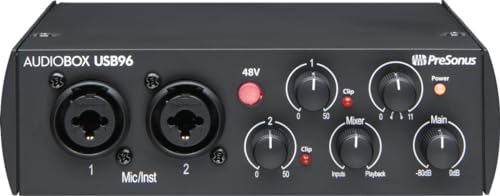
- Two Class-A microphone preamps
- 24-bit/96kHz recording and playback
- MIDI I/O, phantom power, and zero-latency monitoring
Best For: Home studios needing two mic inputs on a budget
Best Portable DSP Interface

- Up to 60 dB clean gain and 48V phantom power
- Onboard auto level, denoising, and pop reduction
- Portable single-channel USB-C XLR interface
Best For: One-microphone podcasting, streaming, and mobile recording
Best Budget Two-Input Option

- Two combo XLR, line, and instrument inputs
- Transparent Crystal Preamps with phantom power
- Zero-latency monitoring and MPC Beats included
Best For: Beginner recording, podcasting, and live streaming
Best for Air-Enhanced Recordings
Focusrite Scarlett Solo 3rd Gen

- High-performing mic preamp with switchable Air mode
- 24-bit/192 kHz recording and low-noise outputs
- Separate Hi-Z input for guitar or bass
Best For: Solo vocals, acoustic instruments, and guitar recording
Best for Expandable Home Studios – Focusrite Scarlett 4i4 4th Gen
The Focusrite Scarlett 4i4 4th Gen is a strong choice among audio interfaces with better preamps for creators who need more than a basic two-input setup. Its two 4th-generation mic preamps, Hi-Z inputs, four line inputs, MIDI I/O, and 4-in/4-out design make it practical for microphones, instruments, synths, and drum machines.
Best For: Home studios recording multiple instruments, hardware synths, or small production setups.
Pros:
- Two 4th-generation mic preamps and 120dB dynamic range.
- Includes Hi-Z inputs, four line inputs, four line outputs, and MIDI I/O.
- Auto Gain, Clip Safe, Air modes, and 24-bit/192kHz support.
- Includes a broad bundle of recording software and effects.
Cons:
- Its wider I/O layout may be more than a simple vocal-and-guitar setup requires.
- The included USB-C power supply adds another connection to manage.
Choose the 4i4 when flexibility and connectivity matter as much as preamp quality. It offers useful recording safeguards and expansion potential without moving into a larger studio interface.
Best for Vintage-Style Vocal Tracking – Universal Audio Volt 276
The Universal Audio Volt 276 stands out among audio interfaces with better preamps by pairing a Vintage mode inspired by classic UA 610 preamps with an analog compressor based on the 1176. This two-channel USB interface is designed to add character and control during recording, particularly for vocals and instruments.
Best For: Singers, songwriters, and mobile producers who want preamp color and built-in compression.
Pros:
- Vintage mode is designed to provide the sound of classic UA 610 preamps.
- Built-in analog compressor is based on the renowned 1176.
- Supports recording on Mac, Windows, iPad, and iPhone with the required accessories.
- Includes access to LUNA and additional software resources.
Cons:
- It provides two channels rather than the broader I/O of a larger interface.
- Mobile iOS use may require an external power supply and Apple adapter.
- Warranty coverage is listed as one year.
The Volt 276 is a compelling fit when the goal is an inspiring tracking path rather than maximum connectivity. Its Vintage preamp mode and compressor can help shape a more finished sound while recording.
Best for Clear Two-Channel Recording – MOTU M2 USB-C Audio Interface
The MOTU M2 is a focused two-channel option for shoppers comparing audio interfaces with better preamps. It combines two preamps, 24-bit/192kHz recording, USB-C connectivity, and hardware monitoring in a compact design suited to straightforward computer-based recording.
Best For: Solo musicians, podcasters, and home recordists who need two inputs and direct monitoring.
Pros:
- Two preamps in a compact 2-in/2-out interface.
- Supports 24-bit/192kHz recording.
- Hardware monitoring helps support direct monitoring workflows.
- Includes more than 6GB of free content and a two-year warranty.
Cons:
- Limited to two input and two output channels.
- The supplied details list Windows operating-system support, so platform compatibility should be checked before buying.
The M2 makes sense for users who value a streamlined recording setup over extensive routing. Its two preamps, high-resolution support, and hardware monitoring cover the essentials for many solo recording systems.
Best for First-Time Artists – Focusrite Scarlett 2i2 4th Gen
The Focusrite Scarlett 2i2 4th Gen is a practical entry point for anyone comparing audio interfaces with better preamps for vocals, guitar, or simple overdubbing. It offers two 4th-generation mic preamps, two Hi-Z instrument inputs, 120dB dynamic range, and recording safeguards in a compact 2-in/2-out format.
Best For: Beginner musicians, vocalists, and guitarists building a compact home recording setup.
Pros:
- Two 4th-generation mic preamps with 120dB dynamic range.
- Hi-Z inputs support direct guitar and instrument connections.
- Auto Gain and Clip Safe help reduce level-setting and clipping problems.
- Includes Air modes and a substantial software bundle.
Cons:
- Two inputs and two outputs limit expansion for larger recording sessions.
- It lacks the additional line inputs and MIDI I/O found on the Scarlett 4i4.
The 2i2 is a sensible choice when ease of use and strong core recording features matter more than extensive routing. It gives solo creators capable preamps and helpful level-management tools in a compact interface.
Vintage Character Pick – Universal Audio Volt 176
If you want audio interfaces with better preamps and built-in recording color, the Universal Audio Volt 176 is a strong two-channel option. Its Vintage mode is based on UA 610-style preamps, while the onboard 76-style compressor can add punch and consistency to vocals and instruments.
Best For: Singers, instrumentalists, podcasters, and mobile creators who want preamp character and simple hardware compression.
Pros:
- Vintage mode delivers the rich character of classic UA 610 preamps.
- Built-in analog compressor is based on the renowned 1176 design.
- Supports Mac, Windows, iPad, and iPhone recording setups.
- Includes MIDI I/O and compatibility with LUNA and other supported software.
Cons:
- Requires an external Volt power supply for supported mobile use.
- Apple mobile setups may require a Lightning to USB Camera Adapter.
- Its two-channel configuration is better suited to smaller recording setups.
The Volt 176 stands out when preamp character and hands-on dynamics processing matter more than having a large input count. It is a particularly appealing choice for vocal-focused recording and portable production.
Modern Clarity Pick – Focusrite Scarlett Solo 4th Gen
The Focusrite Scarlett Solo 4th Gen is a practical choice among audio interfaces with better preamps for solo recording. It combines one XLR mic preamp with a Hi-Z instrument input, a 120dB dynamic range, and Air modes designed to add presence and harmonic drive to vocals and guitars.
Best For: Songwriters and solo producers recording one microphone and one guitar or instrument at a time.
Pros:
- Offers a 120dB dynamic range and converters shared with Focusrite’s flagship interfaces.
- Air modes can bring vocals and guitars forward in a mix.
- Includes a dedicated XLR mic input and Hi-Z instrument input.
- Includes Pro Tools Intro+, Ableton Live Lite, Cubase LE, and Hitmaker Expansion.
Cons:
- Only one XLR microphone preamp is provided.
- Its two-input layout is limiting for multi-microphone recording.
- Air mode is a tonal option, not a substitute for external processing.
Scarlett Solo 4th Gen is a streamlined option for clean, modern home recording. Its improved Air mode and bundled software make it especially useful for beginners and songwriters who need a compact interface with a focused feature set.
Value Two-Preamp Pick – PreSonus AudioBox 96
For budget-conscious buyers comparing audio interfaces with better preamps, the PreSonus AudioBox 96 25th Anniversary model offers two Class-A mic preamps in a portable USB interface. It also adds instrument inputs, MIDI I/O, phantom power, and zero-latency mixer control for straightforward home recording.
Best For: Home recordists who need two microphone inputs, simple monitoring, and a broad software bundle at an accessible feature level.
Pros:
- Includes two high-quality Class-A microphone preamps.
- Provides two high-headroom instrument inputs and MIDI I/O.
- Supports up to 24-bit/96kHz recording and playback.
- USB bus power and onboard +48V phantom power support mobile and condenser-mic setups.
Cons:
- Maximum sample rate is 96kHz rather than 192kHz.
- Phantom power is global rather than independently switchable per input.
- The interface uses USB 2.0 connectivity.
The AudioBox 96 is a sensible value pick when two mic preamps are more important than advanced conversion specifications. Its mixer control, MIDI connectivity, and included Studio One and Studio Magic software make it a capable starting point for a home studio.
Best Portable DSP Interface – Shure MVX2U Gen 2
For creators comparing audio interfaces with better preamps, the Shure MVX2U Gen 2 is a compact XLR-to-USB-C option built around clean gain and convenient onboard processing. It provides up to 60 dB of gain, 48V phantom power, and compatibility with desktop, tablet, and smartphone setups.
Best For: Podcasters, streamers, and mobile creators using one XLR microphone.
Pros:
- Up to +60 dB of clean gain with 48V phantom power
- Onboard Auto Level, denoising, and Digital Popper Stopper processing
- Portable, MFi-certified USB-C design with 192 kHz maximum sample rate
- MOTIV apps provide tone, EQ, compression, and limiter controls
Cons:
- Single-channel design is less suitable for recording multiple sources
- Advanced processing depends on the Shure app ecosystem
The MVX2U stands out when a simple one-microphone setup matters more than a traditional multi-input interface. Its gain range and DSP features make it especially practical for consistent spoken-word audio across devices.
Best Budget Two-Input Option – M-AUDIO M-Track Duo
The M-AUDIO M-Track Duo is a straightforward choice for shoppers seeking audio interfaces with better preamps on a budget. Its transparent Crystal Preamps support condenser microphones, while two combo inputs accept XLR, line, or instrument signals for recording, podcasting, and streaming.
Best For: Beginners who need two inputs and flexible instrument or microphone connectivity.
Pros:
- Two combo XLR, line, and instrument inputs with phantom power
- Transparent Crystal Preamps for microphone recording
- Zero-latency monitoring through the USB/Direct switch
- Includes MPC Beats and supports 48 kHz recording
Cons:
- Maximum sample rate is limited to 48 kHz
- USB Type-B connection is less current than USB-C designs
The M-Track Duo focuses on useful essentials rather than advanced processing. It is a sensible starter interface for users who want two simultaneous inputs, direct monitoring, and a software bundle without a complicated setup.
Best for Air-Enhanced Recordings – Focusrite Scarlett Solo 3rd Gen
The Focusrite Scarlett Solo 3rd Gen is a strong pick for shoppers researching audio interfaces with better preamps and a polished recording workflow. Its high-performing mic preamp includes switchable Air mode, while the interface records up to 24-bit/192 kHz and adds a dedicated Hi-Z instrument input.
Best For: Solo musicians, vocalists, and podcasters seeking a compact interface with a detailed preamp and instrument input.
Pros:
- High-performing mic preamp with switchable Air mode
- Dedicated high-headroom instrument input for guitar or bass
- 24-bit/192 kHz converters and low-noise balanced outputs
- Includes recording software, effects, instruments, and a three-year warranty
Cons:
- Designed around one XLR microphone input
- Does not offer two XLR mic inputs for multi-microphone recording
The Scarlett Solo 3rd Gen is a focused option for one-person recording. Air mode can add clarity to acoustic sources, while the separate instrument input makes it easy to switch between vocal, guitar, and bass sessions.
How We Picked the Best Audio Interfaces with Better Preamps
We focused on interfaces with reliable USB connectivity, practical input and output options, low-noise microphone preamps, and useful monitoring controls. We also considered headphone amplification, direct monitoring, included software, portability, build quality, and how well each model suits its likely users.
“Better preamps” does not necessarily mean the most expensive interface. A good preamp should provide enough clean gain for your microphone, preserve detail without obvious hiss, and offer sensible control over input level. Some models also add compression or analog-style coloration for recording and streaming workflows.
Quick Comparison
| What to Compare | Why It Matters |
|---|---|
| Input count | Determines how many microphones or instruments you can record at once. |
| Preamp gain and noise | Important for quiet dynamic microphones and clean vocal recordings. |
| Connection | USB-C or USB connectivity affects compatibility and setup convenience. |
| Monitoring | Direct monitoring and headphone quality help reduce latency and improve tracking. |
| Extra processing | Compression, enhancement, or loopback features can benefit creators and streamers. |
Key Buying Factors for Audio Interfaces with Better Preamps
Match the Preamp to Your Microphone
Condenser microphones generally need less gain than many passive dynamic microphones. If you use a broadcast-style dynamic mic, prioritize an interface with ample clean gain or plan for an inline booster. Confirm that the interface supplies 48V phantom power when required by your condenser microphone.
Choose the Right Number of Inputs
A solo singer, guitarist, or podcaster may need only one or two inputs. Two combo inputs are more flexible for stereo instruments, interviews, or two-person recording, while four-input models are better for small ensembles and expanded home studios.
Check Monitoring and Computer Compatibility
Look for a dependable direct-monitoring option, a suitable headphone output, balanced monitor outputs, and compatibility with your computer or tablet. Some interfaces require a USB-C cable, adapter, or external power when used with mobile devices.
Consider Workflow Features
Onboard compression or a character mode can be useful for streaming and quick vocal tracking, but clean preamps and stable drivers matter more for general recording. Loopback, MIDI, bundled software, and independent monitor controls may also influence your choice.
Who Should Buy Which Audio Interfaces with Better Preamps?
First-time home recordists: Choose a straightforward one- or two-input interface with clear controls and dependable direct monitoring.
Vocalists and guitarists: Prioritize clean preamp gain, instrument inputs, low-latency monitoring, and enough headphone output for comfortable tracking.
Podcasters and streamers: Models with compression, loopback, simple level controls, or microphone-focused features can speed up live production.
Small project studios: A four-input interface offers more room for stereo recording, multiple microphones, and future expansion without immediately requiring a larger rack system.
Before buying, verify your microphone’s gain requirements, the number of simultaneous sources you record, your device connections, and whether the included software supports your preferred digital audio workstation.