
The best powered studio monitors give you clearer, more balanced sound without requiring a separate amplifier. From compact desktop pairs to larger near-field speakers, the right choice depends on your room, listening distance, and audio goals.
We compared 10 popular models across size, connectivity, output, and intended use to help you find a practical match for mixing, content creation, gaming, or casual listening.
Best 10 Powered Studio Monitors Picks for 2026
Top Pick

- Wide sweet spot with precise imaging
- Dual 41-watt Class-D amplification
- Boundary EQ and HF Trim controls
Best For: Music production, podcasting, and sound design
Compact Studio Choice

- Space-saving 4.5-inch monitor design
- Room Control and High Trim adjustments
- XLR/TRS, RCA, and stereo mini inputs
Best For: Compact music-production and video-editing setups
Best Value Features
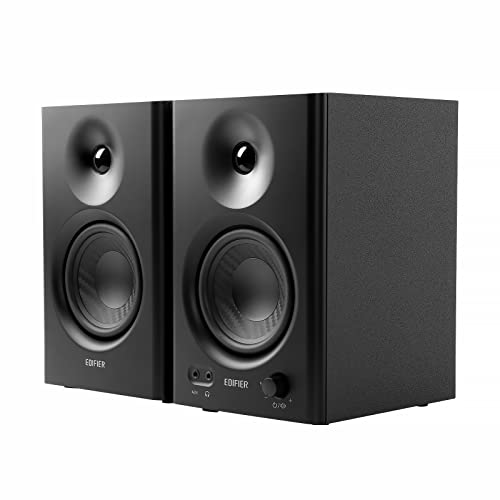
- Balanced TRS, RCA, AUX, and headphone connections
- Selectable monitor and music modes
- 4-inch woofer with silk-dome tweeter
Best For: Desktop creators and home studios
Most Connected

- Bluetooth 5.3 and USB via a 24-bit DAC
- Balanced TRS plus AUX and RCA inputs
- Front headphone output for easy monitoring
Best For: Mixed-use desks and compact creative setups
Compact Ribbon Precision
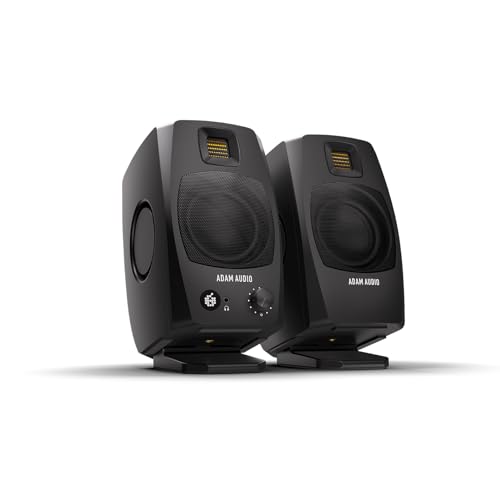
- D-ART ribbon tweeter for detailed highs
- USB-C and balanced 1/4-inch connectivity
- Compact design with included angled stands
Best For: Desktop producers and listeners needing compact, detailed monitoring
Reliable Near-Field Reference

- Bi-amplified two-way monitor design
- Five-inch woofer with one-inch dome tweeter
- Balanced and unbalanced XLR/TRS inputs
Best For: Music production and studio monitoring with a neutral presentation
Versatile High-Resolution Power

- Three-way design with 110W RMS amplification
- Wired inputs plus Bluetooth LDAC
- Room tuning through rear controls and app
Best For: Flexible studio, desktop, and home listening setups
Best Compact All-Rounder

- 50 watts of built-in stereo amplification
- Adjustable high- and low-frequency controls
- TRS, RCA, aux, and headphone connections
Best For: Compact desktops, home studios, gaming, and everyday listening
Best Connected Monitor

- Hi-Res Audio certification with extended response
- Bluetooth multipoint plus balanced TRS and analog inputs
- App-controlled EQ and three listening modes
Best For: Home studios, editing, guitar practice, and wireless-enabled setups
Best Feature-Packed Pair

- Kevlar woofers and silk-dome tweeters
- Multiple wired inputs and front headphone access
- Includes cables, foam feet, and MPC Beats software
Best For: Desktop production, podcasting, streaming, gaming, and multimedia
Top Pick – JBL 305P MkII Pair
The JBL 305P MkII pair is a strong choice for creators seeking powered studio monitors with a wide sweet spot, clear imaging, and enough output for music production, podcasting, and cinematic sound design. Its 5-inch woofer, dual 41-watt Class-D amplification, and room-adjustment controls make it adaptable to different desktop studio setups.
Best For: Music producers, podcasters, vloggers, and sound designers who want accurate stereo monitoring with room-tuning controls.
Pros:
- Image Control Waveguide provides precise imaging and a wide listening area.
- Dual 41-watt amplifiers and a Slip Stream port support dynamic, deep sound.
- Boundary EQ and HF Trim help tailor the response to the room.
- XLR and 1/4-inch TRS inputs suit common studio equipment.
Cons:
- The 5-inch format may provide less low-end scale than larger monitors.
- These are wired, tabletop speakers rather than wireless monitors.
Choose the JBL pair when stereo imaging and flexible room adjustment matter more than wireless convenience. The included two-monitor package is well suited to a dedicated desktop production system.
Compact Studio Choice – Yamaha HS4 Pair
The Yamaha HS4 pair offers compact powered studio monitors for smaller workspaces, video editing stations, and DAW setups. Its 4.5-inch woofer, 1-inch dome tweeter, room controls, and broad input selection provide a practical balance of monitoring capability and space efficiency.
Best For: Home producers and video editors who need compact monitors with XLR/TRS, RCA, and stereo mini connectivity.
Pros:
- Compact 4.5-inch woofer design suits smaller desktops.
- Room Control and High Trim controls help adjust the response.
- Includes XLR/TRS combo, RCA, and stereo mini inputs.
- Pair includes speaker cable, stereo mini-to-RCA cable, and anti-slip pads.
Cons:
- The listed 26-watt output is more modest than some larger powered studio monitors.
- The 60 Hz–22 kHz frequency response may offer less deep bass extension.
The HS4 is a sensible option when desk space and connection flexibility are priorities. It is especially convenient for compact music-production and video-editing systems that use both professional and consumer sources.
Best Value Features – Edifier MR4
The Edifier MR4 is a flexible set of powered studio monitors for creators who want near-field monitoring plus convenient everyday listening. Its 4-inch composite woofer, silk-dome tweeter, MDF enclosure, balanced TRS input, and selectable monitor and music modes support both production work and casual playback.
Best For: Home studios, personal computers, and creators who want monitoring features with simple front-panel controls.
Pros:
- Professionally tuned response is designed for music creation.
- Includes balanced 1/4-inch TRS, RCA, AUX, and front headphone connections.
- Monitor and music modes support production and casual listening.
- Separate high- and low-frequency controls provide basic tonal adjustment.
Cons:
- The 4-inch woofer is intended for near-field use rather than large-room playback.
- The supplied notes list wired audio connectivity rather than a standard wireless monitoring setup.
The MR4 stands out for its combination of studio-oriented tuning and user-friendly controls. It is a practical fit for a desktop creator who also wants an easy switch between accurate monitoring and relaxed listening.
Most Connected – Ortizan C7 Bluetooth Pair
The Ortizan C7 pair combines powered studio monitors with Bluetooth 5.3, USB audio through a built-in 24-bit DAC, and multiple wired inputs. Its 3.5-inch carbon-fiber woofer, 0.75-inch silk-dome tweeter, balanced TRS input, and headphone output make it a versatile choice for compact creative, gaming, and entertainment setups.
Best For: Small studios and mixed-use desks that need Bluetooth, USB, balanced TRS, AUX, RCA, and headphone connectivity.
Pros:
- Bluetooth 5.3 supports convenient wireless playback from compatible devices.
- Built-in 24-bit DAC enables direct USB digital audio.
- Balanced 6.35mm TRS input works with mixers and other professional gear.
- Front headphone output and multiple AUX inputs simplify switching sources.
Cons:
- The 3.5-inch woofer is smaller than those in many traditional studio monitors.
- The supplied notes emphasize versatile connectivity but do not specify output power or frequency range.
The C7 is the most connectivity-focused option in this group. Choose it when wireless playback and USB audio are as important as balanced studio connections, especially in a compact mixed-use workspace.
Compact Ribbon Precision – ADAM Audio D3V
The ADAM Audio D3V is a compact pair of powered studio monitors designed for desktop listening, songwriting, production, and general music use. USB-C connectivity, angled stands, and onboard placement controls make it especially practical for smaller workspaces.
Best For: Desktop producers and listeners who want detailed monitoring in a compact setup.
Pros:
- D-ART ribbon tweeters are designed for precise, unfatiguing high-frequency reproduction.
- 3.5-inch woofers and passive radiators extend response down to 45 Hz.
- USB-C, balanced 1/4-inch inputs, headphone output, and included angled stands support flexible desktop use.
Cons:
- The compact 3.5-inch woofer may provide less scale than larger monitors.
- They require corded power and are not waterproof.
The D3V stands out when desk space, direct computer connection, and high-frequency detail matter most. Its mounting options and DSP switches add useful flexibility for challenging placements.
Reliable Near-Field Reference – Yamaha HS5 Pair
The Yamaha HS5 pair is a straightforward choice among powered studio monitors for music production and studio monitoring. Its bi-amplified two-way design emphasizes a clean, uncolored presentation, with balanced XLR and TRS inputs for common studio connections.
Best For: Producers and engineers seeking a focused near-field reference monitor pair.
Pros:
- Five-inch woofers and one-inch dome tweeters provide two-way monitoring.
- Bi-amplification delivers 45 watts for low frequencies and 25 watts for high frequencies.
- XLR and TRS inputs accept balanced or unbalanced signals.
Cons:
- The stated 54 Hz low-frequency response may not satisfy users needing deep bass extension.
- Connectivity is wired rather than wireless for studio sources.
The HS5 is a sensible option when sonic neutrality and conventional studio connections take priority over extra features. Its five-inch format suits near-field monitoring without moving into a larger monitor class.
Versatile High-Resolution Power – Edifier MR5
The Edifier MR5 combines powered studio monitor features with broad home and desktop connectivity. Its three-way design, 110W RMS amplification, room-tuning controls, and wired or LDAC wireless playback make it a flexible choice for monitoring and everyday listening.
Best For: Users who want studio-oriented sound, room adjustment, and extensive connectivity in one pair.
Pros:
- Three-way system uses a five-inch woofer, 3.75-inch midrange driver, and one-inch silk dome tweeter.
- 110W RMS amplification and a 46 Hz–40 kHz response support powerful, detailed playback.
- Offers XLR, TRS, RCA, AUX, Bluetooth LDAC, app-based tuning, and a front headphone output.
Cons:
- The larger feature set may be more than users need for a simple wired studio setup.
- The pair is comparatively heavy at 10.38 kg.
The MR5 is a strong fit for buyers who need powered studio monitors that can also serve home theater, desktop, and wireless listening roles. Its rear controls and app presets make adapting the sound to a room more convenient.
Best Compact All-Rounder – PreSonus Eris 3.5
The PreSonus Eris 3.5 is a practical pair of powered studio monitors for compact desks, home studios, gaming setups, and everyday listening. Its 3.5-inch woofers, silk-dome tweeters, 50 watts of built-in amplification, and room-tuning controls provide a flexible stereo setup without requiring extra amplification.
Best For: Desktop music production, gaming, streaming, movies, and buyers who need versatile wired connectivity in a compact pair.
Pros:
- Sold as a complete stereo pair with 50 watts of built-in amplification.
- High- and low-frequency controls help tailor the sound to different rooms.
- Includes balanced TRS, RCA, front-panel auxiliary, and headphone connections.
- 3.5-inch woven-composite woofers and 1-inch silk-dome tweeters cover a broad listening range.
Cons:
- The compact 3.5-inch woofer design may not deliver the low-end reach of larger monitors.
- These are corded speakers and are not water resistant.
The Eris 3.5 stands out when flexibility and simple desktop integration matter more than maximum bass output. Its adjustable tuning and broad input selection make it a strong choice for mixed-purpose use.
Best Connected Monitor – Edifier MR3
The Edifier MR3 combines powered studio monitor features with convenient wireless listening. With 18W RMS per channel, 3.5-inch mid-low drivers, 1-inch tweeters, balanced TRS and analog inputs, and Bluetooth multipoint support, it suits users who want monitoring capability alongside everyday convenience.
Best For: Home studios, video editing, guitar practice, near-field listening, and setups that need both wired inputs and Bluetooth.
Pros:
- Hi-Res Audio certified with a stated response from 52Hz to 40kHz.
- Offers Monitor, Music, and Custom modes for different listening tasks.
- EDIFIER ConneX app provides additional EQ and sound adjustments.
- Supports balanced TRS, RCA, AUX, headphone output, and Bluetooth multipoint.
Cons:
- The 18W-per-channel output is lower than some larger powered monitor systems.
- The supplied details list the unit count as one, so buyers should verify the package contents if they expect a stereo pair.
The MR3 is a good fit for listeners who do not want to choose between studio-oriented connections and wireless convenience. Its app-based customization also makes it adaptable for production and casual listening.
Best Feature-Packed Pair – M-AUDIO BX3 3.5-inch Monitors
The M-AUDIO BX3 is a wired pair of powered studio monitors designed for desktop production, streaming, podcasting, gaming, and multimedia. Its 3.5-inch Kevlar woofers, silk-dome tweeters, MDF cabinets, bass-reflex design, and multiple inputs give small workspaces a flexible monitoring setup.
Best For: Creators who want a compact stereo pair with wired connectivity, front headphone access, EQ controls, and included setup accessories.
Pros:
- Includes one active and one passive speaker for a complete stereo pair.
- 3.5-inch Kevlar woofers and silk-dome tweeters support punchy bass and clear highs.
- Provides 1/4-inch, 1/8-inch, and RCA inputs plus a front headphone connection.
- Rear high- and low-EQ controls and a left/right active-speaker switch add setup flexibility.
Cons:
- The wired design does not provide Bluetooth connectivity.
- Compact 3.5-inch drivers may be less suitable when deep, room-filling bass is the priority.
- The supplied specifications contain differing power references, so buyers should confirm the exact output rating.
The BX3 is especially appealing for desktop creators who value connection options and physical controls. Its included cables, foam feet, and MPC Beats software also make it a convenient starting point for a basic production station.
How We Picked the Best Powered Studio Monitors
We focused on active speaker systems with built-in amplification, evaluating the features that matter most in real-world desktop and home-studio setups. Our comparison considers driver size, stereo configuration, connectivity, frequency coverage, physical footprint, and suitability for near-field listening.
Because “studio monitor” can describe products ranging from professional mixing tools to affordable multimedia speakers, we included options across several price and performance levels. Models with Bluetooth or consumer-friendly controls may be more convenient, while traditional wired monitors often prioritize predictable signal delivery and focused monitoring.
Quick Comparison
| Best For | What to Look For |
|---|---|
| Mixing and critical listening | Balanced tuning, reliable stereo imaging, and flexible placement controls |
| Small desks and bedrooms | Compact cabinets, modest bass output, and near-field operation |
| Music and media playback | Convenient inputs, strong everyday clarity, and optional Bluetooth |
| More powerful home studios | Larger woofers, higher output, and improved low-frequency extension |
Key Buying Factors for Powered Studio Monitors
Driver Size and Room Compatibility
Smaller 3- to 4-inch monitors are easier to place on a desk and can sound clean at short distances. Five-inch models generally provide fuller bass and more headroom, but they need more space and may overwhelm a very small room.
Inputs and Connectivity
Check which connections match your audio interface, computer, mixer, or other source. Balanced inputs can help reduce noise in studio wiring, while Bluetooth is useful for quick playback from phones and tablets. Some pairs also include headphone or auxiliary connections for desktop convenience.
Placement and Controls
Leave space behind rear-ported speakers and aim the tweeters toward ear level. Acoustic adjustment controls can help compensate for nearby walls, desks, or bright rooms. A pair of stands or isolation pads may improve clarity by reducing desk vibration.
Power and Frequency Response
Higher wattage does not automatically mean better accuracy, but sufficient headroom helps prevent distortion at practical listening levels. Consider published frequency response as a guide rather than a guarantee, and prioritize balanced sound over exaggerated bass.
Who Should Buy Which Powered Studio Monitors?
Choose a compact 3- or 4-inch pair if you are building a desktop setup, working in a small room, or want affordable speakers for editing and everyday listening. A five-inch pair is a stronger all-purpose choice for home recording, mixing, and fuller low-end response.
Prioritize professional-style wired monitors if consistency and mixing accuracy matter most. Choose a Bluetooth-equipped model if convenience and multiple playback sources are equally important. Whichever pair you select, use them at a sensible distance, position them symmetrically, and allow room treatment and placement—not just speaker specifications—to shape the final result.