
Choosing the right mixer can make worship services easier to run, voices clearer, and music more consistent from week to week. The best option depends on your channel count, volunteer experience, room size, microphone needs, and preferred workflow.
These 10 models cover compact setups, live streaming, small ensembles, and larger church productions, with options ranging from straightforward analog controls to advanced digital routing and remote mixing.
Best 10 Audio Mixer for Church Sound Picks for 2026
Best Compact Digital Control
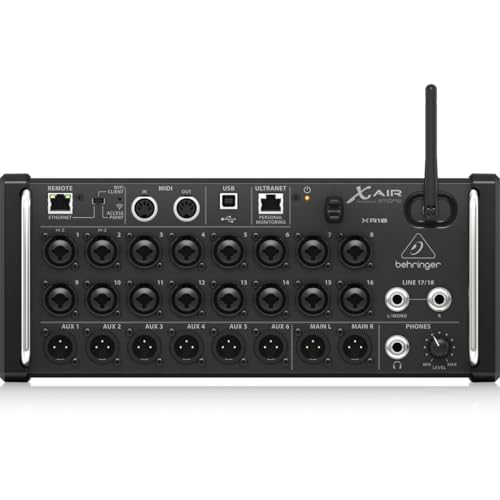
- 18 channels and 12 buses for live mixing
- 16 programmable MIDAS-designed mic preamps
- Built-in Wi-Fi and 18 x 18 USB interface
Best For: Tablet-controlled church setups and multichannel recording
Best Full-Scale Console

- 40 inputs and 25 buses for complex productions
- 32 programmable MIDAS-designed mic preamps
- Motorized faders and extensive XLR outputs
Best For: Large church services with dedicated sound teams
Best Analog Workflow
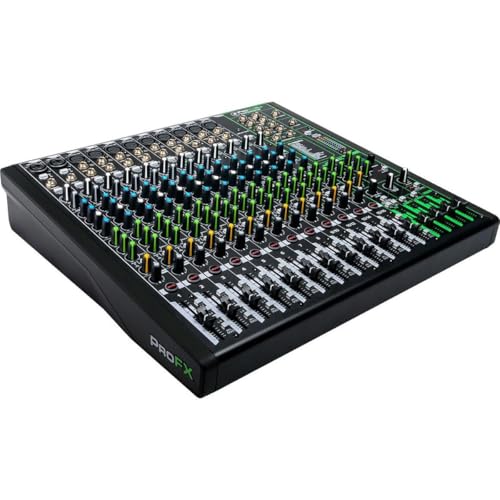
- 16-channel layout with physical controls
- Onyx preamps provide up to 60 dB of gain
- GigFX effects and multitrack USB recording
Best For: Small churches wanting simple mixing and recording
Best Budget Connectivity

- Bluetooth, USB, and MP3 playback support
- 48V phantom power with balanced XLR inputs
- Three-band EQ and built-in MP3 recording
Best For: Small portable services and wireless playback setups
Large-Setup Control
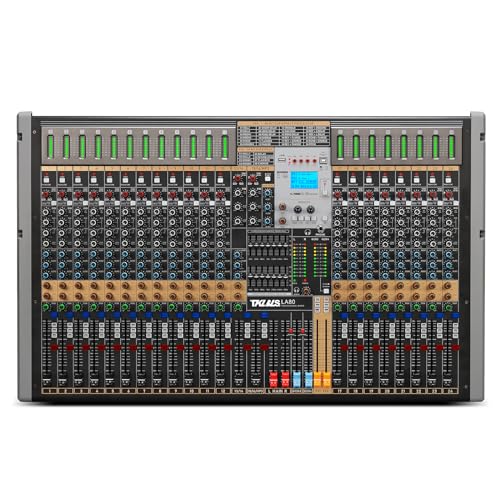
- 20 mic and four stereo inputs
- Individual 48V phantom power
- Dual DSP and four-group routing
Best For: Larger worship teams and complex church sound setups
Feature-Rich Flexibility

- 14 combo inputs and two stereo channels
- 99 DSP effects with USB recording
- Bluetooth and per-channel 48V control
Best For: Church teams combining live mixing, recording, and playback
Compact Service Setup

- 12 mic and two stereo channels
- 99 DSP effects and independent 48V
- USB recording plus Bluetooth playback
Best For: Smaller churches and straightforward worship setups
Flexible Church Setup
Depusheng DX12 12-Channel Mixer

- 12 channels for multiple microphones and sources
- Bluetooth and USB computer connectivity
- 3-band EQ and +48V phantom power
Best For: Churches needing flexible inputs and recording connectivity
Easy Monitoring Pick

- Eight XLR and 1/4-inch input channels
- USB, Bluetooth, and flash-drive support
- Per-channel EQ, effects, faders, and monitoring
Best For: Small churches needing playback and headphone monitoring
Compact Effects Option
FULUODE CT-80S 8-Channel Mixer

- Slim 8-channel design for smaller setups
- Bluetooth 5.0 and MP3/USB playback
- Reverb, USB recording, and phantom power
Best For: Smaller churches wanting compact playback and effects
Best Compact Digital Control – Behringer X AIR XR18
The Behringer X AIR XR18 is a flexible audio mixer for church sound when you want tablet-based control, plenty of inputs, and easy recording. Its 18-channel design, 16 programmable MIDAS preamps, built-in Wi-Fi router, and bidirectional USB interface suit worship spaces, rehearsals, and live applications.
Best For: Churches needing a compact digital mixer controlled from an iPad or Android tablet.
Pros:
- 18-channel, 12-bus design supports varied live setups.
- Includes 16 programmable MIDAS-designed microphone preamps.
- Built-in Wi-Fi enables direct tablet operation without an external router.
- 18 x 18 USB interface supports direct multichannel recording.
Cons:
- Operation depends on tablet-based control rather than physical faders.
- Its 7.1-pound format may require a separate mounting or placement solution.
The XR18 is a strong fit for teams comfortable mixing from a tablet. It combines substantial input capacity with USB recording in a relatively portable format.
Best Full-Scale Console – Behringer X32 Digital Mixer
The Behringer X32 is a full-size audio mixer for church sound systems that need extensive routing and hands-on control. It provides 40 input channels, 25 buses, 32 programmable MIDAS preamps, motorized faders, and numerous outputs for complex live and installed setups.
Best For: Larger churches and production teams managing complex services, multiple sources, and detailed scenes.
Pros:
- 40-input and 25-bus architecture accommodates demanding productions.
- 32 programmable MIDAS-designed mic preamps provide broad input capacity.
- 25 automated motorized 100 mm faders support hands-on mixing and scene management.
- Offers 16 XLR outputs plus additional line inputs and outputs.
Cons:
- At 45.4 pounds, it is substantially less portable than compact mixers.
- Its large 40.4-by-25.9-by-12.8-inch dimensions require dedicated space.
- The extensive feature set may be more than a small church needs.
The X32 makes the most sense when channel count, physical controls, and routing flexibility matter more than portability. Its motorized faders and scene-management capabilities are especially useful for repeatable service workflows.
Best Analog Workflow – Mackie ProFX16v3
The Mackie ProFX16v3 is a practical audio mixer for church sound when you want physical controls without a digital learning curve. Its 16 channels, Onyx preamps, built-in GigFX effects, and USB multitrack recording support worship services, small venues, and recording tasks.
Best For: Churches and small venues that prefer an analog-style workflow with USB recording.
Pros:
- Provides 16 channels for bands, worship teams, and small venues.
- Onyx preamps offer up to 60 dB of gain on every mic channel.
- Built-in GigFX engine includes 24 effects.
- USB interface records multitrack while mixing the room.
Cons:
- It has fewer channels than the larger digital consoles in this roundup.
- Its analog-focused operation may offer less automated control than a digital mixer.
Choose the ProFX16v3 if straightforward, hands-on operation is a priority. It combines familiar mixer controls with useful effects and direct multitrack USB recording.
Best Budget Connectivity – XTUGA CT120 12-Channel Mixer
The XTUGA CT120 is a compact audio mixer for church sound when Bluetooth playback, USB connectivity, and basic live inputs are useful priorities. This 12-channel board includes 48V phantom power, balanced XLR inputs, three-band EQ, built-in effects, and MP3 playback and recording features.
Best For: Smaller churches, portable services, streaming, and setups using phones or other wireless playback devices.
Pros:
- Supports Bluetooth playback from phones, computers, and other devices.
- Includes 48V phantom power and balanced XLR inputs with insert points.
- USB audio interface supports recording and exporting to a computer.
- Built-in MP3 player/recorder supports MP3, WAV, and WMA files.
Cons:
- Its 12-channel capacity is lower than the other mixers listed here.
- The supplied specifications describe it as compact but provide limited dimensional detail.
- Bluetooth and playback features may be unnecessary for a basic wired church setup.
The CT120 is geared toward accessible connectivity and compact operation rather than large-scale routing. It can be a convenient choice for smaller teams that want wireless playback, USB recording, and essential microphone inputs in one board.
Large-Setup Control – 24-Channel Audio Mixer
For a larger worship team or multi-source setup, this audio mixer for church sound provides 20 microphone inputs plus four stereo inputs. Its flexible routing, individual phantom-power switches, and dual DSP make it suited to managing complex live mixes.
Best For: Churches needing extensive input capacity and flexible control for microphones, instruments, and music playback.
Pros:
- 20 mic inputs and four stereo inputs support larger sound systems.
- Individual 48V phantom power switches help accommodate mixed microphone setups.
- Dual DSP with 24 reverb effects provides separate effect control for microphone and music signals.
- Four-group routing, dual 7-band EQ, PAD, and high-pass filters offer detailed mix management.
Cons:
- Its 24-channel design is relatively large for smaller congregations or simple services.
- At about 15.99 kg, it may be less convenient to move between locations.
This is the strongest fit when your church needs substantial input headroom and hands-on routing. Smaller systems may not need its size, but larger live setups can benefit from the expanded connectivity and control.
Feature-Rich Flexibility – W IN-MIX DX16 Mixer
The W IN-MIX DX16 is a versatile audio mixer for church sound teams that also record, stream, or handle varied live events. It combines 14 combo inputs and two stereo channels with extensive DSP effects, USB recording, Bluetooth, and independent channel controls.
Best For: Church sound teams that need flexible inputs plus recording, playback, and effects for services or events.
Pros:
- 14 XLR/6.35 mm combo inputs plus two stereo channels support microphones and instruments.
- Each channel includes independent gain, 3-band EQ, and 48V phantom power control.
- 99 DSP effects, USB recording, and Bluetooth add useful built-in functionality.
- Metal construction and illuminated mute buttons support practical live operation.
Cons:
- The 30-day refund period and one-year warranty provide less coverage than some alternatives.
- XLR cables are sold separately.
This model offers a balanced feature set for churches that want one mixer to cover live sound, recording, and playback. Its 16-channel capacity is substantial, though teams with very large microphone counts may need more inputs.
Compact Service Setup – 12-Channel Audio Mixer
For a smaller worship space or straightforward service setup, this 12-channel audio mixer for church sound offers 12 microphone inputs and two stereo channels in a more compact format. USB recording, Bluetooth playback, channel muting, and built-in effects add flexibility without requiring separate equipment.
Best For: Smaller churches, meetings, and live setups needing practical input control and convenient playback or recording.
Pros:
- 12 mic inputs and two stereo channels accommodate a range of service sources.
- Independent 48V phantom power and 3-band channel EQ support microphone adjustment.
- 99 DSP effects, USB recording/playback, and Bluetooth provide useful built-in tools.
- Individual mute switches and a 7-band main-output EQ simplify live adjustments.
Cons:
- Its 12-channel capacity may be limiting for larger worship teams.
- Bluetooth is specified for a range of about 15 feet.
This mixer is a practical choice when input needs are moderate and the system benefits from simple recording and wireless playback. Larger churches may prefer the additional channels and routing available from the other options.
Flexible Church Setup – Depusheng DX12 12-Channel Mixer
For churches needing an audio mixer for church sound with room for several microphones and playback sources, the Depusheng DX12 offers 12 channels, Bluetooth, USB connectivity, and +48V phantom power. Its broad selection of XLR, 1/4-inch, RCA, send/return, and headphone connections can support a flexible worship or event setup.
Best For: Churches that need multiple inputs, wireless music playback, and PC or Mac recording capability.
Pros:
- 12 channels with XLR and 1/4-inch inputs for connecting multiple devices.
- Bluetooth supports wireless streaming from compatible mobile devices and computers.
- USB audio interface, 3-band EQ, LED metering, and +48V phantom power are included.
Cons:
- Its extensive connection layout may be more than a small church setup requires.
- The supplied notes do not identify digital mixing or remote-control features.
The DX12 is a practical choice when input capacity and connection flexibility matter most. It is especially useful for setups combining microphones, instruments, playback devices, and computer recording.
Easy Monitoring Pick – 8-Channel USB Bluetooth Mixer
This 8-channel console is a straightforward option for an audio mixer for church sound, with XLR and 1/4-inch inputs, USB playback and recording, Bluetooth streaming, and headphone monitoring. Built-in gain, channel faders, 3-band EQ, reverb, and delay provide useful control for services, meetings, and small live events.
Best For: Small churches and multi-purpose rooms that want simple input control, playback, effects, and private monitoring.
Pros:
- Eight channels support multiple microphones and unbalanced 1/4-inch sources.
- USB, Bluetooth, computer, flash-drive, and mobile-device connectivity add playback and recording flexibility.
- Each channel includes gain, 3-band EQ, effects, fader, and peak-monitoring controls.
Cons:
- Eight channels provide less expansion room than a 12-channel console.
- The supplied notes do not specify advanced routing or digital console controls.
With its accessible control layout and built-in reverb and delay, this mixer suits churches that want useful sound-shaping tools without moving to a larger board. The headphone monitoring feature is also convenient for setup and troubleshooting.
Compact Effects Option – FULUODE CT-80S 8-Channel Mixer
The FULUODE CT-80S is a compact choice for an audio mixer for church sound, combining eight channels with Bluetooth 5.0, MP3/USB playback, USB recording, reverb, and +48V phantom power. Its thin chassis and support for microphones and instruments make it suitable for smaller worship spaces, conferences, and church events.
Best For: Churches wanting a slim 8-channel mixer with wireless playback, vocal effects, and basic recording features.
Pros:
- Eight channels support wired, wireless, and capacitive microphone or instrument connections.
- Bluetooth 5.0 and MP3/USB input support convenient music playback.
- Includes reverb, 3-band channel controls, USB recording, and +48V phantom power.
Cons:
- Eight channels may limit expansion for larger worship teams or complex installations.
- The supplied notes specify a 110V American plug, so power compatibility should be checked.
- Its feature details are less comprehensive than those provided for the other mixers.
The CT-80S emphasizes compact operation and built-in playback and effects. It can work well for smaller church systems where a slim console and straightforward vocal or instrument mixing are priorities.
How We Picked the Best Audio Mixer for Church Sound
We focused on mixers that match common church audio requirements: enough inputs for microphones and instruments, reliable main outputs, vocal-friendly equalization, phantom power for condenser microphones and direct boxes, and practical connectivity for playback or recording. We also considered control style, built-in effects, portability, expansion potential, and how easily volunteers can learn each system.
Digital models can provide scene storage, remote control, flexible routing, and more precise processing. Analog mixers remain appealing when simplicity, immediate hands-on control, and quick setup matter most.
Quick Comparison
| Best For | Recommended Type | What to Look For |
|---|---|---|
| Small worship teams | 8- to 12-channel mixer | Mic inputs, phantom power, USB or Bluetooth playback |
| Growing churches | 16-channel mixer | More monitor sends, effects, and recording connectivity |
| Large services | 24- to 40-input digital mixer | Scene recall, flexible buses, remote control, and expansion |
| Streaming and recording | USB-equipped digital or analog mixer | Independent routing, low-noise preamps, and reliable computer integration |
Key Buying Factors for an Audio Mixer for Church Sound
Channel Count and Future Growth
Count every vocal microphone, instrument, playback source, livestream feed, and spare input you may need. Leave room for growth rather than choosing a mixer that only fits today’s lineup.
Outputs, Monitor Mixes, and Routing
Check the number of auxiliary sends for floor wedges, in-ear monitors, lobby speakers, and livestream feeds. A mixer with flexible buses is especially useful when the house mix and broadcast mix need different levels.
Effects and Processing
Built-in reverb can help vocals and instruments sound polished, while compression and equalization improve clarity and consistency. Digital mixers generally offer deeper processing and repeatable presets.
Ease of Use and Control
For rotating volunteers, clearly labeled physical controls may be preferable. Tablet-controlled systems offer powerful remote operation, but they require dependable Wi-Fi, device access, and a willingness to learn the interface.
Connectivity
USB recording, Bluetooth, media playback, and computer integration can simplify rehearsals, livestreaming, and sermon recording. Verify whether the USB connection supports the routing and channel count you actually need.
Who Should Buy Which Audio Mixer for Church Sound?
Choose a compact 8- or 12-channel mixer for a small congregation, simple vocal-and-instrument setup, or portable ministry team. These boards are typically easier for beginners and quick to deploy.
Choose a 16- or 24-channel mixer for a growing worship band, multiple vocalists, several monitor mixes, or regular recording. The extra inputs and outputs provide useful headroom without the complexity of a large production console.
Choose a large digital mixer for churches with full bands, multiple services, livestreaming, several operators, or complex stage monitoring. Scene recall and remote control can significantly improve consistency between services.
Before buying, confirm connector types, rack or tabletop requirements, monitor output needs, and whether the mixer’s control method suits your volunteers. The best Audio Mixer for Church Sound is the one your team can configure confidently and operate consistently.