
The best DJ mixer for turntables gives you the right combination of phono connectivity, responsive controls, clean audio, and reliable crossfader performance. Whether you mix vinyl, scratch, or combine turntables with digital sources, the right layout can make your setup easier and more enjoyable to use.
We selected 10 mixers and DJ controllers covering beginner-friendly, portable, scratch-focused, rotary, Bluetooth, and DVS-oriented needs. Use the guide below to narrow the choices by features, workflow, and budget.
Best 10 Dj Mixer for Turntables Picks for 2026
Versatile Scratch Pick
Numark M2 2-Channel Scratch DJ Mixer

- Two phono/line-switchable RCA inputs
- Three-band EQ and adjustable crossfader controls
- Portable, rack-mountable design with mic input
Best For: Beginners and flexible analog DJ setups
Battle-Style Controller

- Open layout inspired by turntable battle setups
- Serato DJ Lite included for PC and Mac
- Tall pitch faders for scratch-focused practice
Best For: Digital beginners learning scratch and open-format DJing
Analog Control Value
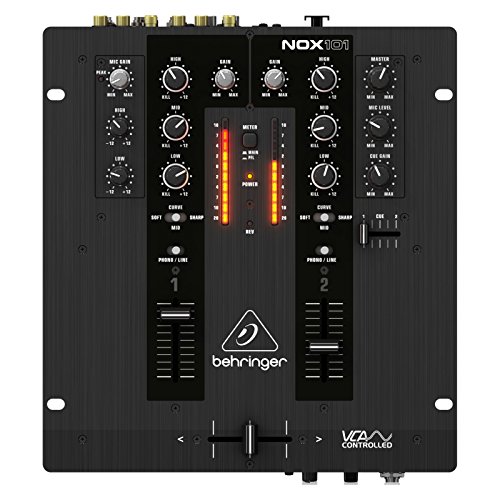
- Two-channel mixer with full-kill three-band EQs
- VCA control and Ultraglide crossfader
- RCA, TRS, and XLR connectivity
Best For: Hands-on two-channel analog mixing and scratching
Club-Style Learning Pick

- Two-channel layout modeled on club mixers
- Rekordbox DVS unlock for digital turntable mixing
- Per-channel filters and Magvel Fader
Best For: Learning beatmatching and building a turntable-based separates setup
Analog Control Pick

- Four stereo channels with analog filter control
- Three phono inputs for turntable-heavy setups
- Balanced master and booth outputs
Best For: Multi-source analog DJ setups
Digital Turntable Workflow Pick

- Two-channel club-style layout
- Included rekordbox DVS for turntables
- USB sound card and performance effects
Best For: Hybrid turntable and digital DJ setups
Value Feature Pick

- Three dual-input stereo channels
- Auto-BPM counter and long-life crossfader
- Microphone-switchable channel and PFL monitoring
Best For: Budget-conscious multi-source mixing
Best Compact Pick
Gemini MM1 Portable 2-Channel Mixer

- Palm-sized, 1.2-pound all-metal design
- Full-size crossfader with gain and 2-band EQ
- RCA master and booth outputs
Best For: Beginners and compact turntable setups
Best Wireless Value
Pyle PMX7BU 3-Channel Bluetooth Mixer

- Three channels with phono/line switching
- Bluetooth and USB flash-drive playback
- Dual mic inputs with talk-over control
Best For: Parties and mobile DJs mixing multiple source types
Best Turntable Flexibility

- Phono preamps on channels 1 and 2
- Cue headphone monitoring for pre-listening
- Bluetooth, USB/MP3, AUX, and dual mic inputs
Best For: Mobile DJs using two turntables and microphones
Versatile Scratch Pick – Numark M2 2-Channel Scratch DJ Mixer
The Numark M2 is a practical dj mixer for turntables, with two phono/line-switchable RCA inputs, straightforward channel controls, and a replaceable crossfader. Its compact, rack-mountable design suits home practice, parties, weddings, and club-style setups.
Best For: Beginners and working DJs who want flexible turntable, media-player, and microphone connectivity.
Pros:
- Two phono/line-switchable inputs support turntables and other sources.
- Three-band EQs, channel faders, and adjustable crossfader slope provide useful mix control.
- Includes mic, master, record, and headphone connections.
- Replaceable crossfader and rack-mountable, portable construction add practical versatility.
Cons:
- It is limited to two channels.
- The listed inputs and outputs are primarily analog RCA and 1/4-inch connections.
The M2 focuses on essential mixing controls rather than a complex feature set. It is a sensible choice when you need an accessible, portable mixer for turntables and everyday DJ use.
Battle-Style Controller – Pioneer DJ DDJ-REV1
The Pioneer DJ DDJ-REV1 is a computer-based alternative to a traditional dj mixer for turntables. Its open battle-style layout, tall pitch faders, and Serato DJ Lite compatibility make it approachable for learning scratch and open-format techniques without a separate turntable setup.
Best For: Beginners who want an affordable controller for scratch practice, hip-hop, and open-format DJing on PC or Mac.
Pros:
- Battle-style layout mirrors a classic turntable and mixer arrangement.
- Serato DJ Lite is unlocked for immediate computer-based use.
- Tall pitch faders and quick effect controls support scratch-oriented practice.
- Compact five-pound design is easy to place in a home setup.
Cons:
- It is a USB DJ controller rather than a standalone analog mixer.
- Its listed platform compatibility is limited to PC and Mac.
The DDJ-REV1 is best viewed as a low-cost entry point for digital battle-style mixing. Choose it when software integration and guided scratch practice matter more than direct phono connections.
Analog Control Value – Behringer PRO MIXER NOX101
The Behringer PRO MIXER NOX101 is a compact two-channel option for shoppers seeking a straightforward dj mixer for turntables. It combines three-band full-kill EQ filters with VCA control and an Ultraglide crossfader, while offering RCA, TRS, and XLR connectivity.
Best For: DJs who want a two-channel mixer with flexible analog connection options and scratch-friendly crossfader features.
Pros:
- Two-channel layout keeps the mixing workflow simple.
- Three-band EQs include full-kill filters for pronounced tonal cuts.
- VCA control and an Ultraglide crossfader are useful for hands-on mixing and scratching.
- RCA, TRS, and XLR connections provide varied connectivity.
Cons:
- Only two channels are provided.
- The supplied notes do not specify phono/line switching or included digital software.
The NOX101 emphasizes tactile analog control and connection flexibility. It can suit a simple turntable setup, provided its available inputs match the sources in your system.
Club-Style Learning Pick – Pioneer DJ DJM-250MK2
The Pioneer DJ DJM-250MK2 is a focused dj mixer for turntables that introduces the two-channel workflow used in professional booths. Its dedicated Sound Color FX Filter controls and Magvel Fader support both basic blending and light scratching, while the rekordbox DVS unlock supports digital files with turntables or media players.
Best For: Home DJs learning club-style beatmatching or building a separates setup with turntables and digital DVS options.
Pros:
- Two-channel club-style layout teaches a familiar professional workflow.
- Free rekordbox DVS unlock supports digital mixing with turntables or media players.
- Dedicated filter control on each channel adds hands-on tonal shaping.
- Magvel Fader is designed for smooth, durable cuts and light scratching.
Cons:
- It is limited to two channels.
- The feature set is intentionally focused, with no listed built-in effects beyond the channel filters.
The DJM-250MK2 is a strong learning bridge between home practice and club-style mixing. Its DVS support adds flexibility for DJs who want to combine turntables with digital files.
Analog Control Pick – Headliner R4 Rotary DJ Mixer
The Headliner R4 is a strong choice if you want a flexible DJ mixer for turntables with hands-on analog control. Its four stereo channels, three phono inputs, dedicated filter, and isolator-style EQs suit setups that combine multiple turntables, media players, and microphones.
Best For: DJs building multi-source analog setups who want rotary controls, phono connectivity, and independent booth monitoring.
Pros:
- Three phono inputs support multiple turntables.
- Four stereo channels include gain, peak LEDs, 3-band isolator EQs, and channel filters.
- Independent balanced XLR and unbalanced RCA master and booth outputs provide flexible system connections.
- Metal enclosure, ALPS potentiometers, and wood side panels give it a sturdy classic design.
Cons:
- Its 4-channel layout may be more mixer than a small two-deck setup requires.
- The corded design requires a dedicated power connection.
The R4 stands out for DJs who prioritize tactile analog mixing and broad source compatibility. The filter controls, cue mix, split monitoring, and separate booth output make it especially practical for home studios and performance rigs with several connected sources.
Digital Turntable Workflow Pick – Pioneer DJM-450
The Pioneer DJM-450 is a compact DJ mixer for turntables that combines a familiar two-channel club layout with Beat FX, a built-in USB sound card, and included rekordbox DVS support. It is suited to DJs who want to mix records or media players while also integrating computer-based workflows.
Best For: Home DJs and scratch-focused users who want two-channel club controls, DVS capability, and USB recording or software integration.
Pros:
- Two-channel layout follows the workflow of Pioneer DJ club mixers.
- Beat FX and Sound Color FX add hands-on transition and performance control.
- Included rekordbox DVS supports mixing digital files with turntables or media players.
- Built-in USB sound card enables set recording and direct software operation without an extra interface.
Cons:
- Only two channels are available for connected sources.
- Its feature set is more dependent on a computer-based workflow than a purely analog mixer.
The DJM-450 is a practical bridge between traditional decks and digital DJing. Its Magvel Fader, effects, DVS support, and USB connectivity make it a versatile option when you want a compact mixer that can handle both turntables and rekordbox-based performance.
Value Feature Pick – Behringer DX626 DJ Mixer
Behringer Pro Mixer Dx626 Professional 3-Channel Dj Mixer With Bpm Counter, Black
Check Price On AmazonThe Behringer DX626 is a straightforward DJ mixer for turntables with three dual-input stereo channels, a BPM counter, and kill-style EQ controls. It offers useful mixing basics for DJs who need several RCA-connected sources and a durable crossfader without requiring a more specialized effects platform.
Best For: Budget-conscious DJs who want a practical three-channel mixer with multiple stereo inputs, BPM monitoring, and microphone flexibility.
Pros:
- Three dual-input stereo channels accommodate multiple connected sources.
- Dual auto-BPM counter helps with tempo awareness during mixes.
- Ultraglide crossfader is rated for up to 500,000 life cycles.
- One channel can switch to a ULN microphone input, and PFL includes a master/PFL mix option.
Cons:
- Output connectivity is limited to RCA.
- The supplied details list RCA audio inputs and do not identify dedicated phono inputs.
- It lacks the USB sound card, DVS, and dedicated effects features found on more advanced options.
The DX626 is best viewed as a basic, flexible mixer for straightforward source blending. Its multiple stereo channels, BPM counter, crossfader, and microphone option make it useful for simple DJ systems, provided your turntables or other sources match its RCA-based input arrangement.
Best Compact Pick – Gemini MM1 Portable 2-Channel Mixer
If you need a compact DJ mixer for turntables, the Gemini MM1 focuses on essential hands-on control without taking up much room. Its two RCA inputs, full-size crossfader, channel gain, and 2-band EQ suit straightforward home, dorm-room, or mobile setups.
Best For: Beginners, small spaces, and DJs who prioritize portability and simple manual mixing.
Pros:
- Ultra-compact 6.5-by-4.13-inch design weighs 1.2 pounds.
- All-metal body with a full-size crossfader and sturdy rotary knobs.
- Includes RCA master and booth outputs plus microphone and headphone connections.
- Channel gain and 2-band EQ provide practical sound-shaping control.
Cons:
- Only two channels are available.
- Uses a 2-band EQ rather than a more detailed multi-band design.
- It is corded and does not include wireless or USB playback features.
The MM1 is a sensible choice when physical controls and a rugged, backpack-friendly build matter more than extensive connectivity. It offers the core controls needed for a basic turntable-oriented setup at a budget-conscious size.
Best Wireless Value – Pyle PMX7BU 3-Channel Bluetooth Mixer
The Pyle PMX7BU is a versatile DJ mixer for turntables that combines phono/line switching with Bluetooth, USB playback, and microphone features. Its three-channel layout gives party DJs and casual performers more source options than a basic two-channel mixer.
Best For: Mobile DJs, parties, karaoke-style use, and users who want turntable inputs alongside wireless and USB playback.
Pros:
- Three channels provide independent volume controls and crossfader mixing.
- Channel 2 accepts turntables through phono inputs or other gear through line inputs.
- Bluetooth supports wireless streaming from phones, tablets, laptops, and PCs.
- Includes USB flash-drive playback, dual microphone inputs, and a headphone jack.
Cons:
- The supplied notes identify phono turntable connection specifically on channel 2.
- The warranty is listed as 90 days.
- Its broad feature set may be more than needed for a simple two-turntable setup.
Choose the PMX7BU if flexibility is a priority. It supports a turntable connection while also accommodating Bluetooth music, USB files, microphones, and line-level sources for mixed-use events.
Best Turntable Flexibility – Pyle PMX8BU 3-Channel Mixer
For a more turntable-focused setup, the Pyle PMX8BU is a DJ mixer for turntables with built-in phono preamps on channels 1 and 2. It also adds cue monitoring, Bluetooth, USB/MP3 playback, and dual balanced microphone inputs for events where DJing and MC duties share the mixer.
Best For: Mobile DJs and event users who need two direct turntable inputs, headphone cueing, and microphone support.
Pros:
- Built-in phono preamps on channels 1 and 2 allow direct turntable connection.
- Phono/line switching supports CDJs or other media players on those channels.
- Cue monitoring enables pre-listening to channels before sending them to the master output.
- Provides Bluetooth, USB/MP3 playback, AUX input, and two balanced 1/4-inch microphone inputs.
Cons:
- It is larger and heavier than the compact Gemini MM1 at 2 pounds.
- The supplied information lists a 3.5mm headphone output rather than a 1/4-inch headphone jack.
- It remains a three-channel mixer, which may limit larger multi-source setups.
The PMX8BU stands out when direct turntable compatibility and cue monitoring are central requirements. Its added wireless, USB, and microphone facilities make it particularly practical for mobile events and DJ/MC applications.
How We Picked the Best Dj Mixer for Turntables
We focused on the features that matter most in a turntable-based setup: phono and line inputs, channel count, crossfader feel, EQ and cue controls, build quality, connectivity, and compatibility with modern digital workflows. We also considered whether each model suits vinyl mixing, scratching, DVS, mobile use, or casual home playback.
A mixer does not need to be expensive to work well with turntables, but the best choice depends on your equipment and technique. Check the input specifications carefully, especially if you plan to connect multiple turntables, powered speakers, microphones, or a computer.
Quick Comparison
| Best For | Recommended Type | What to Look For |
|---|---|---|
| Basic two-deck mixing | 2-channel analog mixer | Phono inputs, three-band EQ, cue monitoring |
| Scratching | Scratch-oriented mixer or controller | Fast crossfader, adjustable curve, durable controls |
| DVS setups | DVS-compatible mixer | Supported software, USB audio, timecode compatibility |
| Expanded setups | Three- or four-channel mixer | Additional inputs, flexible routing, independent channel controls |
| Portable or casual use | Compact mixer | Simple layout, lightweight design, convenient media inputs |
Key Buying Factors for a Dj Mixer for Turntables
Phono Inputs and Grounding
Turntables with traditional cartridges require phono inputs and may need grounding wires to prevent hum. Do not assume every channel accepts phono-level signals; some mixers offer only line inputs or require an external phono preamp.
Channel Count and Connectivity
A two-channel mixer is sufficient for two turntables, while three- and four-channel models provide room for a sampler, media player, drum machine, or extra deck. Also check RCA outputs, microphone inputs, USB connections, and whether Bluetooth is intended for playback rather than low-latency DJ performance.
Crossfader and Cue Controls
Scratch DJs should prioritize a smooth, adjustable crossfader and a layout that keeps EQ, channel faders, and cue controls within easy reach. For long blends, channel fader travel, headphone monitoring, and accurate level meters may matter more than an ultra-light crossfader.
DVS and Software Support
If you want to control rekordbox, Serato, or another DJ platform with timecode records, verify that the mixer supports the required DVS system. A standard analog mixer can mix vinyl audio but cannot automatically provide the digital audio interface or software license needed for DVS.
Who Should Buy Which Dj Mixer for Turntables?
Beginners and home vinyl DJs: Choose a straightforward two-channel model with phono inputs, clear EQ controls, and reliable headphone cueing.
Scratch-focused DJs: Look for an adjustable crossfader, durable construction, and a compact layout designed for quick cuts and transitions.
DVS and hybrid DJs: Select a mixer with confirmed USB audio and software compatibility rather than relying on analog inputs alone.
Mobile and casual users: A lightweight model with Bluetooth or USB playback can be convenient, provided its turntable inputs meet your needs.
Growing setups: Consider a three- or four-channel mixer if you expect to add another deck, media player, microphone, or external instrument. The extra flexibility can prevent an expensive upgrade later.