
The best audio interface with loopback makes it easier to combine microphones, instruments, and computer audio for livestreams, podcasts, tutorials, and recordings. The right model can also simplify monitoring while keeping latency and setup frustration under control.
These 10 options range from compact single-input interfaces to more flexible dual-input models, with choices for desktop computers, phones, tablets, and mobile recording setups.
Best 10 Audio Interface with Loopback Picks for 2026
Best for Flexible Streaming

- Dedicated Music/Streaming switch
- Hardware loopback and direct monitoring
- PC, Mac, iOS, and Android support
Best For: Creators moving between recording and streaming
Best for Studio-Quality Recording
Focusrite Scarlett 2i2 4th Gen

- 24-bit/192 kHz recording
- Auto Gain and Clip Safe features
- Includes recording software bundle
Best For: Musicians prioritizing recording quality and level control
Best Budget Loopback Option

- Monitor mix and loopback function
- 24-bit/192 kHz conversion
- USB-C bus-powered design
Best For: Portable home recording and streaming setups
Best for Solo Creators
Focusrite Scarlett Solo 4th Gen

- One mic and one Hi-Z instrument input
- 24-bit/192 kHz recording
- Air mode and software bundle included
Best For: Singer-songwriters recording vocals and guitar
Best High-Resolution Pick

- 24-bit/192kHz recording
- Two combo inputs with phantom power
- USB-C bus-powered loopback design
Best For: Home recording and mobile content creation
Best Budget All-Rounder
M-AUDIO M-Track Duo USB Interface

- Two combo mic, line, and instrument inputs
- USB/Direct zero-latency monitoring
- MPC Beats and Ableton Live Lite support
Best For: Beginner recording, podcasting, and livestreaming
Best Mobile Streaming Pick

- Stereo RCA inputs for external gear
- Loopback for mobile audio mixing
- Direct headphone monitoring with broad app support
Best For: Mobile streaming and stereo source capture
Simple Loopback Streaming

- Hardware Loopback and Direct Monitor switches
- One XLR/TRS input plus stereo 3.5mm input
- USB-C bus-powered and highly portable
Best For: Solo creators, podcasters, and mobile streamers
Creator-Focused Routing
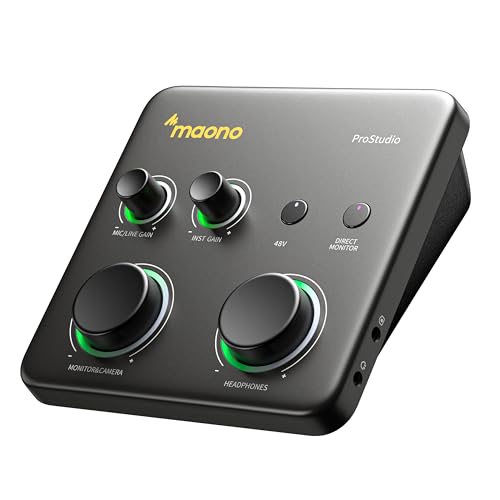
- Built-in loopback for voice, instruments, and desktop audio
- Dual USB connectivity for computer and mobile workflows
- 70 dB gain and 24-bit/192 kHz recording
Best For: Streamers, podcasters, and mobile content creators
Dual-Mic Loopback Setup

- Two XLR inputs for podcasts and collaborative recording
- Loopback combines microphones, instruments, and desktop audio
- Dual USB supports computer and mobile connections
Best For: Two-person podcasts, interviews, and live streams
Best for Flexible Streaming – Zoom AMS-24
The Zoom AMS-24 is a practical audio interface with loopback for musicians, podcasters, and streamers who want simple routing between recording and broadcast setups. Its dedicated Music/Streaming switch, hardware loopback control, and compatibility with computers and mobile devices make it especially adaptable.
Best For: Musicians and creators switching between recording and live streaming workflows.
Pros:
- Music/Streaming switch changes routing quickly.
- Streaming mode combines inputs into one feed for broadcast software.
- Two headphone outputs and two independent headphone mixes support collaborative monitoring.
- Works with PC, Mac, iOS, and Android devices.
Cons:
- Maximum sample rate is 48 kHz.
- Only two input channels are available.
The AMS-24 stands out when loopback and straightforward hardware controls matter more than high-resolution recording. It is a strong fit for compact streaming and mobile-friendly setups.
Best for Studio-Quality Recording – Focusrite Scarlett 2i2 4th Gen
The Focusrite Scarlett 2i2 4th Gen is a compact two-input interface aimed at musicians who prioritize recording quality and easy level management. While the supplied specifications do not identify a loopback function, its 192 kHz support, Auto Gain, Clip Safe, and Air modes make it a capable recording-focused alternative.
Best For: Singers, guitarists, and home producers seeking high-resolution recording with assisted gain control.
Pros:
- Two mic preamps and two Hi-Z instrument inputs.
- 24-bit/192 kHz operation with a 120 dB dynamic range.
- Auto Gain and Clip Safe help manage recording levels.
- Includes Pro Tools Intro+, Ableton Live Lite, Cubase LE, and Hitmaker Expansion.
Cons:
- The supplied notes do not list a loopback feature.
- At 1.7 pounds, it is heavier than the Zoom AMS-24.
The Scarlett 2i2 is better suited to detailed music production than to a loopback-centered streaming setup. Choose it when converter performance, software, and level-protection features are the priority.
Best Budget Loopback Option – PIYONE Q28 Alloy Red
The PIYONE Q28 is an audio interface with loopback designed for straightforward computer and mobile recording. It combines USB-C bus power, two combo inputs, 24-bit/192 kHz conversion, and monitor mix/loopback functionality in a portable enclosure.
Best For: Home creators wanting an affordable, portable two-input interface with loopback and direct monitoring.
Pros:
- Includes monitor mix/loopback functionality.
- Supports 24-bit/192 kHz recording.
- Two XLR/TRS combo inputs accept microphones and instruments.
- USB-C provides data transfer and bus power without an external supply.
Cons:
- The supplied details list Windows compatibility but do not confirm Mac or iOS support in the specifications.
- Only two input channels are available.
- Its 3.5mm headphone connection may not suit users seeking other headphone outputs.
The Q28 offers an appealing feature mix for basic recording, streaming, and mobile-style setups. Its loopback and USB-C design are useful, but buyers should verify operating-system compatibility for their specific device.
Best for Solo Creators – Focusrite Scarlett Solo 4th Gen
The Focusrite Scarlett Solo 4th Gen is a compact interface for one microphone and one instrument, making it a practical choice for singer-songwriters and solo creators. The supplied notes do not list loopback, but its 192 kHz capability, Air mode, and included software support a focused recording workflow.
Best For: Solo musicians who need a small interface for vocals, guitar, and home recording.
Pros:
- Combines one XLR mic preamp with one Hi-Z instrument input.
- Supports 24-bit/192 kHz recording and 120 dB dynamic range.
- Air mode adds presence and harmonic drive to vocals and guitars.
- Includes Pro Tools Intro+, Ableton Live Lite, Cubase LE, and Hitmaker Expansion.
Cons:
- The supplied notes do not identify a loopback feature.
- It has fewer microphone inputs than the Scarlett 2i2 and Zoom AMS-24.
The Scarlett Solo is the most focused option here for a one-person recording setup. It is compact and well equipped for vocals and guitar, but it is not the strongest match if loopback is a must-have feature.
Best High-Resolution Pick – PIYONE Q2 2×2 USB-C Interface
The PIYONE Q2 is a practical audio interface with loopback for creators who want a compact two-input setup with high-resolution recording. Its USB-C, bus-powered design works with Mac and PC without drivers, while combo inputs support microphones, instruments, and line-level sources.
Best For: Home recording, mobile creators, and users who want 24-bit/192kHz recording with loopback functionality.
Pros:
- 24-bit/192kHz converters for high-fidelity recording.
- Two XLR/TRS combo inputs with 48V phantom power and Hi-Z support.
- USB-C plug-and-play operation with zero-latency direct monitoring.
- Compact bus-powered design with illuminated gain controls.
Cons:
- The supplied details do not specify compatibility beyond the listed Mac, PC, and iOS use cases.
- Its two-channel design may be limiting for larger recording setups.
Choose the Q2 if resolution, portability, and flexible input options matter more than having numerous channels. The dedicated monitor mix/loopback function also makes it a strong fit for streaming and content creation.
Best Budget All-Rounder – M-AUDIO M-Track Duo USB Interface
The M-AUDIO M-Track Duo is a straightforward audio interface with loopback-oriented monitoring controls for recording, podcasting, and live streaming. It provides two combo inputs, phantom power, and a USB/Direct switch for zero-latency monitoring, with compatibility across Windows, macOS, iOS, and Android.
Best For: Entry-level recording, podcasts, livestreams, and musicians needing flexible mic, line, and instrument inputs.
Pros:
- Two combo XLR/line/instrument inputs with phantom power.
- USB/Direct switch supports zero-latency monitoring.
- Includes MPC Beats and supports Ableton Live Lite.
- Works with computers and selected mobile platforms.
Cons:
- Maximum sample rate is 48kHz, lower than some competing interfaces.
- The supplied details do not explicitly list a dedicated loopback control.
The M-Track Duo is a sensible value choice when basic two-channel recording and monitoring are the priority. It is especially appealing for beginners who want bundled software and broad device compatibility.
Best Mobile Streaming Pick – IK Multimedia iRig Stream
The IK Multimedia iRig Stream is a compact audio interface with loopback designed for routing stereo audio from mixers, keyboards, audio players, and mobile devices. RCA inputs, direct headphone monitoring, and compatibility with common apps make it particularly useful for mobile recording, streaming, and podcasting.
Best For: Mobile livestreaming, podcasting, and mixing external stereo sources with smartphone or tablet audio.
Pros:
- Loopback supports jamming or combining audio from a smartphone or tablet.
- Stereo RCA inputs connect mixers, keyboards, and other line-level gear.
- Direct headphone monitoring helps prevent latency and echo.
- Works with iPhone, iPad, Mac, PC, and popular apps such as Zoom and Instagram.
Cons:
- RCA inputs are less suited to direct microphone or guitar connections than combo-input interfaces.
- Its two-channel stereo design is intended for simpler routing setups.
The iRig Stream is the most purpose-built option here for mobile streaming and stereo source capture. Its tiny 2.4-ounce form factor and app-friendly monitoring make it convenient when portability matters most.
Simple Loopback Streaming – Zoom AMS-22
The Zoom AMS-22 is a practical audio interface with loopback for solo musicians, podcasters, and creators who want straightforward recording and streaming. Its Loopback switch combines input audio with computer playback, while Direct Monitor helps you hear the source in real time without extra software.
Best For: Solo recording, podcasting, and uncomplicated livestreaming setups.
Pros:
- Dedicated Loopback and Direct Monitor switches simplify streaming.
- Offers one XLR/TRS combo input plus a stereo 3.5mm input.
- Compact, bus-powered design works with Mac, PC, iOS, and Android.
- Music and Streaming modes support different recording workflows.
Cons:
- Only one XLR/TRS combo input is provided.
- Maximum sample rate is 48 kHz.
The AMS-22 is a strong choice when easy, hardware-based loopback matters more than extensive input capacity. It keeps the setup portable and avoids the need for additional routing software.
Creator-Focused Routing – MAONO P1 USB Audio Interface
The MAONO P1 is an audio interface with loopback designed for creators who need flexible routing across computers and mobile devices. Its built-in loopback can combine voice, instruments, backing tracks, and desktop audio, while the dual USB ports support simultaneous computer and phone or iPad connections.
Best For: Mobile-friendly podcasting, livestreaming, guitar content, and vocal recording.
Pros:
- Up to 70 dB of gain supports higher-gain dynamic microphones.
- 24-bit/192 kHz recording and ASIO support suit music and creator workflows.
- Built-in loopback and ProStudio2 software simplify audio routing and effects.
- Auto-Gain, independent mute controls, and direct monitoring aid streaming.
Cons:
- The supplied notes do not specify the number or type of microphone inputs.
- Advanced routing depends on the ProStudio2 software workflow.
Choose the P1 if your setup moves between a computer and mobile device or requires more routing flexibility than a basic interface. Its creator-oriented controls are especially useful for streams and tutorials.
Dual-Mic Loopback Setup – MAONO P2 Dual XLR Interface
The MAONO P2 is an audio interface with loopback for creators who need two XLR microphone connections alongside flexible computer and mobile routing. It combines dual XLR inputs, built-in loopback, direct monitoring, and independent mute controls for podcasts, interviews, livestreams, and home recording.
Best For: Two-microphone podcasts, live streams, voiceovers, and small home-studio setups.
Pros:
- Dual XLR inputs accommodate most condenser and dynamic microphones.
- Built-in loopback captures instruments, voices, backing tracks, and desktop audio.
- Dual USB ports support simultaneous computer and phone or iPad connectivity.
- 24-bit/192 kHz recording, ASIO support, and direct monitoring support detailed work.
Cons:
- Its 56 dB gain may offer less headroom than the P1’s stated 70 dB.
- The supplied notes do not specify a dedicated hardware Loopback switch.
The P2 is the more suitable MAONO option when two XLR microphones are central to the setup. It offers the routing and monitoring features needed for collaborative content without giving up mobile connectivity.
How We Picked the Best Audio Interface with Loopback
We focused on interfaces that suit streaming, podcasting, voice recording, music production, and hybrid mobile workflows. The shortlist considers input and output count, loopback or computer-audio routing, connection options, monitoring controls, compatibility, portability, and likely ease of setup. We also included models at different price and feature levels so solo creators, musicians, and small production teams can choose appropriately.
Check the specifications carefully before buying: loopback implementation varies by model, and some interfaces may rely on a companion app, operating-system support, or a specific USB connection.
Quick Comparison
| Best For | What to Look For |
|---|---|
| Solo podcasting or voice recording | One quality mic input, headphone monitoring, and simple gain control |
| Two-person podcasts or music | Two independent preamps and combo XLR/TRS inputs |
| Streaming and tutorials | Reliable loopback, direct monitoring, and flexible output routing |
| Mobile recording | USB-C or Lightning compatibility, compact size, and suitable power options |
| Instrument-focused setups | Hi-Z instrument input, adequate gain, and low-latency monitoring |
Key Buying Factors for an Audio Interface with Loopback
Inputs and Preamp Gain
Count the microphones and instruments you expect to use at the same time. Two combo inputs provide more flexibility than a single input, while higher gain can help with quieter dynamic microphones. For guitar or bass, look for an instrument-ready input.
Loopback and Routing
Loopback sends computer audio back into a recording or streaming application. Confirm whether the interface offers dedicated loopback controls, software routing, or a simple stereo return. This matters when mixing music, calls, game audio, and microphone signals.
Monitoring and Connections
Direct monitoring can reduce distracting latency, but flexible routing is equally important for livestreams and collaborative calls. Check headphone and line outputs, USB-C or USB-A requirements, mobile-device compatibility, and whether the interface is bus-powered or needs external power.
Resolution and Compatibility
24-bit recording is a useful baseline for modern home studios. Sample-rate figures matter less than stable drivers, compatible software, and a clean workflow. Verify support for your operating system, phone, tablet, and preferred recording or streaming application.
Who Should Buy Which Audio Interface with Loopback?
Choose a compact single-input model if you mainly record one microphone or instrument and value portability. A two-input interface is the better choice for interviews, stereo sources, simultaneous vocals and instruments, or future expansion. Streamers should prioritize dependable loopback and monitoring controls over headline sample-rate numbers. Mobile creators should select a model with the right USB-C or Lightning accessories and power arrangement. Finally, musicians should favor suitable preamp gain, instrument input support, and low-latency monitoring. Matching the interface to your actual signal sources will produce a simpler, more reliable setup than buying the model with the longest feature list.