
A dead car battery can leave you stranded, especially when a conventional jump pack is uncharged or has been sitting unused. Capacitor car jump starters offer a different approach: they draw a small amount of available power from the vehicle battery, then deliver a high-current boost without relying on a large internal lithium battery.
We selected 10 options for different needs, including compact emergency kits, high-output boosters for larger engines, permanently mounted units, and models with useful extras such as air compressors. The right choice depends on your vehicle, storage habits, climate, and whether you need batteryless operation or maximum all-around versatility.
Best 10 Capacitor Car Jump Starters Picks for 2026
Batteryless Convenience

- No regular pre-charging required
- 800A peak output for large 12V engines
- Works from -40°F to 158°F
Best For: Low-maintenance roadside preparedness
All-in-One Power

- 2000A peak output with Boost Mode
- Up to 40 starts per charge
- Power bank and 300-lumen flashlight included
Best For: Drivers wanting a multifunction emergency kit
Maximum Capacitor Output

- Six supercapacitors with up to 6285A
- No pre-charge and about one-minute charging
- Works from -45°F to 158°F
Best For: Heavy-duty 12V vehicle and fleet use
Compact Smart Design

- 1800A output for 7.0L gas and 5.0L diesel
- Cup-sized body with retractable charging cable
- Display, power bank, and emergency light
Best For: Compact everyday vehicle carry
Permanent-Mount Protection
JS300 1000A Super Capacitor Jump Starter

- Batteryless supercapacitor design with no chemical storage cells
- 1000A output for 12V passenger cars
- App monitoring plus -40°C to 80°C operating range
Best For: Permanent vehicle installation and low-maintenance emergency starting
All-in-One Roadside Kit

- 2500 peak amps for up to 8.5L gas or 6.5L diesel
- 150 PSI compressor with preset auto-shutoff
- USB power, LED emergency light, and digital display
Best For: Multi-function roadside assistance including tire inflation
Maximum Batteryless Power
GR7 7000A Super Capacitor Jump Starter

- 7000A peak output for a wide range of 12V vehicles
- Six 3000F supercapacitors with no conventional pre-charge
- Rated for 100,000+ cycles and -40°F to 158°F operation
Best For: High-output starting across cars, trucks, RVs, and off-road vehicles
Best Overall
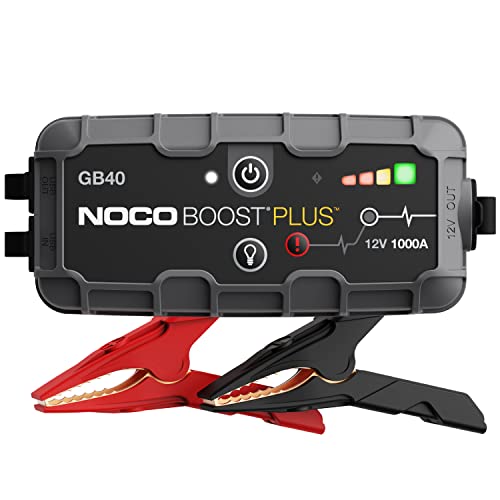
- 1,000A output for up to 6.0L gas and 3.0L diesel
- Spark-proof and reverse-polarity protection
- USB power bank and seven-mode flashlight
Best For: Portable everyday roadside kits
Best Batteryless Value

- No internal battery or pre-charging required
- 800A output with Force Start mode
- Display, alternator check, and extreme-temperature operation
Best For: Low-maintenance 12V gas-engine emergencies
Best for Larger Engines

- Rated for up to 8.0L gas and 4.0L diesel
- No pre-charging with supercapacitor technology
- Compact two-pound design with jumper cables
Best For: Larger trucks, SUVs, and diesel vehicles
Batteryless Convenience – Autowit SuperCap 2
For drivers comparing capacitor car jump starters, the Autowit SuperCap 2 stands out because it does not rely on a conventional battery or regular at-home charging. It draws power from a weak 12V vehicle battery and can prepare for a jump in minutes, with up to 800A of peak output for gasoline engines up to 8.0L and diesel engines up to 4.0L.
Best For: Drivers who want a low-maintenance emergency starter for cars, trucks, tractors, motorcycles, RVs, and other 12V equipment.
Pros:
- Built-in supercapacitors eliminate routine pre-charging at home.
- Supports up to 800A peak output for larger gasoline and diesel engines.
- Safety system helps guard against sparks, reverse polarity, overcurrent, overload, and overvoltage.
- Rated for operation from -40°F to 158°F.
Cons:
- Its 800A output is lower than the output ratings of the other high-powered options here.
- It is designed for 12V systems only.
The SuperCap 2 is a practical choice if you value long-term storage readiness and minimal maintenance. Its compact 2-pound design and broad temperature range make it especially appealing as a vehicle emergency tool.
All-in-One Power – TOPDON JumpSurge 2000Pro
Among capacitor car jump starters and conventional portable boosters, the TOPDON JS2000Pro emphasizes high output and extra roadside functionality. Its 2000A peak current can start 12V vehicles with engines up to 8.0L gas or 6.0L diesel, while Boost Mode is designed to help start a vehicle even when the battery has 0% capacity.
Best For: Drivers who want a powerful jump starter that also serves as a power bank, 12V accessory supply, and emergency flashlight.
Pros:
- 2000A peak output supports up to 8.0L gasoline and 6.0L diesel engines.
- Boost Mode can restore a flat battery sufficiently for starting when properly connected.
- Includes 10 safety protections and UL2734 certification.
- Provides USB-C, USB, and 12V DC outputs plus a 300-lumen light with three modes.
Cons:
- It uses a lithium-ion battery, so it requires charging before use.
- The adapter is not included.
- At 1.52 kg, it is heavier than the smallest portable options.
The JS2000Pro is a strong fit for people who want more than an emergency starter. Its carrying case, multiple outputs, Boost Mode, and flashlight make it a versatile vehicle kit, provided you keep it charged.
Maximum Capacitor Output – KeenPower SC6000 Pro
For shoppers seeking high-output capacitor car jump starters, the KeenPower SC6000 Pro uses six 3000F supercapacitors instead of a traditional battery. It can draw a charge from a weak 12V battery, reach a usable charge in about a minute according to the supplied notes, and deliver up to 6285A for 12V cars, trucks, tractors, motorcycles, RVs, and similar vehicles.
Best For: Owners of multiple 12V vehicles who prioritize maximum stated output, rapid readiness, and extreme-temperature operation.
Pros:
- Supercapacitor design requires no pre-charging at home.
- Up to 6285A maximum current provides substantial starting power.
- Rated to operate from -45°F to 158°F.
- Force-start function is available for completely dead 12V vehicles.
Cons:
- Its 10.5-pound weight makes it less convenient to carry than compact jump starters.
- The supplied notes identify it for 12V vehicles only.
- The maximum current claim is not directly comparable to standard battery jump-starter ratings.
The SC6000 Pro is built around capacitor capacity rather than stored battery charge. Its size and weight favor a garage, work truck, or fleet application, while the rapid charging approach suits users who may leave the tool stored for long periods.
Compact Smart Design – Fanttik Potent T10
The Fanttik Potent T10 is a compact alternative for shoppers comparing capacitor car jump starters with battery-powered models. Its 1800A peak output and 12000mAh lithium-ion battery are rated for 7.0L gas or 5.0L diesel engines, while the cup-sized body, built-in retractable charging cable, and display make it easy to keep in a vehicle.
Best For: Drivers who want a small, easy-to-carry jump starter with phone-charging capability and clear operating information.
Pros:
- Compact design is about 40% smaller than most traditional starters, according to the supplied notes.
- 1800A peak output supports engines up to 7.0L gas or 5.0L diesel.
- Smart display shows voltage, battery level, and operating status.
- Includes a 12000mAh power bank, retractable cable, and multi-mode emergency light.
Cons:
- Its lithium-ion battery requires charging before an emergency.
- It does not use a supercapacitor system, so it may not suit shoppers specifically seeking batteryless operation.
- The supplied notes do not specify an operating temperature range.
The Potent T10 is best viewed as a compact, feature-rich battery jump starter rather than a true capacitor model. Its small footprint, smart clamp, integrated cable, and phone-charging function make it convenient for everyday vehicle carry.
Permanent-Mount Protection – JS300 1000A Super Capacitor Jump Starter
This permanent-mount option is designed for drivers who want a ready-to-use capacitor car jump starter installed directly on the vehicle. It harvests residual power above 5V, then delivers a 1000A starting surge without relying on internal chemical storage cells.
Best For: Vehicle owners seeking a permanently installed, low-maintenance emergency starter with app-based monitoring.
Pros:
- Supercapacitor design avoids leakage, swelling, and fire risks associated with chemical storage cells.
- 1000A peak output supports 12V passenger cars, with operation from -40°C to 80°C.
- Reverse-polarity, overload, and overcurrent protection support safer use.
- The app tracks voltage, current, temperature, and startup history.
Cons:
- Permanent installation is less convenient than carrying a portable jump box.
- It requires residual vehicle power above 5V to harvest energy.
- The supplied notes do not indicate compatibility with vehicles beyond 12V passenger cars.
The JS300 is a specialized choice rather than a conventional portable starter. Its long cycle life, environmental durability, and monitoring features make it appealing for a vehicle that needs dependable installed backup power.
All-in-One Roadside Kit – LOKITHOR JP400 Jump Starter
The LOKITHOR JP400 combines a 2500-peak-amp 12V jump starter with a cordless air compressor, making it a versatile alternative to basic capacitor car jump starters. Its screen, automatic inflation controls, lighting, and USB outputs are aimed at broader roadside emergencies.
Best For: Drivers who want one compact device for jump-starting, tire inflation, device charging, and nighttime visibility.
Pros:
- 2500 peak amps are rated for vehicles up to 8.5L gas or 6.5L diesel.
- 150 PSI compressor includes preset pressure settings and automatic shutoff.
- Ten listed protection types and a smart identifying clamp support safer connections.
- Includes USB charging, a 300-lumen light, and a digital display for voltage and tire pressure.
Cons:
- Unlike batteryless supercapacitor models, the supplied notes describe an 80C high-rate battery rather than a supercapacitor system.
- The compressor and additional functions make it more feature-heavy than a dedicated starter.
- The stated operating range begins at -4°F, narrower than some capacitor-based alternatives.
The JP400 stands out for versatility. Choose it when tire inflation and portable power matter as much as jump-starting, especially if you value automatic controls and a clear digital interface.
Maximum Batteryless Power – GR7 7000A Super Capacitor Jump Starter
The GR7 is a batteryless capacitor car jump starter built around six 3000F supercapacitors. With a claimed 7000A peak current and no pre-charge requirement, it is designed to start a broad range of 12V vehicles after drawing energy from a weak battery.
Best For: Drivers of cars, trucks, RVs, motorcycles, tractors, and snowmobiles who prioritize very high peak output and extreme-temperature capability.
Pros:
- 7000A peak current is rated for most 12V gas and diesel vehicles.
- Batteryless design needs no conventional pre-charging; a low vehicle battery can provide startup energy in a few minutes.
- Rated for more than 100,000 cycles and temperatures from -40°F to 158°F.
- Reverse-polarity, overcurrent, overload, and overvoltage protections are included.
Cons:
- It may take a few minutes to draw enough energy when the vehicle battery is very weak.
- The supplied notes specify 12V compatibility, so it is not presented for higher-voltage systems.
- Its stated warranty is one year.
The GR7 is the strongest fit here for users who want maximum starting output in a portable, batteryless format. Its broad vehicle coverage and temperature range make it especially suitable for demanding road and off-road use.
Best Overall – NOCO Boost GB40
The NOCO Boost GB40 is a compact lithium option for drivers comparing capacitor car jump starters with more traditional battery-powered designs. Its 1,000-amp output is rated for engines up to 6.0L gas and 3.0L diesel, while built-in safety features help simplify emergency starts.
Best For: Passenger-car owners who want a versatile jump starter with power-bank and flashlight functions.
Pros:
- 1,000 peak amps and up to 20 starts per charge for compatible engines.
- Spark-proof and reverse-polarity protection supports easier, safer connections.
- Compact 2.4-pound design with an IP65-rated housing.
- Includes a USB power bank and 100-lumen, seven-mode LED flashlight.
Cons:
- Requires recharging, unlike batteryless supercapacitor models.
- Its rated engine capacity is lower than some options designed for larger engines.
The GB40 is a strong all-around pick when portability and extra emergency features matter. Its one-year warranty and included storage bag add practical value for a glove box or roadside kit.
Best Batteryless Value – Novus Start NS800
The Novus Start NS800 is a batteryless choice for shoppers seeking capacitor car jump starters that do not need routine pre-charging. It draws energy from a weak 12V battery in about one to five minutes and delivers up to 800 amps for 12V gas engines.
Best For: Drivers who want a maintenance-free emergency starter with clear status information and broad temperature capability.
Pros:
- No internal battery or regular charging required.
- 800-amp output with Force Start mode for low or faulty batteries.
- Designed for temperatures from -40°F to 149°F.
- Includes a bright 2.5-inch LED display and alternator check.
Cons:
- Must draw power from the vehicle’s weak battery before starting.
- Designed for 12V gas engines, with no diesel engine rating supplied.
With a three-year manufacturer warranty and a claimed 200,000-plus-use design, the NS800 is appealing for buyers prioritizing low maintenance. Its display and Force Start mode make it particularly practical during uncertain battery conditions.
Best for Larger Engines – Ultra Cap 800A
The Ultra Cap is a batteryless option for buyers comparing capacitor car jump starters for trucks, SUVs, and equipment. Its supercapacitor system needs only a few minutes connected to a weak battery and is rated to start gasoline engines up to 8.0L and diesel engines up to 4.0L.
Best For: Owners of larger gas or diesel vehicles who want a compact, no-precharge emergency starter.
Pros:
- 800-amp peak output for engines up to 8.0L gas and 4.0L diesel.
- Supercapacitor design requires no pre-charging at home.
- Rated for more than 100,000 uses under normal conditions.
- Works across a stated range from -40°C to 70°C and includes four charging options.
Cons:
- Needs a weak battery or another charging source before use.
- Its 800-amp rating is lower than the NOCO’s listed peak output.
- The supplied notes do not list an IP water- or dust-resistance rating.
The Ultra Cap stands out for its broader engine-size rating, especially for diesel owners. Its flat, two-pound form factor and included cables suit vehicle kits, though users should remember that batteryless operation still depends on an available power source.
How We Picked the Best Capacitor Car Jump Starters
We compared these 10 models by starting output, stated engine compatibility, capacitor design, portability, safety features, and intended use. We also considered practical differences between batteryless jump starters and conventional lithium power packs, including charging requirements, storage, maintenance, and how easily each unit fits into an emergency kit.
Because specifications can vary by seller and production run, confirm the current output rating, cable design, operating procedure, and vehicle-size limits before buying. A high amp number alone does not guarantee that a unit is the best match for your car or truck.
Quick Comparison
| Best For | What to Look For |
|---|---|
| Everyday emergency use | Compact size, clear instructions, and broad 12V compatibility |
| Large gasoline or diesel engines | Higher peak-current rating and generous engine-size claims |
| Frequent roadside use | Durable cables, safety protections, and simple recharge options |
| Permanent vehicle installation | Mounting hardware, weather resistance, and dependable access |
| All-in-one emergency kits | Integrated air compressor, lighting, or additional accessories |
Key Buying Factors for Capacitor Car Jump Starters
Vehicle and Engine Compatibility
Check whether the model supports your vehicle’s voltage and engine type. Most options here are designed for 12V systems, but gasoline and diesel capacity can differ substantially. Diesel engines generally demand more starting power, particularly in cold weather.
Output and Real-World Starting Conditions
Peak amperage is useful for comparison, but cable quality, connection strength, battery condition, temperature, and engine size also affect results. Choose a unit with comfortable headroom rather than buying exactly at your vehicle’s stated limit.
Charging and Capacitor Operation
Batteryless units are attractive because they do not need to remain fully charged like lithium packs. However, they typically need a small amount of residual power from the vehicle battery or another source before delivering their boost. Read the startup sequence carefully and verify whether the model supports charging from USB, a second vehicle, or another 12V source.
Safety, Storage, and Convenience
Look for reverse-polarity protection, short-circuit protection, overheat safeguards, insulated clamps, bright status indicators, and a sturdy case. If you keep the unit in a trunk, consider temperature tolerance and whether its controls are easy to use in darkness or rain.
Who Should Buy Which Capacitor Car Jump Starters?
Choose a compact batteryless model if you want a low-maintenance backup for a commuter car and prefer not to monitor an internal battery. A high-output model is better for trucks, SUVs, larger gasoline engines, or diesel vehicles, provided its published limits cover your application. Drivers who want one tool for multiple roadside problems should consider a jump starter with an air compressor or built-in lighting.
A permanently mounted capacitor starter makes sense for work vehicles, off-road rigs, and cars where fast access matters more than portability. If you want a familiar, broadly useful emergency power bank that can also charge electronics, a conventional lithium model such as the NOCO option may be more versatile. Whichever style you choose, keep the clamps clean, follow the connection order, and test the unit before an emergency.