
Finding the right ramps for a small car means balancing low approach height, reliable traction, clearance, and a capacity rating that comfortably exceeds your vehicle’s weight. The best options make routine garage work easier without requiring a full lift.
We’ve compared 10 low-profile car ramps for oil changes, inspections, and maintenance, including plastic and steel-style designs, jack-support ramps, and compact choices for home garages.
Best 10 Car Ramps for Small Cars Picks for 2026
Low-Profile Essential

- 2.5-inch lift for routine service
- 9.05-degree loading angle
- 10,000-pound pair capacity
Best For: Compact oil-change and underbody access
Heavy-Duty Wide Base

- 12,000-pound pair capacity
- 12-inch-wide tread surface
- Rubber feet and non-skid tread
Best For: Mixed-vehicle garages needing versatile ramps
Compact Low-Clearance Pick
Nilight Low Profile Service Ramps

- 2.6-inch lift for low vehicles
- Short, wider design for tool access
- 10,000-pound pair capacity
Best For: Sedans, coupes, and lowered vehicles
Detachable Low-Lift Option
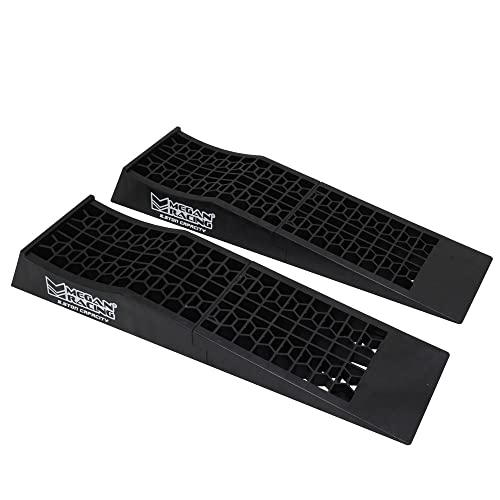
- 2.56-inch lift for low cars
- Detaches into four pieces
- 9-pound plastic composite set
Best For: Low-profile cars and compact storage
Low-Profile Jack Assist Ramps
2.6-Inch Lift Jack Assist Ramps

- 2.6-inch lift for low-chassis cars
- 9.3-inch width and 17° slope
- 13,000-pound GVW capacity
Best For: Low sports cars needing floor-jack clearance
Full-Height Service Ramps
6.7-Inch Low-Profile Service Ramps

- 6.7-inch lift for maintenance access
- 12,000-pound rated capacity
- Anti-slip base and 17° incline
Best For: Garage oil changes and routine vehicle maintenance
Wide Jack Support Ramps
Wide 2.6-Inch Low-Chassis Ramps

- 10-inch width for wider tires
- 2.6-inch lift with 17° slope
- 5.3-pound pair and 20,000-pound GVW
Best For: Low cars and tuners with wider tires
Best Overall
Amazon Basics Low-Profile Car Ramps
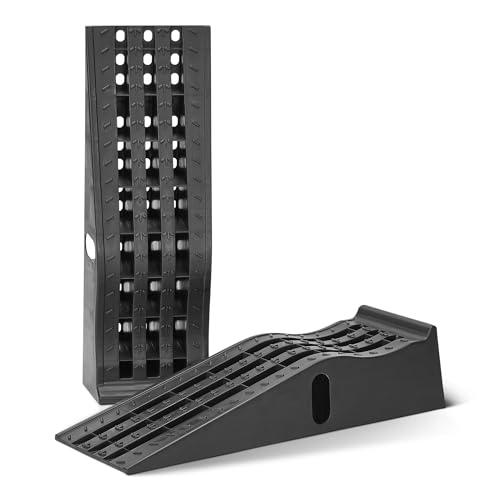
- 3,250-lb capacity per ramp
- Textured traction and rubber base stops
- Longer approach for garage maintenance
Best For: Home-garage oil changes and underbody access
Best for Low-Clearance Access

- 17-degree loading angle
- 2.44-inch lift for jack access
- Wide, short polypropylene design
Best For: Low-chassis cars needing modest extra clearance
Best for Debris Management
Mesh-Channel Low-Profile Ramps

- Mesh channels help shed oil and debris
- 2.44-inch lift with 17-degree approach
- 12,300-lb capacity per pair
Best For: Low-clearance maintenance where drainage matters
Low-Profile Essential – Black Widow Low Car Ramps
These Black Widow ramps are a compact option for anyone shopping for car ramps for small cars and routine underbody service. Their 2.5-inch lift and 9.05-degree loading angle provide modest elevation for oil changes and basic access while leaving room to position a jack underneath.
Best For: Small cars and other vehicles needing a low, compact lift for oil changes or light underbody work.
Pros:
- Gentle 9.05-degree approach angle suits many vehicles.
- Honeycomb plastic construction is designed for strength and reduced moisture buildup.
- Pair supports up to 10,000 pounds GVW, or 5,000 pounds per axle.
- Compact 27.5-inch length is practical for garage storage.
Cons:
- The 2.5-inch lift is limited for jobs requiring substantial clearance.
- Vehicle clearance and gross weight must be confirmed before use.
- The narrow 7.75-inch width may require careful tire alignment.
This is a straightforward choice when you want a gentle approach and a small amount of extra working room. Use a spotter, observe the tire stop, and verify compatibility with your vehicle before driving onto the ramps.
Heavy-Duty Wide Base – Ironton Poly Car Ramp Set
The Ironton set offers a wide, gradual platform for shoppers comparing car ramps for small cars that may also serve larger vehicles. Its 12-inch width, non-skid tread, and rubber feet are designed to help keep the ramps stable during loading, while the 8.5-inch height provides more lift than low-profile models.
Best For: Households that want one durable ramp set for compact cars, sedans, trucks, SUVs, and vans.
Pros:
- 12,000-pound GVW capacity supports a broad range of vehicles.
- Wide 12-inch tread accommodates varied tire widths.
- Non-skid tread and rubber feet help limit movement during use.
- High-impact poly construction resists corrosion and weighs 20.6 pounds per pair.
Cons:
- At 35.5 inches long and 8.5 inches tall, these ramps are larger than compact low-lift options.
- The higher profile may not suit every low-clearance car without checking approach clearance.
- They provide more capacity than many small cars require.
Choose this set if versatility and a broad contact surface matter more than minimal size. The gradual design and high capacity make it a flexible garage tool, but confirm the ramp geometry works with your specific car.
Compact Low-Clearance Pick – Nilight Low Profile Service Ramps
Nilight ramps are designed specifically for low-clearance vehicles, making them a practical contender among car ramps for small cars. The 2.6-inch lift helps provide initial elevation for jack access, while the shorter 17.14-inch format is intended to leave more room for jacks and tools.
Best For: Sedans, coupes, and lowered vehicles needing compact ramps for jack access and routine maintenance.
Pros:
- 2.6-inch lift is intended for low-clearance vehicles.
- Anti-slip texture, silicone pads, and raised wheel stops add stability features.
- Drainage holes help prevent water accumulation.
- Shorter, wider design supports easier tool access and more tire-size compatibility.
Cons:
- The 17-degree loading angle is steeper than some longer ramp designs.
- The lift remains limited for repairs requiring extensive clearance.
- Vehicle weight and bumper clearance should be checked before use.
This set stands out for garages where space and low clearance are the main concerns. Its compact footprint can simplify positioning around a jack, but the steeper angle makes checking approach clearance especially important.
Detachable Low-Lift Option – Megan Racing Drive-On Ramps
The Megan Racing ramps combine a low 2.56-inch lift with a detachable design, giving shoppers a flexible option when comparing car ramps for small cars. Each side is rated for 5,000 pounds, and the two ramps can separate into four pieces for handling or storage.
Best For: Low-profile cars and garages that value a detachable ramp format.
Pros:
- Low-profile drive-on design raises vehicles 2.56 inches.
- Detaches from two ramps into four pieces for easier handling or storage.
- High-strength plastic composite construction keeps the set at 9 pounds.
- Each side is rated for 5,000 pounds of GVW capacity.
Cons:
- The 2.56-inch lift offers limited working clearance.
- No separate anti-slip, rubber-foot, or wheel-stop features are listed in the supplied specifications.
- The 7.8-inch width requires accurate tire placement.
This is a space-conscious choice for low-profile vehicles and light service tasks. Its detachable construction is the main differentiator, while the modest lift means it is best viewed as an access aid rather than a high-clearance service solution.
Low-Profile Jack Assist Ramps – 2.6-Inch Lift Jack Assist Ramps
For shoppers comparing car ramps for small cars, these compact ramps are designed primarily to help a floor jack reach low-chassis vehicles. Their 2.6-inch lift, 17-degree slope, and 9.3-inch width suit many low-profile and sport-tire applications.
Best For: Low sports cars and small vehicles needing extra clearance for a hydraulic floor jack.
Pros:
- Compact 17-inch length leaves room for jacks and maintenance tools.
- Wide 9.3-inch platform and gentle slope help accommodate low-profile tires.
- Lightweight polypropylene construction, rubber pads, and mesh-style handling design support portability.
- Rated for up to 13,000 pounds GVW.
Cons:
- These are jack-assist ramps, not intended for direct under-car crawling without a jack.
- The 2.6-inch lift is limited compared with full service ramps.
This is a practical choice when the main challenge is sliding a floor jack under a low car rather than creating substantial working height. Verify your tire width and follow appropriate vehicle-support procedures before maintenance.
Full-Height Service Ramps – 6.7-Inch Low-Profile Service Ramps
Among car ramps for small cars, this pair is the more conventional service-ramp option, offering a 6.7-inch lift for oil changes, tire work, and other garage maintenance. The 17-degree incline is intended to make access easier for low-clearance vehicles.
Best For: Home-garage maintenance when a small or standard car needs more underbody clearance.
Pros:
- Provides a listed 6.7-inch lift for easier access beneath the vehicle.
- High-strength plastic construction is designed to be portable and durable.
- Anti-slip base helps reduce movement during use.
- Supports up to 12,000 pounds and tires up to 9 inches wide.
Cons:
- At 36.22 inches long and 18.7 pounds per pair, it is less compact than the short jack-assist designs.
- The stated tire-width limit is 9 inches, so owners of wider tires should confirm fit.
This option makes sense for buyers prioritizing usable service height over compact storage. Its capacity is substantial, but compatibility with your tire width and vehicle setup should be checked before purchase.
Wide Jack Support Ramps – Wide 2.6-Inch Low-Chassis Ramps
These lightweight car ramps for small cars combine a low 2.6-inch lift with a 10-inch width, making them useful for low-chassis cars, sports cars, and modified vehicles with wider tires. Their short 17.5-inch profile is intended to leave the jack’s working area open.
Best For: Low cars and tuners that need compact ramps with extra tire width for jack-supported maintenance.
Pros:
- 10-inch width helps accommodate wider modified-car tires.
- Short design provides more room for a jack and other tools.
- Honeycomb traction surface, curved shape, drainage features, and bottom pads support stability.
- Lightweight polypropylene pair weighs 5.3 pounds and is rated to 20,000 pounds GVW.
Cons:
- The lift at the tire position is only 2.6 inches.
- These ramps are intended for jack support and low-clearance access, not a high-lift service platform.
Choose this pair when width and portability matter more than maximum lift. The short footprint is convenient in a garage, while the low height makes it especially relevant for low-clearance vehicles.
Best Overall – Amazon Basics Low-Profile Car Ramps
For shoppers comparing car ramps for small cars, this Amazon Basics pair offers a practical balance of a gradual approach, sturdy construction, and substantial capacity. The 35.51-inch length and textured traction surface are suited to oil changes and underbody access on solid, level garage floors.
Best For: Home-garage maintenance where high capacity and a longer approach are useful.
Pros:
- Rated for 3,250 pounds per ramp, or 6,500 pounds per pair.
- Textured traction surface, anti-slip technology, and rubber base stops support stable positioning.
- Reinforced plastic construction keeps each ramp relatively easy to handle at 9.24 pounds.
- 35.51-inch length and 8.07-inch height provide a gradual, useful approach for many vehicles.
Cons:
- The 8.07-inch height may be more than needed for basic low-clearance access.
- Specified for solid, level surfaces, so setup conditions matter.
Choose these if you want a versatile pair for regular garage work and value a high stated load rating. Their larger profile is less focused on minimum lift than the shorter low-profile alternatives.
Best for Low-Clearance Access – 2.44-Inch Lift Service Ramps
These compact car ramps for small cars are designed around low-clearance service work. Their 17-degree loading angle, 2.44-inch lift, and shorter 17-inch footprint help create room for a hydraulic floor jack without requiring a long ramp.
Best For: Low-chassis vehicles needing modest extra clearance for a jack or oil-change work.
Pros:
- 17-degree loading angle is intended to help avoid front-bumper contact on low-profile cars.
- 2.44-inch lift can help position a hydraulic floor jack under a lowered chassis.
- Wide 9.5-inch design and anti-slip pads support stability.
- Rated for up to 12,300 pounds per pair.
Cons:
- The 2.44-inch lift is limited compared with taller service ramps.
- The shorter design may not provide as much approach length as a full-size ramp.
This pair makes sense when workspace and bumper clearance are priorities. Its compact dimensions are especially practical for low-clearance service tasks where only a small lift is required.
Best for Debris Management – Mesh-Channel Low-Profile Ramps
For car ramps for small cars that may encounter oil, water, or shop debris, this two-pack adds mesh channels to the same compact low-profile format. The 17-inch length, 17-degree loading angle, and 2.44-inch lift target low-chassis maintenance without taking up much working space.
Best For: Low-clearance maintenance in spaces where drainage and debris control are useful.
Pros:
- Mesh-channel design helps prevent accumulated oil, water, and debris.
- 17-degree approach angle is designed for loading low-profile cars without touching the bumper.
- Short, wide 17-by-9.5-inch footprint leaves room for jacks and tools.
- 12,300-pound pair capacity and anti-slip pads provide a substantial stated capacity.
Cons:
- The 2.44-inch lift may be insufficient when greater underbody clearance is needed.
- The compact ramp length offers less gradual approach than longer ramps.
Pick this version when the mesh-channel feature is more valuable than extra lift. It is a focused option for low-clearance oil changes and jack-support work, particularly where keeping the ramp surface clearer is helpful.
How We Picked the Best Car Ramps for Small Cars
We focused on ramps designed for low-clearance vehicles and common home-garage tasks such as oil changes, underbody inspections, tire access, and light maintenance. Each option was assessed for its stated capacity, lift height, ramp profile, traction features, portability, and likely fit for compact cars.
Capacity claims can be listed per ramp, per pair, or as gross vehicle weight, so always confirm how a manufacturer defines its rating. A suitable pair should provide a substantial margin above your car’s curb weight and should be used only on a firm, level surface.
Quick Comparison
| Ramp Type | Best For | Key Advantage | Watch For |
|---|---|---|---|
| Low-profile plastic | Compact cars and occasional maintenance | Lightweight and easy to store | Verify surface stability and capacity |
| Steel or heavy-duty ramps | Frequent garage work | Rigid construction and high load ratings | Greater weight and storage needs |
| Jack-support ramps | Lift-assisted maintenance | Useful where extra clearance is needed | Not always intended for driving onto |
| Detachable or compact ramps | Small garages and limited storage | Convenient handling and storage | Check assembly and locking details |
Key Buying Factors for Car Ramps for Small Cars
Approach Height and Clearance
A low approach angle helps prevent a front bumper, splitter, or undertray from scraping. Compare the ramp’s entry height with your car’s lowest front point, not just its tire diameter. The stated lift height also determines whether you can comfortably reach the service area.
Capacity and Construction
Choose a rating that exceeds the vehicle’s actual weight with a meaningful safety margin. Consider passengers, cargo, and weight distribution, then confirm whether the rating applies to one ramp or the complete pair. Reinforced plastic can be practical for lighter vehicles, while steel is often preferable for frequent or heavier-duty use.
Traction and Stability
Look for textured driving surfaces, anti-slip pads, wheel stops, and a broad base. Ramps should sit flat without rocking. Use wheel chocks on the wheels remaining on the ground, engage the parking brake when appropriate, and follow the manufacturer’s instructions.
Storage and Usability
Plastic ramps are generally easier to carry and store, while metal ramps may offer greater rigidity at the cost of weight. Measure your garage space and check whether the ramps can be nested, detached, or hung vertically.
Who Should Buy Which Car Ramps for Small Cars?
Choose a lightweight low-profile plastic pair if you have a small, mostly stock car and need ramps for occasional oil changes or inspections. A heavier-duty steel-style set makes more sense for regular maintenance, frequent use, or vehicles near the upper end of the stated capacity.
Drivers with especially low front ends should prioritize the gentlest approach profile and confirm measurements before ordering. If you need to combine ramps with a jack, select a model explicitly intended for jack support rather than assuming a drive-on ramp is suitable. For tight garages, compact or detachable designs can simplify storage, but stability and correct assembly should come before convenience.