
The best cassette recorders make it easy to play old tapes, capture voice notes, record from microphones, or preserve analog audio in digital formats. This lineup includes simple portable players, full-size dual decks, and multifunction models with USB, SD, Bluetooth, or radio features.
Use the comparison and buying advice below to match the recorder’s format support, power options, controls, and recording capabilities to the way you plan to use it.
Best 10 Cassette Recorders Picks for 2026
Best Portable AM/FM Cassette Recorder
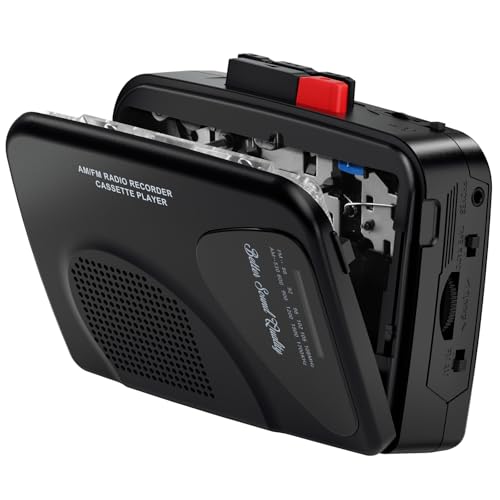
- Plays and records cassettes
- AM/FM radio included
- Battery or DC 5V power
Best For: Portable listening and simple recording
Best Dual-Deck Cassette Recorder

- Two independent cassette decks
- USB digital output
- Mic mixing and pitch control
Best For: Tape duplication and computer archiving
Best Easy-Use Cassette Recorder

- One-touch cassette recording
- Built-in microphone with level control
- Aux input for external sources
Best For: Lectures, notes, and casual recording
Best Simple Cassette Recorder

- One-touch recording
- Built-in and external microphone options
- AUX and headphone connections
Best For: Interviews, classes, and basic tape playback
Most Versatile Solar Cassette Recorder
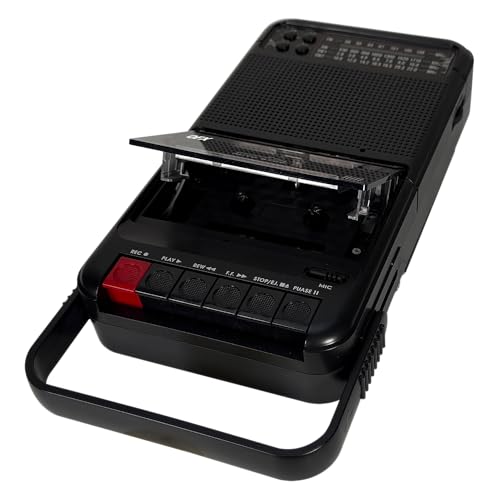
- Records from microphone, Bluetooth, USB, radio, or line input
- Plays cassettes, USB MP3 files, Bluetooth audio, and radio
- Uses solar or AC charging with rechargeable batteries
Best For: Portable, multi-source cassette listening and recording
Best Cassette-to-Digital Converter
Gracioso Multi-Format Recorder

- Transfers cassette audio to USB or FAT32 TF cards
- Records USB or TF-card audio onto cassette
- Includes microphone recording and a headphone jack
Best For: Digitizing, transferring, and recording cassette audio
Best USB-Recording Shoebox Recorder

- Records USB audio to cassette
- Records cassette, Bluetooth, FM, mic, or line-in to USB
- Includes Bluetooth, USB, FM, and line-in/out connections
Best For: Two-way USB and cassette recording
Simple Voice Notes

- Plays tapes and records audio
- Built-in microphone for voice notes
- Battery or AC powered
Best For: Simple home or portable voice recording
Tape-to-WAV Choice
USB Cassette Recorder Converter

- Converts tapes directly to WAV
- Records to cassette or USB
- Built-in speaker and microphones
Best For: Digitizing and managing cassette collections
Hands-Free Recording
Coby CVR42BK Cassette Recorder
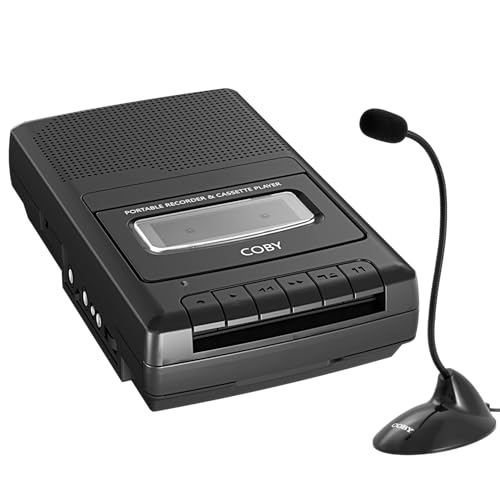
- Detachable standing microphone
- Built-in speaker, aux, and headphones
- Battery or included AC power
Best For: Tabletop lectures, meetings, and voice notes
Best Portable AM/FM Cassette Recorder – Compact Tape Player
For shoppers seeking versatile cassette recorders, this compact Mersoco model combines tape playback and recording with AM/FM radio. It supports 2 AA batteries or DC 5V power and includes 3.5mm headphones for private listening.
Best For: Portable tape playback, radio listening, and recording lectures, broadcasts, or personal audio.
Pros:
- Plays and records cassettes while also tuning AM/FM stations.
- Offers battery or DC 5V operation for flexible use.
- Includes 3.5mm headphones and a USB-to-DC power cable.
Cons:
- AA batteries and the 5V adapter are not included.
- Its plastic, compact design is focused on portability rather than advanced deck features.
This is a practical choice when you want one lightweight device for everyday cassette playback, basic recording, and radio listening.
Best Dual-Deck Cassette Recorder – TEAC W-1200B
TEAC W-1200B Dual Cassette Deck with Recorder with USB Pitch Control Karaoke-Mic-in and Remote
Check Price On AmazonThe TEAC W-1200B is a full-size option for shoppers who need more capable cassette recorders. Its dual decks support recording and playback, while USB output enables CD-quality digital recording to a PC or Mac.
Best For: Cassette duplication, tape-library archiving, karaoke-style mixing, and more involved home recording setups.
Pros:
- Dual independent decks support recording and playback on both sides.
- USB output supports digital recording at up to 48kHz/16-bit PCM.
- Includes mic mixing, pitch control, dubbing, remote control, and tape counters.
Cons:
- Its deck-style design is less portable than compact cassette recorders.
- USB digital recording requires connection to a computer.
Choose this TEAC when recording flexibility and cassette archiving matter more than a small footprint. It is the most feature-rich option in this lineup.
Best Easy-Use Cassette Recorder – JENSEN MCR-100
The JENSEN MCR-100 keeps cassette recording straightforward with one-touch recording, a built-in condenser microphone, and automatic level control. Its retractable handle and shoebox-style design also make it convenient for classrooms, personal notes, and mobile use.
Best For: Students, casual voice recording, lectures, music, and users who want simple controls.
Pros:
- One-touch recording simplifies capturing audio to cassette.
- Built-in microphone and automatic level control help maintain consistent recording levels.
- Auxiliary input supports smartphones, tablets, and other audio sources.
Cons:
- The supplied notes do not specify battery operation, so it may be less flexible away from an outlet.
- Its recording microphone operation is mono.
- The included warranty is limited to 90 days.
This JENSEN is a sensible pick for uncomplicated recording rather than advanced tape production. Its accessible controls and multiple input options suit everyday use.
Best Simple Cassette Recorder – PROSCAN PRC124AMZ
PROSCAN Cassette Player & Recorder with Microphone, Headphone Jack, Aux in, Black
Check Price On AmazonThe PROSCAN PRC124AMZ is a straightforward choice among cassette recorders, pairing one-touch recording with a built-in free-standing microphone and an external microphone jack. It also includes AUX input, headphone output, and AC/DC operation.
Best For: Recording interviews, classes, conferences, and playing older tapes at home or on the go.
Pros:
- One-touch recording is convenient for quick voice captures.
- Automatic level control is designed to support clear, consistent recordings.
- Includes AUX input, headphone jack, fast forward, rewind, and a carry handle.
Cons:
- At 1.74 pounds, it is heavier than compact handheld tape players.
- The supplied notes do not list radio functionality.
- Its corded-electric power description may limit portability depending on the setup.
This PROSCAN model fits buyers who want a basic cassette player-recorder with useful audio inputs and simple recording controls, without the complexity of a dual-deck system.
Most Versatile Solar Cassette Recorder – Portable Shoebox Audio Hub
The QFX RETRO-38BT is one of the more flexible cassette recorders for portable listening and basic recording. It combines cassette playback and recording with Bluetooth, USB MP3 playback, line-in/out connections, and AM/FM/SW radio, plus solar or AC charging.
Best For: Buyers who want a rechargeable cassette recorder with radio, Bluetooth, and several playback options.
Pros:
- Records to cassette from its microphone, Bluetooth, USB, radio, or line input.
- Supports Bluetooth streaming and USB MP3 playback.
- Includes AM, FM, SW1, and SW2 radio bands.
- Solar and AC charging, with two rechargeable batteries pre-installed.
Cons:
- Its shoebox-style design may be bulkier than a simple cassette player.
- The supplied notes do not specify a headphone jack.
The RETRO-38BT stands out when versatility and off-grid portability matter more than a minimalist design. Its built-in speaker and retractable handle make it practical for casual listening around the home or on the go.
Best Cassette-to-Digital Converter – Gracioso Multi-Format Recorder
The Gracioso 669W is designed for shoppers seeking cassette recorders that can also digitize and move audio between formats. It can record cassette content to a USB drive or TF card, record USB or TF-card audio onto cassette, and connect with Audacity for computer conversion.
Best For: Preserving cassette recordings, transferring audio to digital storage, and making recordings with a built-in or external microphone.
Pros:
- Converts cassette content to a USB drive or FAT32 TF card.
- Records USB or TF-card audio onto cassette.
- Supports computer transfer through Audacity and includes a software CD-ROM.
- Offers a built-in microphone, external microphone support, and a 3.5mm headphone jack.
Cons:
- USB and TF-card recording requires FAT32 formatting.
- Uses four C batteries or a Type-C power cable rather than built-in rechargeable batteries.
- The listed digital recording time is 8 hours.
This model is the strongest fit for cassette owners who want conversion features alongside everyday playback. Its flexible recording paths make it more useful for archiving and transferring audio than a basic tape-only unit.
Best USB-Recording Shoebox Recorder – QFX RETRO-39BT
The QFX RETRO-39BT is a practical choice among cassette recorders if USB recording is a priority. It can record USB audio directly to cassette, while also recording cassette, Bluetooth, FM radio, microphone, or line-in audio to USB.
Best For: Users who want straightforward cassette and USB recording in a portable shoebox-style player.
Pros:
- Records digital audio from a USB drive directly onto cassette.
- Records cassette, Bluetooth, FM radio, microphone, or line-in audio to USB.
- Provides Bluetooth playback through a built-in 3.5-inch speaker.
- Includes USB, line-in/out, external microphone support, and a 3.5mm headphone connection.
Cons:
- Four C batteries are required for portable use and are not included.
- Radio support is listed as FM rather than AM/FM/SW.
- The supplied digital recording time is 60 minutes.
The RETRO-39BT offers a clear advantage for two-way USB and cassette recording without giving up Bluetooth or FM playback. Choose it when those recording workflows matter more than solar charging or broader radio-band coverage.
Simple Voice Notes – Coby Cassette Player Recorder
The Coby CVR-22 is a straightforward choice among cassette recorders for playing tapes and capturing voice notes, lectures, or interviews. Its built-in microphone, large controls, and battery-or-AC operation make it practical for home use or portable recording.
Best For: Seniors, students, and anyone seeking an easy cassette player and recorder for basic voice recording.
Pros:
- Plays cassettes and records audio in one compact device.
- Built-in microphone eliminates the need for extra recording equipment.
- Supports four C batteries or AC power for flexible placement.
- Includes a 3.5mm headphone jack and aux input.
Cons:
- Requires four C batteries for portable use.
- The built-in microphone is intended for basic speech recording rather than advanced audio capture.
With simple buttons and clear labels, the CVR-22 focuses on accessible cassette playback and everyday recording. It is a sensible pick if ease of operation matters more than digital conversion features.
Tape-to-WAV Choice – USB Cassette Recorder Converter
This USB cassette recorder stands out among cassette recorders by combining tape playback, recording, and direct WAV conversion. It can save tape content to a USB flash drive without a computer or software installation, while also supporting voice, music, and classroom use.
Best For: Tape owners who want playback, recording, and a convenient way to back up cassettes as WAV files.
Pros:
- Converts cassette content directly to WAV files on a USB flash drive.
- Supports cassette-to-USB and external-audio recording modes.
- Offers a built-in 3W speaker, integrated microphone, and dedicated microphone.
- Includes a retractable handle, 3.5mm headphone jack, and flexible battery or USB-to-DC power.
Cons:
- Four C batteries and the AC adapter are not included.
- Its larger shoebox-style body weighs about 2 pounds.
- USB functionality requires a compatible flash drive.
The T300-N3 is the most feature-oriented option here, especially for listeners preserving cassette collections. Its direct WAV workflow is useful, but buyers should account for the separate power adapter and USB drive.
Hands-Free Recording – Coby CVR42BK Cassette Recorder
The Coby CVR42BK is one of the more approachable cassette recorders for lectures, meetings, and voice notes. Its detachable standing microphone enables hands-free tabletop recording, while the built-in speaker, aux input, and dual power options support flexible listening and use.
Best For: Students, teachers, seniors, and home users who want simple cassette recording with a tabletop microphone.
Pros:
- Includes a detachable standing microphone for hands-free recording.
- Plays and records cassette tapes for lectures, music, or voice notes.
- Provides a built-in speaker, 3.5mm headphone jack, and aux input.
- Uses four C batteries or the included AC adapter.
Cons:
- Four C batteries are required for battery-powered operation.
- The retro shoebox design is less compact than a pocket-size recorder.
- It focuses on cassette recording and playback rather than tape-to-digital conversion.
Large controls and the included standing microphone give the CVR42BK a practical edge for tabletop recording. Choose it over a basic built-in-mic model when hands-free voice capture is especially important.
How We Picked the Best Cassette Recorders
We focused on the features that matter most in everyday tape use: reliable playback, recording controls, microphone support, audio connections, portability, power flexibility, and digital conversion options. The selection covers several use cases, including listening to prerecorded cassettes, making voice recordings, creating mixtapes, transferring audio to USB or SD storage, and managing multiple tapes with a dual-deck system.
Because Cassette Recorders vary widely in design, we considered both compact battery-powered units and larger home components. We also looked for practical details such as built-in speakers, headphone outputs, auxiliary inputs, radio tuners, remote controls, and pitch adjustment.
Quick Comparison
- Best for home cassette duplication: The TEAC dual cassette deck offers two-deck convenience and more advanced control options.
- Best for portable use: Compact Jensen, Coby, Proscan, and QFX models are easier to carry and operate away from a stereo system.
- Best for tape conversion: The Gracioso and USB-focused converter models are designed for transferring cassette audio to digital storage.
- Best for flexible power: Several portable options support batteries, AC power, or USB/DC input.
- Best for recording voice: Models with built-in or standing microphones simplify spoken-word recording.
Key Buying Factors for Cassette Recorders
Playback and Recording Capability
Confirm whether a model only plays tapes or can also record. For recording, check the available source: built-in microphone, external microphone, radio, auxiliary input, or another cassette. One-touch recording is convenient for quick voice notes, while more advanced users may prefer adjustable controls.
Digital Conversion and Connections
If you want to preserve aging tapes, choose a model that supports USB, SD, or U-disk recording and verify the stated file format. An auxiliary input is useful for routing audio from another device, while a headphone jack allows private listening. Bluetooth can add modern playback flexibility, but it does not necessarily mean the unit can record Bluetooth audio.
Portability and Power
Battery operation is useful for travel, classrooms, interviews, and emergency playback. AC or DC operation is better for extended home use. Built-in speakers, a carrying handle, and simple physical controls can matter more than extra features when portability is the priority.
Deck Controls and Audio Quality
Look for features such as pitch control, automatic stop, microphone level adjustment, and separate volume controls. A full-size deck may provide steadier operation and better system integration, while portable shoebox-style units prioritize convenience.
Who Should Buy Which Cassette Recorders?
Choose a basic portable cassette recorder if you mainly need affordable playback and occasional voice recording. Select a model with a microphone and one-touch recording for dictation, interviews, or personal notes. For digitizing a tape collection, prioritize USB or SD conversion and confirm how files are saved before buying. A dual cassette deck is the better fit for home users who need copying, extended listening, or more traditional stereo-deck controls. Finally, choose a radio-equipped or rechargeable model when you want one portable device for tapes, broadcasts, and everyday listening.