
The best loop stations for live performances help musicians build layered arrangements, stay in time, and control a set without relying on a full band. The right model depends on your instrument, foot-control needs, track count, and whether you need built-in rhythms or hands-free operation.
We selected 10 options ranging from simple practice-friendly pedals to powerful multi-track loopers for demanding stage rigs. Use the guide below to compare their strengths and choose a looper that matches the way you perform.
Best 10 Loop Stations for Live Performances Picks for 2026
Flagship Performance Hub
BOSS RC-600 Floor-Based Looper
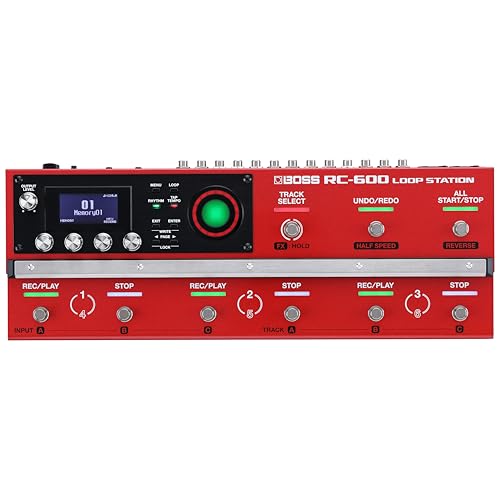
- Six simultaneous stereo phrase tracks
- Extensive Input FX and Track FX selection
- Nine assignable footswitches for flexible control
Best For: Complex, layered live performances
Intuitive Stereo Workhorse
Electro-Harmonix 720 Stereo Looper

- 10 independent loops with 12 minutes of stereo time
- Unlimited overdubbing plus undo and redo
- Stereo I/O with Reverse and half-speed effects
Best For: Stereo looping with multiple song ideas
Rhythm-Driven Song Builder

- Over 280 preset rhythm styles
- Two-track song-based looping operation
- Six hours of stereo recording time
Best For: Solo sets with structured rhythms and song sections
Compact Creative Starter

- 10-minute recording with unlimited overdubs
- 11 play modes with reverse and speed effects
- Aluminum-alloy casing and compact footprint
Best For: Simple, portable loop experimentation
Best Creative Control

- Two stereo phrase tracks
- 64 phrase memories
- USB audio/MIDI and onboard effects
Best For: Club performers, electronic musicians, and beatboxers
Best for Song Sections

- Two collaborating looper tracks
- 100 stereo drum rhythms
- Independent loop footswitches
Best For: Live song section changes, songwriting, and practice
Best for Layered Textures

- Three minutes of looping
- Unlimited overdubs
- Reverse and variable-speed playback
Best For: Layered textures and expressive loop manipulation
Premium Multitrack Choice
Aeros Loop Studio Gold Edition
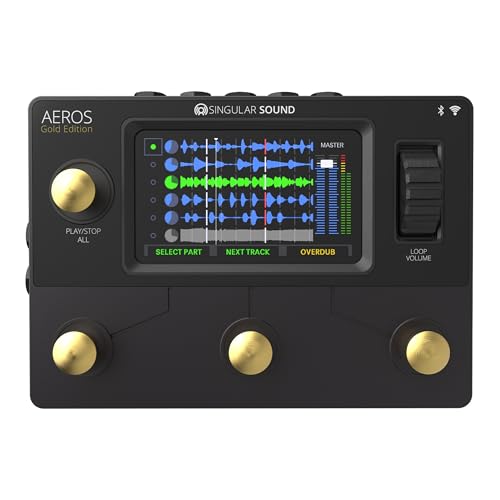
- Six song parts and six stereo tracks per song
- Up to 10 hours per song with extensive storage
- Touchscreen mixing, effects, MIDI, USB, Wi-Fi, and Bluetooth
Best For: Detailed live arrangements and loop-based production
Simple One-Person Setup

- Up to 16 minutes of recording time
- Compact 1.2-pound pedal design
- Simple controls for straightforward looping
Best For: Basic live looping and compact setups
Drum-Backed Mini Looper

- Six minutes of looping with unlimited overdubs
- Eleven drum styles with auto-sync and tap tempo
- Headphone output supports silent practice
Best For: Compact rhythm-backed looping and practice
Flagship Performance Hub – BOSS RC-600 Floor-Based Looper
For musicians comparing loop stations for live performances, the BOSS RC-600 is a feature-rich floor-based option built for complex, layered sets. It combines six simultaneous stereo tracks, extensive effects, and highly customizable foot control in a flagship design.
Best For: Guitarists, singer-songwriters, multi-instrumentalists, and performers who need deep control over layered live loops.
Pros:
- Records and edits up to six simultaneous stereo loops in real time.
- Uses 32-bit AD/DA and 32-bit floating-point processing for class-leading sound quality.
- Includes 49 Input FX and 53 Track FX types, with up to four usable in each section.
- Nine assignable footswitches and three pedal modes offer flexible live control.
Cons:
- Its extensive controls and functions may require more setup than a basic looper.
- The floor-based unit is relatively large and weighs 8.2 pounds.
- It requires corded electric power.
The RC-600 is a strong choice when performance flexibility matters more than compactness. Its six-track architecture and deep effects engine make it particularly suitable for elaborate solo arrangements and live looping setups.
Intuitive Stereo Workhorse – Electro-Harmonix 720 Stereo Looper
The Electro-Harmonix 720 Stereo Looper keeps loop stations for live performances straightforward while providing substantial recording capacity. It offers 10 independent loops, stereo connectivity, and hands-on performance effects in a compact pedal format.
Best For: Performers who want multiple independent loops, stereo operation, and simple foot-accessible loop effects.
Pros:
- Provides 720 seconds, or 12 minutes, of stereo recording across 10 independent loops.
- Supports unlimited overdubbing with undo and redo functions.
- Offers Reverse and half-speed effects at the touch of a button.
- Includes stereo input and output and can record two instruments at once.
Cons:
- The supplied notes describe fewer advanced control options than larger flagship loop stations.
- It uses a 9.6V power supply, so replacement power arrangements should be checked carefully.
- Its control interface is touch-based rather than featuring a larger display.
With high-quality uncompressed audio and a practical 10-loop layout, the 720 is a versatile option for performers who want meaningful storage and stereo flexibility without moving to a larger floor unit.
Rhythm-Driven Song Builder – BOSS RC-10R Rhythm Looper
The BOSS RC-10R combines looping with structured accompaniment, making it a distinctive choice among loop stations for live performances. Its two-track song-based operation, extensive rhythm library, and compact footprint help performers build arrangements with more movement than a basic looper.
Best For: Solo performers who want looped parts supported by preset rhythms, fills, transitions, and song sections.
Pros:
- Includes more than 280 preset rhythm styles with intros, endings, and transition fills.
- Offers 16 drum kits sourced from BOSS and Roland rhythm libraries.
- Provides serial two-track operation for building performances with two independent song parts.
- Stores up to 99 phrase memories and 50 user rhythms.
Cons:
- Its rhythm-focused design may be more specialized than needed for simple overdubbing.
- It has two-track operation rather than the six simultaneous stereo tracks of the RC-600.
- The supplied notes do not list a broad onboard effects selection.
The RC-10R is a compelling fit for performers who want their loops to follow recognizable song sections and dynamic rhythms. Its small footprint and six-hour stereo looper capacity add practical value for live use.
Compact Creative Starter – Rowin Looper Pedal
For musicians seeking affordable, compact loop stations for live performances, the Rowin Looper offers a focused set of creative tools. It provides 10 minutes of recording, unlimited overdubbing, 11 play modes, and reverse or speed-altering effects in a small aluminum-alloy pedal.
Best For: Guitarists and performers who want a compact looper with basic recording, overdubbing, and loop-manipulation features.
Pros:
- Provides up to 10 minutes of recording with unlimited overdubs.
- Includes undo and redo functionality for editing loop performances.
- Offers 11 play modes plus reverse, slow, and fast loop manipulation.
- Uses an aluminum-alloy casing and robust footswitch in a compact design.
Cons:
- The supplied notes do not specify stereo operation or onboard memory for multiple saved loops.
- Its listed dimensions vary between the sizing reminder and item details, so buyers should verify fit before mounting.
- The notes provide limited information about advanced connectivity and control options.
The Rowin is best approached as a straightforward, space-conscious looping pedal rather than a full performance workstation. Its play modes and editing functions give solo musicians useful creative variety while keeping the setup simple.
Best Creative Control – BOSS RC-202
For performers seeking loop stations for live performances, the BOSS RC-202 combines two stereo phrase tracks with hands-on tabletop controls. Its phrase memories, onboard effects, and USB/MIDI connectivity make it suited to progressive electronic sets, beatboxing, and club performance workflows.
Best For: Club performers, electronic musicians, beatboxers, and progressive music creators who want fingertip control without relying solely on footswitches.
Pros:
- Two simultaneous stereo tracks with dedicated controls and status indicators.
- Four input effects and four track effects support DJ- and sampler-style processing.
- Stores 64 phrase memories with track, effect, and playback settings.
- Supports USB audio/MIDI plus optional footswitch, expression pedal, and MIDI control.
Cons:
- Its tabletop design may be less convenient for performers who prefer foot-operated looping.
- Optional external footswitches or expression pedals are not included.
The RC-202 is a feature-rich choice when immediate hand control, effects, and repeatable phrase setups matter more than a simple pedal layout.
Best for Song Sections – Valeton VLP-200
The Valeton VLP-200 is a practical option among loop stations for live performances, combining two full-featured loopers with 100 stereo drum rhythms. Serial and free collaboration modes let performers run loops in parallel or switch between song sections, while independent footswitches control each loop.
Best For: Performers, songwriters, and practice-focused musicians who want loop transitions, built-in rhythms, and foot control.
Pros:
- Two looper collaboration modes support parallel playback and section switching.
- Includes 100 stereo drum rhythms across 16 styles and drum kits.
- Offers manual or automatic recording modes.
- Provides two-channel inputs and outputs, USB Type-C, CTRL, and MIDI IN/OUT.
Cons:
- It has a 1-year manufacturer warranty.
- The compact unit has only two dedicated loop footswitches.
With high-resolution 24-bit/48 kHz sampling, rhythm accompaniment, and MIDI synchronization, the VLP-200 is well suited to structured live arrangements and songwriting sessions.
Best for Layered Textures – Walrus Audio Xero Polylooper
The Walrus Audio Xero Polylooper offers a focused approach to loop stations for live performances, with up to three minutes of looping and near-infinite stacking. Volume, pan, reverse, and variable-speed playback provide useful ways to shape layered parts during a set.
Best For: Performers who want to build evolving layers and manipulate loop playback speed, direction, and stereo placement.
Pros:
- Supports up to three minutes of looping.
- Allows unlimited overdubs and near-infinite loop stacking.
- Includes volume and pan controls for loop shaping.
- Offers reverse playback plus 0.5x, 1x, and 2x speed settings.
Cons:
- The supplied notes do not list drum rhythms, MIDI, or USB connectivity.
- Its feature set is centered on looping and playback manipulation rather than multi-track collaboration.
The Xero Polylooper is a compact, specialized choice for artists who prioritize deep overdubbing and expressive manipulation over rhythm accompaniment or extensive connectivity.
Premium Multitrack Choice – Aeros Loop Studio Gold Edition
For performers who need expansive loop stations for live performances, the Aeros Loop Studio Gold Edition combines six song parts, six stereo tracks per song, unlimited overdubs, and hands-free touchscreen mixing. Its large storage capacity and broad connectivity also make it suitable for songwriting and loop-based production.
Best For: Guitarists, vocalists, and multi-instrumentalists building detailed live arrangements.
Pros:
- Supports up to six song parts and six stereo tracks per song with unlimited overdubs.
- Offers up to 10 hours of recording per song and more than 48 hours of loop storage with a 32GB SD card.
- Provides 32-bit floating point audio, creative effects, touchscreen mixing, MIDI, USB, Wi-Fi, and Bluetooth.
- Includes multiple inputs and outputs plus a two-year manufacturer warranty.
Cons:
- The 32GB SD card is not included.
- At 2.3 pounds and 8.5 by 6.25 by 2.75 inches, it is less compact than a basic looper pedal.
- Requires a 9-volt, 300-milliamp power source.
The Aeros is the most capable option here for layered, song-length performances. Choose it when track depth, storage, and flexible control matter more than a compact pedalboard footprint.
Simple One-Person Setup – Boss RC-2 Loop Station
The Boss RC-2 Loop Station is a straightforward choice for musicians seeking compact loop stations for live performances. With up to 16 minutes of recording time and a simple control layout, it focuses on quick, uncomplicated looping rather than extensive track management.
Best For: Performers who want a compact, easy-to-use one-person looping setup.
Pros:
- Provides up to 16 minutes of recording time.
- Compact design measures 2.88 by 5.13 by 2.38 inches and weighs 1.2 pounds.
- Uses a simple knob control layout and standard 1/4-inch audio hardware interface.
Cons:
- Offers substantially less recording capacity than the other listed options.
- The supplied notes do not specify features such as multiple tracks, built-in effects, or connectivity beyond 1/4-inch audio.
- Requires a 9-volt, 300-milliamp power source.
The RC-2 is best suited to players who value simplicity and portability. It is a practical entry point for basic live looping, but performers planning complex layered arrangements may need a more feature-rich station.
Drum-Backed Mini Looper – NUX NDL-3 HOOK Drum & Loop
The NUX NDL-3 HOOK is a practical mini option among loop stations for live performances, pairing phrase looping with an integrated drum machine. Auto tempo detection, smart tap tempo, unlimited overdubs, and a headphone output make it useful for both live layering and silent practice.
Best For: Players who want compact looping with synchronized drum patterns and headphone practice.
Pros:
- Combines a phrase looper with 11 drum-beat styles.
- Supports up to six minutes of loop time and unlimited overdubs.
- Offers auto tempo detection, smart tap tempo, and independent drum playback.
- Includes a 1/8-inch headphone output for silent practice and USB-C for firmware updates.
Cons:
- Six minutes of loop time is limited compared with larger loop stations.
- USB-C is intended for firmware updates rather than general audio connectivity.
- Requires a 300-milliamp power source.
The HOOK stands out when rhythm support is central to your performance. Its small format and headphone output add flexibility, while the shorter loop time keeps it better suited to concise phrases than full song-length arrangements.
How We Picked the Best Loop Stations for Live Performances
We evaluated these loopers by considering the features that matter most onstage: recording time, overdub behavior, track organization, footswitch layout, audio connections, rhythm tools, portability, and ease of use. We also considered how well each unit fits different performance styles, including solo guitar, vocal looping, electronic music, beat-driven sets, and compact acoustic rigs.
Advanced models earn consideration for flexible routing, multiple independent tracks, MIDI or USB connectivity, and deeper live control. Simpler pedals remain valuable when reliability, quick setup, and a small footprint matter more than extensive editing.
Quick Comparison
| Best For | Look For |
|---|---|
| Solo performers | Multiple tracks, dedicated controls, and reliable rhythm or tempo functions |
| Guitarists wanting simplicity | Easy overdubbing, clear footswitches, and stereo input/output |
| Beat-driven performers | Drum patterns, quantization, and pattern or song memory |
| Electronic and progressive creators | Independent tracks, MIDI, USB audio, and flexible routing |
| Practice and small rigs | Compact size, headphones output, and straightforward recording |
Key Buying Factors for Loop Stations for Live Performances
Track Layout and Loop Control
Decide whether you need one continuous loop, two synchronized tracks, or several independently controlled parts. Multi-track designs are better for changing verse, chorus, and bridge sections during a set, while single-loop pedals are faster to learn and easier to place on a crowded pedalboard.
Footswitches and Hands-Free Operation
Live looping becomes frustrating when essential commands require menu diving. Look for dedicated controls for record, play, stop, undo, redo, track selection, and rhythm changes. External footswitch support can add control without forcing you to bend down between songs.
Timing, Rhythms, and Memory
Built-in drum patterns, quantization, count-ins, and automatic tempo features can help keep performances tight. Preset and phrase memories are especially useful if you perform a repeatable set and want to prepare arrangements before going onstage.
Connectivity and Sound Quality
Check mono or stereo inputs, microphone compatibility, auxiliary inputs, headphones output, and USB or MIDI support. Stereo routing is important for keyboards, effects-heavy guitar, and electronic instruments, while microphone-ready connections matter for vocal looping.
Size, Durability, and Setup
A larger controller may offer better access to live functions, but it also takes more pedalboard or stage space. Prioritize sturdy switches, visible status indicators, dependable power requirements, and a layout you can operate confidently under low stage lighting.
Who Should Buy Which Loop Stations for Live Performances?
Choose a compact single-loop pedal if you are learning looping, adding occasional layers to guitar, or need a simple backup unit. A rhythm-equipped looper is a stronger fit for solo performers who want drum accompaniment and song-like structure without carrying separate gear.
Choose a multi-track model if your set depends on independent parts, planned transitions, or complex arrangements. Vocalists, beatboxers, keyboard players, and electronic musicians should prioritize microphone or stereo connectivity, flexible routing, and hands-free control. For silent practice, look for a dedicated headphones output and simple overdub workflow.
Before buying, map your intended performance: count the layers you need, identify every command you must access by foot, and confirm that the inputs, outputs, power supply, and memory features fit your existing rig. The best looper is the one you can operate reliably while performing, not necessarily the model with the longest feature list.