
The best loop station can turn a portable instrument, microphone, or compact live rig into a complete performance setup. For traveling musicians, the right choice balances looping power with manageable size, simple controls, dependable connections, and easy transport.
We selected 10 loopers across beginner, vocal, guitar, tabletop, and advanced multi-track categories so you can find a practical fit for rehearsals, street performances, small venues, and mobile music-making.
Best 10 Loop Stations for Traveling Musicians Picks for 2026
Compact Pro Choice

- 13 hours of stereo recording and 99 phrase memories
- 57 rhythms, seven drum kits, and reverse looping
- Compact design with MIDI, USB, and battery operation
Best For: Traveling musicians who want advanced features in a small pedal
Vocal Simplicity Pick

- Automatic microphone gain control
- Five-minute loops with unlimited overdubs
- Two-button design with noiseless loop clearing
Best For: Vocalists and acoustic players seeking simple live looping
Flagship Layering Workstation
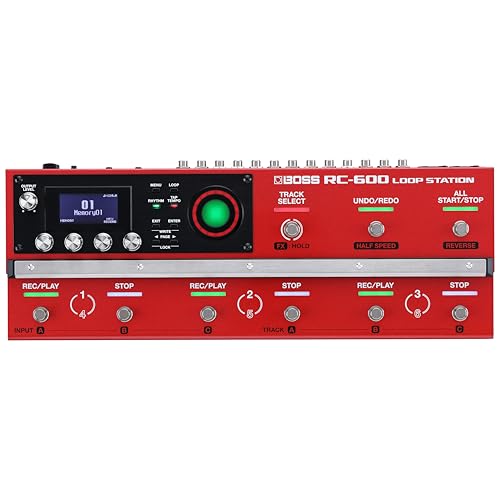
- Six simultaneous stereo tracks for layered performances
- Extensive Input FX and Track FX selections
- Nine assignable footswitches with three pedal modes
Best For: Touring musicians who need advanced multi-track live control
Loop-and-Rhythm Companion

- 140 minutes of stereo loops across 14 save slots
- 121 drum grooves spanning 11 genres
- Stereo I/O, time stretch, tap tempo, and three record modes
Best For: Traveling players who want loops and drum patterns in one pedal
Professional Control

- 13 hours of stereo recording
- 57 rhythms and 99 phrase memories
- USB, MIDI, and external-control support
Best For: Advanced solo performers and touring musicians
Tour-Ready Multitracking
Aeros Loop Studio Gold Edition
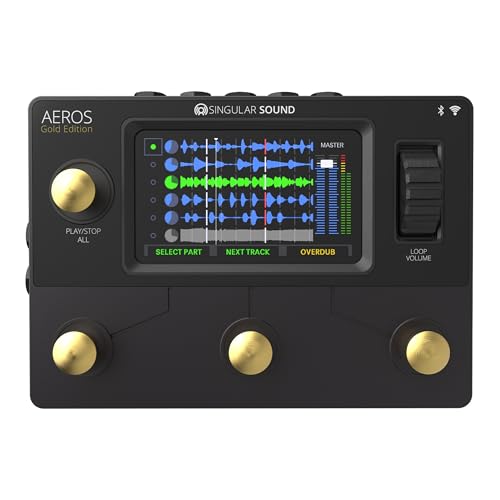
- Six song parts and six stereo tracks
- Up to 10 hours per song
- Touchscreen mixing with wireless connectivity
Best For: Layered live arrangements and loop-based production
Simple Travel Essential

- Straightforward record and overdub controls
- 12 minutes of stereo recording
- Battery or optional AC-adaptor operation
Best For: First-time loopers and compact travel setups
Best Portable Value
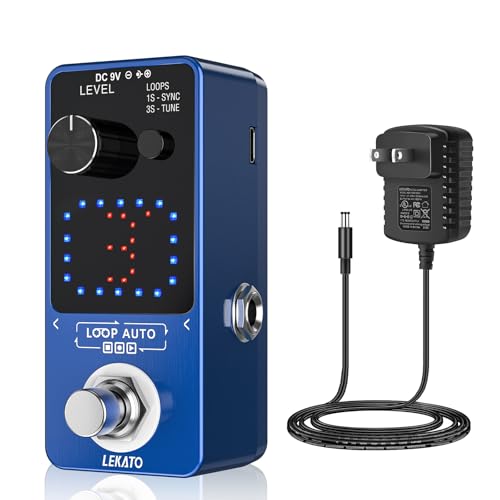
- Three loops and 18 minutes of total recording
- Built-in tuner and synchronous recording
- USB transfer with uncompressed 48 kHz/24-bit audio
Best For: Traveling guitarists wanting a compact, practical looper
Best Compact Tabletop Station

- Two simultaneous stereo phrase tracks
- 64 phrase memories for saved setups
- Multiple input and track effects with USB audio/MIDI
Best For: Hands-on tabletop performers and electronic musicians
Best for Full Tabletop Performances

- Five stereo tracks for complex layers
- Two XLR mic inputs with phantom power
- Includes footswitches, expression pedal, and AC adapter
Best For: Vocalists and multi-part performers building elaborate live sets
Compact Pro Choice – BOSS RC-5
For musicians seeking capable loop stations for traveling musicians, the BOSS RC-5 combines a pedalboard-friendly design with professional recording quality, extensive phrase storage, and flexible power options. Its 13 hours of stereo recording, 99 phrase memories, and built-in rhythms make it well suited to rehearsals, street performances, and compact stage setups.
Best For: Traveling performers who want advanced looping features in a compact pedal.
Pros:
- 32-bit AD/DA conversion and 32-bit floating-point processing support high-quality audio.
- Stores up to 13 hours of stereo recordings and 99 phrase memories.
- Includes 57 rhythms with A/B variations and seven drum kits.
- Offers MIDI, USB, external control, and battery operation.
Cons:
- Single-track looping may be limiting for highly layered arrangements.
- Optional PSA adapter is needed for extended powered sessions.
The RC-5 is a strong balance of portability and creative control. It is especially appealing when travel space is limited but sound quality, rhythm accompaniment, and connectivity still matter.
Vocal Simplicity Pick – TC Helicon DITTO MIC LOOPER
TC Helicon DITTO MIC LOOPER Easy to Use Two-Button Looper Pedal for Vocals and Acoustic Instruments
Check Price On AmazonThe TC Helicon DITTO MIC LOOPER is a straightforward choice among loop stations for traveling musicians who perform with vocals or acoustic instruments. Automatic microphone gain control and a two-button interface keep operation simple, while five-minute loops and unlimited overdubs support quick live arrangements.
Best For: Vocalists and acoustic performers who prioritize easy setup and uncomplicated looping.
Pros:
- Automatic mic gain control simplifies vocal looping.
- Two-button operation is easy to learn and use live.
- Provides five-minute loop length with unlimited overdubbing.
- Dedicated stop function enables noiseless loop clearing.
Cons:
- Requires corded electric power rather than battery operation.
- Offers less storage, rhythm, and connectivity detail than more advanced loopers.
This model makes the most sense for performers who want a focused vocal looper rather than a feature-heavy workstation. Its simple controls can be valuable when portability and fast live operation take priority.
Flagship Layering Workstation – BOSS RC-600
The BOSS RC-600 is a floor-based powerhouse for traveling musicians who need extensive control rather than minimal luggage. It supports six simultaneous stereo tracks, real-time loop editing, and a broad effects selection, making it suitable for complex solo performances and multi-instrumental setups.
Best For: Serious touring performers building detailed, multi-layered live arrangements.
Pros:
- Six simultaneous stereo phrase tracks support complex layered performances.
- Uses 32-bit AD/DA conversion and 32-bit floating-point processing.
- Includes 49 Input FX and 53 Track FX types, with four usable at once in each section.
- Nine assignable footswitches and three pedal modes provide extensive control.
Cons:
- Large 22.88-inch footprint and 8.2-pound weight are less convenient for light travel.
- Requires corded electric power and draws 1100 milliamps.
The RC-600 delivers the deepest performance control in this group, but its flagship size and power requirements make it better for planned travel than ultra-portable setups. Choose it when layering capability outweighs compactness.
Loop-and-Rhythm Companion – MOOER Groove Looper X2
The MOOER Groove Looper X2 combines stereo looping and drum accompaniment in one pedal, making it a practical option among loop stations for traveling musicians who want more than basic overdubbing. It offers 14 save slots, up to 140 minutes of total stereo recording, and 121 drum grooves across 11 genres.
Best For: Guitarists and other performers who want portable loops with varied built-in rhythm accompaniment.
Pros:
- Provides 14 save slots and up to 140 minutes of stereo loop recording.
- Includes 121 drum grooves across 11 musical genres and 11 variations per genre.
- Supports count-in, automatic, and normal recording modes.
- Offers time stretching, tap tempo, separate loop and drum outputs, and audio-file import.
Cons:
- Requires a 9V DC adapter rather than battery power.
- Its 4.1 kHz/24-bit stereo recording specification is less detailed than the BOSS RC-5 and RC-600 processing specifications.
The Groove Looper X2 is a compelling middle ground for travelers who want rhythm support without moving to a large floor workstation. Its storage, genre variety, and synchronization features add useful flexibility for practice and performance.
Professional Control – BOSS RC-500
For traveling musicians who need substantial looping control, the BOSS RC-500 combines dual-track operation, stereo recording, onboard rhythms, and deep external-control options in a performance-focused pedal.
Best For: Performers who want advanced live looping, rhythm backing, and extensive phrase storage.
Pros:
- Offers 13 hours of stereo recording and storage for 99 phrase memories.
- Includes 57 preset rhythms, 16 drum kits, and A/B variations.
- Supports USB WAV file management, MIDI, footswitches, and expression pedals.
- Provides a multi-color LCD and creative Loop FX such as reverse, repeat, and scatter.
Cons:
- At 3.4 pounds, it is less compact than a basic travel looper.
- Some advanced control features may be more than casual users need.
- MIDI connectivity uses mini TRS jacks, with the adaptor cable available separately.
The RC-500 is a strong choice when touring flexibility and performance depth matter more than minimal size. Its rhythms, memory, and connectivity make it particularly capable for complex solo sets.
Tour-Ready Multitracking – Aeros Loop Studio Gold Edition
The Aeros Loop Studio Gold Edition is built for traveling musicians who want multitrack songwriting and live looping in one unit, with six song parts, six stereo tracks per song, and hands-free mixing through its touchscreen.
Best For: Guitarists, vocalists, and multi-instrumentalists building detailed live arrangements.
Pros:
- Supports up to six song parts and six stereo tracks per song with unlimited overdubs.
- Records up to 10 hours per song and stores more than 48 hours with a 32GB SD card.
- Offers 32-bit floating-point audio plus Reverse, Fade In/Out, and Loop Decay effects.
- Provides touchscreen mixing and USB, Wi-Fi, Bluetooth, and MIDI connectivity.
Cons:
- The 32GB SD card is not included.
- Its 8.5-by-6.25-inch footprint may require more travel space than a compact pedal.
- Its broad feature set may take more time to learn than a simple looper.
With extensive track capacity and flexible connectivity, the Aeros is suited to musicians who treat looping as a complete performance or production workflow. It is especially appealing for layered arrangements rather than quick one-loop accompaniment.
Simple Travel Essential – BOSS RC-1
For musicians seeking straightforward loop stations for traveling musicians, the BOSS RC-1 delivers record, playback, overdub, undo, and redo functions in a familiar compact stompbox design.
Best For: Guitar, bass, and keyboard players who want an easy entry point for live looping.
Pros:
- Simple controls make recording, overdubbing, and loop management approachable.
- Provides 12 minutes of stereo recording time and retains the recorded phrase after shutdown.
- Includes a 24-segment LED indicator showing Rec, Overdub, and Play status.
- Runs on an included 9-volt battery for approximately 4.5 hours or an optional PSA adaptor.
Cons:
- It lacks the onboard rhythms, Loop FX, and deep connectivity found on more advanced models.
- Battery life is approximately 4.5 hours, so extended travel may require spares or an adaptor.
- Its 12-minute recording capacity is limited for longer, layered arrangements.
The RC-1 is a practical pick for travelers who prioritize portability and a short learning curve. Its focused feature set covers essential looping without adding the complexity of a larger performance workstation.
Best Portable Value – LEKATO Guitar Looper Pedal
For musicians seeking loop stations for traveling musicians, the LEKATO Guitar Looper is a compact, metal-bodied option with 18 minutes of total recording time. Its built-in tuner, USB file transfer, and included power adapter make it practical for portable guitar setups.
Best For: Traveling guitarists who want an affordable pedal with multiple loops, tuner functionality, and easy computer file management.
Pros:
- Three loops with up to 18 minutes of total recording time
- Synchronous recording helps add parts during playback
- 48 kHz/24-bit uncompressed audio with Analog-Dry-Through
- USB import/export and automatic file saving
Cons:
- Designed primarily as a guitar pedal rather than a tabletop performance station
- Requires a 9V, 0.6A power supply
The LEKATO stands out when portability, straightforward controls, and useful recording capacity matter more than extensive performance effects. It is a sensible travel companion for guitar-focused looping.
Best Compact Tabletop Station – BOSS RC-202 Loop Station
The BOSS RC-202 is a compact tabletop choice for loop stations for traveling musicians who perform with hands, electronic instruments, or beatboxing. It provides two simultaneous stereo tracks, dedicated controls, and 64 phrase memories in a 3.8-pound unit.
Best For: Club performers and progressive music creators who need hands-on looping, stereo tracks, and stored setups.
Pros:
- Two simultaneous stereo phrase tracks with dedicated controls
- 64 phrase memories across eight banks
- Four input effects and four track effects can be used simultaneously
- USB audio/MIDI interface with optional external control support
Cons:
- External footswitches or an expression pedal are optional rather than included
- At 3.8 pounds, it is less pedalboard-friendly than a small guitar looper
With its memory capacity, stereo workflow, and DJ- and sampler-style effects, the RC-202 is more capable than a basic pedal while remaining relatively compact for tabletop travel rigs.
Best for Full Tabletop Performances – BOSS RC-505 Mk2 Loop Station
For loop stations for traveling musicians who need a larger performance setup, the BOSS RC-505 Mk2 offers five stereo tracks and dedicated tabletop looping controls. Its microphone inputs, phantom power, line inputs, rhythm generator, and USB connectivity support more elaborate live arrangements.
Best For: Vocalists, beatboxers, and multi-part performers who want several stereo tracks and microphone-friendly connectivity.
Pros:
- Five stereo tracks for layered performances
- Two XLR microphone inputs with phantom power
- Two stereo line-input pairs for broader source compatibility
- Includes a footswitch, dual footswitch, expression pedal, and AC adapter
Cons:
- Larger tabletop format is less convenient for minimalist travel setups
- Uses electric power and is better suited to organized performance rigs than casual portability
The RC-505 Mk2 is the most expansive option here for building layered live sets. Choose it when track count and input flexibility outweigh the space and setup demands of a larger tabletop unit.
How We Picked the Best Loop Stations for Traveling Musicians
We evaluated these loopers for the demands of mobile performance: portability, control layout, recording flexibility, audio quality, connectivity, durability, and setup speed. We also considered how easily each model fits different workflows, including guitar-and-vocal performances, beat-based sets, solo instrumental shows, and more complex live arrangements.
Because traveling musicians have different space and power limits, the selection spans compact single-track pedals, stereo loopers, vocal-focused designs, tabletop controllers, and full-featured multi-track systems. Features such as USB, MIDI, onboard effects, rhythm patterns, phrase memory, and synchronization were weighed according to their practical value rather than treated as essentials for every player.
Quick Comparison
| Best For | What to Look For |
|---|---|
| Beginners and minimal rigs | Simple footswitches, clear status indicators, and fast overdubbing |
| Vocalists and acoustic performers | Microphone compatibility, vocal-friendly controls, and clean input handling |
| Beat-based performers | Rhythm patterns, drum-machine features, and pattern synchronization |
| Advanced live sets | Multiple tracks, phrase memories, MIDI, USB, and flexible routing |
| Traveling players | Compact construction, reliable power options, and a manageable control layout |
Key Buying Factors for Loop Stations for Traveling Musicians
Size, Weight, and Power
Measure the looper against your pedalboard, case, and travel setup. A feature-rich unit may replace several devices, but a compact pedal is often easier to carry and faster to deploy. Check its power requirements and whether your existing supply can support it.
Tracks, Memory, and Loop Length
Basic loopers work well for layering a few parts, while multi-track models provide greater control over verses, choruses, transitions, and independent sections. Confirm the available phrase memory and maximum recording time if you plan to prepare material before a show.
Inputs, Outputs, and Synchronization
Choose inputs that match your instruments and microphone needs. Stereo outputs are valuable for keyboards, stereo effects, and broader backing textures. USB and MIDI can simplify recording, syncing drum machines, or integrating a compact mobile setup.
Foot Control and Reliability
Footswitch spacing and command design matter when you are performing without looking down. Prioritize dependable switches, readable indicators, and controls that remain usable in dim venues. A looper that is slightly less advanced but easier to operate may be the better travel companion.
Who Should Buy Which Loop Stations for Traveling Musicians?
Choose a simple compact pedal if you are new to looping or mainly layer guitar, bass, or another instrument. Vocalists and acoustic players should prioritize microphone support and intuitive hands-free operation. Musicians who build performances around beats should look for rhythm tools and synchronization.
For programmed sets, multiple instruments, or independent song sections, a multi-track floor unit offers more control. Tabletop loopers are a strong match for beatboxers, electronic performers, and creators who prefer fingertip access. Finally, select a stereo or MIDI-capable model if it needs to work as the central hub of a larger traveling rig.