
The best portable DACs with balanced output can give headphones and IEMs cleaner conversion, stronger amplification, and more connection flexibility than a phone or laptop alone.
Our 2026 roundup covers compact USB-C dongles, higher-powered portable amplifiers, and feature-rich models with both 3.5mm and 4.4mm outputs. Use the guide below to narrow your choice by power, device compatibility, controls, and everyday portability.
Best 10 Portable Dacs with Balanced Output Picks for 2026
Best Value Pick

- Dual CS43131 DACs with PCM 384kHz and DSD256 support
- 3.5mm and 4.4mm balanced outputs
- 60-step volume control in a compact metal body
Best For: Flexible everyday listening from phones, tablets, or computers
Best for Compact Power

- 241mW balanced 4.4mm output
- Dual ESS Sabre DACs and PCM 384kHz/DSD256 support
- App-customizable filters in a lightweight design
Best For: Portable listening with extra balanced-output power
Highest Power Output

- Up to 550mW balanced power in desktop mode
- Dual CS43131 DACs and dual SGM8262 op-amps
- 3.5mm and 4.4mm outputs with app control
Best For: Demanding headphones and planar headphones on the go
Best Tube-Sound Option
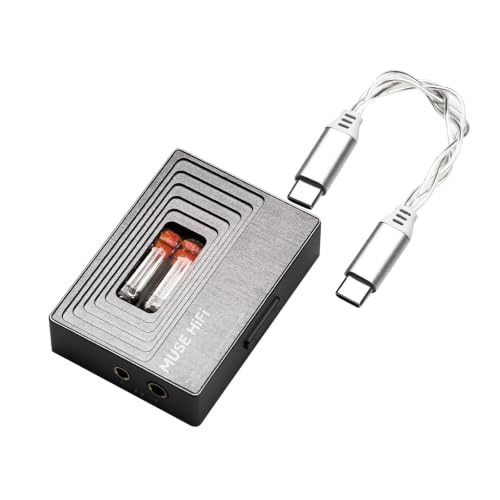
- JAN6418 tube for warmer harmonics and smoother mids
- 480mW 4.4mm balanced output
- PCM 384kHz and DSD256 support with dual outputs
Best For: Warm, engaging listening with powerful balanced drive
Gold Pocket Power

- 4.4mm balanced and 3.5mm outputs
- Up to 400 mW amplifier power
- 6–8-hour battery and high-resolution support
Best For: Portable listeners driving IEMs or over-ear headphones
Dual-Chip Detail

- Dual CS43131 DAC architecture
- 4.4mm output reaches 320 mW at 32 ohms
- 25g body with controls and Android EQ
Best For: USB-C users wanting balanced power and portable controls
Adjustable Gain Flexibility

- 3.5mm and 4.4mm outputs
- Three hardware gain levels
- DSD256 and PCM 32-bit/384kHz support
Best For: Travel listeners switching between IEMs and headphones
Best for Custom Tuning

- 4.4mm balanced and 3.5mm outputs
- App-based parametric EQ controls
- Dual CS43198 DAC chips
Best For: Listeners who want adjustable sound and flexible headphone connectivity
Best for High Output
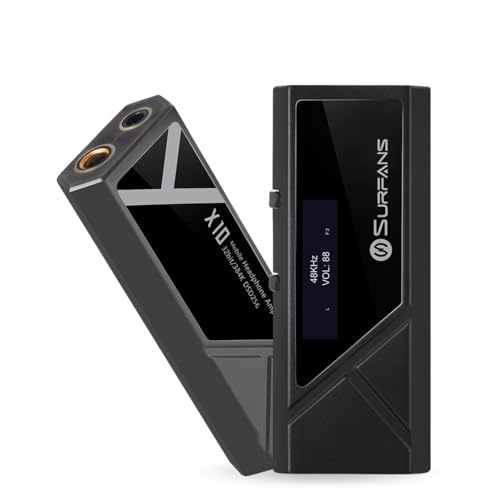
- Up to 522mW output
- 3.5mm and 4.4mm ports
- USB-C support for phones and computers
Best For: Listeners seeking powerful portable amplification in a compact dongle
Best for Plug-and-Play Use

- Balanced 4.4mm output up to 241mW
- Dual ESS Sabre DAC design
- PCM 384kHz and DSD256 support
Best For: USB-C users wanting a lightweight, easy-to-use balanced dongle
Best Value Pick – Fosi Audio DS2
The Fosi Audio DS2 is a practical choice for listeners seeking portable DACs with balanced output, combining 3.5mm single-ended and 4.4mm balanced connections in a compact USB-C dongle. Its dual CS43131 DACs, high-resolution support, and independent volume buttons make it well suited to phones, tablets, and computers.
Best For: Everyday high-resolution listening with flexible output and broad device compatibility.
Pros:
- Supports PCM up to 32-bit/384kHz and DSD256.
- Offers both 3.5mm and 4.4mm balanced outputs.
- Includes 60-step independent volume control with memory.
- Compact CNC-machined metal construction and a 24-month warranty.
Cons:
- Requires a compatible USB-C source or adapter.
- Its 170mW-per-channel output may be less powerful than some larger dongles.
The DS2 stands out as a balanced-output option for buyers who want strong specifications and convenient controls without moving to a bulkier portable amplifier.
Best for Compact Power – iFi GO Link 2 Max
The iFi GO Link 2 Max is one of the more power-focused portable DACs with balanced output, delivering up to 241mW through its 4.4mm connection. It also adds app-based filter customization, improved dynamics, and a lightweight design for USB-C devices.
Best For: Listeners who want a lightweight dongle with a powerful balanced output and tuning options.
Pros:
- Provides up to 241mW from the balanced 4.4mm output.
- Uses dual ESS Sabre DAC chips in a balanced circuit.
- Supports PCM 384kHz and DSD256 playback.
- Nexis app enables customizable filtering.
Cons:
- Designed for USB-C devices, so older sources may need an adapter.
- Plastic construction may feel less substantial than metal-bodied alternatives.
With reduced distortion, S-Balanced output, and a 20%-lighter design than its predecessor, the GO Link 2 Max is a strong fit when portability and balanced-output power are priorities.
Highest Power Output – FiiO KA13
The FiiO KA13 is a standout among portable DACs with balanced output for users who need substantial drive from a small USB-C adapter. Its desktop mode raises balanced output power to 550mW, while dual CS43131 DACs and dual op-amps support detailed playback.
Best For: Driving demanding headphones and planars while keeping a compact dongle format.
Pros:
- Desktop mode delivers up to 550mW through the balanced output.
- Includes both 3.5mm and 4.4mm headphone outputs.
- Supports PCM up to 32-bit/384kHz and DSD256.
- FiiO Control app supports RGB, filters, and S/PDIF settings.
Cons:
- Maximum power requires desktop mode.
- Its feature set may be more than casual listeners need.
The KA13 is the performance-oriented pick in this group, especially for buyers who want unusually high balanced power without carrying a traditional desktop amplifier.
Best Tube-Sound Option – MUSEHiFi M3 Ultra
The MUSEHiFi M3 Ultra takes a different approach to portable DACs with balanced output by pairing a JAN6418 vacuum tube with an ES9028Q2M DAC. It delivers 480mW through its 4.4mm balanced output and supports high-resolution files from phones, tablets, and computers.
Best For: Listeners who prefer a warmer, more organic presentation with ample balanced-output power.
Pros:
- JAN6418 tube is designed for richer harmonics and smoother mids.
- Offers 480mW through the 4.4mm balanced output.
- Supports PCM 32-bit/384kHz and DSD256.
- Includes both 3.5mm and 4.4mm outputs with a stated THD+N as low as 0.0003% via 4.4mm.
Cons:
- Tube-based design may appeal less to listeners seeking a strictly neutral presentation.
- Vacuum-tube hardware can be more sensitive to handling than a conventional solid-state dongle.
The M3 Ultra is the most distinctive choice here, combining high balanced power with tube coloration and a triple noise-reduction system intended to control microphonics.
Gold Pocket Power – iFi Hip-dac2 Gold Edition
The iFi Hip-dac2 Gold Edition is a strong choice among portable dacs with balanced output if you want a pocket-friendly amplifier with both 3.5mm and 4.4mm headphone connections. Its USB input works with smartphones, tablets, PCs, and Macs, while the rechargeable battery provides approximately 6–8 hours of use.
Best For: Listeners who want a stylish portable DAC amp with 4.4mm balanced output and enough power for IEMs or over-ear headphones.
Pros:
- Provides a 4.4mm balanced output alongside 3.5mm S-Bal connectivity.
- Offers up to 400 mW of amplifier power for a range of headphones.
- Supports high-resolution formats, including Tidal MQA, through native digital-to-analog conversion.
- Slim aluminum design and 6–8-hour battery life suit portable listening.
Cons:
- Uses USB input only, so wireless connectivity is not included.
- Battery life varies with usage and connected equipment.
The Hip-dac2 Gold Edition stands out for combining a powerful amplifier, balanced output, and compact design. It is especially appealing if you want a portable setup that can move between sensitive in-ear monitors and larger headphones.
Dual-Chip Detail – TRN Black Pearl USB-C DAC Amp
The TRN Black Pearl is a compact option among portable dacs with balanced output, combining dual CS43131 DAC chips with USB-C compatibility. It supports high-resolution PCM and DSD playback, and its 4.4mm output delivers more power than the 3.5mm connection when used with compatible headphones.
Best For: Android, USB-C mobile, and computer users who want a lightweight DAC amp with app-based EQ, physical controls, and dual headphone outputs.
Pros:
- Includes both 3.5mm single-ended and 4.4mm balanced outputs.
- Delivers up to 320 mW through the 4.4mm output at 32 ohms.
- Supports PCM up to 32-bit/384kHz and DSD256.
- Compact 25g metal body includes volume, playback, and track controls.
Cons:
- Only one headphone output should be used at a time.
- EQ adjustment through the WALK PLAY app is specified for compatible Android devices.
- It is wired and does not offer water resistance.
With its dual DAC design, 4.4mm balanced output, and built-in controls, the Black Pearl is well suited to everyday mobile listening. Its lightweight construction makes it easy to carry, while the higher balanced-output power adds flexibility for compatible headphones.
Adjustable Gain Flexibility – TempoTec Sonata BHD
The TempoTec Sonata BHD is a practical pick among portable dacs with balanced output, offering both 3.5mm single-ended and 4.4mm balanced headphone jacks in a plug-and-play USB DAC amp. Its three gain levels and dedicated volume buttons make it easier to match the device to different IEMs and headphones.
Best For: Listeners who want a small USB DAC amp with hardware gain adjustment, independent volume control, and broad iOS, Android, Mac, and Windows compatibility.
Pros:
- Offers both 3.5mm and 4.4mm headphone outputs.
- Three-position low, medium, and high gain switch adapts to different headphones.
- Supports native DSD256 and PCM up to 32-bit/384kHz.
- Physical volume buttons provide independent hardware adjustment.
Cons:
- USB-powered operation means it does not include a separate battery.
- Windows compatibility is specified for Windows 10 version 1703 and later.
- Balanced-output benefits require headphones or IEMs with a compatible 4.4mm cable.
The Sonata BHD focuses on control and compatibility rather than extra features. Its adjustable gain is useful when switching between sensitive IEMs and more demanding headphones, and its compact 18g aluminum build is convenient for travel or desk use.
Best for Custom Tuning – MOONDROP Dawn PRO 2
The MOONDROP Dawn PRO 2 is a versatile choice among portable DACs with balanced output, offering both 3.5mm and 4.4mm connections. Its dual CS43198 DACs, adjustable DSP, and 4Vrms output suit listeners who want detailed control and solid performance from a phone or other compatible source.
Best For: Listeners who want customizable EQ and a balanced output for most headphones.
Pros:
- 4.4mm balanced and 3.5mm outputs provide flexible headphone compatibility.
- MOONDROP app supports detailed EQ adjustments, including frequency, gain, and Q value.
- Dual CS43198 DAC chips and three independent LDO power chips support high-resolution playback.
- Aluminum housing includes vents designed to improve heat dissipation.
Cons:
- The advanced DSP controls may be more than casual listeners need.
- Its maximum output is positioned for balanced sound and broad compatibility rather than extreme power.
The Dawn PRO 2 stands out for its combination of balanced connectivity, app-based tuning, and efficient circuit design. It is particularly appealing if you want to shape the sound rather than use a fixed DAC profile.
Best for High Output – Surfans X10
The Surfans X10 is a compact option for shoppers comparing portable DACs with balanced output. It combines USB-C connectivity with 3.5mm single-ended and 4.4mm balanced ports, while its stated output of up to 522mW provides useful headroom for compatible IEMs and headphones.
Best For: Users who prioritize strong portable output and broad USB-C device compatibility.
Pros:
- Offers both 3.5mm and 4.4mm balanced headphone outputs.
- Up to 522mW of output provides substantial volume headroom.
- ES9028Q2M DAC and ES9603 amplifier chips support Hi-Res audio playback.
- Works with compatible USB-C iPhones, Android devices, PCs, and Macs.
Cons:
- It uses a wired USB-C connection rather than wireless connectivity.
- Balanced output benefits require compatible 4.4mm headphones or cables.
With its high stated power rating and straightforward physical controls, the X10 is a practical travel and desktop dongle. It makes the most sense for listeners who need extra output capability without moving to a larger amplifier.
Best for Plug-and-Play Use – iFi Audio Go Link Max
The iFi Audio Go Link Max is a simple, cable-style choice among portable DACs with balanced output. Its dual ESS Sabre DAC design provides a balanced 4.4mm connection with up to 241mW of power, while USB-C plug-and-play operation keeps setup uncomplicated.
Best For: Listeners who want a lightweight USB-C dongle with high-resolution playback and balanced output.
Pros:
- Balanced 4.4mm output delivers up to 241mW of power.
- Supports PCM up to 32-bit/384kHz and native DSD256 playback.
- Dual ESS Sabre DAC chips form a balanced circuit.
- Flexible cable design helps reduce stress on USB-C sockets.
Cons:
- It provides a 4.4mm output rather than a listed 3.5mm headphone output.
- Its compatibility is centered on devices with USB-C ports.
The Go Link Max favors convenience and portability over extensive controls. Choose it if you have a USB-C source and compatible balanced headphones, and want a lightweight solution with high-resolution format support.
How We Picked the Best Portable Dacs with Balanced Output
We focused on portable USB DAC/amp models that include a true 4.4mm balanced output, rather than only a 3.5mm headphone jack. We also considered the needs of phone, tablet, computer, and dedicated music-player users, comparing output power, supported formats, gain controls, physical controls, size, and connection convenience.
Specification claims can vary by output, gain setting, and load, so maximum power figures should be treated as a useful reference rather than a guarantee of identical performance with every headphone. Practical factors such as battery impact, cable requirements, and operating-system compatibility matter just as much.
Quick Comparison
| Best For | What to Prioritize | Typical Choice |
|---|---|---|
| Small everyday setup | Low weight, USB-C convenience, efficient output | Compact dongle DAC |
| Power-hungry headphones | Higher balanced output and gain adjustment | More powerful portable amp/DAC |
| Android and iPhone users | Correct cable, plug-and-play support, low power draw | USB-C DAC with suitable adapter |
| Multiple headphones | Both 3.5mm and 4.4mm outputs, volume controls | Dual-output model |
Key Buying Factors for Portable Dacs with Balanced Output
Balanced Output and Power
A 4.4mm balanced connection can provide more power and channel separation, but it does not automatically make every headphone sound better. Your headphones or IEMs must have a compatible balanced cable, and balanced wiring is not interchangeable with a standard 3.5mm connection. Check power ratings at your intended impedance and whether the device offers low or high gain.
Compatibility and Connection
Confirm the DAC works with your source before buying. USB-C models are convenient for newer Android phones, tablets, PCs, and Macs, while iPhone users may need the appropriate Lightning or USB-C adapter. Some phones may require OTG support or a separate USB adapter. A removable cable is often easier to replace than a fixed lead.
Controls, Battery, and Portability
Volume buttons, gain switches, and playback controls can make a dongle more practical, especially when your phone’s volume steps are limited. A bus-powered DAC draws power from the connected device; higher-output models may use more battery. Consider body size, cable strain, heat, and whether the unit can fit comfortably beside a phone in a pocket.
Format Support and Noise
High-resolution PCM and DSD support are useful for matching a music library, but they should not outweigh clean output and reliable software behavior. Sensitive IEMs benefit from a low noise floor and low gain. Tube-equipped or enhanced-sound models may offer a particular character, while neutral DAC/amps are generally easier to pair across many headphones.
Who Should Buy Which Portable Dacs with Balanced Output?
Choose a compact dongle if you mainly use efficient IEMs and want a lightweight upgrade for a phone or laptop. Select a higher-powered balanced model if you regularly drive demanding over-ear headphones or want more headroom. A dual-output DAC is the safest choice for households or collections that include both standard 3.5mm and balanced 4.4mm cables. If you value tonal character over maximum simplicity, a model with tube or sound-enhancement features may be appealing; otherwise, prioritize clean output, dependable compatibility, and convenient controls.