
The best portable voice recorders make it easier to capture lectures, meetings, interviews, calls, and spontaneous ideas without relying on a phone. This roundup compares compact digital recorders and newer AI models with transcription and summarization features.
Consider recording quality, storage, battery life, controls, and privacy before choosing. The right device depends on whether you need dependable basic playback or hands-free AI-assisted notes.
Best 10 Portable Voice Recorders Picks for 2026
Best Traditional Recorder
EVISTR 64GB Digital Voice Recorder

- 64GB storage with WAV and MP3 support
- Voice activation with seven sensitivity levels
- USB-C transfer and playback controls
Best For: Students and professionals who want a conventional high-capacity recorder
Best AI Note Taker

- Transcribes and summarizes recorded conversations
- Ask questions across your recordings
- Up to four days of battery life
Best For: Meeting-heavy users who want automated notes and action items
Best High-Capacity Value
EVIDA 128GB Digital Voice Recorder

- 128GB capacity rated for 9,296 recording hours
- Voice activation with six sensitivity levels
- Password protection and four-folder organization
Best For: Users who need extensive local storage and organized recordings
Best Wearable AI Recorder
Plaud NotePin S Wearable AI Recorder

- Wearable as a pin, clip, necklace, or wristband
- Transcribes in 112 languages
- 64GB local storage with 20-hour recording
Best For: Professionals seeking hands-free recording and AI-generated summaries
Best Value

- Stereo recording with noise reduction
- Voice activation and A-B repeat
- Up to 20 hours of continuous recording
Best For: Students and casual everyday recording
Best Premium AI
Plaud Note Pro AI Voice Recorder
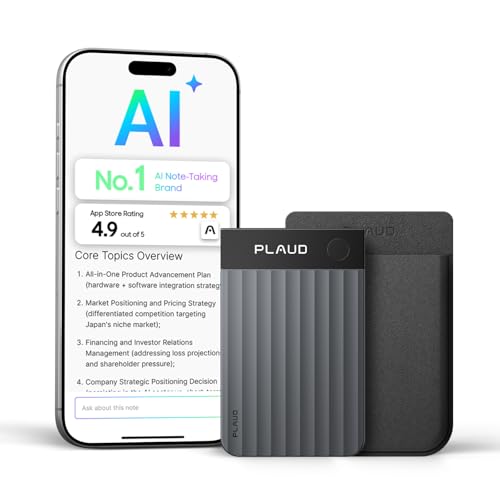
- AI transcription, summaries, and recording Q&A
- Slim 1.06-ounce design with AMOLED display
- Up to 30 hours in Enhance Mode
Best For: Professionals managing meetings, calls, and follow-up tasks
Best for Long Sessions
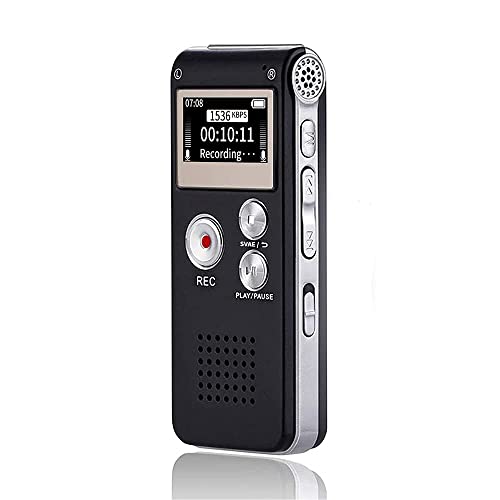
- 16GB storage for extended recordings
- Up to 30 hours of continuous recording
- Simple controls with voice activation
Best For: Lectures, interviews, and meetings requiring extra capacity
Best for Maximum Battery Life

- Up to 100 hours of continuous recording
- 128GB card supports up to 9,800 hours at 32kbps
- One-touch, voice-activated, AI noise-reduced recording
Best For: Long meetings, lectures, interviews, and extended recording sessions
Best for Easy Controls
Tonfarb 136GB Digital Voice Recorder

- 1536kbps PCM recording with automatic noise reduction
- Large LCD, one-click controls, and voice activation
- Up to 68 hours of recording with 136GB total storage
Best For: Students, interviews, lectures, and screen-guided recording
Best Traditional Recorder – EVISTR 64GB Digital Voice Recorder
For shoppers comparing portable voice recorders for lectures, meetings, interviews, and everyday notes, the EVISTR L357 emphasizes straightforward controls, high-capacity storage, and adjustable recording settings. Its built-in microphone supports PCM noise reduction and recording gain adjustment, while voice activation can help reduce silent sections.
Best For: Students, teachers, professionals, and writers who want a conventional recorder with playback and extensive local storage.
Pros:
- 64GB capacity stores up to 4,660 hours at 32Kbps.
- Supports WAV and MP3 recording, playback, A-B repeat, rewind, and variable-speed playback.
- Voice activation includes seven sensitivity levels and can reduce silent segments.
- USB-C transfer works with Windows and Mac computers.
Cons:
- It does not offer automatic transcription or AI summaries.
- Battery life is listed at up to 32 hours of continuous recording, shorter than some AI-focused alternatives.
The EVISTR is a practical choice when you prefer physical recording controls and editable audio files over app-based transcription. Its storage, file organization, and playback tools make it versatile for regular recording sessions.
Best AI Note Taker – Pocket AI Voice Recorder
Among portable voice recorders, the Pocket AI Voice Recorder is designed for users who want recordings turned into usable notes. A one-tap interface captures conversations, while its connected AI tools can transcribe, summarize, identify action items, and answer questions based on recordings.
Best For: People who attend frequent meetings, calls, or conversations and want summaries and follow-up tasks instead of manually reviewing audio.
Pros:
- AI features can create transcripts, summaries, action items, and conversation maps.
- “Ask Pocket” lets users query information from their recordings.
- MagSafe compatibility supports convenient attachment to compatible phones and devices.
- Battery life is listed at up to four days on a charge.
Cons:
- Additional premium features are available through an optional subscription.
- Its AI-focused workflow may be less suitable for shoppers seeking a simple standalone recorder with conventional file controls.
Pocket stands out for productivity rather than traditional audio management. It is a strong fit if turning conversations into searchable summaries and next steps matters more than adjusting recording formats manually.
Best High-Capacity Value – EVIDA 128GB Digital Voice Recorder
The EVIDA 128GB is one of the more storage-focused portable voice recorders for lectures, meetings, speeches, and interviews. It combines PCM recording, voice activation, playback, password protection, and multiple folders, making it useful for users who want to keep many recordings organized on the device.
Best For: Students, business users, and anyone who needs substantial local storage with basic file-management and security features.
Pros:
- 128GB storage is rated for up to 9,296 hours of recording.
- Supports MP3 recording at multiple bit rates and WAV recording at 1536Kbps.
- Voice activation offers six sensitivity levels to reduce blank sections.
- Includes password protection, four-folder organization, A-B repeat, and USB file transfer.
Cons:
- Its listed battery life is up to 54 hours, so it may require more frequent charging than some long-standby devices.
- There is no headphone jack listed in the supplied specifications.
- It does not provide built-in AI transcription or summarization.
The EVIDA prioritizes capacity and practical recorder functions. Choose it when you want to archive many audio files locally and value folders, password protection, and selectable recording formats.
Best Wearable AI Recorder – Plaud NotePin S Wearable AI Recorder
The Plaud NotePin S takes a wearable approach to portable voice recorders. It can be used as a pin, clip, necklace, or wristband, then paired with the Plaud app and web tools for transcription, summaries, mind maps, and to-do lists. A physical record button provides direct control while recording.
Best For: Professionals who want discreet, hands-free recording with structured summaries and flexible ways to wear the device.
Pros:
- Supports transcription in 112 languages through the Plaud app and web platform.
- Includes four wearing options plus a dedicated physical record button.
- Stores up to 64GB of audio locally and provides up to 20 hours of continuous recording.
- Includes a free Starter Plan with 300 transcription minutes per month.
Cons:
- Transcription access is plan-based, with higher limits requiring optional upgrades.
- Its 20-hour continuous recording rating is shorter than some conventional recorders.
- Users should obtain consent and follow applicable privacy laws before recording others.
The NotePin S is best viewed as a wearable meeting and productivity tool rather than a basic dictaphone. Its lightweight design, accessories, and AI summaries make it compelling for users who need hands-free capture and organized follow-up information.
Best Value – HoTiyan 8GB Voice Recorder
For shoppers comparing portable voice recorders for lectures, meetings, and interviews, the HoTiyan offers straightforward recording with useful playback and file-management features. Its built-in stereo microphone, voice activation, and rechargeable battery make it practical for everyday note-taking.
Best For: Students and casual users who want an affordable recorder with voice activation, A-B repeat, and MP3 playback.
Pros:
- 8GB storage with multiple recording-quality options and up to 20 hours of continuous recording.
- Voice activation can reduce silent sections and conserve storage space.
- Supports MP3 and WAV files, USB transfers, variable playback speed, and password protection.
Cons:
- The 8GB capacity is smaller than some competing models.
- Its 1.1-inch screen may feel limited for navigating many files.
This is a versatile, easy-to-use choice when you want core recording functions plus playback and organization tools without a more specialized workflow.
Best Premium AI – Plaud Note Pro AI Voice Recorder
The Plaud Note Pro takes portable voice recorders beyond basic audio capture by combining directional microphones, AI transcription, summaries, and searchable recording conversations. It is designed for users who want recorded meetings and calls turned into actionable notes across mobile, desktop, and web apps.
Best For: Professionals who need AI-assisted transcription, summaries, multimodal notes, and secure cross-device access.
Pros:
- Four MEMS microphones and a VPU microphone support clear speech capture from up to 16.4 feet in Enhance Mode.
- AI tools can answer questions about recordings, extract key points, draft emails, and suggest next steps.
- Ultra-slim 1.06-ounce design includes an AMOLED status display, 64GB storage, and up to 30 hours of Enhance Mode recording.
- Includes a Starter Plan with 300 transcription minutes per month and supports optional team features.
Cons:
- Its transcription and AI features are tied to the Plaud app and plan structure.
- There is no headphone jack.
- Users should obtain consent before recording and follow applicable privacy laws.
This is the most capable option here for an AI-centered workflow, but it makes the most sense for buyers who will actively use its app, transcription, and collaboration features.
Best for Long Sessions – Sunlan 16GB Voice Recorder
If you need portable voice recorders for lectures, interviews, or meetings, the Sunlan emphasizes simple controls, extra storage, and long recording endurance. One-button recording, built-in playback, and voice activation keep the device accessible for users who prefer a traditional standalone recorder.
Best For: Users who want a simple 16GB recorder for extended sessions, clear voice capture, and easy playback.
Pros:
- 16GB storage provides more room for recordings and doubles as removable USB storage.
- Noise-reduction technology and a sensitive microphone are designed to capture clearer speech.
- Voice activation can begin recording when sound is detected and reduce unnecessary silent time.
- Supports one-button recording, A-B repeat, speaker playback, and up to 30 hours of continuous recording.
Cons:
- The mono microphone setup is less suited to stereo recording.
- Playback battery life is listed at about 7 hours.
- Its feature set is focused on basic recording rather than built-in transcription or cloud tools.
Choose the Sunlan when capacity, uncomplicated controls, and long recording time matter more than advanced connectivity or AI features.
Best for Maximum Battery Life – Elasound 132G Voice Recorder
For shoppers comparing portable voice recorders for long meetings, lectures, or interviews, the Elasound stands out for its claimed 100-hour continuous recording time and generous storage. One-touch recording, voice activation, AI-assisted noise reduction, and USB-C transfers make it practical for frequent use.
Best For: Professionals, students, journalists, and anyone who needs extended recording capacity.
Pros:
- 128GB TF card capacity supports up to 9,800 hours of audio at 32kbps.
- Up to 100 hours of continuous recording and headphone playback.
- One-touch recording, voice activation, AI triple noise reduction, and USB-C connectivity.
- Includes a clip-on microphone, headphones, OTG adapters, and USB-C cable.
Cons:
- The storage-time claim is based on 32kbps recording, while actual capacity varies by format and settings.
- The device is larger and heavier than some compact recorders, at about 0.17 kg.
Choose this model if endurance and storage are more important than an especially small footprint. Its bundled accessories and simple controls add flexibility for work and study.
Best for Easy Controls – Tonfarb 136GB Digital Voice Recorder
The Tonfarb is one of the more approachable portable voice recorders for users who want clear controls and quick file management. Its large LCD screen, one-click recording, voice activation, PCM support, and USB-C connection suit classroom, office, and interview use.
Best For: Students, journalists, and buyers who prefer a screen-based recorder with straightforward operation.
Pros:
- Supports 1536kbps PCM recording with dual microphones and automatic noise reduction.
- Includes 8GB of built-in storage plus a 128GB TF card for up to 9,775 hours in MP3 format.
- One-click recording and saving can be activated from the side switch, even when powered off.
- Includes voice activation, A-B repeat, password protection, a 1.44-inch LCD, and a metal casing.
Cons:
- Its stated continuous recording time is up to 68 hours, shorter than the longest-lasting options here.
- The supplied details list USB 2.0 rather than USB-C hardware, despite describing USB-C file transfer.
This is a sensible pick when usability matters as much as storage. The display and playback features make it easier to review recordings directly on the device.
Best for Hands-Free Recording – Qunifyed Magnetic Voice Recorder
For portable voice recorders that can stay in place during meetings or work sessions, the Qunifyed adds a practical double-sided magnetic design. It combines one-touch recording, AI noise filtering, USB-C and OTG transfers, and MP3 playback in a compact device.
Best For: Office users, drivers, students, and professionals who want flexible hands-free placement on metal surfaces.
Pros:
- 136GB internal storage is rated for up to 18,800 hours of recording files.
- Supports up to 100 hours of continuous recording.
- Double-sided magnets allow hands-free attachment to compatible metal surfaces.
- AI smart noise filtering, one-touch operation, USB-C, and OTG support work across iPhone, Android, Mac, and Windows devices.
Cons:
- The magnetic mounting feature is useful only on suitable metal surfaces.
- The supplied details do not specify a display, recording format, or included accessories.
This model is particularly appealing when placement flexibility is a priority. Its unusually high stated storage capacity and long battery rating also make it suitable for regular, extended use.
How We Picked These Portable Voice Recorders
We selected models that cover the main ways people record audio: classroom lectures, business meetings, interviews, phone conversations, personal notes, and wearable capture. The lineup includes straightforward digital voice recorders with generous storage alongside AI-focused devices that can transcribe or summarize recordings.
Our comparison emphasizes practical features rather than storage numbers alone. We considered microphone performance, voice activation, playback controls, charging and file transfer, portability, recording capacity, and the convenience of automated transcription. Because AI products may require an app, account, or subscription, those trade-offs should be weighed alongside their time-saving benefits.
Quick Comparison
- Best for simple recording: Choose a conventional digital recorder with physical controls, playback, and USB transfer.
- Best for lectures and meetings: Look for voice activation, noise reduction, a capable microphone, and enough storage for repeated sessions.
- Best for AI notes: Select an AI recorder that supports transcription and summaries, while checking app compatibility and service limits.
- Best for discreet or hands-free use: A compact or wearable model is easier to carry, position, and access during conversations.
Key Buying Factors for Portable Voice Recorders
Recording Quality and Microphones
More storage cannot compensate for muffled audio. Prioritize clear microphones and noise-reduction features if you will record from a distance or in busy rooms. Stereo recording can help capture multiple speakers, while a simpler mono design may be sufficient for dictation.
Storage and Battery Life
Capacity claims are often based on lower-quality recording settings, so treat advertised hour counts as estimates. For frequent users, 32GB or more provides useful headroom; occasional note-takers may need far less. Also check continuous recording time, recharge speed, and whether the battery is replaceable.
Controls, Playback, and File Transfer
Physical record, pause, lock, and playback buttons are valuable when you need to operate the device quickly. USB-C is convenient on newer models, while password protection can help safeguard sensitive files. Confirm that recordings export in a format your computer or editing software supports.
AI Transcription and Privacy
AI transcription can turn long recordings into searchable notes, but it may depend on a smartphone app, internet connection, account, or paid plan. Review supported languages, speaker labeling, processing limits, and data-handling policies before recording confidential conversations.
Who Should Buy Which Portable Voice Recorders?
Students and educators should favor reliable voice activation, long battery life, simple playback, and enough capacity for lectures. Professionals may prefer AI transcription and summaries for meetings, provided privacy and subscription terms fit their workflow. Journalists and interviewers should prioritize microphone quality, consistent recording, quick controls, and easy file transfer. Personal note-takers can choose a small basic recorder for affordability or a wearable AI model for faster hands-free capture.
Before buying, confirm local laws and obtain consent where required when recording other people. A recorder that is easy to operate, secure, and compatible with your existing workflow is usually more useful than one with the highest advertised capacity.