
The best voice recorders for musicians make it easy to capture riffs, rehearsals, lessons, interviews, and live performances before inspiration disappears. The right model depends on whether you need simple voice memos, high-quality stereo recording, or multitrack production tools.
We compare 10 portable recorders across microphones, inputs, recording formats, durability, storage, and workflow so you can choose a practical fit for your music setup and budget.
Best 10 Voice Recorders for Musicians Picks for 2026
Best Multitrack Pick

- Four-track, 32-bit float recording
- Stereo mics and two XLR/TRS inputs
- USB-C recording with SD backup
Best For: Rehearsals, live performances, and multi-source music recording
Best Compact Voice Recorder

- 64GB storage with WAV and MP3 support
- Adjustable gain and noise reduction
- Voice activation and USB-C transfer
Best For: Song ideas, practice notes, and portable voice recording
Best Flexible Stereo Recorder

- Three mics with nine recording patterns
- 32-bit float/96kHz clip-free capture
- USB mic mode with SD-card backup
Best For: Rehearsals, room sound, and flexible stereo recording
Best High-Capacity Option
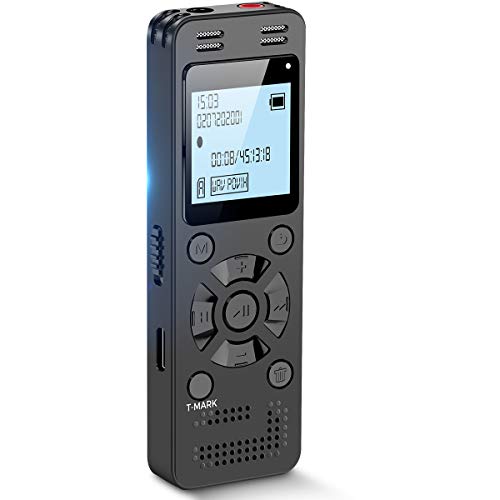
- 128GB storage for extensive recordings
- 1536kbps PCM and voice activation
- Password protection and folder organization
Best For: Voice memos, lessons, interviews, and spoken ideas
Best All-Around Pick
Zoom H1 Essential for Musicians

- 32-bit float recording for clip-free audio
- X/Y stereo microphones
- USB-C microphone mode
Best For: Portable rehearsal, songwriting, and content recording
Best for Expandability
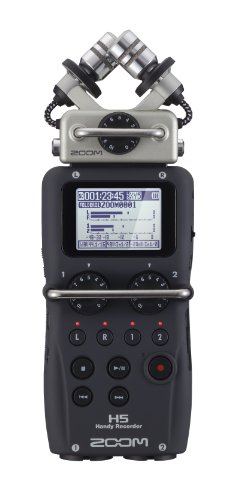
- Four-track simultaneous recording
- Interchangeable input capsules
- Dual XLR/TRS inputs with phantom power
Best For: Multi-source recording and flexible microphone setups
Best Accessory Bundle
Zoom H1 Essential Recorder Kit

- Includes lavalier mic and furry windscreen
- 32-bit float recording
- 32GB card and batteries included
Best For: Ready-to-use mobile recording and storytelling
Best with Extra Features

- Four-track recording with bounce and undo
- Two XLR/TRS combo inputs
- 80-plus rhythms, effects, and USB interface
Best For: Songwriters layering vocals and instruments
Best Advanced Portable Recorder

- 8-track 32-bit float recording
- Four XLR/TRS inputs and XY capsule
- 2-inch color display and AA power
Best For: Mobile sessions using multiple audio sources
Best Simple Practice Recorder

- One-button 32-bit float recording
- X/Y microphones capture up to 120 dB SPL
- Includes overdubbing and speed adjustment
Best For: Practice, rehearsals, and quick musical ideas
Best Multitrack Pick – Zoom H4 Essential
For musicians who need flexible recording options, the Zoom H4 Essential is a capable choice among voice recorders for musicians. Its built-in stereo microphones, two XLR/TRS inputs, four-track recording, and 32-bit float capture suit rehearsals, live performances, instruments, and larger creative projects.
Best For: Musicians recording rehearsals, live performances, instruments, and multi-source projects.
Pros:
- Supports four-track recording and clip-free 32-bit float audio.
- Offers built-in stereo mics plus two XLR/TRS inputs for external gear.
- Can record or stream over USB-C while saving a backup to an SD card.
- Spoken menu guidance improves accessibility and navigation.
Cons:
- Requires two AA batteries.
- Its broader feature set may be more than needed for simple voice notes.
The H4 Essential is the strongest fit here when a musician needs inputs for additional microphones or instruments rather than a basic dictation recorder.
Best Compact Voice Recorder – EVISTR L357 Digital Recorder
The EVISTR L357 is a practical option among voice recorders for musicians who want a compact device for rehearsals, songwriting ideas, or spoken notes. It combines a built-in noise-reduction microphone with adjustable gain, voice activation, MP3/WAV recording, and 64GB of storage.
Best For: Musicians who want an easy-to-operate recorder for ideas, practice notes, interviews, and lectures.
Pros:
- Offers adjustable seven-level recording gain and PCM noise reduction.
- Supports both WAV and MP3 recording formats.
- Voice activation can reduce silent sections and conserve storage.
- Includes 64GB storage, USB-C transfer, and up to 32 hours of continuous recording.
Cons:
- Uses a built-in microphone rather than inputs for external instruments or microphones.
- Its feature set is oriented toward general voice recording rather than multitrack music production.
The L357 makes sense for musicians prioritizing portability, long storage capacity, and simple controls over dedicated music-production connectivity.
Best Flexible Stereo Recorder – Zoom H2 Essential
The Zoom H2 Essential stands out among voice recorders for musicians who need adaptable built-in microphone coverage. Its three microphones and nine selectable patterns support mono, stereo, and surround recording, while 32-bit float capture helps handle changing volume without constant gain adjustments.
Best For: Musicians capturing rehearsals, room sound, interviews, and wide stereo or surround recordings.
Pros:
- Provides three built-in microphones and nine selectable recording patterns.
- Records clip-free audio at up to 32-bit float/96kHz without manual gain adjustment.
- Works as a USB microphone while recording a backup to an SD card.
- Supports wireless Bluetooth timecode syncing between multiple H2 Essential units.
Cons:
- Uses built-in microphones rather than listed XLR/TRS inputs for external gear.
- Requires two AA batteries.
Choose the H2 Essential when microphone pattern flexibility and reliable clip-resistant capture matter more than connecting external instruments directly.
Best High-Capacity Option – EVIDA VR01 128GB Recorder
The EVIDA VR01 is a straightforward choice among voice recorders for musicians who mainly need long-running voice capture and ample file storage. It offers 128GB capacity, PCM recording, voice activation, playback features, and password protection for organizing songwriting notes, discussions, and other recordings.
Best For: Musicians who need extensive storage for voice memos, interviews, lessons, and spoken ideas.
Pros:
- Provides 128GB of storage and supports up to 1536kbps WAV recording.
- Voice activation can reduce blank sections in recordings.
- Includes password protection, bookmarks, A-B repeat, and four-folder file organization.
- Can also function as a USB flash drive and MP3 player.
Cons:
- Has a built-in mono, noise-cancellation microphone rather than external microphone inputs.
- The listed specifications show no headphone jack.
- Its 54-hour recording-time specification is more limited than its large storage capacity might suggest.
The VR01 is best treated as a high-capacity personal recorder for spoken material and ideas, not as a replacement for a multitrack music recorder.
Best All-Around Pick – Zoom H1 Essential for Musicians
The Zoom H1 Essential is a practical choice for musicians seeking voice recorders for musicians that are easy to carry and ready for rehearsals, songwriting sessions, acoustic performances, lessons, and jam sessions. Its X/Y stereo microphones and 32-bit float recording are designed to capture clear audio without requiring constant level adjustments.
Best For: Musicians who want a compact recorder for practice, songwriting, performances, and content creation.
Pros:
- 32-bit float recording helps provide clip-free audio.
- Built-in X/Y stereo microphones capture detailed stereo sound.
- USB-C microphone mode supports livestreams, calls, podcasts, and voiceovers.
- Lightweight 92 g design with up to 10 hours of recording time.
Cons:
- Uses two AAA batteries rather than a rechargeable battery.
- Its built-in stereo microphone configuration may be less flexible than a multi-input recorder.
Choose the H1 Essential if portability and simple, reliable capture matter most. It is especially well suited to musicians who also record videos, interviews, or remote content.
Best for Expandability – Zoom H5 Four-Track Recorder
The renewed Zoom H5 is a strong option for musicians who need more input flexibility than a basic handheld recorder. It supports four-track simultaneous recording, interchangeable input capsules, and two XLR/TRS combo inputs with phantom power and -20 dB pads.
Best For: Musicians recording multiple sources, external microphones, or small multi-track sessions.
Pros:
- Four-track simultaneous recording supports more involved setups.
- Interchangeable input capsules allow the recording configuration to be changed.
- Two XLR/TRS combo inputs include selectable phantom power and -20 dB pads.
- Runs for up to 20 hours on two AA batteries and records to SD or SDHC cards up to 32GB.
Cons:
- This is a renewed product with a listed 90-day limited warranty.
- It is likely less straightforward for users who only need quick stereo recordings.
The H5 makes more sense than a simple pocket recorder when your musical setup includes several microphones or line-level sources. Its capsule system also gives it room to adapt as your recording needs grow.
Best Accessory Bundle – Zoom H1 Essential Recorder Kit
This H1 Essential bundle is a convenient starting point for musicians who want voice recorders for musicians with key accessories included. Along with the recorder, it provides a 32GB microSDHC card, lavalier condenser microphone, furry windscreen, four AAA batteries, and a cloth.
Best For: Musicians and storytellers who want an all-in-one portable recording kit for performances, interviews, and mobile content.
Pros:
- Includes a recorder, 32GB microSDHC card, lavalier microphone, windscreen, batteries, and cloth.
- 32-bit float recording avoids the need to adjust levels constantly.
- Onboard X/Y microphones capture sound up to 120 dB SPL.
- Includes overdubbing, pre-record, auto record, and playback-speed adjustment features.
Cons:
- The supplied details list mono microphone operation for the bundle.
- Accessory quality and included contents may make it less focused than buying a recorder alone.
The bundle is appealing when you want to start recording immediately without gathering accessories separately. It combines the H1 Essential’s core recording features with tools for lavalier recording and outdoor use.
Best with Extra Features – Zoom R4 Multi-Track Recorder
For musicians comparing voice recorders for musicians, the Zoom R4 stands out when layering and arranging ideas matter as much as capturing a quick take. It records up to four tracks, supports XLR/TRS sources, and uses 32-bit float recording to reduce clipping concerns.
Best For: Songwriters and musicians who want a portable multitrack workflow for vocals, instruments, overdubs, and practice arrangements.
Pros:
- Records, layers, and bounces up to four tracks with undo support.
- Two XLR/TRS combo inputs accommodate microphones, instruments, and keyboards.
- Includes more than 80 rhythm patterns and built-in effects.
- Works as a USB audio interface and runs on AA batteries or USB-C.
Cons:
- Its multitrack workflow is more involved than a simple stereo recorder.
- It uses four AA batteries, rather than the two AAA batteries used by some compact models.
The R4 is a strong choice if your recording process involves building complete musical ideas rather than simply documenting rehearsals. Its inputs, rhythm section, and bounce function give it more arranging flexibility than a basic handheld recorder.
Best Advanced Portable Recorder – Zoom H6studio 8-Track
The renewed Zoom H6studio is aimed at musicians who need a broader input setup in a portable recorder. It combines 32-bit float recording with four XLR/TRS combo jacks and an XY microphone capsule for capturing multiple sources.
Best For: Musicians and mobile recording setups that need several microphone or instrument inputs in one compact unit.
Pros:
- Supports 8-track recording with 32-bit float audio.
- Provides four XLR/TRS combo inputs plus an XY mic capsule.
- Uses a full-color 2-inch LCD for navigation and control.
- Portable design weighs 16.84 ounces and runs on four AA batteries.
Cons:
- This is a renewed product with a 90-day limited warranty.
- At 1.1 pounds, it is heavier than the H1essential.
The H6studio is the more capable option here for multi-source recording. Choose it when four combo inputs and 8-track capability justify the extra size and renewed-product trade-offs.
Best Simple Practice Recorder – Zoom H1essential 2-Track
The Zoom H1essential is a straightforward option for musicians who want voice recorders for musicians that are easy to carry and quick to operate. Its built-in X/Y microphones, one-button recording, and 32-bit float capture make it well suited to practices, rehearsals, and musical sketches.
Best For: Musicians who want an uncomplicated handheld recorder for practice, rehearsal playback, songwriting ideas, and samples.
Pros:
- One-button recording and 32-bit float capture reduce setup work.
- Built-in X/Y microphones handle sound levels up to 120 dB SPL.
- Includes overdubbing, pre-record, auto-record, and playback-speed adjustment.
- Bundle includes a windscreen, case, USB-C cable, 64GB microSD card, and batteries.
Cons:
- It is a two-track recorder rather than a multitrack input-focused unit.
- Its built-in microphones and compact design offer less source-input flexibility than the R4 or H6studio.
The H1essential makes the most sense when convenience matters more than extensive routing. It is small, bundled with useful accessories, and includes practice-friendly tools that help musicians review and develop their playing.
How We Picked the Best Voice Recorders for Musicians
We focused on the features that matter when recording music away from a computer: microphone quality, input flexibility, ease of use, portability, battery life, storage, and resistance to clipping during unpredictable performances. The lineup includes compact two-track recorders, models with XLR/TRS inputs, multitrack units, and accessory bundles.
We also considered the difference between a purpose-built music recorder and a basic dictaphone. Voice-activated recording and large storage can be useful for meetings or lectures, but musicians should pay closer attention to microphone design, stereo imaging, gain control, file formats, and monitoring options.
Quick Comparison
| Recorder type | Best for | What to look for |
|---|---|---|
| Compact stereo recorder | Song ideas, rehearsals, and lessons | Built-in stereo microphones, simple controls, and low weight |
| Recorder with XLR/TRS inputs | External microphones and instruments | Phantom power, reliable preamps, and headphone monitoring |
| Multitrack recorder | Layered demos and mobile production | Track count, overdubbing, effects, and bounce functions |
| Recorder bundle | First-time buyers | Included card, microphone, windscreen, and useful accessories |
| Basic digital voice recorder | Spoken notes and interviews | Storage, playback, voice activation, and password features |
Key Buying Factors for Voice Recorders for Musicians
Microphones and Recording Quality
Built-in stereo microphones are convenient for rehearsals, acoustic instruments, and room ambience. Look for adjustable microphone angles or a suitable pickup pattern if you want a wider or more focused stereo image. For loud sources, headroom and limiter performance matter as much as maximum resolution.
Inputs and Expandability
If you plan to connect a vocal mic, guitar, keyboard, or mixer, choose a recorder with the appropriate XLR/TRS combo inputs. Check whether it supplies phantom power for condenser microphones and whether it supports simultaneous recording on all required channels.
32-Bit Float and Conventional Formats
32-bit float recording can provide extra protection against badly set input levels, which is helpful for live shows and fast-moving sessions. It does not replace good microphone placement, and files may require compatible editing software. Standard WAV and MP3 support can be more convenient for quick sharing.
Workflow, Power, and Portability
Physical controls, a clear screen, headphone output, and quick file transfer reduce friction when capturing ideas. Consider battery type, USB operation, memory-card support, wind protection, and whether the recorder is small enough to keep within reach.
Who Should Buy Which Voice Recorders for Musicians?
Songwriters and students: Choose a compact stereo recorder that starts quickly and is easy to carry. It is ideal for melodies, practice sessions, lessons, and rehearsal references.
Solo performers and content creators: A bundle with a lavalier or condenser microphone and storage card can provide a more complete starting setup without requiring separate accessories.
Band leaders and live-recording users: Prioritize 32-bit float, strong stereo microphones, wind protection, and dependable battery performance for unpredictable volume levels.
Home producers and multi-instrumentalists: Select a multitrack model with several inputs, overdubbing, effects, and bouncing so you can build demos without a laptop.
People mainly recording speech: A high-capacity voice recorder with playback, voice activation, and password protection may be more practical than a music-focused field recorder, provided you do not need detailed stereo music capture.