
Choosing the right power amplifier can transform a capable audio system into a more dynamic, controlled, and engaging setup. The best option depends on your speakers, listening room, source components, and whether you prefer clean efficiency, tube warmth, or flexible modern connectivity.
We’ve gathered 10 noteworthy amplifiers spanning compact desktop models, stereo and mono configurations, integrated hybrids, professional designs, and high-output home audio components. Use the guide below to narrow the field by performance priorities, system compatibility, and budget.
Best 10 Power Amplifier for Audiophiles Picks for 2026
Flexible Hi-Fi Power

- 240W at 4 ohms per mono amplifier
- Balanced XLR and RCA inputs
- Expandable stereo or multi-channel design
Best For: Modular hi-fi and home-theater systems
Streaming-System Partner

- Up to 100W per channel via digital input
- 192kHz/24-bit optical and coax playback
- Pure analog input bypasses ADC
Best For: WiiM streamer-based passive-speaker systems
Rack-Ready Output
Crown XLS1002 Professional Amp

- 350W per channel at 4 ohms
- Balanced and RCA inputs
- DSP, crossover, and limiter functions
Best For: Professional, rack-mounted, and high-output systems
Warm Hybrid Versatility
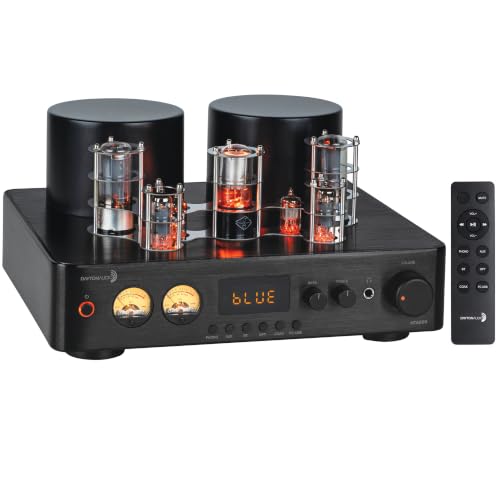
- 100W per channel at 4 ohms
- Tube preamp with Class A/B output
- Bluetooth, USB DAC, and phono input
Best For: Versatile warm-sounding home stereo systems
High-Output Flexibility
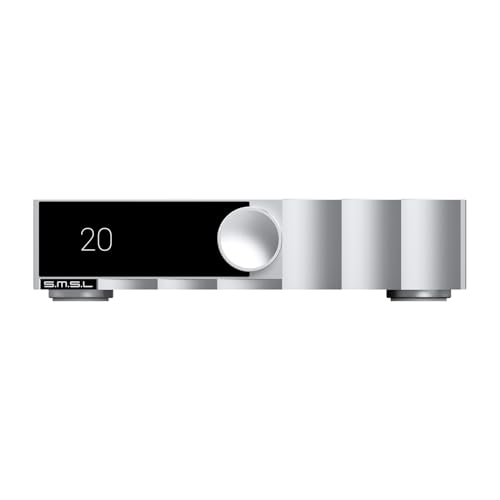
- Stereo pass-through and XLR mono modes
- Infineon GaN power stage with PGA2311 control
- Overheat and overcurrent protection
Best For: Expandable stereo systems and demanding speakers
All-in-One Digital Power

- ESS9038Q2M DAC and TPA3255 Class D amplification
- Bluetooth, USB, optical, coaxial, and balanced inputs
- Sub-out, 12V trigger, remote, and VU display
Best For: Versatile 2.0 or 2.1 digital audio systems
Hybrid High-Power Drive
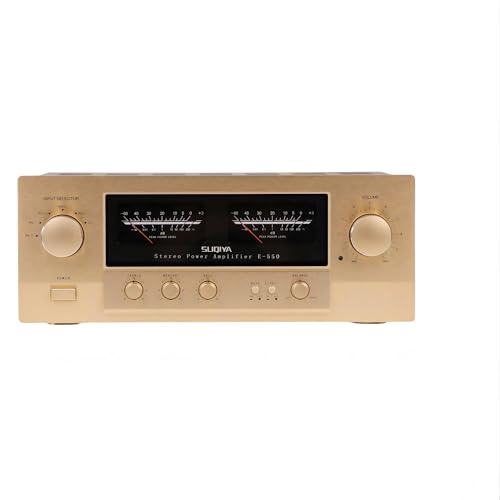
- Class A to Class AB operation
- 200W x2 at 8 ohms, 380W x2 at 4 ohms
- XLR/RCA inputs and dual toroidal transformers
Best For: Demanding speakers and high-power two-channel systems
Flexible Power Pick

- Stereo or mono operation with up to 235W maximum output
- Balanced XLR/TRS input and 12V trigger-in
- Swappable op-amps and upgraded cooling
Best For: Configurable passive-speaker and subwoofer systems
Tube Sound Specialist
Reisong A10 EL34 Tube Amplifier
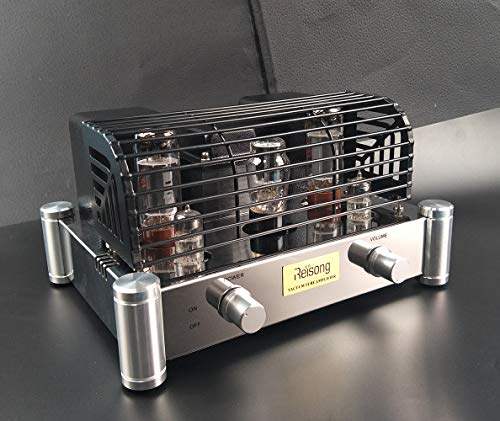
- 12W single-ended Class-A tube design
- Point-to-point hand-welded construction
- Recommended for speakers rated 89dB or higher
Best For: Efficient bookshelf-speaker systems
Compact High-Output Value
Fosi Audio V3 48V Class-D Amplifier

- Up to 300W per channel stated output
- TPA3255 design with low-noise performance claims
- Volume-controlled pre-out and swappable op-amps
Best For: Compact desktop, bookshelf, and home-theater systems
Flexible Hi-Fi Power – Fosi Audio V3 Mono
For audiophiles building a modular system, the Fosi Audio V3 Mono is a compact power amplifier for audiophiles that drives one passive speaker with up to 240 watts at 4 ohms. Its mono-block design suits stereo, multi-channel, and home-theater configurations.
Best For: Audiophiles assembling customizable stereo or multi-channel systems with demanding passive speakers.
Pros:
- Supports RCA single-ended and XLR/1/4-inch TRS balanced inputs.
- TPA3255 Class D design with PFFB technology and reported low distortion.
- Flexible mono-block setup with auto power and signal sensing.
- Heat-dissipating chassis and side ventilation support sustained output.
Cons:
- Each amplifier is designed to power a single passive speaker.
- Requires a separate preamp, receiver, or source component.
- Customization through replaceable op-amps may appeal more to enthusiasts than casual listeners.
The V3 Mono is a strong choice when system flexibility and clean, high-power amplification matter more than having an all-in-one receiver. A two-pack can form a stereo pair, while additional units can expand a home-theater system.
Streaming-System Partner – WiiM Vibelink Amp
The WiiM Vibelink Amp is a streamlined power amplifier for audiophiles who already have passive speakers and a separate source. It offers high-resolution digital inputs, a pure analog path, and up to 100 watts per channel at 8 ohms when using digital input.
Best For: WiiM streamer owners and listeners upgrading passive speakers with modern, high-resolution amplification.
Pros:
- Works with WiiM Mini, Pro, Pro Plus, and Ultra streamers.
- Supports up to 192kHz/24-bit playback through optical and coaxial inputs.
- Pure analog input bypasses ADC conversion.
- Unibody aluminum chassis, copper heat pipe, and graphene heatsink support cooling.
Cons:
- It is a pure power amplifier and does not provide built-in streaming.
- RCA input output is rated at 60 watts, compared with 100 watts through digital input.
- Its one-year warranty is shorter than some competing options.
Choose the Vibelink Amp when you want a clean, compact amplifier to complement an existing WiiM-based or digital hi-fi setup. Its analog input also gives turntable-oriented systems a direct connection without ADC conversion.
Rack-Ready Output – Crown XLS1002 Professional Amp
The Crown XLS1002 is a professional power amplifier for audiophiles and system builders who need rack-mountable, two-channel output with protection and crossover tools. It delivers 350 watts per channel at 4 ohms and can be bridged for higher-output applications.
Best For: Studio, live-sound, installation, and home-theater systems needing robust two-channel amplification.
Pros:
- Provides 350 watts per channel at 4 ohms and 1100 watts bridged at 4 ohms.
- Includes balanced XLR, 1/4-inch TRS, and RCA inputs.
- DriveCore Class D construction weighs less than 11 pounds.
- Peakx Limiters, PureBand crossover, sleep mode, and forced-air cooling add practical system features.
Cons:
- Forced-air fans may be less suitable for extremely quiet listening rooms.
- Its rack-mount professional format is less compact than a typical home hi-fi amplifier.
- Full warranty coverage depends on purchase from an authorized U.S. Crown dealer.
The XLS1002 makes sense when output flexibility and system-management features are priorities. It is particularly compelling for installations or larger setups where rack mounting, bridging, and speaker protection are more important than a minimalist desktop design.
Warm Hybrid Versatility – Dayton Audio HTA200 Tube Amp
The Dayton Audio HTA200 combines tube preamp character with Class A/B power, making it an appealing power amplifier for audiophiles who want warmth and broad source connectivity. It supplies 100 watts per channel at 4 ohms and includes Bluetooth, USB, phono, optical, and coaxial inputs.
Best For: Home listeners who want tube-inflected sound, built-in source inputs, and an easy path to a 2.1 system.
Pros:
- Hybrid tube and Class A/B design adds a classic warm presentation.
- Dedicated phono input supports turntable connections.
- Built-in USB DAC, Bluetooth 5.0, optical, coaxial, and AUX inputs offer flexibility.
- Preamp output supports adding a powered subwoofer.
Cons:
- Its integrated design may be unnecessary for buyers who already own a preamp or source hub.
- The supplied notes specify 100 watts per channel at 4 ohms, not at higher speaker impedances.
- Tube-based preamp circuitry may not suit listeners seeking an entirely neutral solid-state presentation.
The HTA200 is a practical all-in-one option for a living-room stereo. It combines amplification, digital and wireless sources, phono connectivity, tone controls, headphone listening, and subwoofer expansion in one component.
High-Output Flexibility – SMSL VMV PA200
The SMSL VMV PA200 is a focused power amplifier for audiophiles who want a straightforward stereo design with the option to scale into a higher-output mono setup. Its GaN power stage, PGA2311 volume chip, XLR input, and pass-through mode suit systems built around demanding speakers and clean signal handling.
Best For: Audiophiles seeking a versatile stereo amplifier that can also be paired with a second unit for mono operation.
Pros:
- Supports stereo pass-through and XLR mono modes.
- Uses an Infineon GaN power device and TI PGA2311 volume chip.
- Includes overheat and overcurrent protection.
- Dedicated high-power switching supply supports demanding operation.
Cons:
- Mono-mode expansion requires a second amplifier.
- Its feature set is more focused on amplification than all-in-one source connectivity.
The PA200 is a sensible choice when flexible system building and high-power speaker support matter more than integrated streaming or DAC features. Its protection circuits and selectable operating modes add useful practicality to a dedicated amplifier setup.
All-in-One Digital Power – AIYIMA A80 DAC Amplifier
The AIYIMA A80 is a practical power amplifier for audiophiles who want amplification, DAC functionality, and modern source connections in one compact component. Its TPA3255 Class D section, ESS9038Q2M DAC, balanced input, Bluetooth, and digital inputs make it adaptable for music, television, and desktop systems.
Best For: Listeners building a flexible 2.0 or 2.1 system with digital sources, balanced connectivity, and remote control.
Pros:
- Combines an ESS9038Q2M DAC with a TPA3255 amplifier.
- Offers Bluetooth, USB, optical, coaxial, RCA, and TRS balanced inputs.
- Supports up to 300W x2 output, with claimed 0.006% THD.
- Includes subwoofer pre-out, 12V trigger, tone control, and a digital VU display.
Cons:
- The many functions may be unnecessary for a purely analog amplifier system.
- Actual output depends on the connected speakers and system conditions.
The A80 stands out for convenience and connectivity rather than minimalist purism. It is a strong fit for buyers who want one amplifier to serve high-resolution music, TV audio, Bluetooth playback, and a flexible subwoofer-equipped setup.
Hybrid High-Power Drive – Class A/AB Stereo Amp
This Class A/AB hybrid is a power amplifier for audiophiles who want Class A operation at lower volumes and substantial Class AB headroom for demanding musical peaks. Its dual toroidal transformers, balanced inputs, heavy chassis, and high damping factor point toward a substantial two-channel setup for difficult-to-drive speakers.
Best For: Enthusiasts seeking a powerful, traditional stereo amplifier with high-current capability and a warm, detailed low-level presentation.
Pros:
- Runs in Class A up to 30W at 8 ohms before switching to Class AB.
- Claims 200W x2 at 8 ohms and 380W x2 at 4 ohms.
- Includes dual 650W toroidal transformers and ELNA filter capacitors.
- Provides XLR and RCA inputs, bi-wiring support, and protection circuits.
Cons:
- Its 57.9-pound weight and large chassis require substantial rack or shelf space.
- Designed for US 110V-120V, 60Hz power.
- It is a power amplifier rather than an all-in-one DAC or streaming component.
The hybrid topology gives this amplifier a distinct operating concept: Class A character for quieter listening and Class AB reserves when the music demands more power. Buyers should plan for its size, weight, and US-specific power design before choosing it.
Flexible Power Pick – Fosi Audio ZA3
For audiophiles who want flexible system building, the Fosi Audio ZA3 is a compact power amplifier with stereo and mono modes, balanced input, and substantial output potential. It is suited to desktop, home theater, and passive-speaker systems where connectivity and upgradeability matter.
Best For: Audiophiles seeking a configurable amplifier for passive speakers, subwoofer integration, or dual-amp mono setups.
Pros:
- Switches between stereo output up to 180W and mono output up to 235W.
- Balanced XLR/TRS input and 12V trigger-in help reduce noise and simplify system control.
- Includes swappable op-amps and uses TPA3255, NCC, ELNA, WIMA, and Sumida components.
- Upgraded cooling design supports sustained high-power operation.
Cons:
- Op-amp rolling requires compatible components and hands-on experimentation.
- Its compact Class-D format may not appeal to buyers seeking a traditional full-size amplifier.
The ZA3 stands out as a versatile power amplifier for audiophiles who value measurable performance, balanced connectivity, and a path to future system expansion.
Tube Sound Specialist – Reisong A10 EL34 Tube Amplifier
The Reisong A10 EL34 is a low-power, single-ended Class-A tube amplifier for listeners who prioritize a traditional tube-based design. With 12W output, it is best matched carefully with efficient bookshelf speakers rather than demanding floorstanding or low-sensitivity models.
Best For: Audiophiles with bookshelf speakers rated at 89dB sensitivity or higher who want an EL34 tube amplifier.
Pros:
- Single-ended Class-A design uses two EL34 tubes, two 6N2J tubes, and one 5Z4PJ tube.
- Point-to-point hand welding and upgraded 76×40 output transformers suit traditional tube-audio enthusiasts.
- Includes a protective tube cover and circuit diagram.
Cons:
- Its 12W output is unsuitable for many floorstanding or low-sensitivity speakers.
- Requires careful power and input-mode setup if no sound is heard after startup.
- Tube operation is less plug-and-play than a compact solid-state amplifier.
The A10 is a focused choice for a power amplifier for audiophiles who already have efficient bookshelf speakers and specifically want the character and construction of a tube-based Class-A design.
Compact High-Output Value – Fosi Audio V3 48V Class-D Amplifier
The Fosi Audio V3 combines a small chassis with up to 600W total stated output, making it a practical power amplifier for audiophiles building a desktop, bookshelf, or home-theater system around passive 2–8Ω speakers. Its pre-out and op-amp support add useful flexibility for system tuning.
Best For: Listeners who want a compact Class-D amplifier with high output potential, cooling provisions, and adjustable pre-out functionality.
Pros:
- Designed to drive 2–8Ω speakers with up to 300W per channel stated output.
- TPA3255 amplifier chip and premium capacitors and inductors support low-distortion performance.
- Top-and-bottom vents and a full-body heatsink improve heat dissipation.
- Volume-controlled pre-out and replaceable NE5532 op-amps expand setup options.
Cons:
- Its maximum output depends on the connected speaker and system conditions.
- Op-amp swapping is optional but requires compatible 8-pin dual op-amps.
- The minimalist mini-amp format provides fewer built-in features than a larger integrated amplifier.
With strong output claims in a compact enclosure, the V3 is a sensible power amplifier for audiophiles who want efficient passive-speaker drive without giving up pre-out flexibility or component experimentation.
How We Picked the Best Power Amplifier for Audiophiles
We selected these amplifiers to represent the main choices available to serious listeners: efficient Class D designs, balanced-input models, tube and hybrid amplifiers, integrated units, and professional-style power amps. We considered claimed output, input options, channel configuration, speaker-system flexibility, amplification topology, and practical features such as Bluetooth, DSP, mono operation, and subwoofer compatibility.
Because amplifier specifications are often measured under different conditions, wattage alone does not determine sound quality. Treat the figures as a starting point and verify impedance compatibility, power requirements, and the manufacturer’s measurement standards before buying.
Quick Comparison
| System Need | Best-Suited Designs | What to Prioritize |
|---|---|---|
| Desktop or small-room setup | Compact Class D stereo amps | Small footprint, efficient cooling, useful inputs |
| Hard-to-drive or large speakers | High-output stereo or mono amps | Stable operation at the speaker’s impedance |
| Warm, traditional presentation | Tube or hybrid amplifiers | Tube type, maintenance, and speaker sensitivity |
| Balanced home audio system | XLR-equipped power amplifiers | Balanced source compatibility and low noise |
| Flexible home theater or installation | Professional-style amplifiers | Cooling, protection circuits, DSP, and rack fit |
Key Buying Factors for a Power Amplifier for Audiophiles
Power, Impedance, and Headroom
Match the amplifier to your speakers’ nominal and minimum impedance ratings. More power can provide cleaner peaks and better bass control, but only when the amp is stable with the load. Highly sensitive speakers may need relatively little power, while inefficient speakers and larger rooms benefit from greater continuous output and headroom.
Amplifier Class and Sound Priorities
Class D models are typically compact, cool-running, and efficient, making them strong choices for modern systems. Class A and Class AB designs may appeal to listeners who value conventional circuit designs and a particular tonal character, though they can use more energy and generate more heat. Tube and hybrid amplifiers can add a warmer presentation but require attention to tube life and maintenance.
Connections and System Matching
Check whether you need RCA, XLR, Bluetooth, digital inputs, or a dedicated preamp. A power amplifier generally requires a volume-controlled source or preamplifier, while an integrated amplifier may include source switching and volume control. Mono modes can help build a higher-output system, but they require compatible wiring and configuration.
Size, Cooling, and Protection
Allow ventilation around the chassis, especially for tube and professional amplifiers. Look for safeguards such as thermal protection, overload limiting, short-circuit protection, and clipping indicators. These features are particularly valuable when an amplifier will drive demanding speakers at high volume.
Who Should Buy Which Power Amplifier for Audiophiles?
Choose a compact Class D stereo amplifier for a desktop, bookshelf, or space-conscious system. Consider a mono pair when you want greater channel separation, more placement flexibility, or additional power for demanding speakers. Balanced-input models are a sensible fit for systems with longer cable runs or balanced preamp outputs.
Tube and hybrid models suit listeners who specifically want tube presentation and do not mind heat or periodic maintenance. A professional-style amplifier is better for high-output systems, installations, or users who value DSP and robust protection features. Finally, an integrated amplifier is the simplest choice when you want amplification and everyday source connectivity in one enclosure.