
The best power amplifiers for home use can add cleaner volume, stronger bass control, and more flexibility to a stereo, home theater, karaoke, or whole-home audio setup. The right choice depends less on headline wattage than on speaker compatibility, inputs, room size, and how you plan to use the system.
We compared 10 notable amplifiers across compact Class D designs, integrated stereo units, multichannel models, and professional-style power amps. Use the guide below to narrow the list by system type, connectivity, power needs, and installation requirements.
Best 10 Power Amplifiers for Home Use Picks for 2026
Best Traditional Stereo Pick

- Coaxial and optical digital inputs
- Phono and analog input support
- A/B speakers plus subwoofer output
Best For: Traditional home stereo systems with varied wired sources
Best RCA/XLR Power Option

- Two channels at 90 watts each
- RCA and XLR inputs
- Designed for home theater use
Best For: Two-channel systems needing RCA and XLR connectivity
Best Compact High-Power Pick

- Compact Class D stereo amplifier
- Up to 300W x2 with suitable supply
- AUX pre-out and swappable op-amp
Best For: Desktop and bookshelf speaker systems
Best Simple Bluetooth Pick
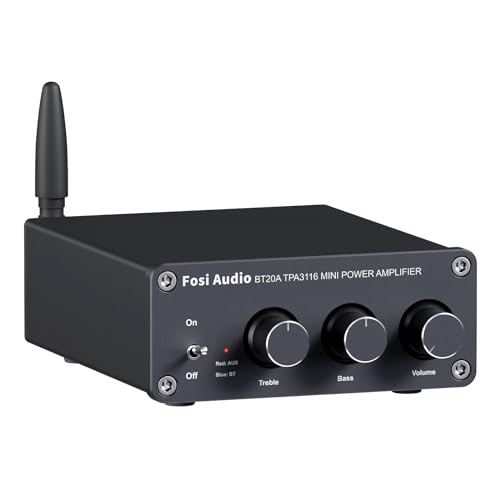
- Bluetooth and RCA inputs
- 100W x2 maximum output
- Compact design with tone controls
Best For: Easy wireless playback with passive speakers
High-Power Rack Amp
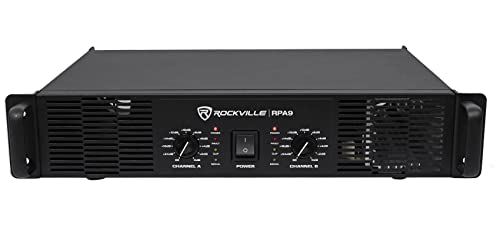
- 800W RMS with 3000W peak output
- Stereo, bridged, and crossover modes
- XLR, RCA, 1/4-inch, speakON, and banana connections
Best For: Large home systems and home venues needing professional connectivity
Compact Wireless Amp
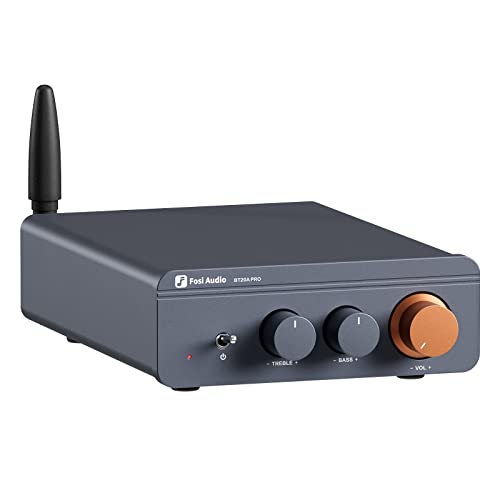
- 300W x 2 output in a mini Class D design
- Bluetooth 5.0 with pairing memory
- Bass, treble, and replaceable op-amp options
Best For: Compact passive-speaker systems and wireless home audio
Reliable Two-Channel Amp

- 300W continuous per channel at 4 ohms
- 600W bridged output for 8-ohm loads
- Forced-air cooling and flexible I/O
Best For: Large passive-speaker systems and dedicated home venues
Versatile Home Audio Pick
Donner 4-Channel Stereo Receiver

- Four independently controlled channels
- Bluetooth 5.3 plus optical and coaxial inputs
- Dual mic inputs with echo and talkover
Best For: Home theater, karaoke, and multi-speaker setups
Compact Stereo Powerhouse
Fosi Audio TB10D Mini Amplifier

- Two-channel Class D design
- Bass and treble controls
- Compact body with protection circuits
Best For: Desktop audio, bookshelf speakers, and bass shakers
Karaoke-Friendly Value
Pyle PTA44BT 4-Channel Receiver

- 500W peak four-channel output
- Bluetooth, USB, microSD, AUX, and FM
- Dual mic inputs with echo and talk-over
Best For: Karaoke, announcements, and casual home entertainment
Best Traditional Stereo Pick – Yamaha A-S301BL
The Yamaha A-S301BL is a versatile choice among power amplifiers for home use, combining digital and analog connectivity with flexible speaker options. It includes coaxial and optical inputs, phono support, A/B speaker connections, and a subwoofer output for building a straightforward stereo system.
Best For: Home listeners who want a conventional integrated stereo amplifier with broad input and speaker connectivity.
Pros:
- Includes digital coaxial and optical inputs.
- Supports analog sources, including phono.
- Offers Speakers A, B, A+B, and a subwoofer output.
Cons:
- At 19.8 pounds, it is less compact than mini amplifier options.
- The supplied notes do not mention Bluetooth or Wi-Fi connectivity.
The A-S301BL stands out when you need flexible wired connections and traditional stereo control rather than a minimalist desktop design.
Best RCA/XLR Power Option – Monolith M2100X
The Monolith M2100X is a focused option among power amplifiers for home use, providing two channels rated at 90 watts per channel. Its RCA and XLR inputs make it suitable for systems that need both consumer and balanced-style connection options.
Best For: Home theater setups or audio systems that need a two-channel amplifier with RCA and XLR inputs.
Pros:
- Delivers 2×90 watts per channel.
- Provides both RCA and XLR inputs.
- Uses a two-channel configuration for straightforward system integration.
Cons:
- The supplied notes provide limited information about additional connectivity or controls.
- Its listed product dimensions are unusually large, so verify available shelf or rack space.
Choose the M2100X when input flexibility and dedicated two-channel amplification matter more than a long list of built-in features.
Best Compact High-Power Pick – AIYIMA A07
The AIYIMA A07 is a compact contender among power amplifiers for home use, using a Class D design with a TPA3255 chip and support for passive speakers rated from 2 to 8 ohms. It includes RCA input, a volume-controlled 3.5mm pre-out, a supplied 32V/5A adapter, and a swappable NE5532 op-amp.
Best For: Desktop, bookshelf, or compact home audio systems that need substantial output in a small enclosure.
Pros:
- Compact metal housing with an internal enhanced cooling system.
- Supports up to 300 watts x2 with a suitable compatible power supply.
- Includes a 3.5mm pre-out for active speakers or a powered subwoofer.
- Swappable op-amp design allows component experimentation.
Cons:
- It does not support Wi-Fi.
- The maximum 300W x2 output requires a separately upgraded compatible power supply.
- It provides RCA and AUX connectivity rather than the broader digital input selection of some integrated amplifiers.
The A07 is appealing for listeners prioritizing compact size, upgrade flexibility, and strong stated output for passive bookshelf speakers.
Best Simple Bluetooth Pick – Fosi Audio BT20A
The Fosi Audio BT20A keeps power amplifiers for home use simple with Bluetooth and RCA inputs, two-channel operation, and a compact Class D design. Its 100W x2 maximum output, bass and treble controls, and included 24V/4.5A power supply suit everyday passive-speaker setups.
Best For: Bedrooms, living rooms, offices, garages, patios, and other spaces needing uncomplicated wireless playback.
Pros:
- Supports Bluetooth and RCA input sources.
- Provides up to 100W x2 maximum output.
- Compact design with simple setup and one-touch power control.
- Includes bass and treble controls for basic sound adjustment.
Cons:
- The supplied notes do not mention digital inputs, phono support, or a subwoofer output.
- It is positioned as an entry-level, no-frills amplifier.
- Bluetooth performance is convenient, but wired RCA remains the alternative input.
The BT20A is a practical pick when easy phone streaming and straightforward controls are more important than extensive system integration.
High-Power Rack Amp – Rockville RPA9
For shoppers comparing power amplifiers for home use, the Rockville RPA9 is a substantial rack-mount option built for demanding passive-speaker systems. Its 800W RMS output, multiple inputs, and stereo or bridged modes make it better suited to large rooms, home venues, or setups that may also support DJ and live-event use.
Best For: Large home audio systems, home venues, and users who need professional-style connectivity and high output.
Pros:
- Delivers 800W RMS and up to 3000W peak output.
- Supports XLR, 1/4-inch, and RCA inputs with speakON and banana outputs.
- Includes stereo and bridged modes, a built-in crossover, and 2U rack-mount construction.
- Dual fans and a heat-sink design support extended operation.
Cons:
- Its professional rack-mount design may be more amplifier than a typical home stereo requires.
- Cooling fans and high power output may be unnecessary for small listening rooms.
The RPA9 stands out when output capacity and flexible connections matter more than compact size. For everyday home listening, verify that your speakers, room, and ventilation can accommodate this professional-grade amplifier.
Compact Wireless Amp – Fosi Audio BT20A Pro
The Fosi Audio BT20A Pro is a compact choice for shoppers seeking power amplifiers for home use without a full-size rack chassis. It combines Bluetooth 5.0, 300W x 2 output, and bass and treble controls in a mini Class D design for passive speakers used indoors or outdoors.
Best For: Compact home stereo systems, desktop setups, and outdoor passive-speaker systems that benefit from wireless playback.
Pros:
- Provides rated 300W x 2 output through a TI TPA3255 amplifier chip.
- Bluetooth 5.0 includes memory for easier pairing.
- Offers bass and treble controls plus replaceable plug-in op-amps for customization.
- Claims SNR of at least 108dB and THD of no more than 0.005%.
Cons:
- It is designed for passive speakers and does not include built-in speakers.
- Op-amp replacement is an enthusiast feature that may be unnecessary for simple systems.
With wireless convenience and a small footprint, the BT20A Pro is an approachable fit for home audio projects. Check speaker compatibility and placement requirements before relying on its stated output in a particular setup.
Reliable Two-Channel Amp – Crown XLi800
Crown XLi800 Two-channel, 600-Watt Bridged 8Ω Power Amplifier. Professional DJ, PA, Stage Amp. Black
Check Price On AmazonThe Crown XLi800 is a two-channel professional amplifier for buyers considering power amplifiers for home use in larger or more demanding systems. It delivers 300W continuous per channel at 4 ohms, can be bridged for up to 600W, and includes forced-air cooling and flexible I/O.
Best For: Home venues, large passive-speaker systems, and users who want a sturdy two-channel professional amplifier.
Pros:
- Provides 300W continuous per channel at 4 ohms.
- Can operate as a 600W bridged amplifier for an 8-ohm load.
- Offers selectable input voltage and flexible input/output connections.
- Forced-air cooling supports sustained operation.
Cons:
- Its 25.1-pound, 19-inch-wide chassis is less convenient for compact home setups.
- The professional design may be excessive for low-volume casual listening.
The XLi800 is a practical choice when dependable two-channel power and bridged operation are priorities. Its size and professional cooling system make it best suited to a dedicated rack, home venue, or high-output speaker installation.
Versatile Home Audio Pick – Donner 4-Channel Stereo Receiver
For shoppers comparing power amplifiers for home use, the Donner MAMP5 stands out as a flexible four-channel receiver with Bluetooth 5.3, optical and coaxial inputs, USB playback, FM radio, and microphone support. Its 25W × 4 RMS rating is suited to multi-speaker setups, while independent channel controls add installation flexibility.
Best For: Home theater, karaoke, hosting, and multi-room or multi-speaker audio setups.
Pros:
- Four independently controlled channels support up to four groups of speakers rated from 4 to 16 ohms.
- Offers Bluetooth 5.3, USB, RCA, AUX, FM, optical, and coaxial connectivity.
- Includes dual microphone inputs, echo, talkover, and adjustable bass, midrange, and treble controls.
Cons:
- The advertised 1000W figure is peak power; listed RMS output is 25W per channel.
- There is no HDMI input, which may limit direct TV or home-theater connections.
- The remote battery is not included.
The Donner is a strong all-purpose choice when you need several inputs and microphone features in one chassis. Confirm your TV’s external-audio setting and speaker impedance before connecting it.
Compact Stereo Powerhouse – Fosi Audio TB10D Mini Amplifier
The Fosi Audio TB10D is a compact option for power amplifiers for home use, pairing a Class D design with a TPA3255 chip, RCA input, passive-speaker output, and front-panel bass and treble controls. It is designed for straightforward two-channel listening without the larger feature set of a karaoke receiver.
Best For: Desktop audio, bookshelf speakers, home stereo systems, and bass-shaker applications.
Pros:
- Two-channel design is rated at 300W per channel and supports 2–8 ohm bookshelf speakers.
- Compact form factor works well in living rooms, game rooms, dining areas, or personal studios.
- Built-in protection circuits and a 24-month manufacturer warranty add practical reassurance.
- Bass and treble knobs allow quick sound adjustment.
Cons:
- Connectivity is limited to RCA input and passive-speaker output.
- It does not include built-in Bluetooth, USB playback, microphone inputs, or radio.
- The 600W figure is the stated total power rating; actual system results depend on speakers and setup.
The TB10D makes sense when you already have a source device or preamp and want a small, powerful stereo amplifier. Its simple layout favors focused listening over all-in-one convenience.
Karaoke-Friendly Value – Pyle PTA44BT 4-Channel Receiver
For power amplifiers for home use that also handle karaoke and announcements, the Pyle PTA44BT combines four-channel amplification with Bluetooth, USB, microSD, AUX, FM radio, and microphone inputs. Its 500W peak rating and support for 4–8 ohm speakers make it a practical choice for casual home entertainment.
Best For: Karaoke, home theater, small gatherings, paging, and multi-speaker entertainment systems.
Pros:
- Four-channel receiver supports multiple 4–8 ohm speakers and delivers 500W peak power.
- Includes Bluetooth, USB, microSD, AUX, FM radio, and a subwoofer RCA output.
- Dual 1/4-inch microphone inputs include echo and talk-over functionality.
- Front-panel controls and an included remote simplify source and volume adjustments.
Cons:
- The 500W specification is peak power rather than a stated continuous RMS rating.
- Its connectivity emphasizes analog and media playback rather than optical or HDMI inputs.
- The product has a one-year warranty.
The PTA44BT is a feature-rich option for buyers who prioritize karaoke and flexible media playback over audiophile-focused simplicity. Consider it for entertainment spaces where microphone controls and talk-over are especially useful.
How We Picked the Best Power Amplifiers for Home Use
We evaluated these amplifiers by looking at their intended use, channel count, advertised output, input and output options, wireless connectivity, physical format, and setup flexibility. We also considered whether each model is better suited to passive bookshelf speakers, larger floorstanding speakers, home theater channels, karaoke, bass shakers, or occasional DJ and PA duty.
Specifications such as “peak” or “maximum” power are not directly comparable across brands, so treat wattage as a starting point rather than a guarantee of real-world loudness. Speaker sensitivity, impedance, room size, and listening distance all affect performance.
Quick Comparison
| Best For | Recommended Type | What to Look For |
|---|---|---|
| Simple two-channel listening | Integrated stereo amplifier | Reliable speaker terminals, line inputs, and easy controls |
| Small rooms and desktop systems | Compact Class D amplifier | Low-profile design, efficient power, and Bluetooth or AUX |
| Home theater expansion | Multichannel power amplifier | Enough channels, suitable impedance support, and RCA or XLR inputs |
| Karaoke or whole-room audio | Feature-rich receiver | Microphone inputs, echo controls, Bluetooth, USB, or FM |
| High-output or event use | Rack-mount professional amplifier | Cooling, durable construction, bridging options, and installation space |
Key Buying Factors for Power Amplifiers for Home Use
Power and Speaker Matching
Check your speakers’ recommended amplifier range and nominal impedance before buying. An amplifier should provide comfortable headroom without forcing you to operate it at maximum output. Avoid choosing solely by the largest advertised number, especially when ratings use different measurement standards.
Channels and System Layout
A two-channel model is appropriate for traditional stereo, while a multichannel amplifier can support a home theater or several speaker zones. Make sure the amplifier’s channel count matches your receiver, processor, or intended speaker arrangement.
Inputs, Outputs, and Wireless Features
RCA inputs cover many traditional sources, while XLR connections can be useful in longer or more installation-focused signal paths. Bluetooth adds convenience for phones and tablets, but wired inputs are generally preferable for permanent sources. A pre-out can also make it easier to add a subwoofer or another amplifier.
Size, Cooling, and Controls
Compact Class D amplifiers are easy to place and typically efficient. Rack-mount professional units may offer more output and durability but need suitable ventilation and space. Confirm whether the controls, display, remote, and speaker terminals fit your room and installation style.
Who Should Buy Which Power Amplifiers for Home Use?
Choose the Yamaha for a conventional, straightforward stereo system with familiar integrated-amplifier controls. The Monolith is the more appropriate direction for listeners expanding a serious multichannel setup. AIYIMA, Fosi Audio, and similar compact Class D models suit desktops, bedrooms, apartments, and efficient passive speakers where small size matters.
Consider the Rockville or Crown when you need a rack-friendly, high-output design for demanding speakers, occasional events, or professional-style setups. Donner and Pyle are better matches for flexible entertainment systems that prioritize Bluetooth, microphones, karaoke, or multiple source options. The Fosi Audio TB10D is especially worth considering for a compact stereo or bass-shaker application, provided its power and connection requirements match your equipment.