
The right wireless microphone can make smartphone video sound dramatically clearer, whether you are filming interviews, tutorials, vlogs, livestreams, or social content. The best models reduce cable clutter while keeping setup simple.
We compared 10 wireless microphone systems for compatibility, audio quality, range, battery life, portability, and overall value. This guide highlights which options fit different phones, recording styles, and budgets.
Best 10 Wireless Microphones for Smartphones Picks for 2026
Best Mini Lav Mic

- 9g transmitter with up to 1,000ft line-of-sight range
- 48kHz/24-bit audio and adjustable noise cancellation
- Up to 30 hours with the charging case
Best For: Lightweight vlogging, streaming, and hands-free smartphone recording
Best Ultralight Option
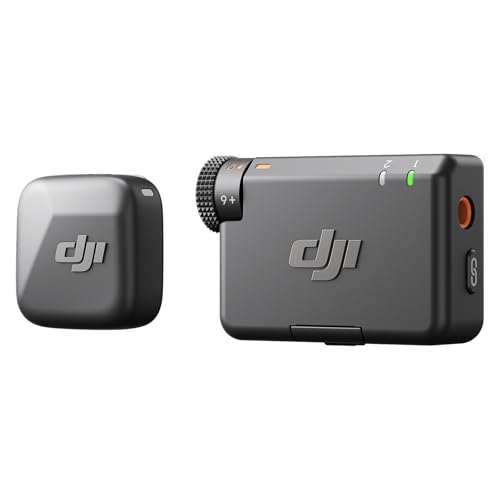
- 10g transmitter with up to 400m transmission range
- Two-level noise cancellation and automatic limiting
- Up to 10 hours of operating time
Best For: Solo creators wanting compact recording with simple level protection
Best Two-Mic Kit

- Two pre-paired transmitters for interviews and co-hosted videos
- GainAssist automatic level management
- Up to 21 hours with the charging case
Best For: Two-person smartphone recording on USB-C devices
Best Handheld Interview Mic
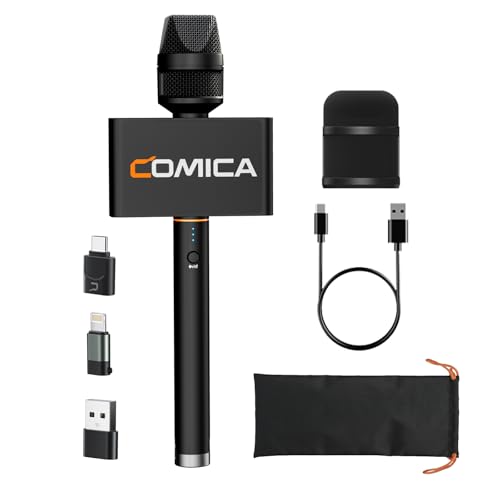
- 14mm cardioid condenser capsule for focused voice capture
- 48kHz/24-bit recording with one-key denoise
- Up to 15 hours of battery life
Best For: Handheld interviews, reporting, podcasting, and presenter-led videos
Best Value Studio Sound

- 48kHz/24-bit audio with 120dB SPL handling
- Three-level noise cancellation and furry windshields
- Up to 200m range with 18-hour alternating runtime
Best For: Mobile creators wanting clear, stable audio for livestreams and video
Best Multi-Device Flexibility
PQRQP 3-in-1 Wireless Mini Mic

- Works with phones, tablets, laptops, and cameras
- 328-foot 2.4G range with low latency
- Dual-mic setup offers up to 20 hours of runtime
Best For: Creators who record across multiple device types
Best Lightweight AI Noise Control

- 5g transmitters with Light and Strong AI noise cancellation
- 48kHz/24-bit audio with limiter and safety track
- 30-hour case battery and 328-foot transmission range
Best For: Discreet smartphone recording in varied environments
Best USB-C Noise-Reducing Pick

- Two transmitters for dual-speaker recording
- Active denoise, original-sound, and mute modes
- USB-C, Lightning, and computer connectivity
Best For: Creators needing flexible dual-mic recording
Best Lightweight Plug-and-Play Pick

- Connects without apps or Bluetooth
- USB-C and Lightning adapters included
- Up to 6 hours of recording with device charging
Best For: Creators who want fast, portable setup
Best Phone-Case-Friendly 2-Pack

- Two omnidirectional lavalier microphones
- Extended receiver fits most phone cases
- Automatic pairing with noise reduction and mute
Best For: Interviews and creators recording with phone cases
Best Mini Lav Mic – Hollyland Lark M2
The Hollyland Lark M2 is a strong pick among wireless microphones for smartphones when you want a tiny, discreet setup for vlogs, interviews, streaming, or mobile video. Its USB-C receiver works with compatible Android phones and newer USB-C iPhones, while the pre-paired system is ready to use quickly.
Best For: Creators who prioritize a lightweight lavalier microphone, long battery life, and adjustable noise cancellation.
Pros:
- Very lightweight 9g transmitter with a stated 1,000-foot line-of-sight range.
- 48kHz/24-bit audio, 70dB signal-to-noise ratio, and support for up to 115dB SPL.
- Up to 30 hours of total runtime with the charging case.
- One-click noise cancellation and app-based control options.
Cons:
- This listing’s receiver is USB-C, so Lightning iPhone users need the appropriate version or adapter.
- The maximum range depends on clear line-of-sight conditions.
The Lark M2 combines an especially small transmitter with strong audio specifications and useful controls. It is a practical choice for hands-free smartphone recording, particularly when extended runtime matters.
Best Ultralight Option – DJI Mic Mini
The DJI Mic Mini is one of the more streamlined wireless microphones for smartphones, offering a 10g transmitter, a USB-C phone adapter, and a receiver for general mobile content creation. Its automatic limiting and two-level noise cancellation help simplify recording in changing environments.
Best For: Smartphone creators who want a compact single-transmitter kit with reliable level control and DJI ecosystem compatibility.
Pros:
- Ultralight 10g transmitter designed to be discreet on camera.
- Up to 400m transmission range and 48kHz audio capture.
- Two noise-cancellation levels for quieter or busier environments.
- Automatic limiting helps reduce clipping from overly loud input.
Cons:
- This is a one-transmitter kit, so it is less suited to two-person recordings.
- The listed 10-hour operating time is shorter than some charging-case systems’ combined runtimes.
With its small form factor, automatic limiting, and flexible connection options, the Mic Mini is a convenient starting point for solo smartphone videos. DJI users may also benefit from its direct OsmoAudio connections with compatible devices.
Best Two-Mic Kit – RØDE Wireless Micro
The RØDE Wireless Micro is a convenient choice among wireless microphones for smartphones when you need to record two people. The pre-paired USB-C receiver connects directly to compatible phones, and GainAssist automatically manages levels without requiring an app or pairing process.
Best For: Interviews, co-hosted videos, and creators using iPhone 15 or later or Android phones with USB-C.
Pros:
- Includes two transmitters, making it suitable for two-person recordings.
- Pre-paired setup requires no app or manual pairing process.
- GainAssist automatically helps keep voice levels consistent.
- Charging case provides up to 21 hours of combined use and includes windshields.
Cons:
- USB-C phones only; it is not compatible with Lightning iPhones without the separate Lightning version.
- The system is designed for smartphone content creation rather than broad multi-device use.
The Wireless Micro focuses on speed and simplicity: dock the receiver, connect it to a compatible USB-C phone, and start recording. Its two-mic layout and automatic level assistance make it particularly practical for interviews and conversational content.
Best Handheld Interview Mic – COMICA Revo S
The COMICA Revo S takes a different approach to wireless microphones for smartphones, using a handheld interview design instead of a clip-on lavalier. Its cardioid capsule, three-level gain adjustment, and one-key denoise make it suited to reporters, interviewers, podcasters, and presenters recording directly to compatible devices.
Best For: Handheld interviews, street reporting, podcasts, and smartphone videos that benefit from a traditional microphone format.
Pros:
- 14mm condenser capsule with a cardioid pattern for focused voice capture.
- 48kHz/24-bit recording and one-key CalMix denoise.
- Three gain levels allow basic sensitivity adjustment.
- Built-in battery provides up to 15 hours of use.
Cons:
- The handheld form factor is less discreet and less hands-free than a lavalier.
- Lightning devices require an OTG-compatible USB-C-to-Lightning adapter.
The Revo S is a sensible fit when presentation style matters as much as portability. Its handheld body and cardioid pickup make it a natural choice for interviews and reports, while the USB-C receiver supports phones, tablets, and computers.
Best Value Studio Sound – Hollyland Lark A1
The Hollyland Lark A1 is a strong pick among wireless microphones for smartphones if you want high-resolution audio, dependable phone connectivity, and flexible noise control without stepping into premium pricing. Its USB-C/Lightning receiver connects directly to compatible phones for recording or live streaming without Bluetooth pairing.
Best For: Smartphone creators who record interviews, livestreams, vlogs, or presentations in changing indoor and outdoor environments.
Pros:
- 48kHz/24-bit recording and 120dB SPL handling help preserve clear audio during louder moments.
- Three noise-cancellation levels let you adjust between natural voice capture and stronger background-noise reduction.
- Up to 200m transmission range, lightweight 8g transmitters, and included furry windshields support mobile outdoor recording.
- Each transmitter runs up to 9 hours, with up to 18 hours using two transmitters alternately.
Cons:
- The receiver is powered by the connected mobile phone, so phone battery usage may matter during long sessions.
- The listed 18-hour figure depends on alternating two transmitters rather than continuous use from one transmitter.
Choose the Lark A1 if stable plug-and-play operation and polished sound matter more than Bluetooth convenience. Its direct receiver connection and adjustable noise control make it especially practical for creators who need predictable results while moving around.
Best Multi-Device Flexibility – PQRQP 3-in-1 Wireless Mini Mic
The PQRQP 3-in-1 is one of the more versatile wireless microphones for smartphones because its receiver is designed to work with iPhones, Android devices, iPads, laptops, and cameras. It combines plug-and-play setup with a long stated range, dual-microphone runtime, and useful controls for muting and reverb.
Best For: Content creators who switch between smartphones, computers, and cameras for interviews, livestreams, karaoke, or recording projects.
Pros:
- 48kHz/24-bit Hi-Fi audio and noise cancellation are designed for clear, low-distortion recordings.
- The 3-in-1 receiver supports iPhone, Android, iPad, laptop, and camera workflows.
- Up to 328 feet of 2.4G wireless range and low latency allow greater movement while recording.
- Dual microphones provide up to 20 hours of runtime, while one-touch mute and reverb add flexibility.
Cons:
- The feature-rich design may be more than needed for someone recording only simple smartphone videos.
- Reverb is useful for singing or narration but may not suit natural-sounding interviews.
The PQRQP stands out when compatibility is a priority. Its broad device support and dual-mic setup make it a practical choice for creators building a flexible recording kit rather than a phone-only system.
Best Lightweight AI Noise Control – BOYA mini 2
The BOYA mini 2 is a compact option among wireless microphones for smartphones, weighing just 5 grams per microphone while offering 48kHz/24-bit recording and adjustable AI noise cancellation. App control, a limiter, and a safety track make it appealing for creators who want more control over recordings without carrying bulky equipment.
Best For: Vloggers, interviewers, livestreamers, and short-form creators who prioritize discreet wearability, extended battery life, and protected audio levels.
Pros:
- Its 5g thumb-sized design is discreet and comfortable for extended wear.
- AI noise cancellation offers Light and Strong modes for different recording environments.
- 48kHz/24-bit audio, a limiter, and a -12dB safety track help preserve detail and reduce clipping risk.
- The charging case provides up to 30 hours of battery life, with transmission up to 328 feet.
Cons:
- This model does not support Bluetooth connectivity.
- Camera compatibility is limited to specified DJI Action and Pocket models; it does not support several listed brands and models.
- The supplied details specify a USB-C receiver, so users of other phone ports may need to confirm compatibility.
Pick the BOYA mini 2 if a nearly invisible microphone and recording safeguards are high priorities. Its app-based controls and safety track are particularly useful for creators who want to fine-tune sound and reduce the chance of unusable takes.
Best USB-C Noise-Reducing Pick – GoorDik Wireless Lavalier Mic
For creators comparing wireless microphones for smartphones, the GoorDik stands out with USB-C connectivity, active noise reduction, and a two-transmitter setup. It works with USB-C phones, including iPhone 15 models and Android devices, while included adapters expand compatibility to Lightning iPhones and computers.
Best For: Vloggers, interviewers, and content creators who want dual microphones, adjustable noise modes, and extended recording flexibility.
Pros:
- Includes two transmitters for recording multiple speakers.
- Offers noise-reduction and original-sound modes, plus mute control.
- Each transmitter provides 6–12 hours of use, with simultaneous charging.
- Includes wind muffs, foam covers, USB, and Lightning adapters.
Cons:
- Some Android phones may require OTG activation.
- Computer users may need to select it as the default input device.
The GoorDik is a versatile choice when you need two clip-on mics and broad device support. Its active denoise options and included wind protection make it especially practical for mobile recording in varied environments.
Best Lightweight Plug-and-Play Pick – Mini Mic Pro
The Mini Mic Pro is a straightforward option among wireless microphones for smartphones, connecting to iPhone, Android, tablets, and laptops without an app or Bluetooth pairing. Its compact design, included wind protection, and simultaneous device charging make it suited to quick recordings on the go.
Best For: Mobile creators making TikToks, YouTube videos, voiceovers, or interviews who prioritize simple setup and portability.
Pros:
- Works with both USB-C and Lightning devices.
- Plug-and-play operation requires no app or Bluetooth.
- Includes foam wind protection and a dead cat cover.
- Records for up to 6 hours per charge and allows device charging while recording.
Cons:
- Battery runtime is listed at up to 6 hours, shorter than some extended-session options.
- The supplied notes do not specify a dual-transmitter configuration.
Choose the Mini Mic Pro if convenience matters more than advanced controls. It combines a lightweight form factor with broad adapter support and useful outdoor wind protection for everyday mobile content.
Best Phone-Case-Friendly 2-Pack – MAYBESTA Wireless Mini Mic
The MAYBESTA two-pack is a practical choice for shoppers seeking wireless microphones for smartphones that support both current USB-C phones and Lightning devices. Its extended receiver is designed to work with most phone cases, while automatic pairing and noise reduction keep setup simple for vlogging, livestreaming, and interviews.
Best For: Phone-based creators who record with a case attached or need two lavalier microphones for interviews and shared presentations.
Pros:
- Includes two lavalier microphones for multi-person recording.
- Longer receiver helps accommodate most phone cases.
- Supports Android, Lightning iPhone and iPad models, USB-C devices, laptops, and tablets.
- Offers automatic connection, omnidirectional pickup, noise reduction, and mute functionality.
Cons:
- The notes do not specify an exact wireless range or battery runtime.
- Users must choose the appropriate adapter for their device.
MAYBESTA is a strong fit for creators who dislike removing a phone case before filming. With two microphones, broad compatibility, and automatic pairing, it is particularly useful for interviews, teaching, and collaborative videos.
How We Picked the Best Wireless Microphones for Smartphones
We focused on practical features that affect everyday recording: phone compatibility, connection type, microphone count, wireless range, battery runtime, charging convenience, noise reduction, and portability. We also considered whether each system suits solo creators, two-person conversations, interviews, presentations, or more polished production.
USB-C models are especially relevant for newer Android phones and USB-C iPhones, while users with Lightning iPhones should confirm adapter or receiver compatibility before buying. Product listings can change, so verify the included connectors and supported devices for your specific phone.
Quick Comparison
- Best all-around options: Hollyland Lark M2, DJI Mic Mini, and RØDE Wireless Micro offer compact designs and strong creator-focused features.
- Best for two speakers: Systems with two transmitters, such as the RØDE, Hollyland Lark A1, PQRQP, and MAYBESTA kits, simplify interviews and joint videos.
- Best for handheld use: The COMICA Revo S is better suited to presenters, reporters, and interviewers who prefer a handheld microphone.
- Best for value: The BOYA, PQRQP, USB-C lavalier, Mini Mic Pro, and MAYBESTA models provide accessible options for casual content.
Key Buying Factors for Wireless Microphones for Smartphones
Phone and Connector Compatibility
Check whether the receiver uses USB-C, Lightning, or a camera-compatible connection. A microphone that cannot connect directly to your phone may require an adapter, which can add cost and inconvenience.
One or Two Transmitters
A single transmitter is enough for solo videos, voiceovers, and presentations. Choose a two-transmitter kit for interviews, couples, podcasts, or any recording with two speakers.
Audio Quality and Noise Control
Look for clear voice reproduction and effective noise reduction when filming outdoors or in busy rooms. Noise cancellation can help, but it may alter voices in some situations, so adjustable or switchable processing is useful.
Range, Battery, and Charging
Longer range helps when the phone is positioned away from the speaker, but real-world obstacles can reduce stated distances. Consider total operating time, charging-case capacity, and whether the system can record while charging.
Size and Setup
Small clip-on transmitters are convenient for mobile creators. A handheld model may be more natural for street interviews, while a charging case makes compact lavalier kits easier to carry and protect.
Who Should Buy Which Wireless Microphones for Smartphones?
Solo creators should choose a compact single-transmitter kit such as the DJI Mic Mini, BOYA mini 2, or Hollyland Lark M2. Interviewers and co-hosts will benefit from two-transmitter sets like the RØDE Wireless Micro or Hollyland Lark A1. Reporters and presenters may prefer the handheld COMICA Revo S. Budget-conscious beginners can start with the PQRQP, USB-C lavalier, Mini Mic Pro, or MAYBESTA, provided the connector and recording-app compatibility match their phone. For the most reliable purchase, prioritize compatibility and microphone count before paying extra for maximum range.