
Driver fatigue monitors for cars can add an extra layer of protection when long hours, late nights, or repetitive routes make drowsiness more likely.
In this roundup, we focus on alert systems that are practical, easy to use, and suited to everyday drivers, truckers, and fleet vehicles.
Best 10 Driver Fatigue Monitors for Cars Picks for 2026
Cabin-Ready Anti-Sleep Alert
Driver Fatigue Alarm Monitor with Pupil Detection

- Pupil detection and voice alerts
- 8 IR LEDs for low-light use
- Tool-free mount for many vehicles
Best For: Long-haul drivers, taxis, buses, and seniors
Recorded-Safety Fatigue Monitor
Driver Fatigure Alarm Device with AI Face Detection

- AI face and eye detection
- 1080P night vision recording
- Triggers 20-second clips on alerts
Best For: Drivers who want alerts plus onboard video recording
Fast-Response Drowsiness Alarm
Driver Fatigue Alarm Device with Continuous Alerts

- 1-second alert response
- Flash, beep, and voice prompts
- 360° rotatable mounting bracket
Best For: Private cars, trucks, buses, and work vehicles
Wide-Angle Road Alert
Fatigue Driving Warning Alarm Device with Pupil Detection
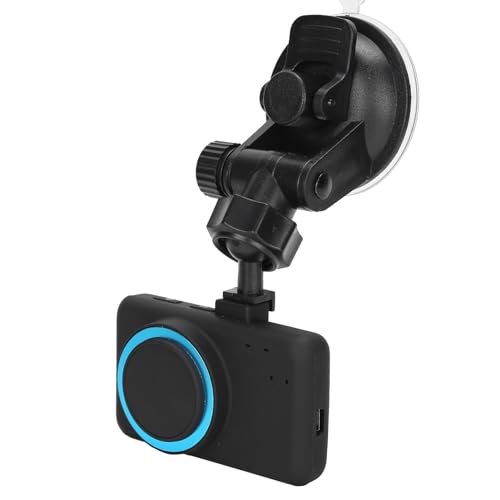
- 1-2 second warning response
- 60° detection angle
- Simple suction-cup installation
Best For: Drivers who want simple wide-angle fatigue monitoring
Smart Face-Tracking Monitor
Driver Fatigue Alarm Device with USB Car Plug

- Face and pupil tracking with AI learning
- Alerts within 1–2 seconds of eye closure
- Includes USB power and easy mounting options
Best For: Drivers who want a simple, camera-based fatigue monitor with broad drowsiness detection
Rotating-Suction Safety Alarm
Fatigue Driving Warning Device

- Pupil detection with voice prompts and warnings
- Rotating suction cup bracket for easier mounting
- Aimed at seniors, truck drivers, and frequent drivers
Best For: Drivers and truck operators who want a straightforward warning device with voice alerts
Dual-Core Continuous Alarm
Anti-Sleep Monitor for Long Drives

- Checks driver status up to 20 times per second
- Continuous alarm repeats until the driver wakes up
- Uses face, pupil, and motion detection together
Best For: Long-distance drivers who want a continuously repeating fatigue alarm
Premium Fatigue Detection Pick
Driver Fatigue Alarm with Voice Prompt

- Pupil detection and face recognition
- Voice prompts with blink monitoring
- Easy dashboard mounting with suction cup
Best For: Long-distance drivers and truck drivers
High-Tech Alert Option
Anti Sleep Driving Alert Monitor

- Infrared image capture with processor analysis
- Face recognition and blinking pattern detection
- Universal rotating ball sucker bracket
Best For: Drivers wanting active real-time fatigue alerts
Simple Safety Alert

- Vision AI algorithm with real-time capture
- Continuously reminding function
- Easy to install in large and small vehicles
Best For: Drivers wanting a straightforward anti-sleep monitor
Cabin-Ready Anti-Sleep Alert – Driver Fatigue Alarm Monitor with Pupil Detection
Driver fatigue monitors for cars can add an extra layer of awareness on long shifts, and this model focuses on pupil detection plus voice alerts to catch signs of drowsiness or distraction early. It’s designed for drivers who need a straightforward in-cabin warning system that installs quickly and works across a wide range of vehicles.
Best For: Long-haul drivers, taxis, buses, and senior drivers who want a simple plug-in safety reminder.
Pros:
- Pupil detection helps identify fatigue-related behavior before a full microsleep.
- 8 IR LEDs and voice alerts support use in low-light driving situations.
- Mounts on the dash, windshield, or center console with no tools required.
- Compatible with cars, trucks, buses, SUVs, and sedans.
Cons:
- No remote is included.
- It is not smart-home compatible.
- Focuses on alerting rather than recording driving footage.
This is a practical pick if you want a no-fuss fatigue alarm that’s easy to install and built for everyday commercial or commuter use. The emphasis is on fast setup and clear warnings rather than extra app-based features.
Recorded-Safety Fatigue Monitor – Driver Fatigure Alarm Device with AI Face Detection
For buyers comparing driver fatigue monitors for cars, this unit stands out by combining fatigue detection with 1080P video recording. It uses AI face and eye detection to trigger alerts quickly, while also saving short clips when warnings are activated, which may be useful if you want both a safety reminder and a basic incident record.
Best For: Drivers who want fatigue alerts plus onboard video recording in one device.
Pros:
- AI and infrared detection identify eye closure, head dropping, yawning, phone use, and smoking.
- 1080P night vision recording captures 20-second clips when alerts are triggered.
- 3M adhesive mount and 3-meter power cable make placement flexible.
- GPS version turns off the alarm below 20 km/h.
Cons:
- TF card support is optional, so storage may require an extra purchase.
- Wired installation may be less convenient than a battery-powered option.
- Only the GPS version includes the low-speed alarm shutoff behavior described in the notes.
This model makes sense if recording matters as much as fatigue warnings. It’s a more feature-rich option for drivers who want alerts, night vision capture, and a cleaner vehicle-mounted setup.
Fast-Response Drowsiness Alarm – Driver Fatigue Alarm Device with Continuous Alerts
If you want driver fatigue monitors for cars with a fast, straightforward warning style, this device focuses on rapid reminders and continuous alerts. It uses AI visual detection and closed-eye recognition to respond quickly, making it a practical fit for drivers who need an attention-grabbing safety prompt during long stretches behind the wheel.
Best For: Drivers of private cars, trucks, buses, and work vehicles who want a simple continuous alarm system.
Pros:
- 1-second reminders help alert drivers quickly when drowsiness is detected.
- Flashing lights, beeps, and voice prompts provide layered alerts.
- AI visual detection and upgraded pupil/motion recognition aim for high-accuracy monitoring.
- 360° rotatable bracket supports easy mounting on flat surfaces.
Cons:
- Battery-powered design may not suit every installation preference.
- No recording or night-vision feature is listed.
- Product details don’t specify vehicle-power compatibility or included wiring.
This is a solid choice if your priority is fast, repeated alerting rather than added features. The setup is broad enough for many vehicle types, which makes it useful as a general-purpose driver warning device.
Wide-Angle Road Alert – Fatigue Driving Warning Alarm Device with Pupil Detection
Among driver fatigue monitors for cars, this model emphasizes a wide detection angle and simple suction-cup installation. It’s built to watch for drowsiness or distraction with a fast response time, making it a straightforward option for drivers who want an easy-to-mount alert device without extra complexity.
Best For: Drivers who want a simple fatigue warning system with wide-angle monitoring.
Pros:
- Detects signs of drowsiness or distraction with a 1-2 second response time.
- 60° detection angle and 45-65 cm range support focused monitoring.
- Suction-cup buckle makes installation simple.
- Works with cars and trucks and is rated for -20℃ to 60℃ operation.
Cons:
- Details on alerts are limited compared with some multi-signal competitors.
- Power and installation notes are brief and not highly specific.
- No recording or app-based features are listed.
This is a practical, no-frills monitor for drivers who mainly want fast detection and broad compatibility. It keeps the focus on basic warning support and easy mounting rather than extra features.
Smart Face-Tracking Monitor – Driver Fatigue Alarm Device with USB Car Plug
If you want driver fatigue monitors for cars that keep watch in real time, this option focuses on facial recognition and rapid alerts. It tracks head movement, eye closure, yawning, distraction, and even behaviors like phone use or smoking, then gives a reminder within 1–2 seconds when drowsiness is detected.
Best For: Drivers who want a simple, camera-based fatigue monitor with broad drowsiness and distraction detection.
Pros:
- Monitors face information continuously, even if drivers change.
- Uses pupil tracking and AI learning to detect eye closure quickly.
- Detects several warning signs, including yawning, squinting, and distraction.
- Includes USB car plug and dual-port charging for easy setup.
Cons:
- Needs the camera aimed toward the driver’s face to work properly.
- Best suited to vehicles with a clear dashboard, console, or windshield mount location.
This is a practical pick if you want a low-fuss driver fatigue monitor that emphasizes quick reaction time and straightforward setup. Its strength is the mix of face tracking, pupil detection, and multiple alert triggers in one compact system.
Rotating-Suction Safety Alarm – Fatigue Driving Warning Device
For shoppers comparing driver fatigue monitors for cars, this model leans into alerting and simple installation. It uses recognition technology plus pupil detection to judge fatigue or inattention, and it adds voice prompts and warnings to help keep drivers engaged.
Best For: Drivers, seniors, and truck operators who want a straightforward warning device with voice alerts.
Pros:
- Uses pupil detection and recognition technology to assess fatigue.
- Provides voice prompts and warnings for inattentive driving.
- Rotating suction cup bracket makes mounting easier across vehicle types.
- Positioned as a practical safety kit for frequent drivers.
Cons:
- Product details are focused on warning functions rather than extra customization.
- Mounting depends on having a suitable suction-cup surface.
This is a no-nonsense choice if your priority is a driver alert system that is easy to install and loud about fatigue detection. It stands out most for its simple mounting and voice-based reminders rather than advanced feature depth.
Dual-Core Continuous Alarm – Anti-Sleep Monitor for Long Drives
Among driver fatigue monitors for cars, this one is built for aggressive detection and persistent alerts. It combines real-time face, pupil, and motion recognition with a dual-core processor that checks status up to 20 times per second and keeps sounding until the driver wakes up.
Best For: Long-distance drivers who want a continuously repeating fatigue alarm with fast detection.
Pros:
- Uses pupil, face, and motion detection together for driver monitoring.
- Dual-core chip checks driver status up to 20 times per second.
- Continuous reminder function keeps alarming until the driver responds.
- Claims 99.9% accuracy for closed-eye detection.
Cons:
- More aggressive alerting may be less suited to drivers who want gentler reminders.
- Camera-based use still depends on clear positioning toward the driver.
This is the strongest fit if you want a fatigue monitor that does more than give a single warning. The continuous alarm behavior and high-frequency checking make it especially appealing for longer drives where ongoing alertness matters most.
Premium Fatigue Detection Pick – Driver Fatigue Alarm with Voice Prompt
If you want driver fatigue monitors for cars that focus on early warnings, this alarm leans on pupil detection, face recognition, and blink-frequency monitoring to flag drowsiness and inattentiveness. It is built as a practical safety add-on for long-distance driving, especially when you want voice prompts rather than a passive visual alert.
Best For: Long-distance drivers, seniors, and truck drivers who want voice-based fatigue warnings.
Pros:
- Uses pupil detection and recognition technology for fatigue monitoring
- Tracks face recognition and blink frequency in real time
- Voice prompts provide immediate driving alerts
- Rotating suction cup bracket makes dashboard mounting straightforward
Cons:
- Designed for vehicle use, so it is not a general smart-home device
- Listed as compatible with cars, trucks, and motorcycles, which may matter if you only need a car-only unit
This model stands out if you want a straightforward monitor with a strong focus on detection features and audible warnings. The installation-friendly bracket and broad vehicle compatibility make it a practical choice for everyday road safety.
High-Tech Alert Option – Anti Sleep Driving Alert Monitor
Among driver fatigue monitors for cars, this unit is geared toward active alerting with infrared image capture, a high-speed digital processor, and voice warnings. It uses recognition technology and pupil detection to judge fatigue, making it a practical pick if you want a monitoring device that emphasizes real-time analysis.
Best For: Drivers and truck operators looking for a fatigue alarm with infrared analysis and voice warnings.
Pros:
- Uses pupil detection and recognition technology to assess fatigue
- Includes face recognition, blinking pattern detection, and voice warnings
- Infrared image capture and a high-speed digital processor support analysis
- Rotating ball sucker bracket supports universal mounting
Cons:
- No batteries required, so installation depends on the vehicle setup
- Product details are focused on function rather than extra accessory features
This is a strong option if your priority is fatigue recognition with layered alert methods. The universal mounting approach and active warning system make it easy to consider for mixed vehicle use.
Simple Safety Alert – Driver Fatigue Alarm Device
If you are comparing driver fatigue monitors for cars and want a simple safety-focused option, this alarm is built around continuous reminders and real-time capture. Its notes highlight a vision AI algorithm and an easy-install design for both large and small vehicles, which makes it a practical no-frills choice.
Best For: Drivers who want a straightforward anti-sleep monitor for large or small vehicles.
Pros:
- Uses a vision AI algorithm with real-time capture
- Continuously reminding function helps keep alerts active
- Easy to install in large and small vehicles
- Positioned as a safe driving alert device
Cons:
- No detailed feature list is provided in the supplied notes
- Fewer specific detection details than the other listed options
This model is best viewed as a simple, practical fatigue alert solution rather than a feature-heavy one. If you want a monitor that emphasizes continuous reminders and broad vehicle fit, it fits the brief well.
How We Picked the Best Driver Fatigue Monitors for Cars
We prioritized Driver Fatigue Monitors for Cars that offer clear drowsiness alerts, dependable detection methods, and straightforward installation. We also looked for features that matter in real-world use, such as voice prompts, infrared sensing, continuous reminders, and real-time face or eye tracking.
Because these products vary widely, we favored models that balance sensitivity with ease of setup. A good monitor should warn early without creating constant false alarms or adding unnecessary complexity.
Quick Comparison
Most options in this roundup fall into a few common categories: pupil or eye-based detection, face recognition or camera-based monitoring, and alarm-only systems designed for simple in-cab use. Some include recording features, while others focus purely on alerting the driver. For many buyers, the best choice comes down to whether they want basic audible warnings or a more advanced monitoring system.
Key Buying Factors for Driver Fatigue Monitors for Cars
Detection Method
Look for a system that matches your driving environment. Eye and pupil detection can be effective for identifying drowsiness, while face-tracking or vision-based algorithms may offer broader monitoring. If you drive at night or in low light, infrared support can be especially useful.
Alert Type
The most effective monitors use alerts that are hard to miss, such as sound prompts, voice warnings, or continuous alarms. If you drive with passengers or on long-haul routes, consider whether the alert volume and tone are appropriate for the cabin.
Installation and Power
Many Driver Fatigue Monitors for Cars connect through USB or a car plug, which makes them simple to install and move between vehicles. Check whether the unit is designed for quick mounting and whether it needs a stable power source for uninterrupted use.
Real-Time Monitoring Features
Some devices capture face information in real time or include video recording. These features can be helpful for added oversight, but they are not always necessary for everyday personal use. Choose the level of functionality that fits your driving habits and privacy preferences.
Vehicle and Use Case Fit
Truck drivers, rideshare drivers, and fleet operators may benefit from more advanced detection and continuous reminders. Casual drivers may prefer a simpler, lower-maintenance alarm system that is easy to operate on demand.
Who Should Buy Which Driver Fatigue Monitors for Cars?
If you drive long distances, work overnight, or manage multiple vehicles, prioritize the more advanced Driver Fatigue Monitors for Cars with stronger detection and recurring alerts. If you want a straightforward safety upgrade for occasional road trips or daily commuting, a simpler anti-sleep alarm may be enough. The best pick is the one that matches your driving pattern, the level of warning you want, and how much setup you are willing to handle.