
The best portable DAC with battery models make high-quality headphone listening easier away from a desk. They can add cleaner conversion, stronger amplification, balanced outputs, and wireless convenience to phones, tablets, computers, and digital audio players.
Our 2026 roundup includes compact USB dongles, Bluetooth receivers, and higher-powered headphone amplifiers. Use the guide below to compare battery needs, connection options, output power, and the features that matter most for your headphones.
Best 10 Portable Dac with Battery Picks for 2026
Balanced Battery Power

- 400mW balanced output for capable headphone drive
- 2200mAh battery with approximately 7–10 hours of playtime
- PCM 384kHz, DSD256, and MQA support
Best For: Wired headphone listeners seeking balanced power and hi-res support
Tiny Tunable Dongle

- Ten-band lossless PEQ via app or web interface
- 0.96-inch IPS color display with intuitive menus
- Supports up to 768kHz/32-bit PCM and DSD256
Best For: Phone and computer users wanting a compact, highly customizable USB DAC
Wireless Flagship Power

- Bluetooth 5.4 with LDAC and aptX Lossless support
- Up to 650mW output in Desktop Mode
- 3.5mm, 4.4mm, USB, and Bluetooth operating flexibility
Best For: Listeners wanting a versatile wireless and wired DAC/amp for demanding headphones
Ultra-Slim Magnetic Companion

- 2100mAh battery with up to 11 hours wireless playback
- 96g body with a 7.85mm ultra-slim design
- Bluetooth 5.4 plus 3.5mm and 4.4mm outputs
Best For: Mobile listeners wanting a slim, magnetic, long-lasting DAC/amp
Power Tuner

- 600mW balanced output
- 10-band persistent parametric EQ
- Dual DAC and dual power modes
Best For: Power users who want strong amplification and customizable sound
Balanced Pocket Pick

- 6–8 hours of battery life
- 400mW maximum output
- 4.4mm and 3.5mm headphone outputs
Best For: USB-connected mobile listening with balanced headphone support
Wireless Hi-Res Choice

- Bluetooth 5.1 with LDAC and aptX
- 4.4mm and 3.5mm outputs
- USB support up to PCM 384kHz and DSD256
Best For: Wireless hi-res listening with USB DAC flexibility
Best Android-Controlled Pick
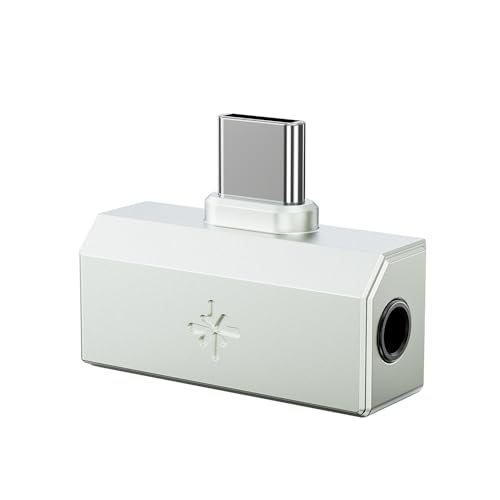
- 7g plug-in aluminum design
- 10-band PEQ tuning
- 3.5mm output with USB-C charging
Best For: Android users seeking a tiny, adjustable DAC
Best Dual-Output Value

- 3.5mm and 4.4mm outputs
- Up to 170mW per channel
- 60-step physical volume control
Best For: Users with multiple headphones and devices
Best High-Power Option

- Up to 550mW in desktop mode
- 3.5mm and 4.4mm outputs
- PCM 384kHz and DSD256 support
Best For: Driving demanding headphones from a compact dongle
Balanced Battery Power – iFi hip-dac3
The iFi hip-dac3 is a strong choice if you want a portable dac with battery power, balanced output, and enough drive for a broad range of headphones. Its 2200mAh battery provides approximately 7–10 hours of playtime, while dual USB-C ports simplify connection and charging.
Best For: Headphone listeners who want balanced amplification, broad hi-res format support, and physical controls in a compact aluminum design.
Pros:
- True balanced circuit with up to 400mW into a 32-ohm load.
- Supports PCM and DXD up to 384kHz, DSD256, and MQA decoding.
- Includes XBass, PowerMatch, and iEMatch features for flexible listening.
- Dual USB-C ports support convenient cable management and simultaneous charging.
Cons:
- Rated playtime of 7–10 hours is shorter than some larger battery-powered options.
- Its wired USB design does not provide Bluetooth connectivity.
The hip-dac3 balances portability and headphone-driving ability particularly well. It is a practical pick for listeners who prioritize wired sound quality and useful analog adjustments over wireless convenience.
Tiny Tunable Dongle – FiiO KA15
The FiiO KA15 is a compact USB DAC and headphone amplifier for listeners who want high-resolution playback without carrying a separate battery-powered chassis. It uses intelligent power management to help reduce phone battery consumption and offers extensive EQ control through the FiiO Control app or web interface.
Best For: Mobile listeners who value a very small USB DAC, customizable ten-band PEQ, and a built-in display.
Pros:
- Ten-band lossless PEQ supports saved, shared, and imported EQ curves.
- 0.96-inch IPS color display provides playback and settings information.
- Supports up to 768kHz/32-bit PCM and DSD256.
- Desktop Mode provides 560mW + 560mW balanced output according to the supplied notes.
Cons:
- The notes do not specify a built-in battery, so it is not a conventional battery-powered portable DAC.
- Desktop Mode may draw more power from the connected source.
The KA15 is best viewed as a feature-rich dongle rather than a standalone portable dac with battery. Its appeal lies in its tiny form factor, display, high-resolution decoding, and unusually flexible software control.
Wireless Flagship Power – FiiO BTR17
The FiiO BTR17 combines Bluetooth, USB DAC, and headphone-amplifier functions with a built-in portable design. For users comparing a portable dac with battery options, its three operating modes offer flexibility: PC soundcard, Bluetooth DAC/amp, and smartphone tail DAC/amp. Desktop Mode can provide up to 650mW while external USB power supplies the device.
Best For: Listeners who want one high-output DAC/amp for Bluetooth use, wired USB playback, and demanding headphones.
Pros:
- Bluetooth 5.4 with LDAC, aptX Adaptive, and aptX Lossless support.
- Dual ES9069Q DACs and THX AAA 78+ amplification provide a high-performance design.
- Supports up to 768kHz/32-bit audio, DSD512, and full MQA decoding.
- Offers 3.5mm unbalanced and 4.4mm balanced outputs plus app and web PEQ.
Cons:
- The supplied notes do not state the internal battery capacity or standalone playtime.
- Its larger feature set may be more than needed for simple wired listening.
The BTR17 is the most versatile option in this group for users who switch between wireless and wired sources. Its high output and multiple modes make it suitable for both mobile listening and more demanding headphone setups.
Ultra-Slim Magnetic Companion – Khadas Tea Pro
The Khadas Tea Pro is a particularly portable dac with battery power, measuring 7.85mm thick and weighing 96g. Its 2100mAh battery delivers up to 11 hours wirelessly or 8 hours in wired use, while Bluetooth 5.4, magnetic attachment, and dual headphone outputs make it convenient for mobile listening.
Best For: Smartphone users who want a slim, screen-equipped DAC/amp with magnetic mounting and both balanced and single-ended outputs.
Pros:
- 2100mAh battery provides up to 11 hours wireless or 8 hours wired playback.
- Very slim 7.85mm design weighs only 96g.
- Supports 3.5mm and 4.4mm outputs, Bluetooth 5.4, PCM up to 768kHz/32-bit, and DSD512.
- MagSafe-compatible magnetic design and 0.95-inch AMOLED display suit phone use.
Cons:
- Magnetic attachment is specifically suited to compatible iPhone models and cases.
- The notes do not provide a specific output-power rating.
Tea Pro stands out for combining a slim body, useful display, substantial battery, and wireless connectivity. It is a strong travel-focused choice when easy phone attachment and long playback matter as much as format support.
Power Tuner – Protocol Max
The Protocol Max is a strong choice if you want a portable DAC with battery power, high output, and extensive sound customization. Its dual DAC design, 600mW balanced amplification, and persistent 10-band parametric EQ make it especially flexible for demanding headphones and tailored listening.
Best For: Listeners who want powerful amplification and saved EQ profiles in a compact USB DAC.
Pros:
- Up to 600mW through the 4.4mm balanced output.
- Dual Cirrus Logic CS43198 DAC chips and dual SGM8262-2 amplifiers.
- 10-band parametric EQ can be adjusted and saved without an additional app.
- Includes both 4.4mm balanced and 3.5mm single-ended outputs.
Cons:
- Not water resistant.
- Its feature set may be more than casual listeners need.
With Eco and Boost power modes, the Protocol Max can prioritize battery conservation or output performance. It is a particularly capable pick for users who want portable power and detailed control, though its appeal depends on whether you will use the EQ and balanced output.
Balanced Pocket Pick – iFi Hip-dac2 Gold Edition
The iFi Hip-dac2 Gold Edition is a practical portable DAC with battery power for phone, tablet, PC, and Mac listening. It combines a slim aluminum design with 6–8 hours of stated battery life, USB connectivity, and both balanced and unbalanced headphone outputs.
Best For: Mobile listeners who want a straightforward battery-powered DAC with balanced headphone support.
Pros:
- Provides 6–8 hours of battery life depending on use.
- Supports 400mW maximum amplifier output for IEMs and over-ear headphones.
- Offers 4.4mm balanced and 3.5mm unbalanced outputs.
- Includes USB-C OTG, USB 3.0, and USB-A-to-USB-C cables.
Cons:
- Uses USB input only and does not provide Bluetooth connectivity in the supplied details.
- Its 0.23 kg weight is higher than some ultra-light portable options.
The Hip-dac2 Gold Edition focuses on simple wired portability rather than a long list of controls. Its battery runtime and output flexibility make it an easy fit for everyday mobile use, especially if your source device connects over USB.
Wireless Hi-Res Choice – FiiO BTR7 Bluetooth DAC
The FiiO BTR7 is a versatile portable DAC with battery power for listeners who prefer wireless convenience alongside USB DAC operation. Bluetooth 5.1, LDAC and aptX support, dual headphone outputs, and a built-in microphone give it broader everyday functionality than a wired-only portable amplifier.
Best For: Users who want a portable Bluetooth receiver that can also serve as a high-resolution USB DAC.
Pros:
- Supports Bluetooth 5.1 with LDAC, aptX Adaptive, aptX HD, AAC, and SBC.
- Includes both 4.4mm balanced and 3.5mm single-ended outputs.
- Supports PCM up to 384kHz, native DSD256, and MQA rendering with a compatible player.
- Built-in microphone and cVc 8.0 support Bluetooth voice calls.
Cons:
- The supplied notes do not specify battery runtime.
- Its extensive wireless and format support may be unnecessary for strictly wired setups.
The BTR7 stands out when connectivity matters as much as amplification. It can work with a smartphone, speaker, or other compatible setup and offers a useful mix of wireless listening, USB DAC functionality, and balanced output.
Best Android-Controlled Pick – FiiO/Snowsky Tiny A
The FiiO/Snowsky Tiny A is a practical portable dac with battery-friendly USB-C connectivity and an ultra-light 7g design. Its plug-in form minimizes cable clutter, while the 3.5mm output and separate USB-C charging port allow listening and charging at the same time. Note that app control is limited to Android, with PC web control also available.
Best For: Android listeners who want a tiny, adjustable DAC with simultaneous charging and playback.
Pros:
- Supports PCM 384kHz/32-bit and DSD256 decoding.
- Built-in 10-band PEQ, preset switching, and volume control.
- Lightweight CNC-machined aluminum body weighs just 7g.
- Supports inline headphone controls and call recording.
Cons:
- The control app does not support iOS.
- Uses a 3.5mm headphone output rather than a balanced connection.
The Tiny A stands out for travelers who prioritize minimum size, onboard tuning, and charging flexibility. Its Android-focused controls make it less universal than some rivals, but the plug-in design is exceptionally easy to carry.
Best Dual-Output Value – Fosi Audio DS2
The Fosi Audio DS2 is a versatile portable dac with battery-conscious operation and both 3.5mm single-ended and 4.4mm balanced outputs. Its dual CS43131 DAC design supports high-resolution playback, while physical buttons provide independent 60-step volume adjustment without requiring complicated setup.
Best For: Phone, tablet, and computer users who need flexible headphone connections and strong output power.
Pros:
- Supports PCM 32-bit/384kHz and DSD256 decoding.
- Offers 3.5mm and 4.4mm balanced outputs.
- Delivers up to 170mW per channel at 32 ohms.
- Works with iPhone 15 models, iPads, Android devices, PCs, laptops, and Macs.
Cons:
- It is a USB-powered dongle rather than a separately battery-powered DAC.
- Its 1.92-ounce weight is higher than ultra-light alternatives.
The DS2 is a strong all-purpose choice when output flexibility matters more than the smallest possible footprint. Its balanced port and substantial drive capability make it particularly appealing for listeners with multiple headphones.
Best High-Power Option – FiiO/JadeAudio KA13
The FiiO/JadeAudio KA13 is a high-output portable dac for listeners who need more power in a compact USB-C adapter. Its desktop mode raises balanced output to 550mW, and the dual 3.5mm and 4.4mm connections support a broad range of headphones and music sources.
Best For: Headphone enthusiasts who want desktop-style power from a small Android, iOS, PC, or music-player accessory.
Pros:
- Desktop mode provides up to 550mW through the balanced output.
- Dual CS43131 DACs and dual SGM8262 op-amps.
- Supports PCM 384kHz/32-bit and DSD256.
- FIIO Control app can adjust RGB lighting, filters, and SPDIF output.
Cons:
- High-power desktop mode may draw more power from the connected source.
- App-based controls add features but may be unnecessary for plug-and-play users.
The KA13 is the performance-focused pick in this group. Choose it when driving demanding headphones is a priority, while keeping in mind that its 550mW desktop mode is more power-oriented than battery-saving.
How We Picked the Best Portable Dac with Battery
We selected models across several use cases rather than treating maximum specifications as the only measure of quality. Our comparison considers connection flexibility, battery-powered operation, wired and wireless support, output options, amplification strength, high-resolution format support, portability, and useful controls such as volume adjustment or equalization.
Because the lineup includes both complete battery-powered units and compact USB DACs, check each product’s power design and intended connection before buying. A small dongle may draw power from a phone, while a Bluetooth receiver or dedicated portable amplifier can operate independently for greater convenience.
Quick Comparison
- Best for balanced wired listening: Choose a model with a 4.4mm output and enough power for your headphones.
- Best for wireless use: Select a Bluetooth DAC/amp with a modern codec such as LDAC or aptX Lossless.
- Best for demanding headphones: Prioritize output power, gain options, and stable performance with your headphone impedance.
- Best for phones and tablets: Confirm the connector, operating-system support, and whether the unit needs separate charging.
- Best for pocketability: Compare dimensions, weight, cable arrangement, and whether the controls are easy to use while moving.
Key Buying Factors for a Portable Dac with Battery
Battery Life and Charging
A built-in battery prevents the DAC from draining your phone and is especially useful during long trips. Check claimed playback time, charging connector, charging speed, and whether the device can play while charging. Battery capacity matters less than real-world endurance and your willingness to recharge another device.
Power and Headphone Compatibility
In-ear monitors usually need little power, but high-impedance or low-sensitivity headphones may benefit from a stronger amplifier. Balanced outputs can provide additional power on compatible headphones, but they do not automatically improve every setup. Review output ratings at the connection you plan to use.
Inputs, Outputs, and Codecs
USB-C is broadly useful, while Bluetooth adds freedom from the source device. If wireless listening is important, compare codec support with your phone or player. Also verify whether the unit includes both 3.5mm single-ended and 4.4mm balanced outputs, and remember that balanced cabling is required to use the latter.
Format Support and Tuning
High PCM and DSD ratings can be useful for specific libraries, but they should not outweigh noise performance, reliable software, and headphone matching. PEQ, bass enhancement, and gain controls may provide more practical value than headline resolution numbers.
Who Should Buy Which Portable Dac with Battery?
Frequent travelers should favor a battery-powered Bluetooth receiver or compact DAC/amp with dependable battery life and simple controls. Desktop-to-mobile listeners may prefer a higher-powered model with USB input and both balanced and unbalanced outputs. Phone users with efficient IEMs can save space with a small USB DAC, while owners of demanding over-ear headphones should focus on amplification power and gain compatibility. If you switch among phones, computers, and players, choose the model with the broadest input support and the fewest adapters.