
Clear, dependable sound matters during sermons, worship services, weddings, and community events. The right wireless microphone system can give speakers freedom to move while keeping setup manageable for volunteers and technicians.
We selected 10 wireless microphone systems with different channel counts, microphone combinations, ranges, and operating features so you can match your church’s stage, room size, and budget.
Best 10 Wireless Microphones for Church Picks for 2026
Reliable Dual-Channel Pick

- Auto-scanning UHF frequencies help reduce interference.
- Two handheld mics with up to 328-foot line-of-sight range.
- Metal construction and cardioid pickup support regular use.
Best For: Churches needing two handheld microphones with flexible frequency setup.
Large-Group Value
Aveek Four-Mic Wireless System

- Includes four cardioid dynamic handheld microphones.
- Rechargeable batteries provide up to 40 hours of stated use.
- 262-foot range and 1/4-inch output suit many PA setups.
Best For: Churches needing four handheld microphones for group services or events.
Most Versatile Setup

- Combines two handheld and two bodypack channels.
- Includes headset and lavalier microphones for hands-free use.
- Fixed frequencies and individual controls support repeatable setups.
Best For: Churches needing handheld, headset, and lapel microphone options.
Simple JBL Pair
JBL Dual-Channel Wireless Microphone System
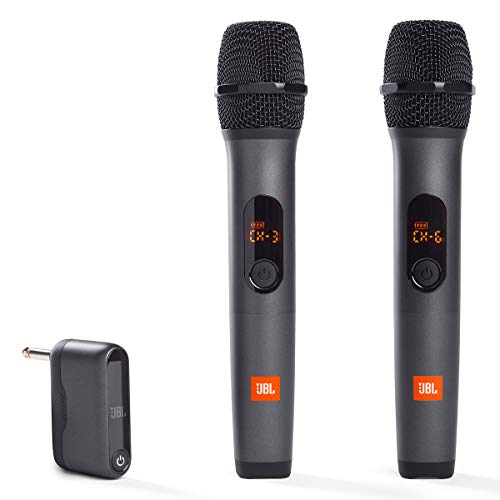
- Includes two microphones and a dual-channel UHF receiver.
- Plug-and-play setup is intended for quick operation.
- Designed for select JBL PartyBox speakers with replaceable AA batteries.
Best For: Small gatherings using compatible JBL PartyBox equipment.
Best for Fixed Church Setups

- Four cardioid UHF handheld microphones
- Up to 260 ft range with individual volume controls
- All-metal receiver with four XLR outputs
Best For: Fixed church audio setups needing four handheld microphones
Best for Hands-Free Ministry
Compact 4-Channel Headset System
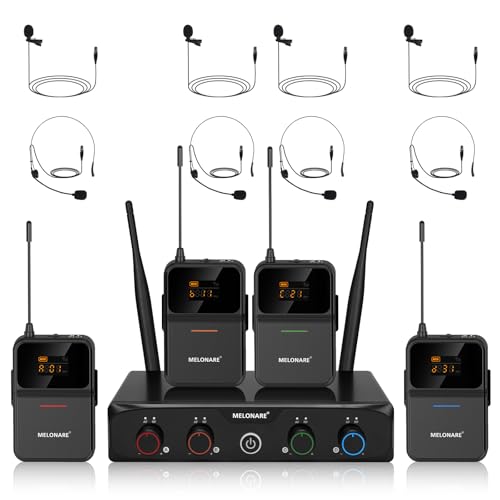
- Four headset-and-lapel microphone combinations
- Up to 200 ft UHF coverage with frequency hopping
- Color-coded bodypacks include mute buttons
Best For: Church speakers and presenters who need hands-free movement
Best for Larger Congregations

- Eight cardioid UHF handheld microphones
- Up to 260 ft range with eight XLR outputs
- Individual volume controls and all-metal construction
Best For: Larger churches needing multiple handheld channels
Best Multi-Mic Value

- Four handheld UHF channels with selectable frequencies
- Auto Scan and IR sync help simplify setup
- Metal build with cardioid pickup and mute controls
Best For: Churches needing several handheld microphones for worship and events
Best for Large Teams
8-Channel UHF Microphone System

- Eight channels support larger worship and event teams
- 8x40 frequencies with Auto Scan and frequency lock
- Includes eight cardioid handheld microphones
Best For: Large churches needing multiple simultaneous handheld microphones
Best Hands-Free Flexibility

- Combines handheld, headset, and lavalier microphones
- Bodypack transmitters enable discreet hands-free use
- Auto Scan and directional pickup support reliable operation
Best For: Churches needing flexible microphones for sermons, worship, and presentations
Reliable Dual-Channel Pick – Phenyx Pro PTU-71-2H
For churches that need two handheld microphones with dependable coverage, the Phenyx Pro PTU-71-2H combines auto-scanning UHF frequencies, cardioid pickup, and a stated line-of-sight range of up to 328 feet. Its dual-channel design suits sermons, worship vocals, and announcements where quick frequency setup matters.
Best For: Churches needing two handheld mics and flexible frequency management.
Pros:
- Auto Scan helps identify lower-interference frequencies, with frequency-lock functionality.
- Offers up to 328 feet of line-of-sight operation and supports multiset operation of up to 16 transmitters.
- Cardioid dynamic microphones and tuned EQ aim for clear, balanced vocal reproduction.
- Includes metal construction, mute controls, and replaceable microphone heads.
Cons:
- The package includes handheld microphones only, not headset or lapel options.
- It requires a compatible PA system, mixer, or speaker for sound output.
This is a practical wireless microphones for church option when reliable two-person coverage and frequency flexibility are higher priorities than microphone-type variety.
Large-Group Value – Aveek Four-Mic Wireless System
The Aveek four-microphone system is designed for churches that regularly need several speakers or vocalists onstage. It provides up to 262 feet of stated range, low-latency transmission, individual volume control, and rechargeable microphones rated for up to 40 hours of use.
Best For: Group services, worship teams, and events requiring four handheld microphones.
Pros:
- Four dynamic cardioid handheld microphones support group performances and services.
- Built-in rechargeable batteries offer up to 40 hours of use with Type-C charging.
- Standard 1/4-inch receiver output works with PA systems, mixers, and powered speakers.
- Stated 262-foot range and noise-reduction features support larger venues.
Cons:
- The receiver randomly assigns a channel when pairing with a microphone.
- It is not compatible with laptops, iPads, cellphones, or AV receivers according to the supplied notes.
- The package does not include headset or lapel microphones.
Choose this system when a church needs four handheld transmitters and wants to reduce routine battery replacement through rechargeable microphone packs.
Most Versatile Setup – Phenyx Pro PTU-5000-2H2B
The Phenyx Pro PTU-5000-2H2B stands out among wireless microphones for church because it combines two handheld microphones with two bodypack transmitters, headsets, and lavalier microphones. Fixed UHF frequencies, individual volume controls, and four XLR outputs make it suited to installations that need different microphone styles.
Best For: Churches mixing handheld vocals with headset or lapel microphones.
Pros:
- Four channels include two handheld and two bodypack microphone options.
- Headset and lavalier microphones support hands-free speaking and teaching.
- Fixed frequencies, memory settings, LCD frequency display, and individual volume controls simplify repeat setup.
- All-metal receiver construction and up to 260 feet of stated range support venue use.
Cons:
- Fixed frequencies may provide less flexibility than an auto-scan system.
- Battery operation is listed at up to eight hours, shorter than some rechargeable alternatives.
- The system is not intended for multiset operation.
This is a strong choice for churches with varied service roles, especially when pastors, presenters, and singers need different microphone formats from one receiver.
Simple JBL Pair – JBL Dual-Channel Wireless Microphone System
The JBL dual-channel wireless microphone system is a straightforward option for churches already using compatible JBL PartyBox speakers. It includes two microphones, a dual-channel UHF receiver, plug-and-play setup, and replaceable AA batteries for uncomplicated vocal or announcement use.
Best For: Small church gatherings using compatible JBL PartyBox equipment.
Pros:
- Two microphones can connect through the dual-channel receiver and mix both voices through the speaker.
- Plug-and-play operation is designed for quick setup.
- Replaceable AA batteries make power changes simple.
- JBL describes the system as providing clear sound without stated sticking, delay, or distortion.
Cons:
- Compatibility is specifically listed for select JBL PartyBox models rather than general PA systems.
- The supplied notes state up to six hours of playback, which may require battery planning for longer services.
- The microphones use plastic enclosures and have fewer connection details than the other systems listed.
This system makes the most sense for a portable church setup centered on a compatible JBL PartyBox; owners of conventional mixers or installed PA systems should verify compatibility first.
Best for Fixed Church Setups – 4-Channel Handheld System
For churches seeking wireless microphones for church services, the Phenyx Pro PTU-5000-4H combines four handheld UHF microphones with individual receiver volume controls. Its fixed-frequency design is suited to a consistent setup where dependable, repeatable operation matters.
Best For: Churches needing four handheld microphones for worship, speeches, conferences, or other services with a fixed audio setup.
Pros:
- Four cardioid handheld microphones help capture vocals while rejecting unwanted noise.
- Up to 260 feet of wireless movement is useful for presenters and performers.
- Individual volume controls, four XLR outputs, and a memory switch support quick setup and balancing.
- All-metal construction is designed for heavy-duty use.
Cons:
- Fixed frequencies may be less flexible than a system designed for broader frequency coordination.
- Requires an amplifier, mixer, PA system, or speaker for sound output.
- The system is not intended for multiset operation.
This is a practical choice when a church wants several handheld microphones and a straightforward rack-style receiver. The included batteries and plug-and-go features can simplify installation, while the fixed-frequency limitation makes it most suitable for a dedicated, stable setup.
Best for Hands-Free Ministry – Compact 4-Channel Headset System
The MELONARE MWM-41-4B is a strong option for churches comparing wireless microphones for church use where speakers need to move freely. Its four bodypacks work with included headset and lapel microphone combinations, making it suitable for hands-free speaking and presentations.
Best For: Churches, conferences, and events requiring four hands-free headset or lapel microphones with a compact receiver.
Pros:
- Includes four headset-and-lapel microphone combinations for flexible hands-free use.
- Offers up to 200 feet of coverage with UHF transmission and frequency hopping.
- Four frequency groups with ten frequencies each support larger coordinated setups.
- Color-coded bodypacks and mute buttons help simplify multi-user operation.
Cons:
- The omnidirectional headset and lapel microphones may pick up more surrounding sound than a directional handheld microphone.
- It uses bodypacks rather than handheld microphones, which may not suit vocal performers.
- Requires an amplifier, mixer, PA system, or speaker for audible output.
Its compact half-rack receiver and built-in antenna make this system convenient for transport and installation. The hands-free format is particularly useful for pastors, presenters, teachers, and ministry teams who need to speak while moving.
Best for Larger Congregations – 8-Channel Handheld System
For larger worship teams and church events, the Phenyx Pro PTU-4000-8H provides eight UHF handheld microphones in one fixed-frequency system. It is designed for services, lectures, conferences, and performances that need more simultaneous handheld channels.
Best For: Larger churches and venues needing up to eight handheld microphones with separate receiver outputs.
Pros:
- Eight cardioid handheld microphones support larger teams and events.
- Up to 260 feet of wireless freedom provides room for presenters and performers to move.
- Eight XLR outputs and individual volume controls allow channel-by-channel connection and balancing.
- All-metal construction and included batteries are suited to regular event use.
Cons:
- Fixed frequencies may limit flexibility when coordinating with other wireless systems.
- Requires external amplification or a PA system for sound output.
- Its eight-channel format may be more equipment than a small church needs.
This system makes the most sense when a church regularly coordinates multiple singers, speakers, or performers. Its dedicated receiver controls and individual XLR outputs provide useful sound-management options, but the larger channel count and fixed-frequency design favor established installations over small, changing setups.
Best Multi-Mic Value – 4-Channel UHF Handheld System
For churches needing several handheld microphones without moving to an eight-channel setup, this four-channel UHF system is a practical option. Auto Scan helps identify lower-interference frequencies, while IR synchronization, cardioid pickup, and a claimed 290- to 328-foot line-of-sight range support straightforward service and event use.
Best For: Churches using multiple handheld microphones for worship, speaking, weddings, or other events.
Pros:
- Four channels with 40 selectable frequencies per channel.
- Auto Scan, frequency lock, and IR synchronization simplify setup.
- Includes four handheld microphones with cardioid pickup, mute functions, and replaceable heads.
- Metal construction and included batteries support regular use.
Cons:
- Provides handheld microphones only, so it is less suited to discreet hands-free speaking.
- Its 1/4-inch audio connection may require compatibility planning with some church audio systems.
This is a well-rounded choice when the ministry primarily needs four handheld channels and values durable construction, frequency flexibility, and simple pairing.
Best for Large Teams – 8-Channel UHF Microphone System
Churches with larger worship teams, rotating speakers, or frequent events may benefit from this eight-channel UHF system. It offers 8×40 selectable frequencies, Auto Scan, IR pairing, and a stated 290- to 328-foot line-of-sight range, giving users more microphone capacity than a typical four-channel package.
Best For: Larger churches and production teams that need up to eight simultaneous handheld microphones.
Pros:
- Eight channels and 8×40 selectable UHF frequencies provide substantial capacity.
- Auto Scan and frequency lock help manage interference.
- Includes eight handheld microphones with cardioid pickup and mute functions.
- Metal receiver and microphones are designed for durable regular use.
Cons:
- The package is more equipment than smaller congregations may need.
- All included microphones are handheld rather than headset or lavalier models.
- It requires 16 AA batteries, adding to ongoing battery management.
Choose this model when microphone count is the priority. Its eight-channel layout is particularly useful for larger services, ensembles, and church events that would quickly outgrow a smaller system.
Best Hands-Free Flexibility – 4-Channel Mixed Mic System
For churches that need both handheld and hands-free options, this four-channel UHF system combines two handheld microphones with bodypack transmitters, lapel microphones, and headsets. Auto Scan, IR synchronization, selectable frequencies, and directional pickup make it adaptable for sermons, worship, presentations, and meetings.
Best For: Churches needing flexible handheld, headset, and lavalier microphone configurations.
Pros:
- Includes two handheld microphones plus two bodypack transmitters.
- Two lapel microphones and two headsets support discreet, hands-free speaking.
- Auto Scan, frequency lock, and IR synchronization help reduce setup friction.
- Cardioid handheld pickup and directional headset/lavalier microphones help reject ambient sound.
Cons:
- Only four wireless channels are available.
- Bodypack microphones add components that require more setup than an all-handheld kit.
- The supplied notes do not specify a dedicated charging system, and the package uses AA batteries.
This is the most versatile choice of the three for church environments with varied roles. It can cover a pastor with a headset or lavalier while keeping handheld microphones available for worship leaders and speakers.
How We Picked the Best Wireless Microphones for Church
We focused on systems that suit common church audio needs, from a single pastor or worship leader to larger services with multiple speakers and performers. Our comparison emphasizes channel capacity, handheld and bodypack configurations, operating range, receiver design, setup features, and the practical demands of recurring weekly use.
UHF systems are especially useful in larger venues because they can provide stable connections across a room when properly coordinated. Auto-scan models may simplify frequency selection, while fixed-frequency systems can work well when the installation is consistent and channels are carefully planned.
Quick Comparison
- Best for two handheld users: Dual-channel systems such as the Phenyx Pro PTU-71-2H and JBL two-microphone system.
- Best for larger teams: Four- and eight-channel systems provide more microphones for worship groups, panel discussions, and events.
- Best for mixed performers: Systems with handheld and bodypack transmitters offer more flexibility for singers, speakers, and instrument users.
- Best for easier setup: Auto-scan systems can help identify usable frequencies with less manual configuration.
Key Buying Factors for Wireless Microphones for Church
Channel Count
Choose enough channels for everyone who may need a microphone at the same time, not just the primary service. Two channels may be sufficient for a pastor and worship leader, while four or eight channels are better for choirs, panels, productions, and special events.
Microphone Type
Handheld microphones are straightforward for singers and speakers. Bodypack systems paired with lavalier or headset microphones allow hands-free delivery and are useful for pastors, presenters, and performers who move frequently.
Frequency Management
Look for clear frequency controls, auto-scan capability, and receiver displays that make troubleshooting easier. In venues with nearby wireless systems, careful frequency coordination is important to reduce interference.
Range, Latency, and Power
Confirm that the stated range suits the sanctuary and any backstage or overflow areas where users may walk. Low latency helps speech and singing feel natural. Also check battery requirements, included accessories, antenna placement, and whether replacement transmitters or batteries are easy to obtain.
Receiver Connections and Installation
Verify that the receiver outputs match your mixer or sound system. A rack-friendly receiver can create a cleaner permanent installation, while a compact unit may be preferable for portable setups shared among rooms.
Who Should Buy Which Wireless Microphones for Church?
Small churches and simple services should prioritize a dependable two-channel system that is easy for volunteers to operate. Growing congregations should consider four channels to support multiple speakers and worship roles without immediately requiring another receiver. Larger churches, production teams, and venues hosting frequent events will benefit from eight-channel systems, provided the mixer has enough inputs and the team can coordinate frequencies.
For hands-free sermons or presentations, choose a package with bodypack transmitters. For vocal-heavy worship, handheld-focused systems are usually the simpler choice. Before buying, count simultaneous users, measure the performance area, check available mixer inputs, and confirm local frequency requirements. Those steps will help you choose Wireless Microphones for Church that remain practical long after installation.