
Choosing the best audio mixer for live bands means balancing channel count, sound quality, monitoring control, portability, and the connections your performers actually need. A compact mixer may suit a small acoustic group, while a larger band can benefit from extra inputs, onboard effects, USB recording, and phantom power.
This roundup compares 10 mixers across established brands and feature-rich budget options, helping you narrow the field for rehearsals, clubs, houses of worship, streaming, and small venue performances.
Best 10 Audio Mixer for Live Bands Picks for 2026
Clean Analog Control

- D-PRE preamps with natural sound
- 3-band EQ and high-pass filters
- Rugged chassis with +48V phantom power
Best For: Small bands and simple analog live setups
Connected Gig Mixing

- Bluetooth playback and USB-C recording
- 24 GigFX+ effects with tap tempo
- Onyx preamps on every mic channel
Best For: Bands combining live sound with streaming or recording
Compact Essentials

- Eight-channel compact analog design
- 3-band EQ on every channel
- Aux send with stereo returns
Best For: Small bands and straightforward rehearsal mixing
Feature-Packed Input Control

- 12 mic inputs plus two stereo channels
- 99 DSP effects with display screen
- USB recording and Bluetooth playback
Best For: Larger live setups needing effects and connectivity
Flexible 6-Channel Pick

- Six channels with four XLR inputs and 48V phantom power
- Bluetooth and USB playback or recording support
- Three-band EQ and 16 built-in DSP effects
Best For: Small bands, karaoke, streaming, and home recording
Reliable Stage Value
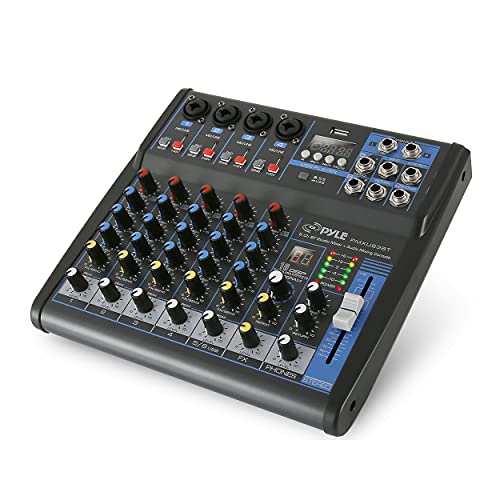
- Six channels with XLR, 1/4-inch, and phantom-power support
- Bluetooth, USB, flash-reader, and MP3 compatibility
- Steel chassis with sealed controls and LED peak indicators
Best For: Small live bands, rehearsals, karaoke, and studio setups
Expanded Input Choice

- Eight channels with XLR and 1/4-inch input support
- USB recording, Bluetooth playback, and headphone monitoring
- Per-channel EQ, gain, FX, PFL, fader, and peak controls
Best For: Small bands, live shows, streaming, and recording
Versatile 6-Channel Pick
Bluetooth Mixer with DSP Effects

- Four XLR and two stereo line inputs
- 99 DSP effects with 7-band output EQ
- Bluetooth, USB, AUX, and 48V phantom power
Best For: Small bands and flexible live or recording setups
Compact Control Choice
4-Channel Mixer with Compressor

- Dedicated compressor and 3-band EQ per channel
- Dual AUX sends for effects or monitors
- 99 DSP, USB, Bluetooth, PAD, and phantom power
Best For: Small ensembles needing compact channel control
Expandable Band Option

- Eight channels for multiple microphones and instruments
- Per-channel EQ, compressor, PAD, and phantom power
- Dual AUX, 99 DSP, USB, Bluetooth, and monitoring
Best For: Growing bands needing extra input capacity
Clean Analog Control – Yamaha MG10
The Yamaha MG10 is a straightforward choice when you need an audio mixer for live bands with dependable analog control. Its D-PRE preamps, 3-band EQ, high-pass filters, and one-knob compressors help shape vocals and instruments without adding unnecessary complexity.
Best For: Small live bands, rehearsals, lectures, and users who prefer a compact mixer without USB or built-in effects.
Pros:
- Studio-grade D-PRE preamps provide natural bass and smooth highs.
- 3-band EQ and high-pass filters help reduce unwanted noise and refine each channel.
- One-knob compressors simplify control over guitars, bass, snare, and vocals.
- Rugged powder-coated metal chassis and +48V phantom power add practical versatility.
Cons:
- No USB connectivity or built-in effects.
- Its 10-channel layout may be limiting for larger multi-microphone setups.
The MG10 is best suited to buyers who want reliable core mixing tools rather than recording or streaming features. It offers a durable, focused setup for compact live sound systems.
Connected Gig Mixing – Mackie ProFX10v3+
The Mackie ProFX10v3+ is a flexible audio mixer for live bands that also need playback, recording, or streaming. Bluetooth, USB-C connectivity, Onyx preamps, and the GigFX+ effects engine let one desk handle both the performance mix and basic content capture.
Best For: Bands that want live mixing with Bluetooth playback, USB recording, streaming, and built-in effects.
Pros:
- Bluetooth supports convenient wireless playback.
- Multi-mode USB recording helps capture or stream the gig.
- GigFX+ provides 24 effects with tap tempo.
- Onyx preamps are included on every mic channel.
Cons:
- The feature-rich design may be more than needed for a basic analog setup.
- It has 10 channels, which may not suit larger bands with extensive input requirements.
Choose the ProFX10v3+ when connectivity is as important as sound shaping. It is a practical all-in-one option for bands moving between rehearsals, live performances, streaming, and recording.
Compact Essentials – Mackie Mix8
The Mackie Mix8 is a compact audio mixer for live bands that need essential controls in a small, uncomplicated format. It combines two mic/line inputs, stereo line inputs, 3-band EQ on every channel, and an aux send for basic instrument and vocal mixing.
Best For: Small bands, practice spaces, and simple setups requiring core analog mixing without USB or built-in effects.
Pros:
- Compact 8-channel design is easy to fit into smaller setups.
- Two mic/line inputs include phantom power for studio condenser microphones.
- 3-band EQ on all channels provides straightforward tone shaping.
- Aux send and stereo returns support basic effects or monitoring connections.
Cons:
- Only two channels are designed for mic/line inputs.
- No USB connectivity or built-in effects are listed.
- The feature set is more limited for larger live-band configurations.
The Mix8 makes sense when affordability and simplicity matter more than extensive routing or digital features. It is a practical compact mixer for smaller ensembles and rehearsal applications.
Feature-Packed Input Control – 12-Channel Audio Mixer
This 12-channel audio mixer is built for live bands and multi-source setups that need plentiful inputs plus digital conveniences. It offers 12 microphone inputs, two stereo channels, independent phantom-power switches, channel mutes, USB recording, Bluetooth, and extensive EQ and DSP controls.
Best For: Live bands, karaoke, meetings, and performers needing many inputs, onboard effects, wireless playback, and recording.
Pros:
- 12 mic inputs plus two stereo channels accommodate larger source counts.
- Independent 48V phantom power switches support condenser microphones.
- 99 DSP effects and a display provide additional sound-shaping options.
- USB recording, Bluetooth playback, and 7-band main-output EQ add flexibility.
Cons:
- The broad feature set may require more setup time than a basic analog mixer.
- Its 4.54 kg weight is less portable than lighter compact mixers.
- Bluetooth range is listed at 15 feet.
This mixer is a strong fit when channel capacity and built-in features take priority. Its independent controls and digital connectivity make it adaptable for complex live performances and multiple audio sources.
Flexible 6-Channel Pick – Bluetooth DSP Audio Mixer
For shoppers seeking an audio mixer for live bands, this six-channel analog console offers a practical mix of microphone, instrument, Bluetooth, and USB playback inputs. Its 48V phantom power, three-band EQ, and built-in DSP effects provide useful control for small performances, karaoke, streaming, and recording setups.
Best For: Small live bands, karaoke performers, and home recording users who need Bluetooth and USB playback in a compact mixer.
Pros:
- Four XLR inputs support microphones, with 48V phantom power for compatible condenser microphones.
- Bluetooth and USB connectivity allow wireless streaming, flash-drive playback, and mixing or recording.
- Three-band EQ, gain controls, independent faders, and 16 DSP effects offer hands-on sound shaping.
Cons:
- It is a traditional analog mixer, so setup and operation require manual adjustment.
- The listed manufacturer warranty is 90 days.
This model is a feature-rich option for smaller setups, especially when built-in effects and wireless playback matter. Its six-channel layout is best suited to modest band configurations rather than larger stage rigs.
Reliable Stage Value – Pyle PMXU63BT 6-Channel Mixer
This Pyle six-channel console is a straightforward audio mixer for live bands that need microphone and stereo line inputs alongside Bluetooth and USB playback. Its rugged steel chassis, channel EQ, LED peak indicators, and 48V phantom power make it suited to small live performances, rehearsals, karaoke, and studio-ready setups.
Best For: Small bands and performers wanting a compact, durable mixer with wireless streaming and familiar analog controls.
Pros:
- Supports XLR and unbalanced 1/4-inch inputs, with a 48V phantom-power button.
- Bluetooth, USB, flash-reader, and MP3 compatibility support playback and mixing from several sources.
- Rugged steel chassis, sealed rotary controls, three-band EQ, and LED peak indicators suit regular use.
Cons:
- Only six channels are available for connecting microphones and instruments.
- The supplied features do not specify built-in reverb or delay effects.
The PMXU63BT is a sensible choice when durability and easy connectivity are higher priorities than a larger channel count. Its multi-voltage power supply is also useful for users who need flexibility across power standards.
Expanded Input Choice – 8-Channel Live Mixer
With eight channels and XLR or unbalanced 1/4-inch connectivity on all channels, this console gives an audio mixer for live bands more room for microphones and instruments. It adds Bluetooth, USB recording and playback, headphone monitoring, per-channel controls, and reverb or delay effects for small stage and recording applications.
Best For: Small bands, live shows, and creators who need more input capacity plus headphone monitoring and USB recording.
Pros:
- Eight channels provide more connection capacity than the two six-channel alternatives.
- Each channel includes gain, FX, PFL, three-band EQ, volume control, and peak indication.
- Bluetooth, USB playback and recording, REC/TAPE connections, and a headphone output support flexible workflows.
Cons:
- The mixer is corded electric and does not offer a battery-powered operating option in the supplied details.
- Its broad control set may require more setup attention than a simpler small mixer.
This is the strongest fit of the three when a band needs additional inputs and more detailed monitoring control. Its ultra-thin chassis and sealed controls add practical appeal for stage, streaming, and recording use.
Versatile 6-Channel Pick – Bluetooth Mixer with DSP Effects
For bands seeking an audio mixer for live bands, this six-channel TKLBLS console combines microphone and instrument inputs with onboard effects, wireless playback, and computer connectivity. Its 3-band channel EQ and 7-band main-output EQ provide practical control for shaping a live mix.
Best For: Small live bands, performers, and recording setups that need flexible inputs, built-in effects, and Bluetooth playback.
Pros:
- Four XLR inputs and two stereo line inputs accommodate microphones, guitars, instruments, and music players.
- Includes 99 DSP effects, plus 3-band channel EQ and 7-band output EQ.
- Offers 48V phantom power, Bluetooth streaming, USB recording/playback, and an AUX output.
- LED indicators and signal monitoring help track levels during performances.
Cons:
- Bluetooth range is specified at about 15 feet.
- The six-channel layout may be limiting for larger bands or expanded stage setups.
This is a well-equipped choice when a compact live mixer needs to cover microphones, instruments, effects, playback, and basic recording without requiring separate accessories for every function.
Compact Control Choice – 4-Channel Mixer with Compressor
This four-channel console is a practical audio mixer for live bands when portability and direct channel control matter. It adds a dedicated compressor knob, dual AUX sends, onboard effects, and real-time monitoring in a compact design suited to smaller performances and PA systems.
Best For: Small ensembles, live streamers, and performers who need compressor control, monitor or effects routing, and a compact mixer.
Pros:
- Each channel includes 3-band EQ, a compressor control, and independent PAD and 48V phantom power functions.
- Dual AUX sends support effects or monitor routing.
- Provides 99 DSP presets, a 7-band graphic EQ, Bluetooth, USB playback, and USB recording.
- Headphone output and built-in metering support real-time monitoring.
Cons:
- Four channels offer less expansion room than the eight-channel alternative.
- Its compact channel count may not suit larger bands with many microphones and instruments.
Choose this model if your setup is relatively small but you still want hands-on dynamics control, flexible routing, and built-in playback and effects features.
Expandable Band Option – 8-Channel Mixer with DSP
With eight channels, this console gives a growing group more room for microphones and instruments, making it a strong audio mixer for live bands. It pairs per-channel EQ and compressor controls with dual AUX sends, 99 DSP presets, USB, Bluetooth, and real-time monitoring.
Best For: Bands with multiple microphones or instruments that need additional input capacity and flexible live routing.
Pros:
- Eight channels provide more connection capacity than the four-channel version.
- 3-band EQ, compressor controls, and independent PAD and 48V phantom power support detailed channel setup.
- Dual AUX sends can route effects or monitors during performances.
- Includes 99 DSP presets, 7-band graphic EQ, Bluetooth, USB playback and recording, metering, and headphone monitoring.
Cons:
- The eight-channel unit weighs 4.9 pounds, making it less lightweight than a smaller mixer.
- It may provide more input capacity than a very small act needs.
This is the most accommodating option in the group for a band that expects to connect several vocal mics, instruments, or other sources while retaining useful effects and monitoring controls.
How We Picked the Best Audio Mixer for Live Bands
We focused on features that matter during real performances rather than judging mixers by channel count alone. Key considerations included input flexibility, microphone preamps, phantom power for condenser microphones and active direct boxes, equalization, onboard effects, monitor and auxiliary outputs, USB or Bluetooth connectivity, and overall ease of operation.
We also considered whether each mixer fits a practical use case. Established models from Yamaha and Mackie are often appealing for predictable controls and dependable construction, while feature-heavy budget consoles may offer more effects and wireless playback for less money. Buyers should verify exact input layouts and output specifications before purchasing, since similarly named models can differ.
Quick Comparison
- Small acoustic acts: Four- to six-channel mixers can handle a vocalist, instrument, playback source, and a few microphones without taking up much space.
- Small bands: Eight- to 10-channel models offer more room for multiple vocals, guitars, keyboards, and microphones.
- Flexible live setups: Twelve-channel mixers provide additional headroom for drums, stereo instruments, guest performers, and expanded stage inputs.
- Recording and streaming: USB interfaces simplify connection to a computer, while Bluetooth is convenient for playback but should not replace wired connections for critical signals.
- Effect-focused setups: Built-in DSP can add vocal reverb and other effects without requiring separate processors, though dedicated outboard gear may provide finer control.
Key Buying Factors for an Audio Mixer for Live Bands
Channel Count and Input Types
Count the sources you will connect at the same time, then leave several spare channels. Check how many inputs accept XLR microphones, how many are line or stereo inputs, and whether stereo channels share connections with microphone inputs.
Phantom Power and Preamp Control
Global 48V phantom power is useful for condenser microphones and some active equipment. Look for individual gain controls, clear level indicators, and a manageable layout so performers or engineers can prevent clipping quickly.
Outputs, Monitoring, and Effects
Main outputs should match your powered speakers, amplifier, or PA system. Headphone and monitor outputs are valuable for sound checks, while auxiliary sends help create separate monitor mixes. Built-in DSP is helpful for basic reverb and vocal polish, but check whether effects can be routed independently.
USB, Bluetooth, and Recording
USB connectivity can support recording, playback, or streaming, but functionality varies. Confirm whether the USB connection records the main mix, individual channels, or only plays audio. Bluetooth works well for walk-in music and breaks, but wired playback is generally more dependable in demanding environments.
Who Should Buy Which Audio Mixer for Live Bands?
Choose a compact four- to six-channel mixer for solo performers, duos, DJs, and small acoustic groups that prioritize portability. Choose an eight- or 10-channel mixer for most small bands needing several vocal microphones and instruments with room to expand. Choose a 12-channel model if you expect drum microphones, stereo keyboards, guest performers, or more complex routing. For bands that record rehearsals or stream performances, prioritize a model with clearly documented USB operation. Above all, match the mixer’s outputs and power requirements to the rest of your PA system before buying.