
The right equalizer can help a home studio shape tone, control troublesome frequencies, and create a more balanced listening environment. The best choice depends on your monitoring setup, available connections, preferred control layout, and whether you need precise studio adjustment or simple home-audio tuning.
We’ve gathered 10 audio equalizers for home studios spanning graphic EQs, dual-channel rack units, spectrum-analyzer models, and options with Bluetooth or auxiliary connectivity. Use the guide below to narrow the field before comparing the individual products.
Best 10 Audio Equalizers for Home Studios Picks for 2026
Flexible Studio Control
Behringer ULTRAGRAPH PRO FBQ3102HD

- Dual-channel 31-band stereo EQ
- FBQ feedback detection system
- Subwoofer output with adjustable crossover
Best For: Detailed home-studio and stereo EQ work
Reliable Rack EQ
dbx 231s Dual Channel Equalizer

- Dual 31-band constant-Q EQ
- Selectable 6 or 12 dB boost/cut
- XLR and TRS connectivity
Best For: Rack-based dual-channel studio signal chains
Connected Home Studio Hub
Decibelvibe TNZ SGE6 Equalizer

- 15-band dual-channel EQ
- Bluetooth, USB, RCA, and 3.5 mm inputs
- Built-in microphone and spectrum display
Best For: Connected home audio and flexible source setups
Visual Home Theater EQ
Rockville REQ42-S 42-Band Equalizer
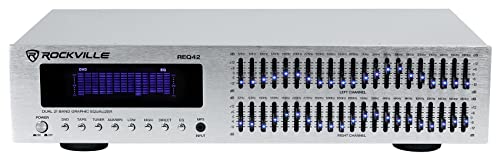
- Dual 21-band graphic EQ
- Spectrum analyzer and multicolor display
- RCA and front-panel 3.5 mm inputs
Best For: Visual home theater and stereo EQ setups
Best Overall Control

- 31 bands per channel for detailed tonal shaping
- Low-cut filter reduces rumble and hum
- XLR and 1/4-inch connectivity
Best For: Detailed dual-channel control in home studios and audio installations
Best Digital Connectivity
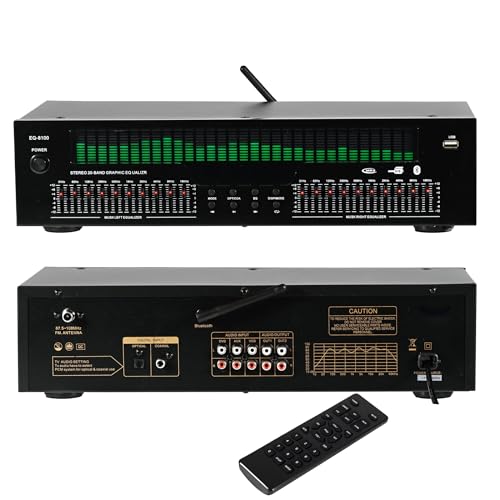
- Bluetooth, USB, optical, and coaxial inputs
- Real-time 31-band spectrum analyzer
- Auto-save presets and 1U rack design
Best For: Studios needing visual feedback and flexible digital source connections
Best Compact Analog Option
15-Band Rack EQ with Subwoofer Output

- 15 bands per channel with ±12 dB adjustment
- Adjustable low-cut frequency control
- Dedicated adjustable-frequency bass output
Best For: Compact analog racks needing focused EQ and subwoofer management
Most Feature-Rich

- 31-band EQ with real-time LED spectrum display
- 10 presets, bypass, noise reduction, and tone controls
- Bluetooth, USB, XLR, TRS, and adjustable bass output
Best For: Studios and home audio setups needing extensive control and connectivity
Best Straightforward Rack EQ
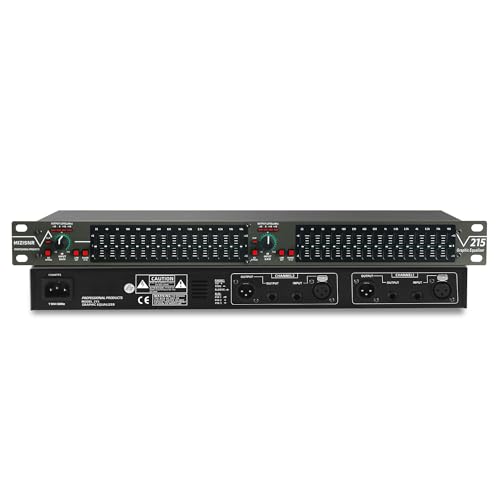
- Dual-channel 15-band graphic EQ
- Low-cut filter targets rumble, hum, and wind noise
- 1U rack mount with balanced and unbalanced I/O
Best For: Hands-on stereo shaping in studio, DJ, and live rack systems
Best for Bass Integration

- 31-band DSP EQ with spectrum analyzer display
- Adjustable 50–250Hz dedicated subwoofer output
- Bluetooth 5.2, USB playback, presets, and noise suppression
Best For: Studios and home audio systems prioritizing controlled low-end response
Flexible Studio Control – Behringer ULTRAGRAPH PRO FBQ3102HD
For home studios that need detailed hands-on shaping, the Behringer ULTRAGRAPH PRO FBQ3102HD is a practical choice among audio equalizers for home studios. Its dual-channel, 31-band stereo design provides extensive frequency control, while the FBQ system helps identify critical frequencies.
Best For: Home studios and stereo setups needing detailed graphic EQ control, feedback detection, and subwoofer integration.
Pros:
- 31-band stereo graphic equalization
- FBQ feedback detection can help reveal critical frequencies
- Sweepable high- and low-cut filters help remove rumble and hiss
- Dedicated mono subwoofer output with adjustable crossover
Cons:
- Rack-style 19-inch design may be more equipment than a simple desktop setup needs
- Analog signal format may not suit users seeking a fully digital workflow
Choose this model when flexible filtering and broad frequency control matter more than minimal size. The subwoofer output also adds useful versatility for monitoring systems with low-frequency expansion.
Reliable Rack EQ – dbx 231s Dual Channel Equalizer
The dbx 231s offers straightforward, professional-style control for builders comparing audio equalizers for home studios. Its dual 31-band layout, selectable boost/cut range, and balanced-style XLR and TRS connections make it well suited to rack-based signal chains.
Best For: Home studios and live-oriented setups that need dual-channel 1/3-octave EQ with flexible input and output connections.
Pros:
- Dual 31-band, 1/3-octave constant-Q frequency bands
- Selectable 6 dB or 12 dB boost/cut ranges
- Front-panel bypass switch for quick comparisons
- XLR and 1/4-inch TRS inputs and outputs
Cons:
- Rack-style dimensions require suitable equipment space
- Does not list built-in feedback detection or spectrum visualization
The 231s is a focused option for users who want conventional graphic EQ controls without added visual or wireless features. Its bypass switch and output monitoring LEDs support practical setup and level checking.
Connected Home Studio Hub – Decibelvibe TNZ SGE6 Equalizer
The Decibelvibe TNZ SGE6 combines equalization, playback connectivity, and visual feedback in a compact unit. For home studios considering audio equalizers for home studios that also work with modern consumer sources, its 15-band, two-channel EQ and Bluetooth, USB, RCA, and 3.5 mm connections offer broad compatibility.
Best For: Home audio, HiFi, DJ, and studio-adjacent setups that need EQ plus Bluetooth, USB, auxiliary, and microphone-enabled spectrum display.
Pros:
- 15-band EQ for two channels with a 31-band spectrum display
- Bluetooth 5.0, USB, RCA, and 3.5 mm connectivity
- Built-in microphone can drive the spectrum display without connected audio cables
- Can function as an audio amplifier or pre-amplifier
Cons:
- Fewer EQ bands than the 31-band rack units in this roundup
- Feature-rich design may be unnecessary for users wanting only basic EQ
This is a versatile choice when source flexibility and visual presentation are part of the buying decision. Its compact dimensions and multiple connection options make it especially adaptable for mixed home audio systems.
Visual Home Theater EQ – Rockville REQ42-S 42-Band Equalizer
Rockville REQ42-S 2 x 21 Band Home Theater Equalizer w/Audio Spectrum Analyzer
Check Price On AmazonThe Rockville REQ42-S is designed for users who want visible, hands-on control in a home theater or stereo system. Its two 21-band equalizers, spectrum analyzer, front-panel auxiliary input, and RCA connections make it a practical alternative among audio equalizers for home studios and entertainment setups.
Best For: Home theater and stereo systems needing dual-channel graphic EQ, spectrum visualization, and multiple RCA source connections.
Pros:
- Dual 21-band graphic equalizers with 42 bands total
- Audio spectrum analyzer and multicolor LED display
- Front-panel 3.5 mm input for iPod or MP3 players
- RCA inputs, record output, VU meters, and removable rack brackets
Cons:
- Its home-theater-focused connections may be less suitable for balanced studio wiring
- Large listed product dimensions may require careful placement
The REQ42-S makes sense for buyers who value visual metering and accessible consumer-audio connections alongside EQ control. It is particularly appealing for systems where display features are as important as frequency adjustment.
Best Overall Control – 31-Band Stereo Graphic EQ
For home studios that need detailed hands-on shaping, this 31-band unit is a versatile choice among audio equalizers for home studios. Its dual-channel layout, switchable low-cut filter, and balanced or unbalanced connections support precise tonal adjustments and practical system integration.
Best For: Home studio users, audiophiles, and installations needing extensive dual-channel frequency control.
Pros:
- 31 adjustable bands per channel with up to ±12 dB of range.
- Low-cut switch helps reduce wind noise, floor rumble, and electrical hum.
- XLR balanced and 1/4-inch TRS unbalanced inputs and outputs.
- Bypass switch and four-segment LED monitoring simplify setup and troubleshooting.
Cons:
- Provides fewer digital features than the Bluetooth-equipped EQ8100.
- Its 18.9-inch rack-style width may require suitable studio space.
This is a strong fit when precise, traditional graphic-EQ control matters more than wireless playback or digital connectivity.
Best Digital Connectivity – EQ8100 20-Band Equalizer
The EQ8100 stands out among audio equalizers for home studios by combining graphic EQ controls with digital inputs, Bluetooth 5.4, USB playback, and a real-time spectrum display. It is designed for users who want visible feedback and flexible source connections in one rack-mount unit.
Best For: Digitally connected home studios, monitoring setups, home theaters, and mobile DJ systems.
Pros:
- Supports optical, coaxial, USB, Bluetooth, and RCA connections.
- Real-time 31-band spectrum analyzer provides visual frequency feedback.
- 20-band graphic equalizer with customizable jump modes and auto-save presets.
- Ultra-thin 1U aluminum chassis is suited to portable or permanent rack use.
Cons:
- Its feature-rich interface may be more than a simple analog setup requires.
- The supplied dimensions list appears unusually large, so rack fit should be confirmed before purchase.
Choose this model if spectrum visualization, digital source compatibility, and quickly recalled EQ curves are priorities for your studio workflow.
Best Compact Analog Option – 15-Band Rack EQ with Subwoofer Output
This dual-channel 15-band model offers practical analog control for audio equalizers for home studios without the added complexity of digital playback features. Its adjustable low-cut frequency, subwoofer output, and rack-mount form factor make it useful for focused tonal shaping and low-end management.
Best For: Compact home studio racks, DJ systems, and setups requiring dedicated subwoofer control.
Pros:
- 15 adjustable bands per channel provide focused EQ control.
- Adjustable low-cut frequency helps target unwanted low-end noise.
- Dedicated bass output with adjustable frequency supports subwoofer integration.
- Includes XLR and 1/4-inch TRS connections, bypass operation, and a two-year warranty.
Cons:
- Offers fewer bands than the 31-band EQ-231.
- Lacks the EQ8100’s Bluetooth, USB, optical, coaxial, and spectrum-analyzer features.
Its straightforward analog design is a sensible choice when you want rack-friendly EQ, noise reduction, and subwoofer routing in a compact package.
Most Feature-Rich – 31-Band Digital Equalizer
For home studios seeking flexible audio equalizers for home studios, this 31-band digital model combines detailed frequency control with real-time visual monitoring. Its preset modes, connectivity options, and rack-mount design make it suitable for more involved audio setups.
Best For: Home studios, DJ equipment, KTV venues, and home theater systems that need extensive EQ control and flexible connections.
Pros:
- 31-band adjustment with a real-time LED spectrum display.
- Includes 10 preset modes, EQ bypass, and independent high, mid, and bass adjustment.
- Bluetooth 5.2, USB playback, XLR balanced, and 1/4-inch TRS unbalanced I/O.
- Dedicated adjustable bass output and intelligent noise reduction.
Cons:
- The extensive feature set may be more than a simple stereo system needs.
- It requires corded power and rack-space planning.
This is a strong option when visual feedback, multiple input and output formats, and bass-system flexibility matter as much as basic tone shaping.
Best Straightforward Rack EQ – 15-Band Stereo Equalizer
This 15-band stereo unit is a practical choice among audio equalizers for home studios when you want separate control for two channels without adding digital playback features. Its low-cut filter and bypass switch are useful for cleanup and quick system checks.
Best For: Home studios, live applications, DJ systems, and audio installations that need dual-channel graphic EQ in a 1U rack format.
Pros:
- Dual-channel stereo design with 15 adjustable bands per channel.
- Provides up to ±12 dB of adjustment per band.
- Low-cut switch helps reduce wind noise, floor rumble, and electrical hum.
- Offers XLR balanced and 1/4-inch TRS unbalanced inputs and outputs.
Cons:
- It has fewer bands than the 31-band alternatives in this roundup.
- No Bluetooth, USB playback, or spectrum analyzer is listed in the supplied specifications.
Choose this model for hands-on stereo shaping and noise cleanup in a conventional rack system, especially if you do not need built-in wireless or USB playback.
Best for Bass Integration – 31-Band Graphic Equalizer
For audio equalizers for home studios that also need modern playback and subwoofer control, this 31-band graphic equalizer adds a dedicated adjustable subwoofer output. The spectrum display, presets, and rack-mount format support both careful tuning and convenient everyday use.
Best For: Studios, home theater systems, DJ booths, and KTV setups that need detailed EQ plus adjustable low-frequency integration.
Pros:
- 31-band DSP equalizer with a four-color, real-time LED spectrum display.
- Stores up to 10 custom presets and includes intelligent noise suppression.
- Bluetooth 5.2 and USB playback provide flexible source options.
- Dedicated subwoofer output offers adjustable frequency from 50Hz to 250Hz.
Cons:
- The feature-rich design may be unnecessary for users seeking basic EQ only.
- Its 1U rack-mount form requires suitable installation space.
This model stands out when controlled bass is a priority. The adjustable subwoofer output complements the detailed main EQ, while the bypass switch makes quick comparisons and troubleshooting easier.
How We Picked These Audio Equalizers for Home Studios
We focused on the features that matter most in a home recording, mixing, DJ, or serious home-listening setup: number of bands, stereo or dual-channel operation, input and output flexibility, rack-mount design, feedback-control features, displays, and ease of adjustment. We also included a range of configurations, from traditional analog-style sliders to digital models with Bluetooth and spectrum visualization.
Because equipment listings can vary by seller and revision, confirm the current specifications, included cables, power requirements, and connector types before ordering. An equalizer should complement your existing interface, mixer, amplifier, or receiver rather than force you to replace other equipment.
Quick Comparison
- 31-band models: Best for detailed frequency shaping, room correction, and precise problem solving.
- 15- or 20-band models: Easier to operate and often sufficient for casual mixing, playback, and basic tonal adjustment.
- Dual-channel stereo EQs: Useful when you need independent left- and right-channel control or conventional rack integration.
- Bluetooth and auxiliary models: Convenient for streaming and home playback, but check whether wireless features fit your studio signal chain.
- Spectrum analyzers: Helpful for visual feedback, especially when learning how frequency changes affect a mix or room.
Key Buying Factors for Audio Equalizers for Home Studios
Band Count and Control Style
More bands provide finer control, but they also require more careful adjustment. A 31-band equalizer is valuable for surgical tonal work and room-related peaks, while a 15-band unit may be faster for broad changes. Graphic sliders are intuitive; digital controls and displays can offer additional convenience.
Connectivity and Signal Compatibility
Check whether the unit uses balanced XLR or TRS connections, unbalanced RCA inputs and outputs, 3.5mm auxiliary connections, or a combination. Match the equalizer’s operating level and connectors to your audio interface, mixer, amplifier, or powered speakers. Avoid unnecessary adapters in the main monitoring path when possible.
Noise, Headroom, and Feedback Control
Look for noise-reduction features, adequate headroom, and feedback detection if you use microphones, live vocals, or high-volume monitoring. Keep boosts modest: aggressive boosts can increase noise, overload downstream equipment, and make a room sound less natural.
Size and Workflow
Rack-mount models suit permanent studio or home-theater installations, while simpler units may be easier to place beside a mixer. Consider whether you need front-panel access, a subwoofer output, Bluetooth, USB, or a visual analyzer—or whether those features add complexity you will not use.
Who Should Buy Which Audio Equalizers for Home Studios?
Choose a 31-band dual-channel model if you mix regularly, need detailed control, or plan to tune monitors and room acoustics. Choose a 15- or 20-band EQ if you want straightforward tone shaping without a steep learning curve. Choose a model with feedback detection for microphone-based setups, rehearsal spaces, or live-performance applications. Choose Bluetooth, USB, or auxiliary connectivity when the equalizer will also serve as a flexible home playback hub. For the most accurate studio results, prioritize clean connections, sensible gain staging, and acoustic treatment before relying heavily on EQ.