
The best audio equalizers under $200 make it easier to shape bass, mids, and treble without replacing your entire sound system. This roundup covers graphic, parametric, headphone, home audio, and car audio models.
Use the guide below to compare band count, connections, controls, installation requirements, and the type of listener or system each equalizer suits best.
Best 10 Audio Equalizers Under 200 Picks for 2026
Rack-Ready Precision
15-Band Stereo Graphic Equalizer

- 15 bands per channel with ±12dB adjustment
- Low-cut filter reduces unwanted low-frequency noise
- XLR and 1/4-inch connectivity in a 1U rack design
Best For: Rack-based home audio, studio, and live setups
Portable Tone Control
Fosi Audio SK01 Headphone Equalizer

- Three-band bass, midrange, and treble control
- Headphone amp, preamp, and instrument equalizer functions
- Rechargeable battery with 3.5mm and 6.35mm jacks
Best For: Portable headphone listening and guitar or instrument use
Car Audio Integration

- Seven-band tuning for vehicle audio systems
- High-level input supports factory audio integration
- Auto turn-on and high-voltage LED indicator
Best For: Car audio upgrades and OEM-integrated installations
Digital Spectrum Control
31-Band Bluetooth Home Equalizer

- 31-band tuning with real-time spectrum monitoring
- Bluetooth, optical, coaxial, and USB connectivity
- 12 customizable modes with auto-save presets
Best For: Detailed digital tuning across home, studio, and live audio systems
Best Car Audio Tuning Pick
CT-7EQ 7-Band Parametric Equalizer
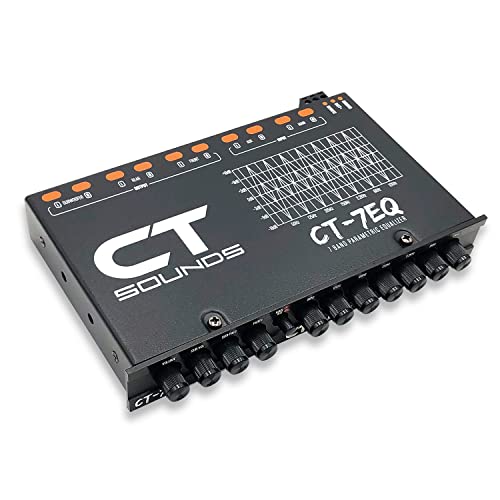
- Seven bands span 20Hz–20kHz
- Separate bass, mid, treble, and sub-bass controls
- Includes installation brackets and hardware
Best For: Compact car-audio installations needing hands-on tuning
Best Simple Tone Control
Schiit Loki Mini+ 4-Band Equalizer

- Four bands target bass, lower midrange, upper midrange, and treble
- Includes a passive bypass mode
- Compact design for home audio systems
Best For: Listeners seeking uncomplicated home-system tone shaping
Best Pro-Style Control
EQX-215S 15-Band Stereo Equalizer

- 15 adjustable bands per channel
- XLR and 1/4-inch TRS connectivity
- Low-cut control and dedicated bass output
Best For: DJ, live, studio, and rack-mounted audio setups
Compact Recording Control

- Seven-band ±12dB tone adjustment
- 3.5mm and headphone compatibility
- Dual-channel aluminum-alloy design
Best For: Recording, podcasting, streaming, and compact headphone setups
Studio-Style Precision

- 31 bands per channel with ±12dB control
- LOW-CUT and BYPASS switches
- XLR and 1/4-inch connectivity
Best For: Detailed home, live, installation, and studio audio shaping
Car Audio Routing

- Seven-band ±12dB car-audio control
- Two inputs and three RCA outputs
- Front, rear, and subwoofer routing
Best For: 12V vehicle systems with multi-channel RCA audio
Rack-Ready Precision – 15-Band Stereo Graphic Equalizer
For shoppers comparing audio equalizers under 200, this 15-band stereo model is a practical choice for rack-based home audio, studio, and live setups. Its dual-channel controls, low-cut filter, bypass switch, and balanced or unbalanced connections provide flexible signal shaping and noise reduction.
Best For: Home audio racks, studios, live applications, and audio installations needing detailed stereo adjustment.
Pros:
- 15 adjustable bands per channel with up to ±12dB range.
- Low-cut switch helps reduce wind noise, floor rumble, and electrical hum.
- Supports XLR balanced and 1/4-inch TRS unbalanced inputs and outputs.
- Standard 1U rack-mount design with a convenient bypass switch.
Cons:
- Corded 110-volt operation is less portable.
- The 1U rack format may be excessive for simple desktop systems.
This is a strong fit when you want hands-on, frequency-by-frequency control and broad installation compatibility rather than a compact portable equalizer.
Portable Tone Control – Fosi Audio SK01 Headphone Equalizer
Among audio equalizers under 200, the Fosi Audio SK01 stands out for listeners who want portable tone shaping alongside headphone amplification. Its three-band analog controls, gain switch, loudness function, and dual headphone jack sizes suit both desktop and mobile listening.
Best For: Headphone users, guitarists, and listeners wanting portable bass, midrange, and treble control.
Pros:
- Adjustable bass, midrange, and treble with tone defeat.
- Works as a headphone amp, analog preamp, or instrument equalizer.
- Provides 3.5mm and 6.35mm headphone connections for 32–300-ohm headphones.
- Built-in 2,500mAh battery offers up to six hours of use.
Cons:
- Three bands offer less detailed control than a graphic equalizer.
- Its stated 2.4-watt output is primarily suited to headphone and compact audio use.
The SK01 is a versatile option for personal listening and instruments, especially if portability and simple analog controls matter more than extensive frequency-band adjustment.
Car Audio Integration – DS18 EQX7PRO 7-Band Equalizer
For car-focused shoppers seeking audio equalizers under 200, the DS18 EQX7PRO is designed around high-level integration and convenient vehicle control. It includes high-level input, automatic turn-on, a high-voltage LED indicator, and seven-band adjustment for tuning a car audio system.
Best For: Car audio installations requiring high-level input compatibility and straightforward system tuning.
Pros:
- Seven-band equalizer provides practical in-car sound adjustment.
- High-level input supports integration with factory audio systems.
- Auto turn-on simplifies operation after installation.
- High-voltage LED indicator provides a quick visual status check.
Cons:
- Its vehicle-oriented design is not a natural fit for home audio systems.
- The supplied notes do not specify the included mounting or wiring accessories.
This model makes the most sense for car audio enthusiasts who need a dedicated equalizer with OEM-friendly input support, rather than a general-purpose home or studio unit.
Digital Spectrum Control – 31-Band Bluetooth Home Equalizer
For buyers comparing audio equalizers under 200, this 31-band digital model offers extensive tuning for home, studio, KTV, DJ, and live-use systems. Real-time spectrum monitoring, Bluetooth connectivity, multiple digital inputs, USB playback, noise reduction, and saved presets make it suited to varied sources and listening environments.
Best For: Home theaters, recording studios, DJ setups, KTV systems, and users who want detailed digital sound customization.
Pros:
- 31-band adjustment covers detailed bass, midrange, and treble tuning.
- Built-in spectrum analyzer provides real-time frequency monitoring.
- Offers Bluetooth, optical, coaxial, and USB connectivity.
- Includes 12 customizable modes and auto-save presets.
Cons:
- The extensive controls may be more than casual listeners need.
- The supplied notes do not identify specific Bluetooth codecs or supported audio formats.
This is the most feature-rich choice in the group for users who want digital control, visual monitoring, and broad connectivity across multiple audio environments.
Best Car Audio Tuning Pick – CT-7EQ 7-Band Parametric Equalizer
If you need audio equalizers under 200 for a car system, the CT Sounds CT-7EQ offers seven frequency segments across the 20Hz–20kHz range. Its compact half-DIN format, dedicated bass, mid, treble, and sub-bass controls make it a practical option for shaping in-car sound.
Best For: Car audio installations that need hands-on frequency and tone adjustment in a compact chassis.
Pros:
- Seven-band parametric design covers 20Hz–20kHz.
- Provides separate bass, mid, treble, and sub-bass adjustments.
- Includes installation brackets and hardware.
- Offers a 25Hz–50KHz frequency response and more than 60dB separation.
Cons:
- The half-DIN design is specifically suited to compatible car-audio installations.
- Installation is required rather than simple plug-and-play use.
The CT-7EQ is a focused choice for drivers who want direct control over their vehicle’s sound. Its included mounting hardware and broad adjustment range add practical value for a custom car-audio setup.
Best Simple Tone Control – Schiit Loki Mini+ 4-Band Equalizer
Among audio equalizers under 200, the Schiit Loki Mini+ stands out for straightforward home-system tone shaping. It provides four broad frequency controls, a fully passive bypass mode, and filtering designed for low hiss without adding unnecessary complexity.
Best For: Home listeners who want an easy way to correct system imperfections or personalize their sound.
Pros:
- Four adjustable bands at 20Hz, 400Hz, 2kHz, and 8kHz.
- Offers up to ±12dB adjustment at the bass and treble bands.
- Includes a 100% passive bypass setting.
- Compact 5 x 3.5 x 1.25-inch design is easy to place in a system.
Cons:
- Its included power adapter is intended only for 115VAC countries.
- Inductors may pick up hum from nearby electronics.
- Four bands provide less detailed control than a multi-band graphic equalizer.
The Loki Mini+ is a sensible pick when broad, musical tone adjustments matter more than extensive frequency-by-frequency control. Its passive bypass also makes it easy to compare processed and unprocessed sound.
Best Pro-Style Control – EQX-215S 15-Band Stereo Equalizer
For shoppers comparing audio equalizers under 200 for a rack or DJ setup, the EQX-215S delivers detailed dual-channel control. Each channel has 15 adjustable bands, while low-cut filtering, balanced inputs, and a dedicated bass output expand its usefulness for live, studio, and installation applications.
Best For: DJs, audio enthusiasts, and small professional setups needing extensive stereo frequency control.
Pros:
- Provides 15 bands per channel with ±12dB adjustment.
- Includes low-cut control for reducing unwanted low-end noise.
- Supports XLR balanced and 1/4-inch TRS unbalanced connections.
- Features a 1U rack-mount form factor and dedicated adjustable bass output.
Cons:
- The 18.9-inch rack-style chassis needs suitable space and installation.
- Its extensive controls may be more than casual listeners need.
- It uses corded electric power at 110 volts AC.
The EQX-215S is the most control-oriented option in this group. Its dual 15-band layout and flexible connections make it better suited to serious system tuning than basic living-room tone adjustment.
Compact Recording Control – 7-Band Digital Equalizer
For shoppers comparing audio equalizers under 200, this compact two-channel model offers straightforward tone shaping with seven adjustable frequency bands. Its 3.5mm connectivity, dual-channel design, and 5–12V DC power range make it suited to smaller recording, streaming, podcasting, and headphone setups.
Best For: Home recording, podcasting, streaming, and users who want a compact headphone-friendly equalizer.
Pros:
- Seven bands provide ±12dB adjustment from 60Hz to 15kHz.
- 3.5mm input supports a 4-pin plug and microphone-equipped headphones.
- Aluminum-alloy construction and dual-channel sound design.
- Includes headphone amplification circuitry and a 5x preamp gain stage.
Cons:
- Requires a 5–12V DC power supply.
- Offers fewer bands and connection options than larger professional EQ units.
- The supplied notes do not specify rack-mount hardware.
This is a practical choice when size, simple seven-band control, and 3.5mm compatibility matter more than extensive studio connectivity. Verify your power setup and input/output requirements before buying.
Studio-Style Precision – 31-Band Stereo Graphic EQ
Among audio equalizers under 200, this dual-channel 31-band graphic equalizer is aimed at buyers who need detailed control for home audio, live sound, installations, or studio work. Each band offers adjustable gain, while balanced XLR and unbalanced 1/4-inch connections support varied audio systems.
Best For: Home audio, live applications, audio installations, and studio users seeking extensive frequency control.
Pros:
- 31 bands per channel allow detailed ±12dB equalization.
- LOW-CUT switch helps reduce wind noise, floor rumble, and electrical hum.
- XLR balanced and 1/4-inch TRS unbalanced inputs and outputs.
- BYPASS switch and four-segment LED meters simplify monitoring and troubleshooting.
Cons:
- At 18.9 inches wide and 6.69 pounds, it needs more space than compact EQs.
- The large number of controls may be more than casual listeners need.
- The supplied notes do not list digital audio connectivity.
Choose this model if precise, hands-on stereo shaping and installation-friendly connections are priorities. Its wider chassis and extensive controls make it better suited to a dedicated rack, desk, or professional audio setup.
Car Audio Routing – Taramps TEQ 7.4 7-Band EQ
For car-audio shoppers researching audio equalizers under 200, the Taramps TEQ 7.4 combines seven-band tone control with vehicle-focused signal routing. Its two RCA stereo inputs and three RCA stereo outputs can feed front, rear, and subwoofer channels in a 12V system.
Best For: 12V car audio systems needing seven-band adjustment, multiple RCA outputs, and front/rear/subwoofer control.
Pros:
- Seven-band EQ covers 50Hz to 12kHz with ±12dB gain adjustment.
- Two RCA stereo inputs include main and auxiliary connections.
- Three RCA stereo outputs support front, rear, and subwoofer channels.
- Offers a stated signal-to-noise ratio above 100dB and blue lighting.
Cons:
- Designed for 12V systems rather than general-purpose home audio power.
- Requires installation in a ventilated, accessible location.
- Uses analog RCA connections and does not list digital inputs.
This equalizer makes the most sense when you want to shape and distribute sound across a multi-channel car system. Plan the mounting location carefully, particularly because the manufacturer advises keeping it away from speakers and excessive vibration.
How We Picked the Best Audio Equalizers Under 200
We focused on practical features that affect everyday sound adjustment and system compatibility. The selection includes compact tone controls, headphone preamps, rack-mount graphic equalizers, and dedicated car audio units. We considered band count, input and output options, signal-control features, installation format, and the likely use case rather than treating a higher number of bands as an automatic advantage.
Because equalizers serve very different systems, compatibility is especially important. A good home stereo equalizer may not work for a car installation, while a headphone equalizer may be unsuitable for line-level connections or powered speakers.
Quick Comparison
| Type | Best For | What to Check |
|---|---|---|
| 15- or 31-band graphic EQ | Home audio, DJ, and rack systems | RCA connections, channel layout, rack size, and noise controls |
| Compact tone-control EQ | Headphones and desktop listening | Amplifier power, headphone impedance, portability, and input format |
| 7-band car EQ | Vehicle sound systems | RCA or high-level input, remote turn-on, voltage handling, and mounting space |
| Bluetooth or analyzer-equipped EQ | Flexible home playback | Wireless support, app or display controls, and source compatibility |
Key Buying Factors for Audio Equalizers Under $200
Band Count and Control Style
More bands provide finer adjustments, but they also require more setup. A 7-band model is usually sufficient for broad bass, midrange, and treble shaping. Fifteen- and 31-band graphic equalizers are better for correcting specific frequency problems in a room or tuning a larger system. Parametric controls can be more precise when they let you choose frequency, width, and gain.
Inputs, Outputs, and Signal Level
Confirm that the equalizer uses the connections your system provides. Home audio units commonly use RCA line-level connections, while car models may add high-level inputs, auxiliary gain, fader control, or multiple outputs. Avoid placing a line-level EQ directly between components that require a different signal format unless the manufacturer specifies compatibility.
Noise, Headroom, and Power
Look for noise-reduction features, adequate output voltage, and clean gain structure. A unit with excessive boost can cause clipping, so lowering the source or amplifier level may be necessary. Headphone users should also check amplifier output and compatibility with their headphones.
Installation and Controls
Rack-mount models need suitable space and cable length. Car equalizers must fit the dashboard or console and have appropriate power and turn-on wiring. Front-panel sliders are useful for quick changes, while compact digital or tone-control units may be easier for desks and smaller systems.
Who Should Buy Which Audio Equalizers Under 200?
Choose a 15- or 31-band home audio model if you want detailed room or speaker correction, DJ control, or visible slider-based adjustments. A compact headphone amplifier equalizer is a better fit for desktop listeners who need tone shaping and headphone drive in one device. Car owners should prioritize dedicated 7-band units with the correct input type, output configuration, and vehicle power connections.
If convenience matters most, consider a model with Bluetooth or an analyzer display, but verify that its wireless features match your sources. For simple bass, midrange, and treble changes, a four-band tone-control equalizer can be easier to use than a full graphic EQ. The best choice is the model that matches your system’s signal path and gives you the amount of control you will actually use.