
Live sound compressors help control peaks, improve vocal consistency, and keep a mix intelligible when performers and rooms are unpredictable. The right unit can add polish without making a system harder to operate.
This roundup covers rack processors, channel strips, optical and FET designs, and mixer-based solutions for mobile rigs, venues, studios, and live-streaming setups.
Best 10 Audio Compressors for Live Sound Picks for 2026
Tour-Ready Dynamics Control

- 1U analog compressor and gate
- Sidechain insert and LED metering
- Useful for touring, portable, and studio rigs
Best For: Live systems needing clear, flexible dynamics control
Two-Channel Control
Behringer Composer Pro-XL MDX2600

- Compressor, limiter, and gate
- Two-channel configuration
- Designed for production and mixing
Best For: Users needing multiple dynamics functions in one processor
Compact Mixer Compression

- 10-input mixer with one-knob compressors
- USB and SPX digital effects
- EQ and high-pass filters for channel shaping
Best For: Small live rigs needing mixing and simple compression
Flexible Dual-Channel Processing
Professional Dual-Channel Audio Compressor

- Compression, gate, and sidechain functions
- XLR/TRS I/O for live integration
- LED monitoring and auto attack/release
Best For: Live and streaming setups needing flexible dual-channel control
Tube-Optical Choice

- One-channel tube optical compressor
- Warm, balanced, versatile sound profile
- Rackmount chassis included
Best For: Single-channel sources needing warm optical compression
Dual-Channel Rack Utility

- Dual-channel or linked stereo operation
- Compression, limiting, expansion, and gate functions
- Balanced TRS and XLR inputs
Best For: Rack systems needing flexible two-channel dynamics control
Inline Mic Gain Solution
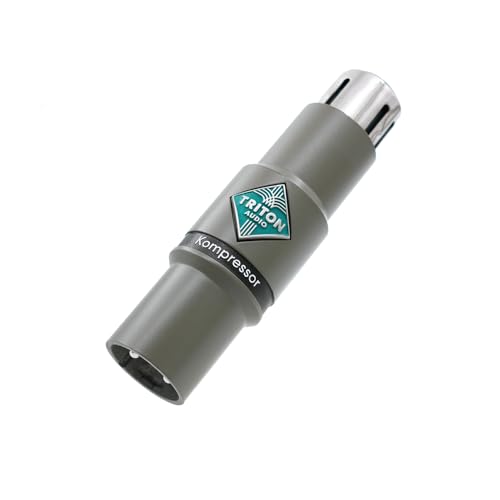
- Inline FET-OPTO compression and 25 dB gain
- Compact one-knob XLR design
- Blocks phantom power from the microphone
Best For: Dynamic or ribbon microphones needing inline gain and leveling
Best All-in-One Channel Strip
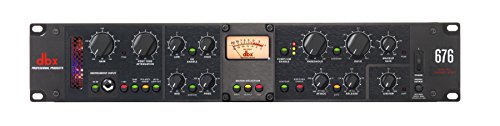
- Tube preamp with selectable tonal character
- Compressor/limiter, sidechain, and parametric EQ
- XLR, ¼-inch, and front-panel instrument inputs
Best For: Live vocals and instruments needing integrated preamp, compression, and EQ
Best Classic-Style Compressor

- Single-channel discrete compressor design
- Custom CineMag USA transformers
- Includes the “all buttons in” ratio setting
Best For: Dedicated compression on one priority live source
Best Dual-Channel Value
Professional Dual-Channel Vocal Compressor

- Two channels with VCA compression and limiting
- Built-in noise gate and LED metering
- Sidechain insert plus XLR/TRS connectivity
Best For: Live vocals, streaming, and two-source stage setups
Tour-Ready Dynamics Control – dbx 266xs Compressor/Gate
For anyone comparing audio compressors for live sound, the dbx 266xs is a practical 1U rack processor with compression, gating, and sidechain connectivity. Its adaptive gate algorithms and dedicated LED displays are designed to make setup and level control straightforward in portable, touring, or studio systems.
Best For: Live rigs that need dependable compression and noise-gate control for vocals, instruments, or full program material.
Pros:
- Compression can smooth uneven levels, add guitar sustain, fatten drums, and tighten mixes.
- Program-adaptive expander/gates use smooth release characteristics.
- Separate LED displays show gain reduction, compression threshold, and gate threshold.
- Standard 1U rackmount format suits portable and touring setups.
Cons:
- It is an analog, corded rack unit rather than a compact pedal or software processor.
- At 6.6 pounds, it adds meaningful weight to a portable rack.
The 266xs stands out when visible metering, flexible dynamics control, and rack integration matter more than minimal setup size.
Two-Channel Control – Behringer Composer Pro-XL MDX2600
The Behringer Composer Pro-XL MDX2600 is a two-channel compressor, limiter, and gate for audio production, mixing, and mastering workflows. Its dual-channel design makes it a useful option for live sound setups that need dynamics processing across more than one signal path.
Best For: Budget-conscious users who want two-channel compression, limiting, and gating in a rack-style processor.
Pros:
- Combines a compressor, limiter, and gate in one unit.
- Two-channel configuration supports processing multiple sources or linked mix duties.
- Suitable for audio production, mixing, and mastering applications.
- Includes a stated two-year manufacturer warranty.
Cons:
- The supplied specifications provide limited detail about its controls and metering.
- The product information lists a 100-volt power specification, so power compatibility should be checked before purchase.
The MDX2600 is worth considering when broad dynamics functionality and two-channel operation are priorities, but verify the power requirements and desired control set for your venue.
Compact Mixer Compression – Yamaha MG10XU Mixer
The Yamaha MG10XU takes a different approach to audio compressors for live sound by building one-knob compressors directly into a 10-input mixer. It combines simple dynamics control with USB connectivity, SPX digital effects, EQ, and high-pass filtering in a rugged desktop-style format.
Best For: Small live setups that need mixing, basic channel compression, effects, and USB connectivity in one compact console.
Pros:
- One-knob compressors provide simple control for guitars, bass, snare, and vocals.
- Offers 10 inputs with USB connectivity and SPX digital effects.
- Three-band EQ and high-pass filters help shape channels and reduce unwanted noise.
- Rugged powder-coated metal chassis is designed for regular handling.
Cons:
- Its integrated compressors offer less dedicated control than a standalone dual-channel processor.
- It is a mixer, not a 1U rack compressor for inserting across arbitrary external channels.
Choose the MG10XU when convenience and channel mixing are more important than advanced standalone compression parameters or rack-based signal routing.
Flexible Dual-Channel Processing – Professional Dual-Channel Audio Compressor
This dual-channel rackmount processor targets studio, live, and streaming applications with compression, noise gating, and sidechain support. For shoppers comparing audio compressors for live sound, its XLR/TRS connectivity, automatic attack and release settings, and LED indicators offer a flexible signal-processing package.
Best For: Live vocal, instrument, and streaming setups that need dual-channel compression with gating and sidechain routing.
Pros:
- Dual-channel design provides control over separate sound sources.
- OverEasy compression and auto attack/release settings are intended for smooth dynamics control.
- Includes XLR and 1/4-inch TRS inputs and outputs for flexible integration.
- Noise gate, LED monitoring, and sidechain insert add routing and cleanup options.
Cons:
- The supplied notes do not specify the number of rack spaces beyond its listed rackmount dimensions or provide detailed control ranges.
- Its 110-volt AC specification should be checked for compatibility with the intended venue or region.
This processor is a feature-rich choice for users who want compression, gating, visual monitoring, and sidechain capability in a single dual-channel unit.
Tube-Optical Choice – Warm Audio WA-1B
The Warm Audio WA-1B is a one-channel tube optical compressor for live sound setups that need a warm, balanced, and versatile analog signal path. Its knob-based control and rackmount chassis suit straightforward processing in a rack or portable rig.
Best For: Vocal, instrument, or other single-channel sources where a warm optical compression character is preferred.
Pros:
- Tube optical compression in a dedicated single-channel design
- Warm, balanced, and versatile sound profile
- Rackmount chassis included
Cons:
- One channel limits use for stereo processing
- Relatively heavy at 12.1 pounds
- Uses corded electric power
The WA-1B is a focused option when tonal character and simple knob control matter more than multi-channel flexibility. Its one-channel format makes it best suited to targeted processing rather than broad system duties.
Dual-Channel Rack Utility – ART SCL2 Compressor/Limiter
The ART SCL2 is a dual-channel compressor, limiter, expander, and gate built for flexible live sound routing. Balanced 1/4-inch TRS and XLR connections, linked stereo operation, and selectable attack and release modes make it a practical rack processor for varied system needs.
Best For: Live rigs needing dual-channel dynamics control or linked stereo processing with balanced connections.
Pros:
- Supports dual-channel or linked stereo operation
- Combines compression, limiting, expansion, and gating
- Balanced 1/4-inch TRS and XLR inputs
- Selectable automatic or manual attack and release
Cons:
- Rack-oriented 19-inch format is less portable than compact units
- Its many functions may be more than a simple compression setup requires
- Listed power specification is 240 volts, so compatibility should be checked
For buyers comparing audio compressors for live sound, the SCL2 stands out as the most feature-rich option here. Its stereo linking and broader dynamics toolkit make it well suited to central rack duties.
Inline Mic Gain Solution – Triton Audio Kompressor
The Triton Audio Kompressor combines an inline FET-OPTO compressor with a 25 dB microphone preamp in a compact XLR barrel. For live sound, its one-knob design can provide source-level dynamics control and gain for low-output dynamic or ribbon microphones.
Best For: Dynamic and ribbon microphones that need inline gain, controlled peaks, and a compact XLR connection.
Pros:
- Combines compression and up to 25 dB of gain boost
- Compact 4.95-inch inline XLR format
- Simple one-knob control from “Less” to “More”
- Blocks 48V phantom power from reaching the microphone
Cons:
- Single-knob control offers less adjustment than a full rack compressor
- Requires 48V phantom power to operate
- Inline design is intended for microphone-level use rather than broad system processing
The Kompressor is the most compact choice in this group and places processing directly at the microphone connection. It is particularly convenient when a low-output mic needs both clean gain and simple leveling without adding a full-size rack unit.
Best All-in-One Channel Strip – dbx 676FX Tube Mic Preamp
For live engineers who want compression alongside preamp and EQ control, the dbx 676FX is a versatile choice among audio compressors for live sound. Its tube preamp, compressor/limiter, sweepable-mid parametric EQ, and XLR/¼-inch connectivity make it suitable for shaping a vocal, instrument, or other source before it reaches the mixer.
Best For: Live vocals, instruments, and rack-based setups that benefit from preamp, compression, limiting, and EQ in one unit.
Pros:
- High-voltage Class-A tube preamp supports warm, clear, or driven tones.
- Includes compressor/limiter, sidechain insert, and three-band parametric EQ.
- Offers front-panel instrument input plus XLR and ¼-inch connections.
- Rack-mountable 2U design suits permanent or mobile rigs.
Cons:
- Its 2U rack size and 13-pound weight may be more than a compact live setup needs.
- The broad channel-strip feature set may be unnecessary if you only need compression.
The 676FX is the most comprehensive option here for users who want tone shaping and dynamics control in one rack unit. Choose it when flexibility matters more than a minimal, compressor-only signal path.
Best Classic-Style Compressor – Warm Audio WA76 Compressor
The Warm Audio WA76 is a focused single-channel choice for audio compressors for live sound when you want dedicated dynamics control and a classic discrete design. Its fully discrete signal path, CineMag USA transformers, and famous “all buttons in” ratio setting make it suited to shaping one important source at a time.
Best For: Engineers who want a single-channel compressor for a lead vocal, bass, guitar, or other priority source.
Pros:
- Fully discrete signal path follows the design approach of a classic ’76 compressor.
- Custom CineMag USA transformers are included.
- Supports the distinctive “all buttons in” ratio setting.
- Metal chassis and compact single-channel format fit professional audio applications.
Cons:
- Only one channel is provided, so multiple sources require additional units.
- Its dedicated compressor format does not include a preamp, EQ, or noise gate.
The WA76 is a straightforward pick when the priority is classic-style compression on a single channel. It is less flexible than a channel strip or dual-channel unit, but its focused design can simplify control of a key live source.
Best Dual-Channel Value – Professional Dual-Channel Vocal Compressor
This dual-channel rackmount unit is a practical option among audio compressors for live sound when you need flexible control for vocals, instruments, or a small stage system. It combines VCA compression, limiting, noise gating, LED metering, sidechain inserts, and XLR/TRS connectivity in a 1U-style chassis.
Best For: Live vocals, streaming, stage performance, and setups that need two channels with noise-gate and sidechain functions.
Pros:
- Dual-channel design provides compression for two sources.
- OverEasy compression and adjustable attack and release support natural dynamic control.
- Built-in noise gate and LED metering assist with cleanup and setup.
- Sidechain insert and XLR/TRS I/O support integration with mixers and PA systems.
Cons:
- The supplied notes do not specify detailed performance figures beyond the listed features.
- Its broad feature set may be more than needed for a simple single-channel application.
Choose this model when channel count and practical live features matter most. The combination of dual-channel compression, gating, metering, and sidechain connectivity makes it especially adaptable for vocals and compact live rigs.
How We Picked the Best Audio Compressors for Live Sound
We focused on practical features that matter during setup and performance: dependable gain control, usable metering, flexible routing, clear controls, rack or portable compatibility, and useful protection against overloads. We also considered whether each product suits vocals, instruments, buses, or full-channel duties.
Because live systems vary widely, this list includes both dedicated processors and related channel-strip or mixer options. A dual-channel unit may be more useful for a compact rig, while a single-channel preamp or compressor can provide more hands-on control for a lead vocal or critical instrument.
Quick Comparison
| Type | Best Use | Features to Look For |
|---|---|---|
| Dual-channel rack compressor | Stereo sources, vocals, small systems | Independent controls, linking, metering |
| Compressor/gate processor | Drums, vocals, stage channels | Gate, sidechain insert, adjustable attack and release |
| Channel strip | Lead vocals and featured instruments | Mic preamp, EQ, compression, limiter |
| Optical or FET compressor | Musical tone and character | Responsive gain reduction, blend or output control |
| Mixer with compression or effects | Small live setups and streaming | Inputs, onboard processing, USB connectivity |
Key Buying Factors for Audio Compressors for Live Sound
Channels and Routing
Choose a single-channel unit for one priority source, or a dual-channel processor when you need to handle stereo keyboards, a pair of microphones, or multiple critical inputs. Sidechain inserts are valuable when you want external EQ or another processor to shape the detector signal.
Controls and Metering
Look for clearly labeled threshold, ratio, attack, release, and output controls. A gain-reduction meter makes settings easier to repeat under pressure. Auto modes can be convenient, but manual controls are preferable when you need consistent results across different performers.
Gates, Limiters, and De-Essers
Built-in gates can reduce stage bleed, while limiters provide extra protection against sharp peaks. A de-esser is particularly useful for bright vocal microphones, but avoid stacking too much processing, which can make speech sound dull or unnatural.
Connections and Installation
Confirm whether the processor accepts balanced XLR, TRS, or both, and check its rack dimensions before buying. For mobile rigs, prioritize sturdy construction and controls that are easy to read in dim venues. For mixers, verify input count and USB or output requirements.
Who Should Buy Which Audio Compressors for Live Sound?
Mobile performers and small venues: Choose a straightforward dual-channel compressor or mixer with built-in effects to reduce equipment count.
Live engineers: A rack processor with sidechain inserts, gates, and detailed metering offers the most routing flexibility for stage channels.
Vocal-focused setups: Consider a channel strip or dedicated optical or FET compressor when preamp quality and tonal character matter as much as peak control.
Studio-live hybrid users: Look for balanced connections, versatile compression behavior, and features that transfer well between recording, streaming, and front-of-house work.
Before ordering, match the compressor’s I/O and processing style to your mixer, confirm available rack space, and leave enough headroom for realistic live levels. The best choice is the unit you can set quickly, monitor confidently, and integrate without adding unnecessary complexity.