
The best compact audio compressors help control dynamics without taking over your rack, pedalboard, or recording chain. This roundup covers dual-channel rack units, single-channel processors, inline microphone tools, and compressor pedals.
Whether you need vocal consistency, smoother instrument tracks, or hands-on live-sound control, these options balance useful compression features with space-conscious designs.
Best 10 Compact Audio Compressors Picks for 2026
Versatile Rackmount Control
Dual-Channel Dynamic Processor

- Dual-channel VCA compression with auto attack/release
- Built-in noise gate and sidechain insert
- XLR/TRS connectivity with LED monitoring
Best For: Studio, live, and streaming systems needing flexible routing
Pro-Level Dynamics Value
Behringer Composer Pro-XL MDX2600

- Two-channel compressor and limiter
- Built-in gate for dynamics control
- Portable design for production and mixing
Best For: Project studios needing several dynamics tools in one unit
Flexible Stereo Processing
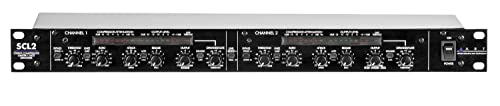
- Dual-channel or linked-stereo operation
- Compression, limiting, expansion, and gating
- Auto/manual timing with LED level meters
Best For: Stereo rigs needing broad analog dynamics control
Mic-Chain Simplicity
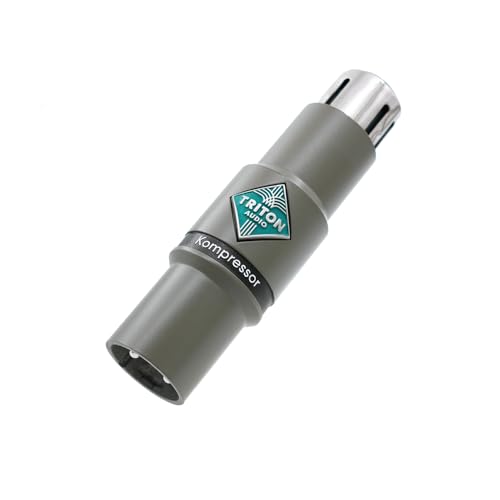
- Inline XLR FET-OPTO compressor and preamp
- Up to 25 dB gain for dynamic and ribbon mics
- One-knob control in a compact barrel design
Best For: Podcasts and vocal chains using low-output microphones
Tube Versatility

- Selectable tube or solid-state operation
- Variable blend for parallel-style control
- Switchable +4 dBu/-10 dBV levels
Best For: Studio users wanting flexible single-channel compression
Pedalboard Clarity

- Compact Phase 90-sized pedal
- Ten gain-reduction status LEDs
- True bypass and constant headroom technology
Best For: Portable pedalboards and compact analog rigs
Classic FET Character

- Fully discrete signal path
- Custom CineMag USA transformers
- All-buttons-in ratio setting
Best For: Engineers wanting classic ’76-style studio compression
Best Compact 1176-Style Pedal
Universal Audio 1176 Compressor Limiter Pedal

- Authentic 1176LN emulation in a stompbox
- Multiple modes plus “all buttons in” setting
- Parallel compression and true/buffered bypass
Best For: Guitarists wanting classic 1176 compression on a pedalboard
Best Dual-Channel Rack Compressor
Professional Dual-Channel Vocal Compressor/Limiter

- Dual-channel VCA compression with Overeasy control
- Noise gate, LED metering, and sidechain insert
- XLR/TRS connectivity for studio and live systems
Best For: Users needing flexible two-channel rackmount dynamics processing
Best Compact Optical Compressor Pedal
Universal Audio LA-2A Studio Compressor Pedal

- LA-2A optical tube compressor/limiter emulation
- Modeled transformers, tubes, and T4 optical cell
- Mix control, attack switch, and bypass options
Best For: Players wanting smooth LA-2A-style compression in a compact pedal
Versatile Rackmount Control – Dual-Channel Dynamic Processor
For users comparing compact audio compressors for studio, live, or streaming setups, this 1U dual-channel processor offers flexible dynamics control in a rack-friendly format. Its VCA circuitry, noise gate, LED monitoring, and sidechain insert provide useful tools for shaping vocals, instruments, and mixed signals.
Best For: Studio, live sound, and streaming users who need dual-channel compression with gating and sidechain flexibility.
Pros:
- Dual-channel operation with Overeasy compression and auto attack/release settings.
- Includes a noise gate, LED gain-reduction monitoring, and sidechain insert.
- Offers balanced XLR and 1/4-inch TRS connectivity in a 1U rackmount design.
Cons:
- Its 19.05-inch rackmount footprint may be too large for very small setups.
- Requires corded power and external rack or tabletop space.
This is a feature-rich choice when compact audio compressors need to cover multiple sources and routing scenarios. Choose it if visual feedback, gating, and sidechain control matter as much as basic compression.
Pro-Level Dynamics Value – Behringer Composer Pro-XL MDX2600
The Behringer Composer Pro-XL MDX2600 is a practical option among compact audio compressors for audio production, mixing, and mastering. Its two-channel compressor, limiter, and gate design combines several core dynamics functions in a portable 1U-style chassis.
Best For: Home studios and project setups that need two-channel compression, limiting, and gating in one unit.
Pros:
- Combines two-channel compression, limiting, and gating.
- Portable design suited to audio production, mixing, and mastering.
- Includes a 2-year warranty.
Cons:
- The supplied notes do not specify detailed connectivity or metering features.
- Its rack-style dimensions require dedicated equipment space.
The MDX2600 makes sense when you want multiple dynamics functions without assembling separate processors. It is a straightforward fit for users prioritizing channel count and core processing coverage.
Flexible Stereo Processing – ART SCL2 Compressor/Limiter
The ART SCL2 is a useful candidate among compact audio compressors when you need dual-channel or linked-stereo processing. It combines compression, limiting, expansion, and gating with balanced 1/4-inch TRS and XLR connections, making it adaptable to varied analog signal paths.
Best For: Stereo or dual-mono setups that need compression, limiting, expansion, and gating with flexible operating modes.
Pros:
- Supports dual-channel or linked-stereo operation.
- Combines compressor, limiter, expander, and gate functions.
- Provides selectable auto/manual attack and release plus LED level meters.
Cons:
- The 19-inch chassis is less suitable for highly space-constrained installations.
- The supplied voltage specification is 240 volts, so power compatibility should be checked.
Choose the SCL2 if stereo linking and broader dynamics processing are more important than an ultra-small footprint. Its multiple operating modes make it a versatile rack processor for analog systems.
Mic-Chain Simplicity – Triton Audio Kompressor
For the smallest recording and broadcast rigs, the Triton Audio Kompressor stands out among compact audio compressors as an inline XLR solution. It combines FET-OPTO compression with a 25 dB microphone preamp and a single control, making it especially practical for low-output dynamic and ribbon microphones.
Best For: Podcasters and vocal recordists using dynamic or ribbon microphones that need inline gain and simple compression.
Pros:
- Extremely compact 4.95-inch XLR-barrel format weighing 3.04 ounces.
- Provides up to 25 dB of gain for low-output microphones.
- One-knob compression control offers simple Less-to-More adjustment.
- Requires 48V phantom power while blocking phantom power from reaching the microphone.
Cons:
- Its one-knob design offers less adjustment than a full rack compressor.
- Requires 48V phantom power to operate.
- Designed for inline microphone use rather than broad line-level routing.
The Kompressor is the most space-efficient choice here for direct microphone-chain control. It is a strong match when clean gain, basic leveling, and ribbon-microphone protection matter more than extensive parameter access.
Tube Versatility – ART Solo VLA
The ART Solo VLA is a flexible choice among compact audio compressors for users who want a single-channel unit with selectable tube or solid-state character. Its optical control, variable blend, and switchable level modes support both tracking and mix-bus applications.
Best For: Home studios and project engineers seeking tube/solid-state flexibility in a single-channel compressor.
Pros:
- Selectable MultiVoice tube or solid-state operation
- Optical AOI control for compressor action
- Variable blend combines uncompressed and compressed signals
- Switchable +4 dBu and -10 dBV level modes
Cons:
- Heavier and larger than pedal-format compressors at 7.03 pounds and 20.8 inches long
- Single-channel design limits simultaneous processing
The Solo VLA stands out when tonal flexibility and parallel-style blending matter more than minimizing rack space. Its corded-electric design and substantial dimensions make it better suited to a permanent studio setup than a highly portable rig.
Pedalboard Clarity – MXR Studio Compressor
The MXR Studio Compressor brings studio-style control to a compact pedal format, making it a practical option among compact audio compressors for guitarists and small-footprint setups. Constant headroom technology, true bypass, and gain-reduction LEDs support clear operation onstage or in the studio.
Best For: Pedalboard users who want an analog compressor with visual gain-reduction monitoring.
Pros:
- Phase 90-sized pedal enclosure
- Constant headroom technology for clear, clean performance
- Ten gain-reduction status LEDs provide visual feedback
- True bypass preserves the bypassed signal path
Cons:
- Pedal format offers fewer stated connection and routing options than a rack-style unit
- Requires a 9-volt power source
With its small 11.2-ounce enclosure and 1/4-inch audio interface, the M76 is the most portable option in this group. It is especially appealing when pedalboard space and straightforward analog control are priorities.
Classic FET Character – Warm Audio WA76
The Warm Audio WA76 is a single-channel discrete compressor designed for professional audio applications. For buyers comparing compact audio compressors, it offers a fully discrete signal path, custom CineMag USA transformers, and the classic all-buttons-in ratio setting.
Best For: Studio engineers seeking classic ’76-style compression in a dedicated single-channel unit.
Pros:
- Fully discrete signal path
- Custom CineMag USA transformers
- Designed to follow the classic ’76 in design and performance
- Supports the famous all-buttons-in ratio setting
Cons:
- Single-channel design limits multi-source processing
- At 8.9 pounds, it is less portable than a pedal-format compressor
- Requires a DC power supply
The WA76 is a focused choice for users who value discrete circuitry and transformer-based design over maximum portability. Its classic feature set makes it a strong fit for dedicated vocal, instrument, or bus-processing duties.
Best Compact 1176-Style Pedal – Universal Audio 1176 Compressor Limiter Pedal
For guitarists seeking compact audio compressors with unmistakable character, this Universal Audio pedal recreates the 1176LN Limiting Amplifier in a stompbox format. It combines familiar 1176 controls with multiple operating modes and parallel compression for flexible pedalboard use.
Best For: Guitarists who want classic 1176 compression, including aggressive “all buttons in” textures, in a compact pedal.
Pros:
- Authentic 1176LN emulation with Single, Dual, and Sustain modes
- Attack, release, input, output, and ratio controls reflect the original hardware
- Offers “all buttons in” mode, parallel compression, and true/buffered bypass
- Compact 4.75-by-2.58-by-2.29-inch pedal design
Cons:
- Designed around 9V DC power and 250mA current draw
- Its pedal format may be less suitable for users needing dual-channel rack processing
This is a character-focused compressor for pedalboards rather than a general-purpose studio rack unit. Its broad 1176-style control set and parallel mode make it particularly useful when you want compression that can move from subtle sustain to gritty, heavily squashed effects.
Best Dual-Channel Rack Compressor – Professional Dual-Channel Vocal Compressor/Limiter
This dual-channel rackmount unit is a practical choice among compact audio compressors for users who need multiple channels and flexible connections. It combines VCA compression, noise gating, LED metering, and a sidechain insert for studio, live, streaming, and vocal applications.
Best For: Studio, live, streaming, and broadcast setups needing dual-channel vocal or instrument dynamics control with XLR/TRS connectivity.
Pros:
- Two compressor/limiter channels for handling multiple sources
- Adjustable attack and release with Overeasy compression for smoother gain reduction
- Built-in noise gate, LED metering, and sidechain insert add routing and control options
- XLR and 1/4-inch TRS inputs and outputs integrate with mixers, interfaces, and PA systems
Cons:
- At 19 inches wide and 1.8 inches high, it is rack equipment rather than a pedalboard unit
- Uses 110V AC power and weighs 2.4 kg
Choose this compressor when connectivity and channel count matter more than ultra-small dimensions. Its gate and sidechain features broaden its usefulness beyond basic level control, while the metering helps with setup and monitoring.
Best Compact Optical Compressor Pedal – Universal Audio LA-2A Studio Compressor Pedal
For players comparing compact audio compressors with smooth optical character, this Universal Audio pedal recreates the Teletronix LA-2A compressor/limiter in a compact stompbox. Its modeled transformers, tube amplifiers, and T4 optical cell are paired with a mix control for parallel compression.
Best For: Guitarists and pedalboard users seeking fat, three-dimensional LA-2A-style compression with straightforward controls.
Pros:
- End-to-end emulation of the LA-2A optical tube compressor/limiter
- Models vintage transformers, tube amplifiers, and the T4 optical cell
- Mix control supports easy parallel compression effects
- Includes stock/fast attack switching and true/buffered bypass
Cons:
- Uses 9V DC power with a 100mA current requirement
- Its optical compressor approach may be less suited to users wanting extensive 1176-style parameter control
This pedal emphasizes the smooth, tube-oriented feel associated with the LA-2A rather than a large collection of aggressive compression controls. The mix control and attack switch add useful flexibility while preserving a compact pedalboard footprint.
How We Picked the Best Compact Audio Compressors
We focused on practical hardware for recording, live sound, streaming, and performance rigs. The selection includes rackmount compressors, single-channel units, inline microphone processors, and pedals so you can compare tools built for different signal-chain positions. We considered control flexibility, compression character, connectivity, channel count, format, and suitability for vocals, instruments, and dynamic microphones.
We also looked for features that matter in everyday use, including limiters, expanders, gates, sidechain inserts, de-essing, balanced inputs and outputs, gain range, and straightforward metering. Classic-style FET and optical designs are included alongside more general-purpose processors.
Quick Comparison
| Best For | Recommended Type | What to Look For |
|---|---|---|
| Studio rack flexibility | Dual-channel compressor | Independent controls, balanced I/O, sidechain access |
| Vocals and spoken word | Single-channel compressor | Low noise, smooth gain reduction, de-essing or limiting |
| Dynamic or ribbon microphones | Inline preamp/compressor | Clean gain, phantom-power compatibility, compact placement |
| Guitar and bass performance | Compressor pedal | Simple controls, rugged enclosure, suitable attack and release |
| Live-system protection | Compressor/limiter with gate | Reliable metering, fast limiting, flexible threshold control |
Key Buying Factors for Compact Audio Compressors
Format and Available Space
Check whether you need a 1U rack unit, half-rack processor, desktop device, inline microphone tool, or pedal. A dual-channel rack compressor can replace two processors, while a pedal is easier to integrate into an instrument rig but usually offers fewer routing options.
Compression Character
FET-style compression is often chosen for fast, assertive control and vocal or instrument presence. Optical designs tend to produce smoother, more gradual leveling. General-purpose VCA-style processors can be useful when you want predictable control across multiple sources. The circuit style is a starting point, not a guarantee, so check the available attack, release, ratio, and makeup-gain controls.
Connectivity and Signal Routing
Balanced XLR or TRS connections are valuable in studio and live racks because they help maintain clean signal paths over longer cable runs. Sidechain inserts are useful when you want external filtering or keyed compression, while a built-in gate, expander, limiter, or de-esser can reduce the need for additional hardware.
Gain, Metering, and Noise
Look for enough input and makeup gain for your source, especially with quiet microphones or passive ribbon microphones. Clear input, output, and gain-reduction meters make setup faster. If the processor will sit on a vocal or streaming chain, low self-noise and consistent operation are particularly important.
Who Should Buy Which Compact Audio Compressors?
Choose a dual-channel rack compressor if you need efficient control for stereo buses, two microphones, or multiple live sources. A single-channel unit is a better fit for a dedicated vocal, bass, guitar, or voiceover path. Inline compressor/preamp designs suit performers who need microphone gain and dynamics control close to the microphone, particularly when portability matters.
Compressor pedals are best for guitarists, bassists, and electronic performers who want immediate control before an amplifier or effects chain. For a flexible studio or live rack, prioritize balanced connectivity, metering, and sidechain options. For a simple vocal or streaming setup, prioritize quiet operation, intuitive controls, and a limiter or de-esser that matches your workflow.