
Clear, consistent speech is central to a professional podcast, and the right equalizer can help reduce muddiness, add presence, and balance microphones or playback systems.
These 10 options range from compact preamp-style units with tone controls to multi-band graphic equalizers designed for more detailed adjustments. Use the guide below to match features, connections, and control range to your recording setup.
Best 10 Audio Equalizers for Podcasting Picks for 2026
Rack-Mount Precision
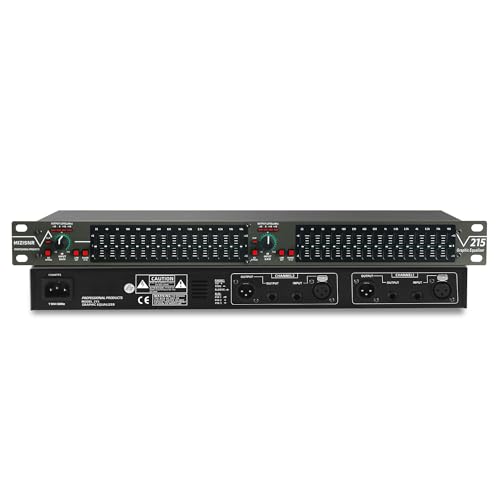
- 15 bands per channel with ±12dB adjustment
- Low-cut filter targets rumble and hum
- XLR and 1/4-inch TRS connectivity
Best For: Permanent podcast studios and dual-channel audio systems
Portable Voice Shaping

- Three-band bass, midrange, and treble control
- Portable battery-powered design
- Headphone amp with 3.5mm and 6.35mm jacks
Best For: Mobile podcasting and headphone monitoring
Low-End Control Pro
15-Band EQ with Subwoofer Output

- 15-band control on each stereo channel
- Adjustable low-cut frequency control
- Dedicated adjustable bass output
Best For: Rack-based studios needing detailed low-frequency routing
Compact Wireless Tuning
Douk Audio EQ5 5-Band Bluetooth EQ

- Five-band tone adjustment
- Bluetooth 5.0 wireless playback
- Dual VU meters with adjustable settings
Best For: Desktop podcast monitoring and home audio systems
Most Flexible Tuning

- 20 independent bands for detailed sound shaping
- Noise gate helps reduce unwanted noise and howling
- Bluetooth, USB, optical, coaxial, and RCA connectivity
Best For: Creators wanting detailed EQ control and versatile connections
Best Balanced Preamp

- Seven frequency bands with ±6dB adjustment
- XLR and RCA inputs and outputs
- Compact aluminum design with high stated SNR
Best For: Users seeking simple EQ in an XLR or RCA system
Best for Studio Versatility

- 31-band tuning with real-time spectrum monitoring
- 12 customizable modes with auto-save presets
- Optical, coaxial, and USB connectivity
Best For: Multi-purpose studios, live setups, and detailed vocal tuning
Compact Voice-Tuning Pick

- Seven bands with ±12dB adjustment
- TRS/TRRS headset support for voice chat
- RCA and 3.5mm outputs can run together
Best For: Compact podcasting and streaming setups
Rack-Mount Studio Choice

- 15 bands per channel with ±12dB adjustment
- Low-cut filter helps reduce rumble and hum
- XLR and 1/4-inch connectivity in a 1U chassis
Best For: Rack-based studio and live podcast systems
Feature-Rich Digital Pick

- 31-segment LED spectrum display
- 10 presets, bypass, and noise reduction
- Bluetooth 5.2, USB, XLR, and 1/4-inch support
Best For: Advanced home studios and multifunction audio systems
Rack-Mount Precision – 15-Band Stereo Graphic EQ
For podcast studios that need hands-on control over two audio channels, this 15-band unit is a practical choice among audio equalizers for podcasting. Its rack-mount design, balanced and unbalanced connections, and low-cut filter support detailed voice and system tuning.
Best For: Fixed podcast studios, live applications, and audio installations needing dual-channel graphic control.
Pros:
- 15 adjustable bands per channel with up to ±12dB of control.
- Low-cut switch helps reduce wind noise, floor rumble, and electrical hum.
- XLR balanced and 1/4-inch TRS unbalanced inputs and outputs.
- 1U rack-mount format includes a bypass switch for easier troubleshooting.
Cons:
- Rack-mount form factor is less convenient for portable podcast setups.
- It provides graphic-band control rather than separate vocal-processing features.
This EQ suits creators who want broad, visible frequency control before recording or broadcasting. Its flexible connectivity makes it easier to integrate into a more permanent studio signal chain.
Portable Voice Shaping – Fosi Audio SK01 Headphone EQ
The Fosi Audio SK01 is a compact option for podcasters who want simple, portable tone adjustment. As one of the more flexible audio equalizers for podcasting, it combines a headphone amplifier, analog preamp, and three-band bass, midrange, and treble control.
Best For: Mobile creators, headphone monitoring, and compact desktop or instrument-based audio setups.
Pros:
- Independent bass, midrange, and treble controls provide straightforward tone shaping.
- One-button tone defeat quickly restores the original signal.
- Gain switch supports headphones with different impedance levels.
- Built-in 2500mAh battery offers up to six hours of use.
Cons:
- Three bands offer less detailed control than a multi-band rack EQ.
- Its 3.5mm and 6.35mm connections may require adapters for some podcast gear.
This is a convenient fit when portability and quick adjustments matter more than extensive frequency sculpting. The loudness function and headphone amplification also make it useful for personal monitoring.
Low-End Control Pro – 15-Band EQ with Subwoofer Output
This dual-channel graphic EQ adds adjustable low-cut and dedicated bass-output controls for podcast setups that need more precise low-frequency management. It is a strong candidate among audio equalizers for podcasting when rack integration and detailed signal shaping are priorities.
Best For: Professional podcast studios, live production, and systems requiring dedicated low-end routing.
Pros:
- 15 bands per channel provide detailed ±12dB sound adjustment.
- Adjustable low-cut frequency helps target unwanted low-end noise.
- Dedicated bass output includes adjustable frequency control.
- Supports XLR balanced and 1/4-inch TRS connections in a 1U rack chassis.
Cons:
- Its rack-mounted design is less suitable for small or mobile podcast kits.
- The extensive controls may be more than needed for basic spoken-word setups.
Compared with a simpler tone control, this model gives a studio more options for separating voice shaping from low-frequency management. It is especially appealing when the rest of the system already uses rack equipment.
Compact Wireless Tuning – Douk Audio EQ5 5-Band Bluetooth EQ
The Douk Audio EQ5 combines five-band tone shaping with Bluetooth 5.0 in a compact desktop enclosure. For podcasters who monitor through a home stereo or computer-speaker setup, it offers a convenient way to adjust sound without committing to a full rack EQ.
Best For: Desktop monitoring, home audio podcast setups, and creators who want wireless playback with visible level meters.
Pros:
- Five frequency bands cover 75Hz, 400Hz, 800Hz, 4kHz, and 10kHz.
- Bluetooth 5.0 supports wireless audio streaming from compatible devices.
- Dual VU meters display real-time signal levels with adjustable behavior.
- Bypass and balance controls provide quick signal comparison and channel correction.
Cons:
- Five fixed bands provide less precise control than a 15-band graphic EQ.
- The supplied notes do not specify microphone inputs or dedicated podcast connections.
This compact EQ is best viewed as a desktop listening and monitoring tool rather than a full studio vocal processor. Its wireless input, bypass control, and VU meters make it appealing for flexible home setups.
Most Flexible Tuning – 20-Band Home Audio Equalizer
For shoppers comparing audio equalizers for podcasting, this model stands out with 20 independent adjustment bands, noise-gate processing, and several wired and wireless input options. Its spectrum display and saved presets can make it easier to refine vocal tone and monitor changes while recording or streaming.
Best For: Podcasters and home creators who want detailed EQ control, noise reduction, and broad connectivity.
Pros:
- 20 independent bands provide detailed control over bass, mids, and treble.
- Built-in noise gate is designed to reduce ambient noise, current noise, and microphone howling.
- Bluetooth 6.0, USB, optical, coaxial, and RCA connections support varied setups.
- Offers 12 customizable modes, auto-save presets, and a 31-band spectrum display.
Cons:
- The 16.9-inch-wide chassis may require dedicated desk or rack space.
- Its extensive features may be more than needed for a simple single-microphone setup.
This is the most feature-rich option of the three for creators who want hands-on shaping and flexible system integration. It is especially appealing if you also use the setup for home theater, music playback, or live streaming.
Best Balanced Preamp – Douk Audio T7 7-Band EQ
The Douk Audio T7 is a compact choice among audio equalizers for podcasting when you need straightforward analog signal shaping between source equipment and an amplifier or speaker system. Its seven fixed frequency bands, balanced connectivity, and high stated signal-to-noise ratio suit users who prefer a simple, plug-and-play component.
Best For: Podcasters with XLR-based equipment who want compact, manual EQ adjustment without extra operating modes.
Pros:
- Seven bands cover key low, mid, and high frequencies from 64Hz to 8kHz.
- XLR and RCA inputs and outputs provide flexible system compatibility.
- Specified SNR above 104dB and distortion as low as 0.003%.
- Compact aluminum-alloy enclosure is designed for easy placement and interference shielding.
Cons:
- It does not include a volume control knob.
- Seven bands offer less detailed adjustment than the 20- and 31-band alternatives.
- The supplied notes do not mention USB, Bluetooth, or built-in noise-gate processing.
The T7 is a focused option rather than an all-in-one podcast processor. Choose it when your existing setup already handles recording and volume control, and you mainly need balanced or RCA EQ in a small chassis.
Best for Studio Versatility – 31-Band Graphic Equalizer
For audio equalizers for podcasting that also need to serve a broader studio or live-sound setup, this 31-band graphic equalizer offers extensive frequency control and real-time spectrum monitoring. Its customizable modes, auto-save presets, and optical, coaxial, and USB connectivity make it suitable for switching between vocal, music, and venue-oriented applications.
Best For: Podcasters, recording studios, and live operators who need detailed tuning across multiple audio sources.
Pros:
- 31-band adjustment supports detailed control across the full audible range.
- Real-time spectrum monitoring helps visualize frequency changes.
- Includes 12 customizable modes with auto-save for quick switching.
- Supports optical, coaxial, USB, and connections for mixers, receivers, monitors, and other systems.
Cons:
- The large number of controls may take more time to learn than a simpler EQ.
- The supplied notes do not specify balanced XLR inputs or outputs.
- Its broad live, DJ, and home-audio feature set may be unnecessary for basic podcast recording.
This model is the strongest fit for a flexible production environment where one equalizer must handle podcasts, music, live sound, and home entertainment. Its spectrum analyzer and 31 bands are useful when precise adjustments matter more than minimal controls.
Compact Voice-Tuning Pick – 7-Band Stereo Equalizer
For creators seeking compact audio equalizers for podcasting, this 7-band stereo model offers hands-on control over bass, mids, and treble. Its 3.5mm TRS/TRRS support also makes it practical for voice chat, streaming, and headset-based recording setups.
Best For: Podcasters and streamers using headphones, mobile devices, or compact desktop audio systems.
Pros:
- Seven adjustable frequencies from 60Hz to 15kHz with ±12dB control.
- 3.5mm input supports both standard and microphone-equipped headsets.
- RCA and 3.5mm outputs can operate simultaneously for flexible routing.
- Provides up to 14dB of preamp gain for lower-output audio sources.
Cons:
- Input selection is limited to either RCA or 3.5mm at a time.
- Seven bands provide less detailed control than larger rack-mount equalizers.
This is a straightforward choice when you want voice and music adjustments without a full rack setup. It is especially appealing for small podcasting or streaming stations that rely on 3.5mm connections.
Rack-Mount Studio Choice – 15-Band Stereo Graphic EQ
This dual-channel model is a strong option among audio equalizers for podcasting when you need more detailed tonal shaping and balanced connectivity. Its low-cut filter can help reduce wind noise, floor rumble, and electrical hum before the signal reaches the rest of the system.
Best For: Studio, live, and installed podcasting systems with rack space and XLR or 1/4-inch connections.
Pros:
- Offers 15 adjustable bands per channel for more precise stereo control.
- Low-cut switch attenuates unwanted low-frequency noise and rumble.
- Includes XLR balanced and 1/4-inch TRS unbalanced inputs and outputs.
- 1U rack-mount design and bypass switch support organized studio installation and testing.
Cons:
- Its 4.74-pound, 18.89-inch-wide chassis is less suitable for portable setups.
- Requires corded power and a compatible rack or dedicated desktop space.
Choose this equalizer when podcast audio needs more hands-on correction than a compact desktop unit can provide. The dual-channel layout and low-cut function are useful for refining speech-focused signals in a more permanent setup.
Feature-Rich Digital Pick – 31-Band Digital Equalizer
For users comparing advanced audio equalizers for podcasting, this 31-band digital model combines detailed frequency control with visual monitoring. Preset modes, intelligent noise reduction, and a real-time LED spectrum display make it suited to setups where repeatable adjustments and signal feedback matter.
Best For: Home studios, podcast rooms, DJ systems, and installations that benefit from extensive EQ control and playback features.
Pros:
- 31-segment spectrum display shows frequency changes in real time.
- Includes 10 preset modes, EQ bypass, and separate high, mid, and bass adjustment.
- Supports Bluetooth 5.2 and USB playback for added source flexibility.
- Provides XLR and 1/4-inch connectivity plus an independently adjustable bass output.
Cons:
- Its rack-mount form factor and 4.44-pound weight may be excessive for simple desktop podcasting.
- The feature set may require more setup than a basic analog equalizer.
This is the most flexible option of the three for users who want detailed shaping, saved presets, and visual frequency feedback. It makes the most sense when the equalizer will serve broader home-audio, studio, or DJ duties in addition to podcasting.
How We Picked the Best Audio Equalizers for Podcasting
We evaluated these Audio Equalizers for Podcasting by focusing on the features that affect real-world voice work: available frequency bands, adjustment precision, input and output connections, noise-control features, form factor, and ease of use. We also considered whether each model is better suited to a desktop, home-stereo, headphone, or rack-mounted setup.
Because podcast systems vary widely, this list includes both simple tone-control units and full graphic equalizers. A larger number of bands can offer more precise shaping, but it may also require more setup knowledge and a cleaner signal chain.
Quick Comparison
| Best For | Look For | Typical Advantage |
|---|---|---|
| Simple desktop recording | Compact preamp and tone controls | Fast adjustments with minimal setup |
| Detailed vocal shaping | 15, 20, or 31 frequency bands | More control over voice clarity and room coloration |
| Headphone monitoring | Headphone amplification and loudness controls | Convenient monitoring and tonal balance |
| Studio or rack systems | Dual-channel design and rack mounting | Integration with larger audio systems |
| Computer or Bluetooth playback | RCA, XLR, or Bluetooth connectivity | Flexible connection options |
Key Buying Factors for Audio Equalizers for Podcasting
Band Count and Control Range
For basic voice correction, bass, midrange, and treble controls may be enough. Fifteen-band models provide more targeted adjustments, while 31-band units are better for detailed system tuning or difficult rooms. More bands are not automatically better if you prefer quick, repeatable settings.
Connections and Signal Path
Check whether the equalizer uses RCA, XLR, or both, and confirm that its input and output levels match your mixer, interface, amplifier, or powered speakers. A unit intended for home audio may not replace a microphone preamp or USB audio interface.
Noise, Headroom, and Monitoring
Look for noise-reduction features, clean gain staging, and enough headroom to avoid clipping. If you monitor through headphones, a model with a built-in headphone amplifier can simplify your setup. Keep EQ boosts modest; excessive boosts can raise background noise and reduce available headroom.
Size and Controls
Rack-mount equalizers suit permanent studio or equipment-rack installations, while compact units work better beside a computer or small mixer. Front-panel sliders are useful for visual adjustments, but digital displays or preset-style controls may be easier for repeatable settings.
Who Should Buy Which Audio Equalizers for Podcasting?
Choose a compact tone-control or preamp-style model if you want straightforward bass, midrange, and treble adjustments for a small desktop system. Choose a 15-band equalizer for a practical balance between vocal control and manageable operation. A 20- or 31-band model makes more sense for experienced users tuning a room, multiple sources, or a more complex studio chain.
For headphone-focused podcasting, prioritize amplification and monitoring features over a large slider count. For a mixer, interface, or rack-based studio, confirm the connector type, channel configuration, and available rack space before buying. Whichever model you choose, use EQ to make moderate corrections after improving microphone placement, room treatment, and recording levels.