
Clear vocals depend on more than speaker quality. The right amplifier can provide cleaner power, better channel control, and enough headroom to keep voices detailed without harshness or distortion.
These 10 four-channel, full-range, and compact car amplifiers cover a range of power levels, wiring options, and budgets. Use the guide below to match each design with your speakers, listening habits, and vehicle’s audio system.
Best 10 Car Amplifiers for Clear Vocals Picks for 2026
Balanced 4-Channel Choice

- Class AB four-channel design
- 60W RMS x 4 at 4 ohms
- Adjustable high/low-pass filters
Best For: Flexible front-and-rear speaker upgrades
High-Output Cobalt Option

- Class AB, four-channel amplifier
- 75W RMS x 4 at 2 ohms
- High/low-pass filters and bass boost
Best For: Tunable systems using RCA source connections
Compact Full-Range Value

- Small Class D four-channel chassis
- Two bridged channels
- 400W stated output power
Best For: Space-constrained installations
OEM-Friendly Power Upgrade

- 800W RMS at 1 ohm
- High-level inputs with auto turn-on
- HPF, LPF, and full crossover modes
Best For: Factory-radio upgrades with flexible tuning
Balanced Vocal Power
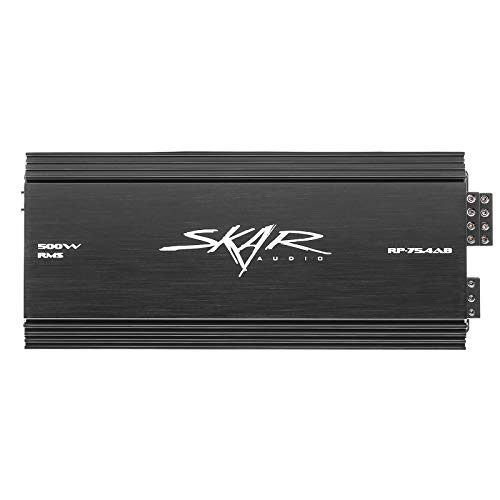
- 75 watts RMS x 4 at 4 ohms
- Adjustable HPF, LPF, gain, and bass EQ
- 105 dB signal-to-noise ratio
Best For: Four-speaker systems needing flexible vocal-focused tuning
Compact Flexible Upgrade

- 100 watts x 4 at 2 ohms
- High-level and RCA inputs
- HPF, LPF, and full-range modes
Best For: OEM upgrades and compact four-channel installations
Mini Hi-Fi Detail

- 104 dB SNR and low stated distortion
- 7.3 x 3.9 x 1.7-inch compact chassis
- 50 Hz–250 Hz adjustable crossover
Best For: Space-limited systems prioritizing low-noise vocal detail
Compact DSP Upgrade
4-Channel 80W x 4 Class A/B Amplifier

- Four 80W channels for front and rear speakers
- Slim aluminum housing simplifies placement
- DSP connectivity plus an RCA subwoofer output
Best For: Compact factory-system upgrades with clearer, stronger vocals
Budget Two-Channel Powerhouse
Pyle PLA2200 2-Channel Amplifier

- Bridgeable two-channel design with advertised 1400W output
- MOSFET supply supports a clean signal
- Gain, crossover, and bass-boost controls aid tuning
Best For: Space-conscious two-channel speaker systems
High-Power Multichannel Choice
Taramps TS 1200x4 Class D Amplifier

- 4 x 300W RMS at 2 ohms or bridged 2 x 600W
- High-level inputs work with OEM stereos
- HPF, LPF, and full-range modes support precise tuning
Best For: High-output multi-speaker and component audio builds
Balanced 4-Channel Choice – Pioneer GM-A6704
The Pioneer GM-A6704 is a practical option among car amplifiers for clear vocals, using a Class AB design, low-distortion output, and adjustable filtering to help tailor the sound. Its four channels can support front and rear speakers, or be bridged for additional power.
Best For: Drivers upgrading multiple speakers who want flexible channel configuration and straightforward tone control.
Pros:
- Four-channel Class AB design supports flexible system layouts.
- 60 watts RMS x 4 at 4 ohms, or 190 watts RMS x 2 bridged.
- Variable high- and low-pass filters help shape the system’s frequency range.
- Low-distortion design helps preserve clean source playback.
Cons:
- The 1,000-watt figure is maximum output rather than the continuous four-channel rating.
- Its 8.5 x 14 x 2.38-inch chassis may require more mounting space than compact amps.
With its balanced power, four-channel layout, and useful filtering, the GM-A6704 is a sensible fit for a conventional speaker upgrade focused on cleaner, more controlled vocals.
High-Output Cobalt Option – Orion CBA2000.4
The Orion CBA2000.4 pairs a Class AB layout with low-level RCA inputs, MOSFET power supply, and adjustable crossover features. For shoppers comparing car amplifiers for clear vocals, its high- and low-pass filters and stated low-distortion, high-signal-to-noise specifications offer useful tuning potential.
Best For: Systems needing a four-channel amplifier with bass boost, crossover controls, and support for 2- or 4-ohm speaker loads.
Pros:
- Supports continuous 2- or 4-ohm speaker loads.
- Provides 75 watts RMS x 4 at 2 ohms and 40 watts RMS x 4 at 4 ohms.
- Includes high-pass, low-pass, and bass-boost controls.
- MOSFET power supply and two-way protection circuitry are included.
Cons:
- The listed RMS output is substantially below the advertised 2,000-watt maximum.
- It uses low-level RCA inputs, which may not suit factory-radio installations without compatible integration hardware.
The CBA2000.4 is a feature-rich choice for users who want more control over speaker frequencies and bass response while powering a multi-speaker system.
Compact Full-Range Value – Taramps TS 400×4
The Taramps TS 400×4 is a small Class D, four-channel amplifier designed for full-range car audio systems. Its compact aluminum chassis can suit installations where space is limited, while its 400-watt output and two bridged channels provide flexibility for speaker upgrades.
Best For: Compact installations that need four channels in a small chassis and can accommodate professional installation.
Pros:
- Compact 4.76 x 1.93 x 5.43-inch aluminum housing.
- Four-channel full-range design with two bridged channels.
- 400 watts of stated output power for a range of car audio applications.
- One-year manufacturer warranty is listed.
Cons:
- The supplied notes do not specify RMS output per channel or speaker-load ratings.
- Professional installation is strongly recommended, adding setup complexity.
- The notes do not list adjustable crossover controls.
This amp is appealing when installation space is the priority, but buyers seeking precise vocal tuning should confirm the system’s power and control requirements before purchasing.
OEM-Friendly Power Upgrade – Taramps TS 800X4
The Taramps TS 800X4 combines four-channel Class D power with high-level inputs and automatic turn-on, making it useful for factory-radio upgrades. For car amplifiers for clear vocals, its RCA inputs and selectable HPF, LPF, and full crossover modes provide practical control over how speakers receive the signal.
Best For: Factory-radio systems needing high-level integration, strong multi-channel output, and flexible crossover settings.
Pros:
- Delivers 4 x 200 watts RMS at 1 ohm or 2 x 400 watts bridged at 2 ohms.
- High-level inputs and automatic turn-on simplify OEM integration.
- HPF, LPF, and full crossover modes support system tuning.
- Compact 6.89 x 5.43 x 1.89-inch aluminum chassis.
Cons:
- The 1-ohm rating requires speakers and wiring configured for that load.
- The supplied notes do not identify a dedicated vocal-focused equalizer or tone control.
With substantial RMS output in a compact enclosure, the TS 800X4 stands out for factory-radio upgrades where clean integration and crossover flexibility matter as much as power.
Balanced Vocal Power – Skar Audio RP-75.4AB
If you want car amplifiers for clear vocals, the Skar Audio RP-75.4AB offers four-channel Class A/B power with 75 watts RMS per channel at 4 ohms. Its adjustable gain, high-pass filter, low-pass filter, and bass EQ help you tune the system around vocal clarity.
Best For: Drivers building a four-channel system for full-range speakers, component speakers, or vocal-focused tuning.
Pros:
- 75 watts RMS x 4 channels at 4 ohms and 125 watts RMS x 4 at 2 ohms
- Adjustable gain, variable HPF and LPF, and three-position bass EQ
- 105 dB signal-to-noise ratio and 20 Hz–20,000 Hz frequency response
- Four-way protection circuitry and a two-year limited warranty
Cons:
- Class A/B design is less compact than the mini Class D alternatives
- Its 19.5 x 7 x 3-inch chassis may require careful mounting space
The RP-75.4AB is a practical choice when you want dedicated power for four speakers and useful filtering controls. It is especially appealing for installations where tuning the midrange and vocal presentation matters more than minimizing amplifier size.
Compact Flexible Upgrade – Taramps TS 400X4
For shoppers comparing car amplifiers for clear vocals, the Taramps TS 400X4 combines four-channel Class D output with high-level and RCA inputs. Its built-in crossover provides HPF, LPF, and full-range modes for adapting the amp to factory or aftermarket systems.
Best For: Factory-stereo upgrades, compact installations, and vehicles needing flexible speaker or bridged-channel operation.
Pros:
- 400 watts RMS total, with 100 watts x 4 at 2 ohms
- Can bridge channels for 200 watts x 2 at 4 ohms
- High-level auto turn-on and RCA inputs support OEM and aftermarket stereos
- Built-in HPF, LPF, and full-range modes suit different speaker configurations
Cons:
- One-year manufacturer warranty is shorter than some competing options
- The supplied notes do not specify a signal-to-noise ratio or frequency response
The TS 400X4 is a versatile daily-driver amplifier with straightforward system-matching features. Its Class D design and multiple input options make it a useful fit when installation flexibility and efficient four-channel power are priorities.
Mini Hi-Fi Detail – Fosi Audio CA30
The Fosi Audio CA30 is designed for listeners seeking car amplifiers for clear vocals in a small installation. This compact Class D four-channel amp lists a 104 dB signal-to-noise ratio, THD+N of 0.006% or lower, and adjustable crossover controls for full-range speakers, tweeters, mids, or subwoofers.
Best For: Under-seat or space-constrained 12V installations where low noise, compact dimensions, and flexible channel use are important.
Pros:
- Compact 7.3 x 3.9 x 1.7-inch chassis for under-seat or trunk mounting
- 104 dB signal-to-noise ratio and THD+N of 0.006% or lower
- Adjustable 50 Hz–250 Hz HPF/LPF plus full-range mode
- RCA and high-level input support, with bridgeable operation for subwoofer use
Cons:
- The listing uses peak and bridge-mode figures, so system matching should focus on the stated configuration
- Its extensive feature set may require more setup than a basic plug-in amplifier
The CA30 stands out when clean, low-noise performance must fit into a very small space. Its crossover range and bridgeable design also let one amplifier serve changing system layouts, from vocal-focused speakers to a mixed speaker-and-subwoofer setup.
Compact DSP Upgrade – 4-Channel 80W x 4 Class A/B Amplifier
For shoppers comparing car amplifiers for clear vocals, this compact four-channel model focuses on adding power to front and rear factory or aftermarket audio systems. Its Class A/B design, universal DSP interface, and imported amplifier chip make it a practical upgrade for systems that sound underpowered.
Best For: Drivers wanting a small amplifier for front-and-rear speakers, original navigation systems, or Android car players.
Pros:
- Four channels rated at 80W each for a balanced speaker upgrade.
- Ultra-thin aluminum housing is designed for relatively easy installation.
- Universal DSP input and output support connection with original audio systems and media players.
- Additional RCA output can support stronger low-frequency output from an active subwoofer.
Cons:
- Its 80W-per-channel rating may be less suitable for especially demanding systems.
- The supplied notes do not specify detailed speaker impedance or frequency-response information.
This is a sensible choice when installation space is limited and the goal is cleaner, more capable sound from a factory-based system. Its four-channel layout is particularly useful for improving vocal presence across the cabin without adding a large chassis.
Budget Two-Channel Powerhouse – Pyle PLA2200 2-Channel Amplifier
The Pyle PLA2200 is a two-channel option for shoppers seeking car amplifiers for clear vocals with adjustable system control. Its MOSFET power supply, variable gain, crossover, and gold-plated RCA connections are aimed at delivering a clean signal while fitting into a slim installation space.
Best For: Small speaker systems, two-channel setups, and buyers who want flexible crossover and bass-boost controls.
Pros:
- Bridgeable two-channel design with advertised output up to 1400 watts.
- MOSFET power supply is designed for a clean, distortion-free signal.
- Variable gain, switchable bass boost, and an electronic crossover allow system tuning.
- Thermal, overload, and short-circuit protection add useful safeguards.
Cons:
- Only two channels are available, so it is less flexible for independently powering front and rear speakers.
- The supplied notes do not identify RMS output ratings for everyday comparison.
- Its bass-boost features may require careful adjustment when vocal clarity is the priority.
With its compact 1.38-inch height and straightforward controls, this amplifier suits installations where space and budget matter. It can support clear vocals when gain, crossover, and bass boost are set to match the speakers rather than simply maximizing output.
High-Power Multichannel Choice – Taramps TS 1200×4 Class D Amplifier
For more demanding systems, the Taramps TS 1200×4 combines four-channel Class D amplification with high-level inputs and flexible filtering. It is a strong candidate among car amplifiers for clear vocals when the system includes multiple speakers, tweeters, drivers, or component speakers that need controlled power.
Best For: High-output multi-speaker builds in cars, trucks, and SUVs, including systems using a factory radio.
Pros:
- Delivers 4 x 300W RMS at 2 ohms or 2 x 600W bridged at 4 ohms.
- High-level inputs and automatic turn-on support direct connection to OEM stereos.
- RCA and high-level inputs offer HPF, LPF, and full-range modes for system tuning.
- Class D efficiency, reinforced terminals, and bridgeable channels suit demanding installations.
Cons:
- Professional installation is recommended, which may increase installation cost and complexity.
- Its high power can be excessive for basic factory speaker replacements.
- Speaker impedance and gain settings must be matched carefully to the system.
This amplifier is best viewed as the foundation for a more ambitious audio build rather than a simple plug-in upgrade. Its filtering and high-level input support can help preserve vocal definition while supplying the power needed by a full-range, multi-speaker layout.
How We Picked the Best Car Amplifiers for Clear Vocals
We focused on amplifiers that can support front and rear speakers or provide flexible channel configurations for a more balanced soundstage. We considered rated RMS power, channel count, class design, impedance compatibility, input options, crossover controls, physical size, and installation practicality.
Because advertised maximum wattage can be misleading, compare continuous RMS output at the impedance your speakers use. A properly matched amplifier with clean headroom is generally more useful for vocal clarity than a higher peak-power claim.
Quick Comparison
| What to Compare | Why It Matters |
|---|---|
| RMS power | Shows the amplifier’s usable continuous output and helps prevent underpowering or clipping. |
| Four channels | Can power front and rear speakers independently or be bridged for additional output. |
| Class A/B vs. Class D | Class A/B designs are often valued for smooth full-range performance; Class D models are typically smaller and more efficient. |
| Impedance rating | Confirms whether the amplifier is compatible with your speaker or subwoofer load. |
| Input flexibility | RCA and high-level inputs make integration easier with aftermarket or factory stereos. |
Key Buying Factors for Clear Vocals
Match RMS Power to Your Speakers
Choose an amplifier whose RMS output is close to the speakers’ RMS handling. Some extra headroom is useful, but excessive gain or an incorrect match can cause clipping, overheating, or speaker damage. Set gain by signal matching rather than using it as a volume control.
Choose the Right Channel Layout
A four-channel amp is a versatile choice for a complete cabin system. Run four speakers independently for front-to-rear balance, or bridge two channels when more power is needed for a pair of speakers or a compatible subwoofer. Verify the minimum bridged impedance first.
Consider Installation and System Inputs
Factory radios often require high-level inputs, while aftermarket receivers commonly use RCA connections. Compact Class D models can fit in tighter spaces and draw less current, whereas Class A/B units may require more ventilation. Check fuse requirements, wiring size, grounding, and available mounting space before buying.
Use Crossovers to Reduce Muddy Sound
High-pass filtering can remove deep bass from door speakers, allowing them to reproduce voices with less strain. If a separate subwoofer is installed, crossover settings help divide frequencies cleanly and preserve vocal detail.
Who Should Buy Which Car Amplifiers for Clear Vocals?
For a balanced everyday upgrade: Choose a dependable four-channel amplifier with moderate RMS output and straightforward crossover controls. This suits factory speaker replacements and typical aftermarket components.
For efficient, space-conscious installations: A compact Class D model is a practical option when trunk or under-seat space is limited, especially when the vehicle has a factory head unit.
For higher-output systems: Look for a higher-RMS model with a stable impedance rating and adequate electrical support. Confirm that the alternator, battery, wiring, and speakers can handle the added demand.
For budget builds: Prioritize honest RMS specifications, input compatibility, and protection features over impressive maximum-wattage numbers. The best amplifier is one that integrates correctly and operates cleanly at normal listening levels.